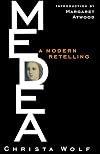
Medea
by Christa Wolf
On This Page
Description
A revisionist account of Medea, the sorceress of Greek mythology, famous for her cruelty and manipulation of men. Here she is presented as a kind woman, victimized by men. By a German author.Tags
Recommendations







































Member Reviews
’I am Medea, the sorceress, if you all will have it so. The wild woman, the foreigner. You shall not belittle me.’’
I’ve always declared-to the dismay of many- that if I ever had a daughter, I would name her Medea. My fascination with this larger-than-life woman has been undiminished ever since I started learning about the ancient, endless, eternal myths of my country from a relatively young age. Call me ‘’weird’’ but dark, controversial figures have accompanied me for the most part of my reading life. It also helped that my mother had the knowledge and the patience to explain to me how myths were made in a society of men, by men and for men. World Culture is loaded with mythical women who have been vilified as an excuse show more for the stupidity, disloyalty and absolute lack of courage on men’s part. Eve, Medea, Helen of Troy, Pandora, Circe, Phaedra, Jocasta...The list goes on and on….A woman can either be a whore or a saint. Too bad for the ‘’willing’’ ones because the first team makes for the best of stories. In this extraordinary moment in European Literature, Christa Wolf reimagines Medea’s story, focusing on her last days in Corinth and culminating with the death of her sons. The result is a haunting, raw elegy of broken promises and thwarted dreams….
’They’ve made what they need out of each of us. Out of you, the Hero, and out of me, the Wicked Witch. They’ve driven us apart like that.’’
People create myths to explain passions, hopes, wishes and inclinations. They need the heroes, the ones who battle against gods and men, as they need the scapegoats responsible when the hero goes astray. What happens when the Hero succeeds only after the Scapegoat has provided the necessary help? Well, noone cares about this tiny detail, all that matters is that the job is done. However, when everything crumbles because of disloyalty and ambition, it’s time for the Scapegoat to be driven out. Medea is either a healer or a bringer of curse. This is what the mob, the ever-changing, witless crowd believes. She is the Other, the Foreigner, the one who threatens the established order with her powers and invocations. Jason is blaming his obsession and lust to Medea, always unwilling to admit what a phony ‘’hero’’ he is. He doesn’t care anymore, the glory is his and it’s time to find a younger, docile wife who would worship him without questions and thoughts of her own…
‘’Is it a comfort to think that people everywhere fall short of the agreements they have made?’’
I feel that this quote expresses the essence of our times extremely accurately. In the outstanding introduction, Margaret Atwood refers to the political and social background and the status quo that shaped Wolf’s work. Coming from the troubled land of former East Germany, it is clear that her political and social views influenced her writing. How could it have been otherwise? Medea was written in 1996, six years after the reunification of Germany, and while reading, one can feel a deep sense of bitterness and intense distrust towards the institution of the state and the authorities. Knowing the political context, Medea becomes much more than a retelling of an ancient legend.
The writing and the characterization are unique. The portrait of Medea is moving, sad, haunting...There are quite a few exceptional descriptions of the city of Corinth and the nightly scenes are eerie, foreboding. Don’t expect any infanticides, gore, violence or sex and the end will surprise you. I will not compare Wolf’s work to Euripides or Seneca. Each one is a different beast, all masterpieces in their own right. However, I know which one I prefer. Wolf’s esoteric, haunting, solemn cry for the truth and for a world that turned out quite different than promised. For the innocent victims of the frustrations of the mighty, the demonization of the weakest links.
‘’Up there in the dark, night-blue sky, like a slightly tilted silver of peel, the crescent moon was still swimming, though on the wane, reminding me of my waning years, my Colchian moon, endowed with the power to pull the sun up over the edge of the earth every morning.’’ show less
I’ve always declared-to the dismay of many- that if I ever had a daughter, I would name her Medea. My fascination with this larger-than-life woman has been undiminished ever since I started learning about the ancient, endless, eternal myths of my country from a relatively young age. Call me ‘’weird’’ but dark, controversial figures have accompanied me for the most part of my reading life. It also helped that my mother had the knowledge and the patience to explain to me how myths were made in a society of men, by men and for men. World Culture is loaded with mythical women who have been vilified as an excuse show more for the stupidity, disloyalty and absolute lack of courage on men’s part. Eve, Medea, Helen of Troy, Pandora, Circe, Phaedra, Jocasta...The list goes on and on….A woman can either be a whore or a saint. Too bad for the ‘’willing’’ ones because the first team makes for the best of stories. In this extraordinary moment in European Literature, Christa Wolf reimagines Medea’s story, focusing on her last days in Corinth and culminating with the death of her sons. The result is a haunting, raw elegy of broken promises and thwarted dreams….
’They’ve made what they need out of each of us. Out of you, the Hero, and out of me, the Wicked Witch. They’ve driven us apart like that.’’
People create myths to explain passions, hopes, wishes and inclinations. They need the heroes, the ones who battle against gods and men, as they need the scapegoats responsible when the hero goes astray. What happens when the Hero succeeds only after the Scapegoat has provided the necessary help? Well, noone cares about this tiny detail, all that matters is that the job is done. However, when everything crumbles because of disloyalty and ambition, it’s time for the Scapegoat to be driven out. Medea is either a healer or a bringer of curse. This is what the mob, the ever-changing, witless crowd believes. She is the Other, the Foreigner, the one who threatens the established order with her powers and invocations. Jason is blaming his obsession and lust to Medea, always unwilling to admit what a phony ‘’hero’’ he is. He doesn’t care anymore, the glory is his and it’s time to find a younger, docile wife who would worship him without questions and thoughts of her own…
‘’Is it a comfort to think that people everywhere fall short of the agreements they have made?’’
I feel that this quote expresses the essence of our times extremely accurately. In the outstanding introduction, Margaret Atwood refers to the political and social background and the status quo that shaped Wolf’s work. Coming from the troubled land of former East Germany, it is clear that her political and social views influenced her writing. How could it have been otherwise? Medea was written in 1996, six years after the reunification of Germany, and while reading, one can feel a deep sense of bitterness and intense distrust towards the institution of the state and the authorities. Knowing the political context, Medea becomes much more than a retelling of an ancient legend.
The writing and the characterization are unique. The portrait of Medea is moving, sad, haunting...There are quite a few exceptional descriptions of the city of Corinth and the nightly scenes are eerie, foreboding. Don’t expect any infanticides, gore, violence or sex and the end will surprise you. I will not compare Wolf’s work to Euripides or Seneca. Each one is a different beast, all masterpieces in their own right. However, I know which one I prefer. Wolf’s esoteric, haunting, solemn cry for the truth and for a world that turned out quite different than promised. For the innocent victims of the frustrations of the mighty, the demonization of the weakest links.
‘’Up there in the dark, night-blue sky, like a slightly tilted silver of peel, the crescent moon was still swimming, though on the wane, reminding me of my waning years, my Colchian moon, endowed with the power to pull the sun up over the edge of the earth every morning.’’ show less
I confess I have a soft spot for Medea; in fact, she is my favourite mythological heroine. Medea the childkiller. Her own children. What Sophie's choice, what earth-mothering, what holy self-sacrifice, what tears for the crucified son, what gut and womb-love--fuck this show, I hear Medea saying, fuck your archetypes, struggle for survival, societal imperatives, gender roles and tender babes. Medea refuses to be a mother. Medea deletes that dimension of her self; Medea opts for monsterhood. We all sort of expect men to be lousy parents, as they are lousy partners and lovers--but whither humanity and the entire Greatest Show On Earth without mother-love? Medea is the greatest criminal in the universe. Medea is worse than Satan.
Well, not show more Christa Wolf's Medea, who is an intelligent, loving, courageous woman, tragically scapegoated, damned if she does and damned if she doesn't--the type and fate depressingly too frequently encountered in reality. It's a necessary counter-weighing retelling of the myth, but not very interesting in execution, to me at least, with it's undifferentiated chorus of first-person voices each bringing a tile of the too-flat mosaic. show less
Well, not show more Christa Wolf's Medea, who is an intelligent, loving, courageous woman, tragically scapegoated, damned if she does and damned if she doesn't--the type and fate depressingly too frequently encountered in reality. It's a necessary counter-weighing retelling of the myth, but not very interesting in execution, to me at least, with it's undifferentiated chorus of first-person voices each bringing a tile of the too-flat mosaic. show less
“At the end she said, They’ve made what they need out of each of us. Out of you, the Hero, and out of me, the Wicked Witch. They’ve driven us apart like that.” Medea to Jason.
Before I had even read Euripides’s retelling of Medea, Medea had already been representative to me of a destructive force propelled by vengeful rage. And what Christa Wolf does with this modern retelling of an ancient tale, is present Medea in a different form compared to the versions given prior.
After helping Jason to retrieve the Golden Fleece and having fled her homeland Colchis, the couple settle in Corinth where having left one power struggle, Medea finds herself at the center of another. This Medea is wiser, more sensible and less amorously show more passionate than her predecessors. As an outsider she is able to observe the faults of the Corinthians, she does not become subservient to the land she has been exiled to as custom demands of women, and once she discovers the heinous secret that is the source of Corinth's prosperity and magnificence, the powerful of Corinth plot and succeed in executing her fall.
If I was to be improper and summarize this brilliant book, I would say that it concerns the workings of power, the abuses of power and the lengths people in power work to maintain their power. Before she had fled, Medea and the other Colchian women were working to restore tradition that would shift power from King Aeëtes, her father, who is corrupt to her sister Chalciope but the king is resolute in maintaining and clinging to power. In Corinth, King Creon and his circle worked to ensure that he remains in power. An already patriarchal society, works to maintain its power while subjecting even more force to its subjects and using and nitpicking certain old traditions to revive.
The theme of the scapegoat is everywhere in the tale. Primarily used by the ones in power to hold onto power longer, as sacrificial offerings or as distractions and the objects of responsibility for disasters. Medea quickly becomes a convenient scapegoat when tragedies occur, and finally we see that those in power not only have the absolute say in present and future matters, but in also how history is remembered.
I'll finish this review that’s become longer than I intended with the apt words Margaret Atwood gives in the introduction to this marvellous book: “Medea is no two-dimensional allegory. Like a tunnel full of mirrors, it both reflects and echoes. The questions it asks the reader, through many voices and in many different ways, is: what would you be willing to believe, to accept, to conceal, to do, to save your own skin, or simply to stay close to power? Who would you be willing to sacrifice?” show less
Before I had even read Euripides’s retelling of Medea, Medea had already been representative to me of a destructive force propelled by vengeful rage. And what Christa Wolf does with this modern retelling of an ancient tale, is present Medea in a different form compared to the versions given prior.
After helping Jason to retrieve the Golden Fleece and having fled her homeland Colchis, the couple settle in Corinth where having left one power struggle, Medea finds herself at the center of another. This Medea is wiser, more sensible and less amorously show more passionate than her predecessors. As an outsider she is able to observe the faults of the Corinthians, she does not become subservient to the land she has been exiled to as custom demands of women, and once she discovers the heinous secret that is the source of Corinth's prosperity and magnificence, the powerful of Corinth plot and succeed in executing her fall.
If I was to be improper and summarize this brilliant book, I would say that it concerns the workings of power, the abuses of power and the lengths people in power work to maintain their power. Before she had fled, Medea and the other Colchian women were working to restore tradition that would shift power from King Aeëtes, her father, who is corrupt to her sister Chalciope but the king is resolute in maintaining and clinging to power. In Corinth, King Creon and his circle worked to ensure that he remains in power. An already patriarchal society, works to maintain its power while subjecting even more force to its subjects and using and nitpicking certain old traditions to revive.
The theme of the scapegoat is everywhere in the tale. Primarily used by the ones in power to hold onto power longer, as sacrificial offerings or as distractions and the objects of responsibility for disasters. Medea quickly becomes a convenient scapegoat when tragedies occur, and finally we see that those in power not only have the absolute say in present and future matters, but in also how history is remembered.
I'll finish this review that’s become longer than I intended with the apt words Margaret Atwood gives in the introduction to this marvellous book: “Medea is no two-dimensional allegory. Like a tunnel full of mirrors, it both reflects and echoes. The questions it asks the reader, through many voices and in many different ways, is: what would you be willing to believe, to accept, to conceal, to do, to save your own skin, or simply to stay close to power? Who would you be willing to sacrifice?” show less
In MEDEA, Christa Wolf revisions the tale of Medea in a series of narrations with six voices: Medea; Jason; Glauce, the Corinthian princess; Agameda, Medea's jealous former student; Akamas, King Creon's first astronomer; and Leukon, King Creon's second astronomer. The revisioning is most successful on the level that it reflects and calls to mind current political situtations and practices: the use of propaganda, the "big lie," the scapegoating of immigrant populations, and the inevitable struggles to retain power despite all costs.
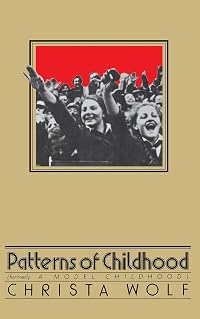
However, on the level of character development, the novel is disappointing. Wolf, who has written marvelously complex characters in PATTERNS OF CHILDHOOD, THE QUEST FOR CHRISTA T, and ACCIDENT: A DAY'S NEWS, show more here falls back on stereotypes. Jason is a blustery, somewhat bewildered, adventurer trying to carve out a place in society for himself. Akamas is the ultimate political schemer and operative, reminiscent, perhaps, of Dick Cheney. Although Glauce suffers, not only from epilepsy, but a childhood trauma , she is a simpleton; and Agameda is simply spiteful. Leukon's is the most interesting voice; he has fallen in love with Arethusa, a Cretan gem-cutter and Medea's friend. While he admires the women's independent spirits, he despairs over their inability to understand the fatal challenge they present to the Corinthians' sense of stability. He can do nothing but watch the disaster unfold.
And what of Medea herself? Medea is one of the most fascinating figures in classical mythology and literature -- a Colchian princess, granddaughter of the sun god Helios and Circe's niece, a sorceress who deserts her homeland and family to help Jason retrieve the golden fleece and avenge himself against his uncle, only to be abandoned and betrayed by him in Corinth. Did she murder her brother to help Jason escape from Colchis? Did she murder her young rival? Did she slay her children to avenge herself or save them from a worse fate? Wolf will have none of this -- her Medea is innocent of everything except a residual guilt for leading her countrymen away from Colchis into an environment that increasingly becomes threatening. She is an oddly modern woman claiming an independent spirit, but lacks emotional or intellectual depth. She plays at being a political dissident, a psychologist, a detective -- but ultimately Wolf's Medea is unsatisfying -- the mysterious enigma has been flattened. show less
However, on the level of character development, the novel is disappointing. Wolf, who has written marvelously complex characters in PATTERNS OF CHILDHOOD, THE QUEST FOR CHRISTA T, and ACCIDENT: A DAY'S NEWS, show more here falls back on stereotypes. Jason is a blustery, somewhat bewildered, adventurer trying to carve out a place in society for himself. Akamas is the ultimate political schemer and operative, reminiscent, perhaps, of Dick Cheney. Although Glauce suffers, not only from epilepsy, but a childhood trauma , she is a simpleton; and Agameda is simply spiteful. Leukon's is the most interesting voice; he has fallen in love with Arethusa, a Cretan gem-cutter and Medea's friend. While he admires the women's independent spirits, he despairs over their inability to understand the fatal challenge they present to the Corinthians' sense of stability. He can do nothing but watch the disaster unfold.
And what of Medea herself? Medea is one of the most fascinating figures in classical mythology and literature -- a Colchian princess, granddaughter of the sun god Helios and Circe's niece, a sorceress who deserts her homeland and family to help Jason retrieve the golden fleece and avenge himself against his uncle, only to be abandoned and betrayed by him in Corinth. Did she murder her brother to help Jason escape from Colchis? Did she murder her young rival? Did she slay her children to avenge herself or save them from a worse fate? Wolf will have none of this -- her Medea is innocent of everything except a residual guilt for leading her countrymen away from Colchis into an environment that increasingly becomes threatening. She is an oddly modern woman claiming an independent spirit, but lacks emotional or intellectual depth. She plays at being a political dissident, a psychologist, a detective -- but ultimately Wolf's Medea is unsatisfying -- the mysterious enigma has been flattened. show less
Excellent take on the Medea myth/legend. The people were all believable and there was plenty to think about for modern times as well. My biggest complaint was that Medea (and the rest of the Colchean people?) was described as being black ("dark brown skin", "crinkly" curly hair) which strikes me as odd since she came from what is now part of northern Turkey.
Medea als wijze genezeres die door de Korinthiers van wie zij een gruwelijk geheim heeft ontdekt tot zondebok wordt gemaakt.
Members
- Recently Added By
Published Reviews
ThingScore 75
"Medea" by Christa Wolf is a retelling of the classical myth of Medea, the sorceress from Greek mythology. In Wolf's version, Medea's story is reimagined from her perspective, offering a feminist reinterpretation that delves into the complexities of power, gender, and colonialism. Through the character of Medea, Wolf explores themes of betrayal, vengeance, and the struggle for agency in a show more patriarchal society, presenting a provocative and thought-provoking examination of ancient myth through a contemporary lens. show less
added by Michael_Vannin
Lists

Female Protagonist
1,056 works; 57 members
Female Author
1,235 works; 67 members

German Literature
518 works; 55 members

Recommend the 20 best books you've read in the last five years
2,168 works; 602 members

Best historical fiction set in the ancient world
126 works; 40 members

Myth (Reuse and Retelling)
188 works; 24 members

le donne raccontano
116 works; 1 member
Author Information

116+ Works 5,611 Members
Christa Wolf was born on March 18, 1929, in Landsberg, which is now Gorzow, Poland. Her father joined the Nazi Party and she became a member of the girls' version of the Hitler Youth. In 1949, she joined the Socialist Unity Party and studied German literature at universities in Jena and Leipzig. She wrote numerous novels during her lifetime show more including The Divided Heaven, The Quest for Christa T., A Model Childhood, and Cassandra. She won several awards including the Heinrich Mann Prize in 1963 and Thomas Mann Prize for literature in 2010. She died on December 1, 2011 at the age of 82. (Bowker Author Biography) show less
Awards and Honors
Notable Lists
Series
Belongs to Publisher Series
Work Relationships
Is contained in
Was inspired by
Has as a commentary on the text
Has as a student's study guide
Common Knowledge
- Canonical title*
- Медея
- Original title
- Medea: Stimmen
- Original publication date
- 1996
- People/Characters
- Medea; Jason [Argonaut]; Creon; Glauce
- Epigraph*
- L'acronia non è la simultaneità indifferente, ma piuttosto un intreccio di epoche disposte insieme secondo il modello dello stativo, una fuga di strutture che tendono ad assottigliarsi. Le si può allungare come una fisarmo... (show all)nica, e allora un'estremità viene a trovarsi molto distante dall'altra, ma è anche possibile inserirle l'una nell'altra come le bambole russe, sicché le pareti del tempo vengono a trovarsi molto vicine tra di loro. Coloro che sono vissuti in altri secoli odono piagnucolare il nostro grammofono, e attraverso le pareti del tempo li vediamo levare le mani verso i piatti appetitosi che abbiamo preparato.
Elisabeth Lenk - First words*
- Pronunciamo un nome e, poiché le pareti sono porose, entriamo nel tempo di lei, incontro desiderato, dal fondo del tempo ricambia lo sguardo senza esitare.
[Prologo]
Anche gli dei morti governano. - Last words*
- (Click to show. Warning: May contain spoilers.)Adesso udiamo le voci.
- Disambiguation notice
- 3518460080 2008 softcover German suhrkamp taschenbuch 4008
3518742302 2010 eBook German suhrkamp taschenbuch 4008
*Some information comes from Common Knowledge in other languages. Click "Edit" for more information.
Classifications
- Genres
- General Fiction, Fiction and Literature
- DDC/MDS
- 833.914 — Literature & rhetoric German & related literatures German fiction 1900- 1900-1990 1945-1990
- LCC
- PT2685 .O36 .M413 — Language and Literature German, Dutch and Scandinavian literatures German literature Individual authors or works 1961-2000
- BISAC
Statistics
- Members
- 528
- Popularity
- 56,449
- Reviews
- 13
- Rating
- (3.93)
- Languages
- 14 — Dutch, English, Finnish, French, German, Hebrew, Italian, Norwegian (Bokmål), Portuguese, Romanian, Russian, Spanish, Swedish, Turkish
- Media
- Paper, Audiobook, Ebook
- ISBNs
- 32
- ASINs
- 5