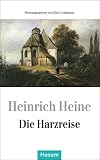
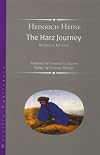
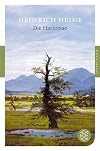
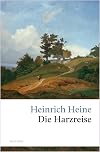
Die Harzreise
by Heinrich Heine
On This Page
Description
Excerpt from Die HarzreiseIn an edition of this kind, no apology will be usees sary for the excision of three or four brief passages that are in no way essential to the text.About the PublisherForgotten Books publishes hundreds of thousands of rare and classic books. Find more at www.forgottenbooks.comThis book is a reproduction of an important historical work. Forgotten Books uses state-of-the-art technology to digitally reconstruct the work, preserving the original format whilst repairing show more imperfections present in the aged copy. In rare cases, an imperfection in the original, such as a blemish or missing page, may be replicated in our edition. We do, however, repair the vast majority of imperfections successfully; any imperfections that remain are intentionally left to preserve the state of such historical works. show lessTags
Recommendations




















Member Recommendations

Member Reviews
Obviously a German book you should not read in English if you are capable of understanding the original.
I had to read parts of this book back in school. It fell into my hand a couple of years ago when I was rearranging my book shelves. I took a short peek and put the book down an hour later when I received a phone call.
I never realized how sarcastic this book is before!!! :o He pulls the academic middle class of the early 18th century through the mud while describing his journey and the people he meets along the way. He condems the professors which have not evolved since the day they took their posts, despises the lazyness of the mind, and the traditional ways.
A must read which will give you more insight not only into the German world show more 200 years ago, but will also provide you with some historical travels of the past, places still alive and existing. The book will provide you with some astonished and shocked laughs. The language is descriptive and a very good example of the sophisticated literature in this age - he IS a famous classic author after all.
I've obviously not read the English version, but even though in the original German the words are sometimes a bit old and not used anymore it's no problem to read through it.
The first sentence from the following quote translated by me: "The city itself is beautiful and you'll like it best when you look at it with your back. ..."
(taken from my Forum for Book Recommendations)
Quote from the first few pages:
"Die Stadt selbst ist schön, und gefällt einem am besten, wenn man sie mit dem Rücken ansieht. Sie muß schon sehr lange stehen; denn ich erinnere mich, als ich vor fünf Jahren dort immatrikuliert und bald darauf konsiliiert wurde, hatte sie schon dasselbe graue, altkluge Ansehen, und war schon vollständig eingerichtet mit Schnurren, Pudeln, Dissertationen, Teedansants, Wäscherinnen, Kompendien, Taubenbraten, Guelfenorden, Promotionskutschen, Pfeifenköpfen, Hofräten, Justizräten, Relegationsräten, Profaxen und anderen Faxen. Einige behaupten sogar, die Stadt sei zur Zeit der Völkerwanderung erbaut worden, jeder deutsche Stamm habe damals ein ungebundenes Exemplar seiner Mitglieder darin zurückgelassen, und davon stammten all die Vandalen, Friesen, Schwaben, Teutonen, Sachsen, Thüringer usw., die noch heutzutage in Göttingen, hordenweis, und geschieden durch Farben der Mützen und der Pfeifenquäste, über die Weenderstraße einherziehen, auf den blutigen Walstätten der Rasenmühle, des Ritschenkrugs und Bovdens sich ewig untereinander herumschlagen, in Sitten und Gebräuchen noch immer wie zur Zeit der Völkerwanderung dahinleben, und teils durch ihre Duces, welche Haupthähne heißen, teils durch ihr uraltes Gesetzbuch, welches Comment heißt und in den legibus barbarorum eine Stelle verdient, regiert werden."
"Im allgemeinen werden die Bewohner Göttingens eingeteilt in Studenten, Professoren, Philister und Vieh; welche vier Stände doch nichts weniger als streng geschieden sind. Der Viehstand ist der bedeutendste." show less
I had to read parts of this book back in school. It fell into my hand a couple of years ago when I was rearranging my book shelves. I took a short peek and put the book down an hour later when I received a phone call.
I never realized how sarcastic this book is before!!! :o He pulls the academic middle class of the early 18th century through the mud while describing his journey and the people he meets along the way. He condems the professors which have not evolved since the day they took their posts, despises the lazyness of the mind, and the traditional ways.
A must read which will give you more insight not only into the German world show more 200 years ago, but will also provide you with some historical travels of the past, places still alive and existing. The book will provide you with some astonished and shocked laughs. The language is descriptive and a very good example of the sophisticated literature in this age - he IS a famous classic author after all.
I've obviously not read the English version, but even though in the original German the words are sometimes a bit old and not used anymore it's no problem to read through it.
The first sentence from the following quote translated by me: "The city itself is beautiful and you'll like it best when you look at it with your back. ..."
(taken from my Forum for Book Recommendations)
Quote from the first few pages:
"Die Stadt selbst ist schön, und gefällt einem am besten, wenn man sie mit dem Rücken ansieht. Sie muß schon sehr lange stehen; denn ich erinnere mich, als ich vor fünf Jahren dort immatrikuliert und bald darauf konsiliiert wurde, hatte sie schon dasselbe graue, altkluge Ansehen, und war schon vollständig eingerichtet mit Schnurren, Pudeln, Dissertationen, Teedansants, Wäscherinnen, Kompendien, Taubenbraten, Guelfenorden, Promotionskutschen, Pfeifenköpfen, Hofräten, Justizräten, Relegationsräten, Profaxen und anderen Faxen. Einige behaupten sogar, die Stadt sei zur Zeit der Völkerwanderung erbaut worden, jeder deutsche Stamm habe damals ein ungebundenes Exemplar seiner Mitglieder darin zurückgelassen, und davon stammten all die Vandalen, Friesen, Schwaben, Teutonen, Sachsen, Thüringer usw., die noch heutzutage in Göttingen, hordenweis, und geschieden durch Farben der Mützen und der Pfeifenquäste, über die Weenderstraße einherziehen, auf den blutigen Walstätten der Rasenmühle, des Ritschenkrugs und Bovdens sich ewig untereinander herumschlagen, in Sitten und Gebräuchen noch immer wie zur Zeit der Völkerwanderung dahinleben, und teils durch ihre Duces, welche Haupthähne heißen, teils durch ihr uraltes Gesetzbuch, welches Comment heißt und in den legibus barbarorum eine Stelle verdient, regiert werden."
"Im allgemeinen werden die Bewohner Göttingens eingeteilt in Studenten, Professoren, Philister und Vieh; welche vier Stände doch nichts weniger als streng geschieden sind. Der Viehstand ist der bedeutendste." show less
Was ist es? keine Reisebeschreibung, sondern Bilder einer Harzwanderung, aber dieses kleine Werk, 1826 erschienen, ist viel mehr: Gedanken, Stimmungen, seine übersprudelnden Gefühle, ... all dies und launisch vermischt mit liebevoller Ironie in Prosa und Lyrik. So schließt es mit: ..., die Sonne hat kaum die Hälfte ihres Weges zurückgelegt, und mein Herz duftet schon so stark, daß es mir betäubend zu Kopfe steigt, daß ich nicht mehr weiß, wo die Ironie aufhört und der Himmel anfängt, .... Es ist der erste Mai, der lumpigste Ladenschwengel hat heute das Recht, sentimental zu werden, und dem Dichter wolltest du es verwehren?
(XI-15)
(XI-15)
Dec 6, 2015German
Onderhoudend en geestig reisverslag van een über-romantische wandeltocht dwars door de Harz, van Göttingen tot Weimar, die de 26-jarige Heine maakte in 1824. De vrolijke verteltrant, de spitante ironie en de laatdunkende beschrijvingen van de Duitse burgermentaliteit zijn heerlijk; het fragmentarische vertellen, de onvertaalde Duitse gedichten en het verouderde taalgebruik werken dan weer op de leeszenuwen.
Met een interessant (en uitgebreid) nawoord van Heine-kenner Martin van Amerongen - echtgenoot van de vertaalster Anneke Woudstra - die de reis dunnetjes overdeed - zij het met de wagen, naar eigen zeggen omdat hij het 14-delige volledige werk van Heine diende mee te sleuren! Van Amerongen biedt tot slot ook een interessante show more 'poging' tot bibliografie aan. show less
Met een interessant (en uitgebreid) nawoord van Heine-kenner Martin van Amerongen - echtgenoot van de vertaalster Anneke Woudstra - die de reis dunnetjes overdeed - zij het met de wagen, naar eigen zeggen omdat hij het 14-delige volledige werk van Heine diende mee te sleuren! Van Amerongen biedt tot slot ook een interessante show more 'poging' tot bibliografie aan. show less
May 15, 2016Dutch
1
Ratings
Members
- Recently Added By
Author Information

Heinrich Heine, 1797-1856 Born Christian Johann Heinrich Heine in Dusseldorf, Germany, on December 13, 1797, Heine's parents were Samson Heine, a commercial tradesman, and Elisabeth van Geldern. The eldest of four, Heine studied law at the universities of Bonn, Berlin, and Gottingen. Although Heine showed more of an interest in literature than show more law, he continued to study about the government, and earned a degree in that field in 1825. Even with his degree, Heine never practiced or held a position in government service. Eventually, Heine decided to follow his heart, and in 1821 he made his debut as a poet with the work Gedichte, translated as Poems. The release of Heine's third volume of poetry, The Town of Lucca, caused quite a stir. In this volume of poetry, Heine satirized the poet August von Platen for his attacks on Heine's Jewish origins. This act discredited Heine, and in 1831 he fled to Paris. There he became a journalist, reporting on French cultural and political affairs. He also wrote travel books and worked on German literature and philosophy, as well as poetry. Heine's best-known works include Atta Troll: A Midsummer Night's Dream, a romantic and humorous narrative poem that satirizes many targets, including German political poets; and Germany: A Winter's Tale, a fictionalized account of Heine's visit to Germany in 1843. Debilitated with a paralyzing illness since 1848, it wasn't until eight years later, on February 17, 1856, that Heine passed away. He was buried at the Montmartre Cemetery in France. (Bowker Author Biography) show less
Some Editions
Series
Belongs to Publisher Series
Privé-domein (29)
Reclams Universal-Bibliothek (2221)
Work Relationships
Is contained in
Has as a student's study guide
Common Knowledge
- Original title
- Die Harzreise
- Original publication date
- 1826
- Important places*
- Muntanyes de Harz, Alemanya
*Some information comes from Common Knowledge in other languages. Click "Edit" for more information.
Classifications
- Genres
- Fiction and Literature, Poetry
- DDC/MDS
- 830 — Literature & rhetoric German & related literatures German literature and literatures of related languages
- LCC
- PT2316 .H2 — Language and Literature German, Dutch and Scandinavian literatures German literature Individual authors or works 1700-ca. 1860/70
- BISAC
Statistics
- Members
- 187
- Popularity
- 175,198
- Reviews
- 3
- Rating
- (4.09)
- Languages
- 7 — Dutch, English, French, German, Italian, Norwegian (Bokmål), Portuguese
- Media
- Paper, Audiobook, Ebook
- ISBNs
- 40
- ASINs
- 1