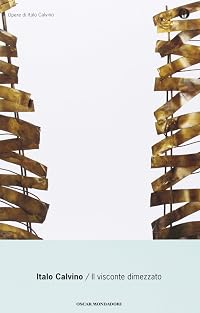
On This Page
Description
"In this fantastically macabre tale, the separate halves of a nobleman split in two by a cannonball go on to pursue their own independent adventures. In a battle against the Turks, Viscount Medardo of Terralba is bissected lengthwise by a cannonball. One half of him returns to his feudal estate and takes up a lavishly evil life. Soon the other, virtuous half appears. The two halves become rivals for the love of the same woman, fight a bloody duel, and achieve a miraculous resolution. Now show more available in an independent volume for the first time, this deliciously bizarre novella is Calvino at his most devious and winning"-- show lessTags
Recommendations









Member Recommendations
Member Reviews
El vizconde demediado es la primera incursión de Italo Calvino en lo fabuloso y lo fantástico. Cuenta Calvino la historia del vizconde de Terralba, quien fue partido en dos por un cañonazo de los turcos y cuyas dos mitades continuaron viviendo por separado. Símbolo de la condición humana dividida, medardo de Terralba sale a caminar por sus tierras. A su paso, las peras que colgaban de los árboles aparecen todas partidas por la mitad. "Cada encuentro de dos seres en el mundo es un desgarrarse", le dice la mitad mala del vizconde a la mujer de quien se ha enamorado. Pero ¿es seguro que se trate de la mitad mala? Esta magnífica fábula plantea la búsqueda del ser humano en su totalidad, quien suele estar hecho de algo más que de show more la suma de sus mitades. show less
“Às vezes a gente se imagina incompleto e é apenas jovem”.
Comecei minha leitura com medo de que a história fosse tremendamente engessada em estereótipos gratuitos, facilmente utilizados por escritores homens da primeira metade do século passado, mas o que percebi foi algo bem longe disso. A história se lê como um tipo de conto de fadas surreal, narrado em primeira pessoa por um personagem periférico à história central do Visconde (ou dos Viscondes).
Consigo imaginar uma edição em capa dura lindamente ilustrada para o livro, e é uma pena que não existe. A imagem do visconde partido, as paragens secas de Terralba, as engrenagens de Pedroprego e o duelo final dariam lindas ilustrações.
Visualizo a narrativa dividida em show more duas partes: a primeira, sobre como se deu o destino do visconde de ficar partido ao meio e os terrores que o lado direito (o "Mesquinho") impõe sobre os moradores de Terralba, e a segunda parte, que nos introduz ao lado esquerdo perdido, o Bom, e sua bondade insensata, que também custa a paz e a vida de vários moradores da região e culmina no duelo entre as partes do Visconde.
A história é surpreendentemente cativante: confesso que não esperava por isso. Não só os horrores e bondades de Medardo, o Visconde de Terralba, são intrigantes, mas seus personagens secundários também. Pamela, o menino narrador sem nome, Dr. Trelawney, Galateo, Sebastiana. Todos são cativantes e bem trabalhados. Existem vários temas abordados na história, mas nunca diretamente apregoados com discursos: a dualidade, os excessos do “bem” e do “mal”, o que compõe um ser humano, religiosidade, o preconceito de vários tipos, a caridade, o abandono, a negligência, a autonomia feminina... Enfim, vários temas costurados numa curta história quasi-faérica.
O livro é maravilhoso e uma pequena preciosidade. Mas, assim como o tema principal que aborda, termina igualmente feliz e triste. Ao chegar na última página, ainda virei para uma folha em branco esperando ler um pouco mais, um parágrafo que fosse, que consolasse de alguma forma a criança-narrador... Mas não foi o caso.
Altamente recomendado para todos aqueles que se interessam por contos-de-fadas, fantasia, dualidade e conflitos emocionais. show less
Uno de los mejores textos de Calvino (Del Calvino bueno) Esta fábula sobre un hombre partido en dos mitades es un texto divertidísimo y una sátira brillante. Con personaje que comete todas las maldades y sólo es superado por una criatura buena que resulta aún más insoportable por su moralismo y sus continuas intervenciones en la vida de sus vecinos.
El vizconde demediado
Italo Calvino
Publicado: 1952 | 85 páginas
Novela Fantástico Sátira
«El vizconde demediado» es la primera incursión de Italo Calvino en lo fabuloso y lo fantástico. Cuenta Calvino la historia del vizconde de Terralba, quien fue partido en dos por un cañonazo de los turcos y cuyas dos mitades continuaron viviendo por separado. Símbolo de la condición humana dividida, Medardo de Terralba sale a caminar por sus tierras. A su paso, las peras que colgaban de los árboles aparecen todas partidas por la mitad. Cada encuentro de dos seres en el mundo es un desgarrarse, le dice la mitad mala del vizconde a la mujer de quien se ha enamorado. Pero ¿es seguro que se trate de la mitad mala?
Esta magnífica fábula show more plantea la búsqueda del ser humano en su totalidad, quien suele estar hecho de algo más que de la suma de sus mitades. show less
Italo Calvino
Publicado: 1952 | 85 páginas
Novela Fantástico Sátira
«El vizconde demediado» es la primera incursión de Italo Calvino en lo fabuloso y lo fantástico. Cuenta Calvino la historia del vizconde de Terralba, quien fue partido en dos por un cañonazo de los turcos y cuyas dos mitades continuaron viviendo por separado. Símbolo de la condición humana dividida, Medardo de Terralba sale a caminar por sus tierras. A su paso, las peras que colgaban de los árboles aparecen todas partidas por la mitad. Cada encuentro de dos seres en el mundo es un desgarrarse, le dice la mitad mala del vizconde a la mujer de quien se ha enamorado. Pero ¿es seguro que se trate de la mitad mala?
Esta magnífica fábula show more plantea la búsqueda del ser humano en su totalidad, quien suele estar hecho de algo más que de la suma de sus mitades. show less
A modern Jekyll/Hyde fable about the good and evil within everyone but that has surprises on the theme, and is amusingly told. The Viscount goes off to the Crusades and, not having a clue what he's doing, promptly jumps in front of a cannon and gets his body split vertically in half. One side is found and restored to life, returns home, and proceeds to rule over his subjects cruelly and selfishly. A while later the other half of the Viscount also returns home, having been found under a pile of corpses and likewise restored to life; but this half is the Viscount's good half, performing good deeds and acting utterly selflessly in all circumstances.
As predictably intolerable as the bad half of the Viscount is, his good half is perhaps show more surprisingly found less than tolerable itself. For instance, farmers don't appreciate being told they should sell their crops for a smaller price because there's a famine and people are starving. Others don't appreciate their personal moral conduct being called into question. "Lucky that cannonball only split him in two. If it had done it in three, who knows what we'd have to put up with!", say the Viscount's put upon subjects. Turns out that goodness without a healthy dose of self-interest to temper it is difficult to accept, as a little reflection will prove the point of.
Also brought into the spotlight is the average person's accommodation of the world's evil, as everyone of course accommodates to some degree (what, you donate every cent you don't need for food and shelter to the poor? No?). This is done through the character of the Viscount's carpenter, Pietrochiodo, who takes pride in his work and is paid well, but the bad Viscount keeps having him create torture and execution devices. "Just forget the purpose for which they're used, and look at them as pieces of mechanism. You see how fine they are?", he says. He justifies himself: "he was beginning to doubt whether building good machines was not beyond human possibility when the only mechanism which could function really practically and exactly seemed to be gibbets and racks." His conscience does bother him sometimes: "Can it be in my soul, this evil which makes only my cruel machines work?" Nevertheless, "he went on inventing other tortures with great zeal and ability."
There are plenty of funny moments in the story. The bad Viscount decides to marry a peasant lass, and, only having badness in him, comes up with a unique way to approach her parents: "That night the haystack where the mother slept caught fire and the barrel where the father slept came apart. In the morning the two old folk were staring at the remains when the Viscount appeared. 'I must apologize for alarming you last night,' said he, 'but I didn't quite know how to approach the subject.'"
In the end, the two halves of the Viscount fight a Monty Python-esque duel, exactly reopen each other's vertical scars, and the doctor stitches them back together, restoring wholeness. Having experienced both halves of what humanity is capable of, unrestrained, he ruled wisely, but limitedly: "Some might expect that with the Viscount entire again a period of marvelous happiness would open; but obviously a whole Viscount is not enough to make all the world whole." show less
As predictably intolerable as the bad half of the Viscount is, his good half is perhaps show more surprisingly found less than tolerable itself. For instance, farmers don't appreciate being told they should sell their crops for a smaller price because there's a famine and people are starving. Others don't appreciate their personal moral conduct being called into question. "Lucky that cannonball only split him in two. If it had done it in three, who knows what we'd have to put up with!", say the Viscount's put upon subjects. Turns out that goodness without a healthy dose of self-interest to temper it is difficult to accept, as a little reflection will prove the point of.
Also brought into the spotlight is the average person's accommodation of the world's evil, as everyone of course accommodates to some degree (what, you donate every cent you don't need for food and shelter to the poor? No?). This is done through the character of the Viscount's carpenter, Pietrochiodo, who takes pride in his work and is paid well, but the bad Viscount keeps having him create torture and execution devices. "Just forget the purpose for which they're used, and look at them as pieces of mechanism. You see how fine they are?", he says. He justifies himself: "he was beginning to doubt whether building good machines was not beyond human possibility when the only mechanism which could function really practically and exactly seemed to be gibbets and racks." His conscience does bother him sometimes: "Can it be in my soul, this evil which makes only my cruel machines work?" Nevertheless, "he went on inventing other tortures with great zeal and ability."
There are plenty of funny moments in the story. The bad Viscount decides to marry a peasant lass, and, only having badness in him, comes up with a unique way to approach her parents: "That night the haystack where the mother slept caught fire and the barrel where the father slept came apart. In the morning the two old folk were staring at the remains when the Viscount appeared. 'I must apologize for alarming you last night,' said he, 'but I didn't quite know how to approach the subject.'"
In the end, the two halves of the Viscount fight a Monty Python-esque duel, exactly reopen each other's vertical scars, and the doctor stitches them back together, restoring wholeness. Having experienced both halves of what humanity is capable of, unrestrained, he ruled wisely, but limitedly: "Some might expect that with the Viscount entire again a period of marvelous happiness would open; but obviously a whole Viscount is not enough to make all the world whole." show less
Au cours d'une bataille contre les Turcs, Médard de Terralba, chevalier génois, est coupé en deux par un boulet de canon. Ses deux moitiés continuent de vivre séparément, l'une faisant le bien, l'autre mutilant tout sur son passage. Ce conte est pétri d'humour et de cynisme. Le monde imaginaire de Calvino où des doigts coupés indiquent la route à suivre, où les lépreux vivent heureux a pourtant toutes les. couleurs du réel. Et le Vicomte pourfendu prouve avec brio que la vertu comme la perversité absolues sont également inhumaines.
A short fairy-tale-like story about a nobleman who comes back from the war with the Turks horribly disfigured; his entire left-hand side has been shot to pieces (or has it?) and the one-eyed, one-legged, one-armed, half-gutted, half-brained (but not half-witted) nobleman seems to have gone through a personality change; it soon turns out that he's, well, evil. He treats his subjects horribly, and he's also become obsessed with cutting things in half.
Of course, after a while it turns out his left-hand-side wasn't obliterated at all, but only took longer to get back from the war since it had to stop and help people every step of the way. Yes, his other side is so completely good it's sickening, and even though his subjects are happy at show more first to have a counter-agent to the right-hand viscount, it soon turns out that the left-hand viscount is barely any use at all, since he absolutely refuses to do anything about the world he lives in or even judge his evil half.
The Cloven Viscount is fun, a light read, playing around with the ideas of good and evil but ultimately not really saying much that hasn't been said in just about every fairytale ever written. I did find some details interesting - for instance, that the first sign that the first half-viscount is evil comes in his completely unforgiving view of justice and his need to separate everything into good and evil halves.
It's a likable enough story, it doesn't take itself too seriously and you'll breeze through it in two hours, but it's by far the most lightweight Calvino I've read. show less
Of course, after a while it turns out his left-hand-side wasn't obliterated at all, but only took longer to get back from the war since it had to stop and help people every step of the way. Yes, his other side is so completely good it's sickening, and even though his subjects are happy at show more first to have a counter-agent to the right-hand viscount, it soon turns out that the left-hand viscount is barely any use at all, since he absolutely refuses to do anything about the world he lives in or even judge his evil half.
The Cloven Viscount is fun, a light read, playing around with the ideas of good and evil but ultimately not really saying much that hasn't been said in just about every fairytale ever written. I did find some details interesting - for instance, that the first sign that the first half-viscount is evil comes in his completely unforgiving view of justice and his need to separate everything into good and evil halves.
It's a likable enough story, it doesn't take itself too seriously and you'll breeze through it in two hours, but it's by far the most lightweight Calvino I've read. show less
Members
- Recently Added By
Lists

Italian Literature
558 works; 43 members

Favourite Books
1,820 works; 311 members

magic realism novels
44 works; 11 members

Lithub: 50 Great Classic Novels Under 200 pages
50 works; 10 members

Books Read in 2016
4,666 works; 197 members

Speculative Fiction from around the World
610 works; 18 members

2024. Nuestro año literario (Faustino Sánchez)
20 works; 1 member

Lo mejor leído en 2025 - Leídos por primera vez: Excelentes (R. D.)
21 works; 1 member
Author Information

403+ Works 70,452 Members
Italo Calvino 1923-1984 Novelist and short story writer Italo Calvino was born in Cuba on October 15, 1923, and grew up in Italy, graduating from the University of Turin in 1947. He is remembered for his distinctive style of fables. Much of his first work was political, including Il Sentiero dei Nidi di Ragno (The Path of the Nest Spiders, 1947), show more considered one of the main novels of neorealism. In the 1950s, Calvino began to explore fantasy and myth as extensions of realism. Il Visconte Dimezzato (The Cloven Knight, 1952), concerns a knight split in two in combat who continues to live on as two separates, one good and one bad, deprived of the link which made them a moral whole. In Il Barone Rampante (Baron in the Trees, 1957), a boy takes to the trees to avoid eating snail soup and lives an entire, fulfilled life without ever coming back down. Calvino was awarded an honorary degree from Mount Holyoke College in 1984 and died in 1985, following a cerebral hemorrhage. At the time of his death, he was the most translated contemporary Italian writer and a contender for the Nobel Prize for Literature. (Bowker Author Biography) show less
Some Editions
Awards and Honors
Series

Belongs to Publisher Series
De twintigste eeuw (73)
Keltainen kirjasto (96)
Work Relationships
Is contained in
Has as a reference guide/companion
Common Knowledge
- Canonical title
- The Cloven Viscount
- Original title
- Il visconte dimezzato
- Original publication date
- 1952
- People/Characters*
- Medardo di Terralba; Pamela; Sebastiana; Dr. Trelawney; Ezechiele; Pietrochiodo
- Important places*
- Liguria, Italia; Italia
- First words*
- C'era una guerra contro i turchi.
- Last words*
- (Click to show. Warning: May contain spoilers.)Ma già le navi stavano scomparendo all'orizzonte e io rimasi qui, in questo nostro mondo pieno di responsabilità e di fuochi fatui.
- Original language
- Italian
*Some information comes from Common Knowledge in other languages. Click "Edit" for more information.
Classifications
- Genres
- Fiction and Literature, General Fiction, Fantasy
- DDC/MDS
- 853.914 — Literature & rhetoric Italian, Romanian & related literatures Italian fiction 1900- 20th Century 1945-1999
- LCC
- PQ4809 .A45 .V5 — Language and Literature French, Italian, Spanish and Portuguese literatures Italian literature Individual authors, 1900-1960
- BISAC
Statistics
- Members
- 1,693
- Popularity
- 13,221
- Reviews
- 34
- Rating
- (3.82)
- Languages
- 21 — Basque, Catalan, Danish, Dutch, English, Finnish, French, German, Galician, Hungarian, Italian, Japanese, Farsi/Persian, Polish, Portuguese, Romanian, Russian, Serbian, Spanish, Swedish, Turkish
- Media
- Paper, Audiobook, Ebook
- ISBNs
- 64
- UPCs
- 1
- ASINs
- 31