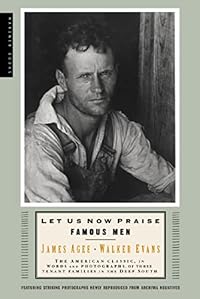
Let Us Now Praise Famous Men
by James Agee, Walker Evans (Photographer)
On This Page
Description
In the summer of 1936, James Agee and Walker Evans set out on assignment for Fortune magazine to explore the daily lives of sharecroppers in the South. Their journey would prove an extraordinary collaboration and a watershed literary event when, in 1941, Let Us Now Praise Famous Men was first published to enormous critical acclaim. This unsparing record of place, of the people who shaped the land and the rhythm of their lives, is intensely moving and unrelentingly honest, and show more today-recognized by the New York Public Library as one of the most influential books of the twentieth century-it stands as a poetic tract of its time. With an elegant new design as well as a sixty-four-page photographic prologue featuring archival reproductions of Evans's classic images, this historic edition offers readers a window into a remarkable slice of American history. show lessTags
Recommendations











Member Recommendations

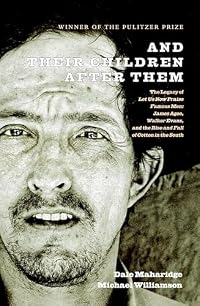
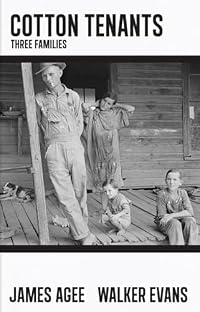
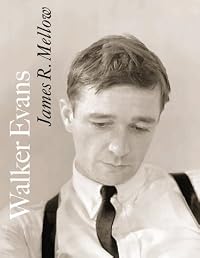
gust Allebei boeken ontstaan uit de samenwerking tussen een schrijver-journalist en een fotograaf.
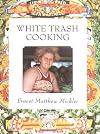
DromJohn I just attended a John T. Edge lecture where he read his Oxford American article "LET US NOW PRAISE FABULOUS COOKS: From the Florida swamps, a cookbook that turned a slur into a badge of honor" which compared the two as two loving but shocking books about southern culture that reached gift book status which then soften the social commentary. The photographs in White Trash Cooking by William Christenberry may be as important as those by Walker Evans in Let Us Now Praise Famous Men..
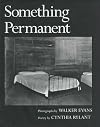
hbsweet Poetry inspired by Walker Evans photos.
Member Reviews
Honestly? One of the greatest, most poetic & rage-filled books I've ever read. It grabbed me by the throat from the beginning and rarely let go.
I want to see ALL Walker Evans' photographs.
I suppose there are aspects of this that are ... problematic by today's standards. I wound up not caring, because ... well ...
... god DAMN. This BOOK. The main problem with a book like this is that it makes most other books look like piffle.
I want to see ALL Walker Evans' photographs.
I suppose there are aspects of this that are ... problematic by today's standards. I wound up not caring, because ... well ...
... god DAMN. This BOOK. The main problem with a book like this is that it makes most other books look like piffle.
This book was as difficult to rate as it was to read, which is to say, quite difficult.
In an effort to deepen my sense of place, I've been trying to read books that are set in Alabama and/or written by Alabama authors. I'd heard this book was a milestone in journalism, that it broke the rules and is still regarded as a dazzling opus for its braiding together of detailed factual reporting, complex prose narrative, and poetic inner reflection. And all that’s true. James Agee, who often places himself as a character in his descriptions of three white Alabama sharecropping families during the Dust Bowl, captures simultaneous feelings of guilt, disgust, compassion, and awe toward impoverished people and their lifestyles, feelings that show more weren’t being publically articulated at the time. Now, any magazine reporter with a byline has license to wax philosophical about the subject of an assignment; but in 1936, Agee was an anomaly. Walker Evans’ photographs further elucidate the baffling dichotomy of toughness and tenderness in sharecropping families.
All of that should earn the book four or five stars.
But it took a blessed eternity to read. And a lot of that reading was slogging through. As important as Let Us Now Praise Famous Men is (and as much as it expanded my knowledge base and deepened my sense of Alabama), on the whole it’s not a super enjoyable read. (At least not for a library-book borrower like me who needs to start and finish a book in one go, not dabble in it a bit at a time.) Ergo, three stars. show less
In an effort to deepen my sense of place, I've been trying to read books that are set in Alabama and/or written by Alabama authors. I'd heard this book was a milestone in journalism, that it broke the rules and is still regarded as a dazzling opus for its braiding together of detailed factual reporting, complex prose narrative, and poetic inner reflection. And all that’s true. James Agee, who often places himself as a character in his descriptions of three white Alabama sharecropping families during the Dust Bowl, captures simultaneous feelings of guilt, disgust, compassion, and awe toward impoverished people and their lifestyles, feelings that show more weren’t being publically articulated at the time. Now, any magazine reporter with a byline has license to wax philosophical about the subject of an assignment; but in 1936, Agee was an anomaly. Walker Evans’ photographs further elucidate the baffling dichotomy of toughness and tenderness in sharecropping families.
All of that should earn the book four or five stars.
But it took a blessed eternity to read. And a lot of that reading was slogging through. As important as Let Us Now Praise Famous Men is (and as much as it expanded my knowledge base and deepened my sense of Alabama), on the whole it’s not a super enjoyable read. (At least not for a library-book borrower like me who needs to start and finish a book in one go, not dabble in it a bit at a time.) Ergo, three stars. show less
This is a story so intense and devoted to its subject, it is almost holy writ. It is a sermon preached by the prophet Jeremiah, who preached while weeping in the streets of Jerusalem. The style is florid and ornate, not a stream but a torrent of consciousness. Some sentences are pages long musings on philosophy and writing and life which might make Faulkner smile with approval.
It is an attempt to accurately portray, in words and pictures, the lives of Tenant Farmers in the South in the worst of the Great Depression. He has an obsessive streak for description, he grabs your hand and wants you to feel everything, to get the smell ingrained in you, to look in their tired eyes and see their quiet dignity.
Evans has an equally astonishing show more photoset in the very beginning, but Agee's descriptions make them LIVE, and the descriptions and life and humanity within them unfold.
Agee scorns the label of their work as Art. Very well then, let us call it Life.
"Let us now praise famous men, and our fathers that begat us. The Lord hath wrought great glory by them through his great power from the beginning.
Such as did bear rule in their kingdoms, men renowned for their power, giving counsel by their understanding, and declaring prophecies:
Leaders of the people by their counsels, and by their knowledge of learning meet for the people, wise and eloquent are their instructions:
Such as found out musical tunes, and recited verses in writing:
Rich men furnished with ability, living peaceably in their habitations:
All these were honoured in their generations, and were the glory of their times.
There be of them, that have left a name behind them, that their praises might be reported."
"And some there be, which have no memorial; who are perished, as though they had never been; and are become as though they had never been born; and their children after them.
But these were merciful men, whose righteousness hath not been forgotten.
With their seed shall continually remain a good inheritance, and their children are within the covenant.
Their seed standeth fast, and their children for their sakes.
Their seed shall remain for ever, and their glory shall not be blotted out.
Their bodies are buried in peace; but their name liveth for evermore.
The people will tell of their wisdom, and the congregation will shew forth their praise."
Sirach (Apocrypha) 44: 1-15 show less
It is an attempt to accurately portray, in words and pictures, the lives of Tenant Farmers in the South in the worst of the Great Depression. He has an obsessive streak for description, he grabs your hand and wants you to feel everything, to get the smell ingrained in you, to look in their tired eyes and see their quiet dignity.
Evans has an equally astonishing show more photoset in the very beginning, but Agee's descriptions make them LIVE, and the descriptions and life and humanity within them unfold.
Agee scorns the label of their work as Art. Very well then, let us call it Life.
"Let us now praise famous men, and our fathers that begat us. The Lord hath wrought great glory by them through his great power from the beginning.
Such as did bear rule in their kingdoms, men renowned for their power, giving counsel by their understanding, and declaring prophecies:
Leaders of the people by their counsels, and by their knowledge of learning meet for the people, wise and eloquent are their instructions:
Such as found out musical tunes, and recited verses in writing:
Rich men furnished with ability, living peaceably in their habitations:
All these were honoured in their generations, and were the glory of their times.
There be of them, that have left a name behind them, that their praises might be reported."
"And some there be, which have no memorial; who are perished, as though they had never been; and are become as though they had never been born; and their children after them.
But these were merciful men, whose righteousness hath not been forgotten.
With their seed shall continually remain a good inheritance, and their children are within the covenant.
Their seed standeth fast, and their children for their sakes.
Their seed shall remain for ever, and their glory shall not be blotted out.
Their bodies are buried in peace; but their name liveth for evermore.
The people will tell of their wisdom, and the congregation will shew forth their praise."
Sirach (Apocrypha) 44: 1-15 show less
James Agee is a famous American novelist. This book however does not belong to his creative oeuvre. Instead, it is a sociological description of abject poverty in the United States during the 1930s in the aftermath of The Great Depression. With photographer Walker Evans Agee visited and documented the lives of poor Americans. The book is the ultimate example of observation and description, providing meticulously detailed description of every aspect of these people's lives. Perhaps the art of this type of writing has been made superfluous as photography and film seem to capture an even more lively impression, although film can barely convey the description of the smell of stale sweat. I assume few people will take the time to read this show more volume. The language is at times poetic. Oddly interspersed with seemingly irrelevant parts, the book is definitely not just a sociological study, but should be read as a type of artistic prose. show less
I did appreciate the parts describing the families, the horrible condition of their poverty, but I've never been a reader to lean towards the poetical. There are chapters where Agee mixes prose and poetry.
The writing has a stream of consciousness feel to it that is sometimes engaging, sometimes tedious. The photographs are beautiful, and Agee portrays the lives of these tenant families with great sensitivity.
I can't honestly give this book a rating, or even much of a review. I found it irritatingly pompous and condescending -- to the readers, that is. Other readers may find it interesting, though.
Members
- Recently Added By
Lists

New York Public Library's Books of the Century - All
170 works; 14 members

Non-Fiction Worth Reading
1,015 works; 254 members

Harold Bloom - The Western Canon: D. The Chaotic Age
833 works; 24 members

Mustich's 1000 Books to Read Before You Die: A Life Changing List
1,001 works; 18 members

Recommended Reading : 600 Classics Reviewed, Editors of Salem Press, 2015
634 works; 6 members

Writers In Public Domain 2026
90 works; 1 member
Author Information

42+ Works 7,922 Members
Born in Knoxville, Tennessee, on November 27, 1909 and educated at Harvard, James Agee crowded versatile literary activity into his short and troubled life. In addition to two novels, he wrote short stories, essays, poetry, and screenplays; he worked professionally as a journalist and film critic. Appropriately, he is best remembered for a work show more that combines several genres and literary approaches. Let Us Now Praise Famous Men, a documentary report on sharecropper life accompanied by vividly realistic photographs by Walker Evans, has been called "a great Moby Dick of a book" (New York Times Book Review). It may be considered an important precursor of the so-called nonfiction novel that was to gain prominence during the 1960s. The Morning Watch (1954), a novel in the tradition of portraits of artists-to-be, and A Death in the Family, a moving account of domestic life based on the loss of Agee's father belong to more conventional types of fiction. The 1960 dramatization of All the Way Home by Tad Mosel, won a Pulitizer Prize and the New York Drama Critics Circle Award; it was also cited by Life as the "Best American Play of the Season." Agee's work for the screen included his scripts for The African Queen and The Night of the Hunter. Agee on Film (1958-60) consists of a gathering of reviews and comments as well as five scripts. Prior to Laurence Bergreen's well-received 1984 biography of Agee, the principal source of information about his life was Letters of James Agee to Father Flye, a collection of seventy letters written by Agee to his instructor at St. Andrew's School and trusted friend throughout his life. The letters show Agee most often in a reflective, self-condemning mood. The final letters, written from the hospital where he was battling daily heart attacks, are touching, as are his sad reflections on the work he yet wanted to do. Agee died in New York of a heart attack on May 16, 1955. He was posthumously awarded a Pulitzer Prize in 1957 for A Death in the Family. (Bowker Author Biography) show less

Some Editions
Awards and Honors
Notable Lists
Series
Belongs to Publisher Series
Work Relationships
Is contained in
Is abridged in
Common Knowledge
- Canonical title
- Let Us Now Praise Famous Men
- Original title
- Let us now praise famous men
- Original publication date
- 1941
- Important places
- Hale County, Alabama, USA
- Epigraph
- Poor naked wretches, whereso'er you are,
That bide the pelting of this pitiless storm,
How shall your houseless heads and unfed sides,
Your loop'd and window'd raggedness, defend you
From seasons such as these? O,... (show all) I have ta'en
Too little care of this! Take physic, pomp;
Expose thyself to feel what wretches feel,
That thou mayst shake the superflux to them,
And show the heavens more just.
Workers of the world, unite and fight. You have nothing to lose but your chains, and a world to win. - Dedication
- To those of whom the record is made.
In gratefulness and in love.
J.A.
W.E. - First words
- The house and all that was in it had now descended deep beneath the gradual spiral it had sunk through; it lay formal under the order of entire silence.
- Last words
- (Click to show. Warning: May contain spoilers.)Our talk drained rather quickly off into silence and we lay thinking, analyzing, remembering, in the human and artist's sense praying, chiefly over matters of the present and of that immediate past which was a part of the present; and each of these matters had in that time the extreme clearness, and edge, and honor, which I shall now try to give you; until at length we too fell asleep.
- Publisher's editor*
- Malaurie, Jean (Directeur de collection)
- Original language
- English
- Disambiguation notice*
- AGEE, JAMES & EVANS, WALKER, Louons maintenant les grands hommes. Trois familles de
métayers en 1936 en Alabama,
Traduit de l'anglais par Jean Queval, Postface de Walker Evans (1960), Postface de Bruce Jackson (2012),... (show all) Plon, 1972.
Edition originale en anglais en 1941, Let Us Now Praise Famous Men, Hougton Mifflin: Boston.
*Some information comes from Common Knowledge in other languages. Click "Edit" for more information.
Classifications
- Genres
- Nonfiction, History, General Nonfiction, Art & Design
- DDC/MDS
- 976.1 — History & geography History of North America South central United States Alabama
- LCC
- HN79 .A4 .A535 — Social sciences Social history and conditions. Social problems. Social reform Social history and conditions. Social problems. By region or country
- BISAC
Statistics
- Members
- 2,388
- Popularity
- 8,162
- Reviews
- 22
- Rating
- (3.98)
- Languages
- 7 — Dutch, English, French, German, Italian, Portuguese, Spanish
- Media
- Paper, Audiobook, Ebook
- ISBNs
- 40
- UPCs
- 3
- ASINs
- 39