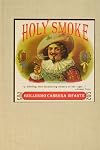
Holy Smoke
by Guillermo Cabrera Infante
On This Page
Description
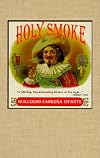
The story of the cigar; from those early beginnings in 1492 to the sophisticated Cohibas of today.Tags
Recommendations






































Member Reviews
What’s wrong with this picture? Certainly, nothing I can see, except perhaps she has not read Holy Smoke by Guillermo Cabrera Infante, a 300-page punning wordplay, a sidesplitting, outrageous history and celebration of the cigar. And here’s a puff from the first pages where, on the island that would become known as Cuba, a scout sent out by Columbus to scout out gold reports to the admirable Admiral on what he did discover:
“De Xeres came back not with nuggets of gold but with some astonishing piece of news: he had found the land of the chimney-men. The what? Men who think they are chimneys: men who smoke. Columbus was disappointed in de Xeres. The man had not only been unable to find any gold, as Marco Polo did, but he came back show more with this weird narrative. A likely story! What should he tell King Ferdinand? ‘Sire, my scout became a boy scout.’ Too much sun too soon. Or did he mean not chimney-men but chimeras? Too much Amontillado, that’s what it was! But de Xeres explained soberly that these savages he saw really smoked like chimneys. Everywhere they went they carried about a brown tube burning on one end. They stuck the other end in their mouths for a while and seemed to drink from the tube. After they did so they smoked from mouth and nostrils. And they seemed to enjoy the experience!”
From the dearth of book reviews posted here, it appears many other readers, similar to the above cigar-smoking lass, have also overlooked this smokin’ Cabrara Infante literary romp which, unlike his other classics such as Infante’s Inferno and Three Trapped Tigers, is not translated from Spanish into English but actually written in English.
As part of the cigar’s illustrious history, we read, “Some twenty years ago the idea (come from England, no doubt) that cigars, like Loos’s blondes, were for gentlemen only, was dispelled by the scraggly mien of Fidel Castro and Che Guevara’s handsome head, both clad in US Army surplus fatigues, both enveloped in smoking beards and both sporting foul, fat cigars.”
I’ll let Cabrera Infante end with his playing with language as he tells of Cocteau Holy Smoke: “Jean Cocteau is so opinionated in ‘Opium’ that his book should better be called ‘Opinions.’. He writes, badly, of old saws and he makes them sound like seesaws. A smoker who smoked twelve pipes a day all his life would be protected not only from the flu, colds and anginas but also in less danger than a man who drank a glass of cognac and four Havanas.’ Cocteau even has some dope not on dope but on cigars: ‘Tobacco is almost harmless. After combustion nicotine disappears. Usually one takes for nicotine (a white salt) that sort of yellow paste produced by modifying by fire all combustible matters. You’ll need four or five fat Havanas a day to provoke in you angina pectoris. Most of what is said on the harm produced by tobacco are spasms with no real danger.’ A white Cococteau projected on a smoke screen.”
You don't have to be a cigar smoker (I'm not) to enjoy this smokin' classic. show less
What’s wrong with this picture? Certainly, nothing I can see, except perhaps she has not read Holy Smoke by Guillermo Cabrera Infante, a 300-page punning wordplay, a sidesplitting, outrageous history and celebration of the cigar. And here’s a puff from the first pages where, on the island that would become known as Cuba, a scout sent out by Columbus to scout out gold reports to the admirable Admiral on what he did discover:
“De Xeres came back not with nuggets of gold but with some astonishing piece of news: he had found the land of the chimney-men. The what? Men who think they are chimneys: men who smoke. Columbus was disappointed in de Xeres. The man had not only been unable to find any gold, as Marco Polo did, but he came back show more with this weird narrative. A likely story! What should he tell King Ferdinand? ‘Sire, my scout became a boy scout.’ Too much sun too soon. Or did he mean not chimney-men but chimeras? Too much Amontillado, that’s what it was! But de Xeres explained soberly that these savages he saw really smoked like chimneys. Everywhere they went they carried about a brown tube burning on one end. They stuck the other end in their mouths for a while and seemed to drink from the tube. After they did so they smoked from mouth and nostrils. And they seemed to enjoy the experience!”
From the dearth of book reviews posted here, it appears many other readers, similar to the above cigar-smoking lass, have also overlooked this smokin’ Cabrara Infante literary romp which, unlike his other classics such as Infante’s Inferno and Three Trapped Tigers, is not translated from Spanish into English but actually written in English.
As part of the cigar’s illustrious history, we read, “Some twenty years ago the idea (come from England, no doubt) that cigars, like Loos’s blondes, were for gentlemen only, was dispelled by the scraggly mien of Fidel Castro and Che Guevara’s handsome head, both clad in US Army surplus fatigues, both enveloped in smoking beards and both sporting foul, fat cigars.”
I’ll let Cabrera Infante end with his playing with language as he tells of Cocteau Holy Smoke: “Jean Cocteau is so opinionated in ‘Opium’ that his book should better be called ‘Opinions.’. He writes, badly, of old saws and he makes them sound like seesaws. A smoker who smoked twelve pipes a day all his life would be protected not only from the flu, colds and anginas but also in less danger than a man who drank a glass of cognac and four Havanas.’ Cocteau even has some dope not on dope but on cigars: ‘Tobacco is almost harmless. After combustion nicotine disappears. Usually one takes for nicotine (a white salt) that sort of yellow paste produced by modifying by fire all combustible matters. You’ll need four or five fat Havanas a day to provoke in you angina pectoris. Most of what is said on the harm produced by tobacco are spasms with no real danger.’ A white Cococteau projected on a smoke screen.”
You don't have to be a cigar smoker (I'm not) to enjoy this smokin' classic. show less
Ratings
Members
- Recently Added By
Author Information

56+ Works 2,281 Members
Classifications
Statistics
- Members
- 144
- Popularity
- 224,854
- Reviews
- 2
- Rating
- (4.00)
- Languages
- 5 — English, French, German, Portuguese, Spanish
- Media
- Paper, Ebook
- ISBNs
- 16
- ASINs
- 4