
Egon Caesar Conte Corti (1886–1953)
Author of The Rise of the House of Rothschild
About the Author
Image credit: Georg Fayer / © ÖNB/Wien
Series
Works by Egon Caesar Conte Corti
Unter Zaren und gekrönten Frauen. Schicksal und Tragik europäischer Kaiserreiche anhand von Briefen, Tagebüchern und (1943) 3 copies
Vom Kind zum Kaiser: Kindheit und erste Jugend Kaiser Franz Josephs I. und seiner Geschwister (1959) 3 copies, 1 review
Mensch und Herrscher; Wege und Schicksale Kaiser Franz Josephs I. zwischen Thronbesteigung und Berliner Kongress (1952) 2 copies
Maximiliano y Carlota 2 copies
Chinesisches Bilderbuch 2 copies
Die entdeckung Amerikas 1 copy
Pompeii en Herculaneum 1 copy
A history of smoking 1 copy
Nelsons Kampf um Lady Hamilton: Die Geschichte einer einzigartigen Liebe (Knaur Biographie) (German Edition) (1983) 1 copy
Tagged
Common Knowledge
- Canonical name
- Corti, Egon Caesar Conte
- Other names
- Corti, Egon Caesar
- Birthdate
- 1886-04-02
- Date of death
- 1953-09-17
- Gender
- male
- Occupations
- historian
author
army officer - Short biography
- Corti came from a Lombard noble family. He wrote biographies on the history of the 19th Century and was in the interwar period as folkish author.
- Nationality
- Austria-Hungary
Austria - Birthplace
- Zagreb, Croatia (then Agram, Austria-Hungary)
- Places of residence
- Kärnten, Austria
- Place of death
- Klagenfurt, Austria
- Map Location
- Austria
Members
Reviews

"Firmly resolved to live her own life and follow the desires of her own mind and heart"
By sally tarbox on 8 January 2018
Format: Paperback
First published in 1935, this is a very readable, fact-based account of Empress Elizabeth of Austria - something of a Princess Diana figure.
After a free and easy childhood near Munich (she was a member of the Wittelsbach family), Elizabeth was just sixteen when she married Franz Josef of Austria. Life suddenly changed dramatically as a member of the show more Viennese court. Her husband was loving but totally caught up in his duties; her mother-in-law overbearing and critical, assuming total control of Elizabeth's first two children.
The Empress seems to have retreated into herself, avoiding as many official duties as possible and absorbing herself totally in her interests: becoming fluent in Hungarian (which pleased one half of the - far from cohesive- Austro-Hungarian empire, and irritated the other); fixating on marathon exercise and diet regimes; travelling compulsively. She would sometimes go beyond the call of duty, visiting lunatic asylums and hospitals whose patients were highly contagious; while she was loved for it, there was also huge criticism for her absenting herself so much.
She had - and maintained control over- a third child; she seems to have devoted all her maternal feelings to this one. But she had tragedies too - from the strain of madness in her family (King Ludwig of Bavaria) to the Mayerling suicide/ murder of her son, Rudolf.
In later years she longed for an end to life; mostly travelling (her friendly relationship with her husband based mainly around letters they exchanged); her youngest child married, health problems. One feels that her eventual demise (stabbed by an anarchist) was almost a blessed release.
I felt the author left a lot of gaps; he gives detailed descriptions of her hunting expeditions and journeys round Europe, but I would have been interested to learn more of her distant relationship with elder daughter Gisela; to have had some understanding of Rudolf's motivation for Mayerling (while his suicide is acknowledged, little is said to explain his dead mistress beside him- presumably murder.) Googling Elizabeth brings up various issues which are not raised in the book - media allegations which, though likely spurious, would have helped the reader understand her antipathy to the wider world.
But an intersting if slightly dated biography.
With some b/w plates. show less
By sally tarbox on 8 January 2018
Format: Paperback
First published in 1935, this is a very readable, fact-based account of Empress Elizabeth of Austria - something of a Princess Diana figure.
After a free and easy childhood near Munich (she was a member of the Wittelsbach family), Elizabeth was just sixteen when she married Franz Josef of Austria. Life suddenly changed dramatically as a member of the show more Viennese court. Her husband was loving but totally caught up in his duties; her mother-in-law overbearing and critical, assuming total control of Elizabeth's first two children.
The Empress seems to have retreated into herself, avoiding as many official duties as possible and absorbing herself totally in her interests: becoming fluent in Hungarian (which pleased one half of the - far from cohesive- Austro-Hungarian empire, and irritated the other); fixating on marathon exercise and diet regimes; travelling compulsively. She would sometimes go beyond the call of duty, visiting lunatic asylums and hospitals whose patients were highly contagious; while she was loved for it, there was also huge criticism for her absenting herself so much.
She had - and maintained control over- a third child; she seems to have devoted all her maternal feelings to this one. But she had tragedies too - from the strain of madness in her family (King Ludwig of Bavaria) to the Mayerling suicide/ murder of her son, Rudolf.
In later years she longed for an end to life; mostly travelling (her friendly relationship with her husband based mainly around letters they exchanged); her youngest child married, health problems. One feels that her eventual demise (stabbed by an anarchist) was almost a blessed release.
I felt the author left a lot of gaps; he gives detailed descriptions of her hunting expeditions and journeys round Europe, but I would have been interested to learn more of her distant relationship with elder daughter Gisela; to have had some understanding of Rudolf's motivation for Mayerling (while his suicide is acknowledged, little is said to explain his dead mistress beside him- presumably murder.) Googling Elizabeth brings up various issues which are not raised in the book - media allegations which, though likely spurious, would have helped the reader understand her antipathy to the wider world.
But an intersting if slightly dated biography.
With some b/w plates. show less
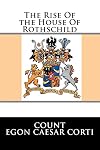
"The Rise of the House of Rothschild" is part of a 2 book set - the later volume being "The Reign of the House of Rothschild". Both volumes were translated from German and printed for the first time in the USA in 1928; the first and only (at that time) unbiased thoroughly researched publication that is "free from political considerations and influence by racial, national, and religious predilections or antipathies". Count Corti was a reputable biographer and historian and researched the show more Rothschild's for 3 years using hundreds of references.
Volume I covers the years 1730 through 1830.
Volume II picks up the continued saga covering the years 1830 through 1903.
Meyer Amschel Rothschild was a poor common uneducated Orthodox Jew living in the German ghetto under harsh conditions, with very few rights and a very bleak future. This book tells the incredible journey he made, creating a financial dynasty that came to be known as the richest family in Europe. With his 5 sons, each settling in different countries (Germany, Austria, France, England, and Italy), they dominated the financial arena "pulling the strings on which kings, generals, and whole nations danced."
The second and third generations of the Rothschild's used their unified power to diplomatically avert wars, loyally assist their respective countries to prosper (regardless of who was in power), negotiate emancipation of the Jews, and amass unimaginable amounts of wealth. This is not a story about the social life of the family. The women and young children are barely mentioned. This is a documentary about business, politics, power, money, and cunning ambition.
There is a lot of controversial propaganda circulating on the internet and in various publications about how the Rothschild's became successful. Some people tend to think they could not have acquired so much power without belonging to an evil secret society. I suppose the Rothschild's could have had many family and business secrets that were never exposed to the general public, but after reading these 2 books which reveal the Rothschild's intense dedication to hard work, their genius for making good business decisions, their relentless persistence in achieving set goals, their self-sacrifice and unwavering loyalty to the family, and their respective countries, I wonder if a lot of the newer theories about the Rothschild's are based on twisted facts and fabricated lies; hateful, sadistic, anti-Semetic trash....tabloid journalism.
What I love about these 2 books is the chronological documentation of the facts; financial transactions, loans, contracts, the logical explanation of how and why critical decisions were made including letters, quotes, and documented conversations. I am now planning to read a more recent 2 volume publication written by Naill Ferguson, a noted Oxford economical historian, which are considered to be major works and covers the years 1849 through 1999. show less
Volume I covers the years 1730 through 1830.
Volume II picks up the continued saga covering the years 1830 through 1903.
Meyer Amschel Rothschild was a poor common uneducated Orthodox Jew living in the German ghetto under harsh conditions, with very few rights and a very bleak future. This book tells the incredible journey he made, creating a financial dynasty that came to be known as the richest family in Europe. With his 5 sons, each settling in different countries (Germany, Austria, France, England, and Italy), they dominated the financial arena "pulling the strings on which kings, generals, and whole nations danced."
The second and third generations of the Rothschild's used their unified power to diplomatically avert wars, loyally assist their respective countries to prosper (regardless of who was in power), negotiate emancipation of the Jews, and amass unimaginable amounts of wealth. This is not a story about the social life of the family. The women and young children are barely mentioned. This is a documentary about business, politics, power, money, and cunning ambition.
There is a lot of controversial propaganda circulating on the internet and in various publications about how the Rothschild's became successful. Some people tend to think they could not have acquired so much power without belonging to an evil secret society. I suppose the Rothschild's could have had many family and business secrets that were never exposed to the general public, but after reading these 2 books which reveal the Rothschild's intense dedication to hard work, their genius for making good business decisions, their relentless persistence in achieving set goals, their self-sacrifice and unwavering loyalty to the family, and their respective countries, I wonder if a lot of the newer theories about the Rothschild's are based on twisted facts and fabricated lies; hateful, sadistic, anti-Semetic trash....tabloid journalism.
What I love about these 2 books is the chronological documentation of the facts; financial transactions, loans, contracts, the logical explanation of how and why critical decisions were made including letters, quotes, and documented conversations. I am now planning to read a more recent 2 volume publication written by Naill Ferguson, a noted Oxford economical historian, which are considered to be major works and covers the years 1849 through 1999. show less

"The Reign of the House of Rothschild" is part of a 2 book set - the first volume being "The Rise of the House of Rothschild". Both volumes were translated from German and printed for the first time in the USA in 1928; the first and only (at that time) unbiased thoroughly researched publication that is "free from political considerations and influence by racial, national, and religious predilections or antipathies". Count Corti was a reputable biographer and historian and researched the show more Rothschild's for 3 years using hundreds of references.
Volume I covers the years 1730 through 1830.
Volume II picks up the continued saga covering the years 1830 through 1903.
Meyer Amschel Rothschild was a poor common uneducated Orthodox Jew living in the German ghetto under harsh conditions, with very few rights and a very bleak future. This book tells the incredible journey he made, creating a financial dynasty that came to be known as the richest family in Europe. With his 5 sons, each cleverly settling in different countries (Germany, Austria, France, England, and Italy), they dominated the financial arena "pulling the strings on which kings, generals, and whole nations danced".
The second and third generations of the Rothschild's used their unified power to diplomatically avert wars, loyally assist their respective countries to prosper (regardless of who was in power), negotiate emancipation of the Jews, and amass unimaginable amounts of wealth. This is not a story about the social life of the family. The women and young children are barely mentioned. This is a documentary about business, politics, power, money, and cunning ambition.
There is a lot of controversial propaganda circulating on the internet and in various publications about how the Rothschild's became successful. Some people tend to think they could not have acquired so much power without belonging to an evil secret society. I suppose the Rothschild's could have had many family and business secrets that were never exposed to the general public, but after reading these 2 books which reveal the Rothschild's intense dedication to hard work, their genius for making good business decisions, their relentless persistence in achieving set goals, their self-sacrifice and unwavering loyalty to the family and their respective counties, I wonder if a lot of the newer theories about the Rothschild's are based on twisted facts and fabricated lies; hateful, sadistic, anti-Semitic trash; tabloid journalism.
What I love about these 2 books is the chronological documentation of the facts; financial transactions, loans, contracts, the logical explanation of how and why critical decisions were made including: letters, quotes, and documented conversations. I am now planning to read a more recent 2 volume publication written by Niall Ferguson, a noted Oxford economic historian, which are considered to be major works and covers the years 1849 through 1999. show less
Volume I covers the years 1730 through 1830.
Volume II picks up the continued saga covering the years 1830 through 1903.
Meyer Amschel Rothschild was a poor common uneducated Orthodox Jew living in the German ghetto under harsh conditions, with very few rights and a very bleak future. This book tells the incredible journey he made, creating a financial dynasty that came to be known as the richest family in Europe. With his 5 sons, each cleverly settling in different countries (Germany, Austria, France, England, and Italy), they dominated the financial arena "pulling the strings on which kings, generals, and whole nations danced".
The second and third generations of the Rothschild's used their unified power to diplomatically avert wars, loyally assist their respective countries to prosper (regardless of who was in power), negotiate emancipation of the Jews, and amass unimaginable amounts of wealth. This is not a story about the social life of the family. The women and young children are barely mentioned. This is a documentary about business, politics, power, money, and cunning ambition.
There is a lot of controversial propaganda circulating on the internet and in various publications about how the Rothschild's became successful. Some people tend to think they could not have acquired so much power without belonging to an evil secret society. I suppose the Rothschild's could have had many family and business secrets that were never exposed to the general public, but after reading these 2 books which reveal the Rothschild's intense dedication to hard work, their genius for making good business decisions, their relentless persistence in achieving set goals, their self-sacrifice and unwavering loyalty to the family and their respective counties, I wonder if a lot of the newer theories about the Rothschild's are based on twisted facts and fabricated lies; hateful, sadistic, anti-Semitic trash; tabloid journalism.
What I love about these 2 books is the chronological documentation of the facts; financial transactions, loans, contracts, the logical explanation of how and why critical decisions were made including: letters, quotes, and documented conversations. I am now planning to read a more recent 2 volume publication written by Niall Ferguson, a noted Oxford economic historian, which are considered to be major works and covers the years 1849 through 1999. show less
1

A serviceable history of smoking, though it reeks of the 1920s and it is quite noticeable that the author, one enigmatically named "Count Corti," is a German. For instance, there are perhaps twice as many German anecdotes as from any other country, and more time is devoted to the pipe pre-Napoleon than either cigars or cigarettes. Also, the final chapter is delightfully entitled "The Final Triumph of Smoking," as, the author notes, smoking was everywhere accepted after the "Great War." A show more nice bibliography, nice vignettes, and nice illustrations. show less
You May Also Like


Associated Authors
Statistics
- Works
- 39
- Members
- 371
- Popularity
- #64,991
- Rating
- 3.6
- Reviews
- 11
- ISBNs
- 56
- Languages
- 5
- Favorited
- 2