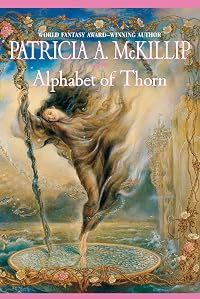
Alphabet of Thorn
by Patricia A. McKillip
On This Page
Description
Fantasy. Fiction. Historical Fiction. HTML:Fantasy author Patricia A. McKillip, the 21st century's response to Hans Christian Andersen, has mastered the art of writing fairy tales — as evidenced by previous works like The Tower at Stony Wood, Ombria in Shadow, and In the Forests of Serre. Alphabet of Thorn is yet another timeless fable suitable for children and adults alike. In the kingdom of Raine, a vast realm at the edge of the world, an orphaned baby girl is found by a palace librarian show more and raised to become a translator. Years later, the girl — named Nepenthe — comes in contact with a mysterious book written in a language of thorns that no one, not even the wizards at Raine's famous Floating School for mages, can decipher. The book calls out to Nepenthe's very soul, and she is soon privately translating its contents. As she works tirelessly transcribing the book — which turns out to be about the historical figures of Axis, the Emperor of Night, and Kane, his masked sorcerer — the kingdom of Raine is teetering on the brink of chaos. The newly crowned queen, a mousy 14-year old girl named Tessera who wants nothing to do with matters of state, hides in the woods as regents plot revolution. The queen's destiny, however, is intertwined with Nepenthe's ability to unravel the mystery of the thorns.. show less
Tags
Recommendations
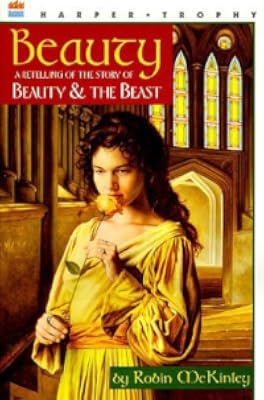
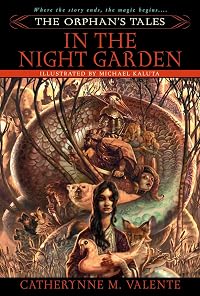

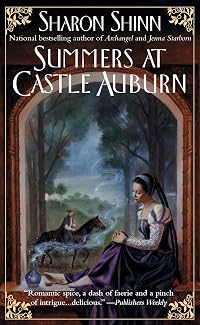
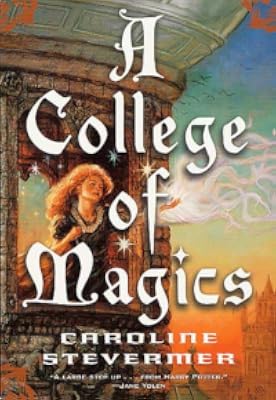
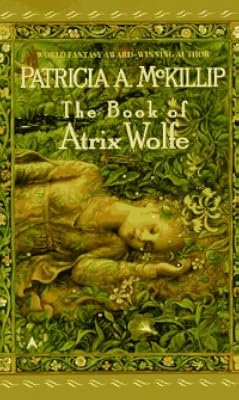
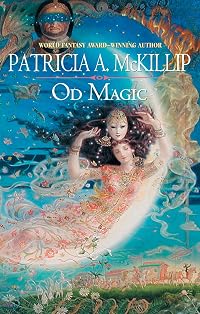
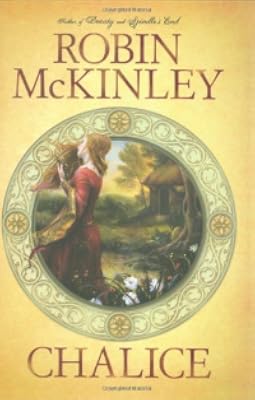
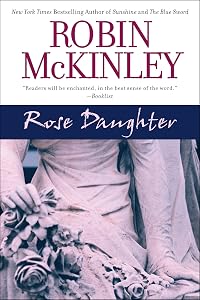


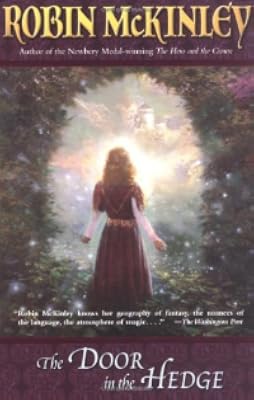
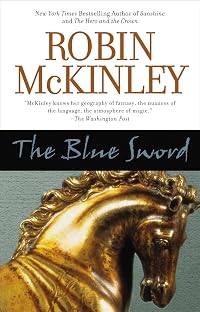
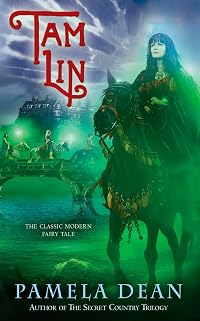
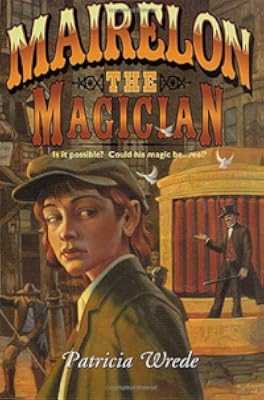

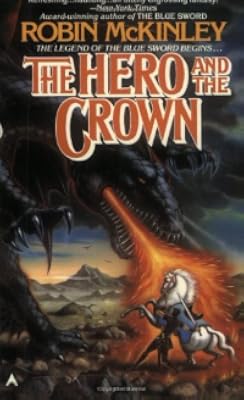
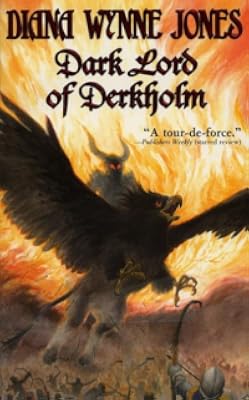
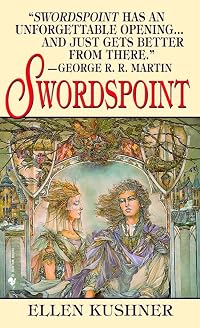
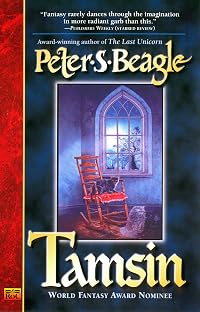



Member Recommendations
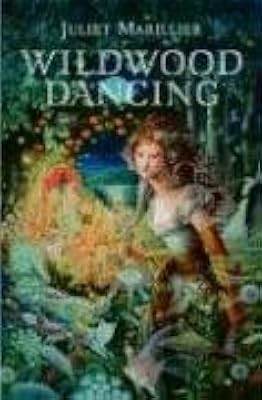
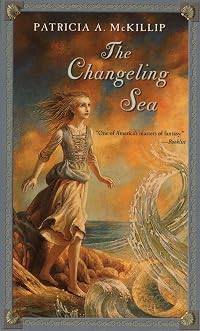
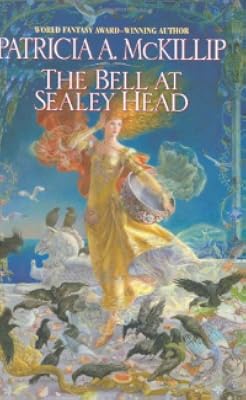
ncgraham Both of these McKillip novels deal with changelings and the power of words, and so make for fascinating comparison.
30
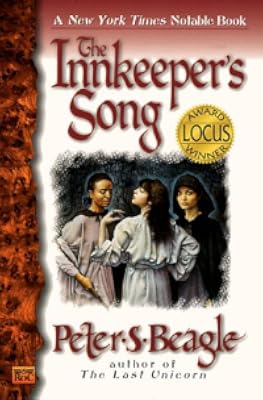
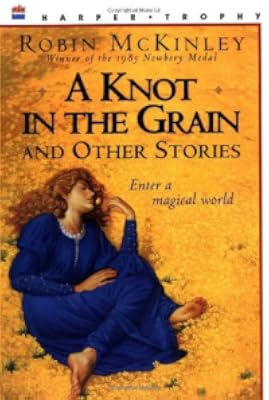
MyriadBooks For code breaking an unknown language; for libraries of secrets.
30
MyriadBooks For questing librarians.
Member Reviews
I went into this book knowing nothing about its plot, and that was a great way to read this particular story--it's a lot about the characters not knowing what's going on or why and what's going to happen, and it works well for the reader to be in the same boat. It's sort of wandering at first, in a way I enjoy (though I see some reviewers wanted a faster and more direct path to action), and then it finds its way and the characters have to find theirs, one way or another. So, in that spirit, I shall implementeth the spoiler tag before getting into details:
This is a book about the power of stories and words. It sort of pretends to be about a romantic relationship, and the thing between Bourne and Nepenthe is sweet (though I am far more show more interested in the friendship between Nepenthe and Laidley, and the hints of one between Laidley and Bourne as well, pushing casually against the weird cultural narrative of manly sparring over a woman-as-prize with, well, actual humanity). But then it turns out to be more about coming of age and finding one's place (for Nepenthe, Bourne, Laidley, but also very much Tessera and even Kane-or-whatever-her-real-name-is). And, rather surprisingly, it turns out to be about mothers and daughters--Kane finding and choosing Nepenthe, obviously, and also Vevay's changing perceptions of Tessera: these latter two have a parent-child dynamic going on in a way I don't see in Tessera's relationship with her largely-offscreen actual mother.
The narrative structure, switching between present-day personal developments and the epic past, is interesting and aligns with the content (the way time is revealed to be nonlinear, the dramatized choice between high epic and ordinary personal life for both Nepenthe and her mother at the end, and so on). Some threads get dropped oddly--where did Mermion go? why was that legend here?--but the whole effect is good. I didn't care much about the epic/past parts and was primarily reading for the present-day ones, but that actually gave the narrative tension an effective twist. In some ways, this book reminded me of A.S. Byatt's Persuasion and other British postmodernist explorations of the relationships amongst history, contemporary life, and literary texts as much as it reminded me of any fantasy novel.
Finally, some thoughts on gender. So, neat that both warrior-mage Kane and powerful Ur king Mermion have been misremembered by history as men (117-20, 135-6). A private, domestic scene--tragedy while a father plays with his child--is also misremembered, translated into a battlefield and a father and son at odds over power (46). So there's some gender history play and questioning going on here. At the same time, does the novel imagine some sort of essential (and essentially nurturing/domestic) femininity? I don't know. We're shown rather pointedly that Tessera, unlike her father, is not into hunting and didn't want to kill anything, let alone people; parallel to that scene, we hear that Kane is not really into warfare and misses peaceful days in "the company of children" (175-6). Ultimately, of course, Kane chooses her daughter over Axis-and-power, saying to the queen: "You do not have to fear me. All I did on the battlefield, I did for Axis. The only thing I ever wanted for myself was him. And our daughter." Hmm. show less
The narrative structure, switching between present-day personal developments and the epic past, is interesting and aligns with the content (the way time is revealed to be nonlinear, the dramatized choice between high epic and ordinary personal life for both Nepenthe and her mother at the end, and so on). Some threads get dropped oddly--where did Mermion go? why was that legend here?--but the whole effect is good. I didn't care much about the epic/past parts and was primarily reading for the present-day ones, but that actually gave the narrative tension an effective twist. In some ways, this book reminded me of A.S. Byatt's Persuasion and other British postmodernist explorations of the relationships amongst history, contemporary life, and literary texts as much as it reminded me of any fantasy novel.
Finally, some thoughts on gender. So, neat that both warrior-mage Kane and powerful Ur king Mermion have been misremembered by history as men (117-20, 135-6). A private, domestic scene--tragedy while a father plays with his child--is also misremembered, translated into a battlefield and a father and son at odds over power (46). So there's some gender history play and questioning going on here. At the same time, does the novel imagine some sort of essential (and essentially nurturing/domestic) femininity? I don't know. We're shown rather pointedly that Tessera, unlike her father, is not into hunting and didn't want to kill anything, let alone people; parallel to that scene, we hear that Kane is not really into warfare and misses peaceful days in "the company of children" (175-6). Ultimately, of course, Kane chooses her daughter over Axis-and-power, saying to the queen: "You do not have to fear me. All I did on the battlefield, I did for Axis. The only thing I ever wanted for myself was him. And our daughter." Hmm.
This was one of the most gorgeous books I've ever read-- every word seemed to be singing in chorus to create a novel that's as much about its lyricism as it is about the plot-- but because of this lyricism, the plot drags a bit in what feels like a lot of extended exposition, taking up about the first 2/3's of the book, though it's worth sloughing through the parts that sing out of tune for the excellent pay-off. There was a chapter near the end where the plot and the style and everything resolved into a truly gorgeous reverie.
As usual, McKillip's sublime prose, superb tone, and excellent characterization make "Alphabet of Thorn" required reading for any serious devotee of fantasy literature. More particularly, this book will appeal strongly to the bookish and the scholarly.
That appeal derives from the setting and the cast. The heroine, Nepenthe, is a foundling raised by librarians, and much of the plot revolves around her slow progress in deciphering and translating a mysterious book written in a nettlesome language no-one else can begin to grasp. Literally nettlesome - the characters of the alphabet are thorny, coiling shapes interlocked into a dense thicket of meaning. The difficult (and painful) task of disentangling these barbed words absorbs Nepenthe's show more attention, and the crucial message they carry slowly takes over the screen; there is a brilliant moment, towards the end, where the reader suddenly realizes that the words on the page have somehow become the words of the Book of Thorn itself. And that moment of realization precipitates the climax of the book, a crisis as convoluted as the alphabet of thorn itself.
Sadly, the resolution of that crisis felt vaguely unsatisfying, depending as it did on a sudden change of heart by a character previously portrayed as obsessively devoted to one course of action. There was insufficient preparation for that change of heart. Though the change was necessary, it felt vaguely unrealistic. Perhaps this seems a strange criticism for a fantasy novel; yet the best fantasy breathes realism into the most implausible of things, and this implausible thing remained so: a deus ex machina at the end of all things.
Still, as flaws go, this one is fairly minor. Indeed, it may well be a product of my own taste more than anything else. And so I can, and do, recommend "Alphabet of Thorn" to any fantasy reader looking to while away a rainy afternoon. If you love books, fantasy, and puzzles, you will surely find "Alphabet of Thorn" as engrossing as Nepenthe finds her Book of Thorn. show less
That appeal derives from the setting and the cast. The heroine, Nepenthe, is a foundling raised by librarians, and much of the plot revolves around her slow progress in deciphering and translating a mysterious book written in a nettlesome language no-one else can begin to grasp. Literally nettlesome - the characters of the alphabet are thorny, coiling shapes interlocked into a dense thicket of meaning. The difficult (and painful) task of disentangling these barbed words absorbs Nepenthe's show more attention, and the crucial message they carry slowly takes over the screen; there is a brilliant moment, towards the end, where the reader suddenly realizes that the words on the page have somehow become the words of the Book of Thorn itself. And that moment of realization precipitates the climax of the book, a crisis as convoluted as the alphabet of thorn itself.
Sadly, the resolution of that crisis felt vaguely unsatisfying, depending as it did on a sudden change of heart by a character previously portrayed as obsessively devoted to one course of action. There was insufficient preparation for that change of heart. Though the change was necessary, it felt vaguely unrealistic. Perhaps this seems a strange criticism for a fantasy novel; yet the best fantasy breathes realism into the most implausible of things, and this implausible thing remained so: a deus ex machina at the end of all things.
Still, as flaws go, this one is fairly minor. Indeed, it may well be a product of my own taste more than anything else. And so I can, and do, recommend "Alphabet of Thorn" to any fantasy reader looking to while away a rainy afternoon. If you love books, fantasy, and puzzles, you will surely find "Alphabet of Thorn" as engrossing as Nepenthe finds her Book of Thorn. show less
If you're a fan of epic fantasy, and things that are written like fairy tales, as I am, then you'll probably love this just as I did. McKillip's writing is beautiful, and some of the best I've read in the epic fantasy sphere. She had me jotting down quotes about every other page. Okay, fine, that's a slight exaggeration, but only a slight one. I'd like to share a couple of them here, just to show you how wonderful she is.
More fantastic in-world poetry and imminently quotable lines are to be found throughout. This book has some fantasy tropes in it, such as a floating mage school, a mystical wood, etc. McKillip writes with such skill that you totally believe the world she's created, tropes and all, and isn't that what all us fantasy lovers really want? There's a reason floating castles and suchlike have persisted through time--because they're freaking cool. But they are also overdone, so it can be hard to make them believable and to put your own twist on it. McKillip not only makes you believe, but she enchants you with words as powerful as any magic.
The story is an interesting one, in that it's less “Lord of the Rings” than “Downton Abbey.” There's no great journey from point A to B for a band of heroes. It's mostly a story about the characters, and the things they feel, and the things that happen around them and to them, and the things that have happened in the history of their world, which gets a bit complicatedas you might expect when time travel is involved .
Before I talk more about the story as a whole, let me introduce you to our cast of characters.
Tessera is the young, unprepared new ruler of Raine. She has to take up the role when her father passes unexpectedly, and she's starts buckling under the pressure almost immediately.
Nepenthe was found abandoned as a babe on the edge of a cliff and taken in by the royal library as a transcriber. She loves translating strange languages, and when the mage school gives her a book written in a language of thorns that nobody has ever seen before to take back to the library she keeps it to herself so that she can have the first crack at it. What she uncovers is the story of two lovers, Axis and Kane, from the distant past who have become major mythical figures by her own time. Their tale is captivating enough to be a book all on its' own, and is revealed to be a lot more pertinent to current events than you might think.
Bourne is a young noble sent to the mage school by his uncle to learn its' secrets so that he can bring them back home and help his uncle conquer new lands in this vulnerable time of changing rulers. He doesn't much care for his studies, or for his uncle's schemes, but he falls hard for Nepenthe (and she for him) and is all around a pretty cool guy.
Vevay is a very old mage, and a personal adviser of sorts to the rulers of Raine. She's also quite the badass. Her main role in the story is to teach Tessera all she needs to know to rule, and to lay some magical smack down when needed. She also has a much younger, though still “old” lover named Gavin, who is a grizzled general.
The story is thrust into motion by Tessera having to take up the responsibility for the twelve crowns of her kingdom when her father suddenly passes, and by the librarian Nepenthe receiving a strange book written in thorns that she begins translating. Other than that the plot is rather meandering, but in a really good way. There is a threat to the kingdom that emerges first as the awakening of the corpse of the first king of Raine, who is entombed in the side of a cliff on the edge of the sea (so cool) and who actually turns out to have been a queen (again, so cool), warning Tessera about the imminent threat of “thorns”, but it's rather subdued by epic fantasy standards, very imaginative when it finally reveals itself, and it is resolved by a lie, an illusion, and a mother's love for her child. Seriously. The great threat is thwarted without a single drop of blood being spilled, and yet it was an incredibly satisfying ending. If that doesn't convince you of McKillip's immense talent, then I don't know what the heck will.
Meanwhile, Bourne is occupied by Nepenthe, and by his magic. Nepenthe is hell bent on translating the book of thorns. We get to see the story of Axis and Kane unfold as she does so. Tessera is flustered by her new responsibilities, and wondering why she can hear trees talk, and what's up with this warning about thorns. Vevay is busy trying to figure out what the threat is as well, and dealing with Bourne's stupid uncle when he decides to attack, and the book never actually explodes into physical conflict. Smaller, more personal stakes are something that I've been looking for in an epic fantasy for a little while now, and I think I've found my go-to author.
I'd also like to point out that if strong female characters are a thing you've been looking for in fantasy, you've come to the right place. Not only does McKillip write her women well, but she writes her men well too. While the shakers and movers of the story are mostly women, I never felt like it was just for the sake of being contrary to a male-biased norm, or to shove a feminist viewpoint down my throat. It's not like the women are super smart and men are incompetent. It's just that the most important people happened to be women, which is the best way to write strong female characters if you truly believe both genders are equal. Nepenthe manages to have a romantic relationship with Bourne without it diminishing either of them as individuals, or taking away from the main through-line of the story. Vevay may be an all-powerful mage, but she still looks to Gavin for support and advice. Everyone is written as a person first, a gender second, and that's something very special indeed. I wish more of McKillip's contemporaries (male and female) had the same gender-blindness.
This is the first of McKillip's novels that I've read, and I can't wait to gobble up everything she's ever written over the next few years (if it even takes me that long). As a rare standalone novel in a world of trilogies and long series this was a fantastic starting point for getting acquainted with her style. I can't recommend it enough. show less
Easier to understand the wind . . . Easier to walk on the surface of the frothing sea, than to remember the hunger to do it. Easier to remember knowledge than ignorance, experience than innocence. Easier to know what you are than remember what you were.
The Shadow of the Emperorshow more
The Hooded One
Who unmasked night
Who laid
the stars like paving stones
Who rode the Thunderbolt
Down the star-cobbled path into day
Was Kane,
The Emperor's twin
Silent, as lightning is silent,
Before the thunder speaks
More fantastic in-world poetry and imminently quotable lines are to be found throughout. This book has some fantasy tropes in it, such as a floating mage school, a mystical wood, etc. McKillip writes with such skill that you totally believe the world she's created, tropes and all, and isn't that what all us fantasy lovers really want? There's a reason floating castles and suchlike have persisted through time--because they're freaking cool. But they are also overdone, so it can be hard to make them believable and to put your own twist on it. McKillip not only makes you believe, but she enchants you with words as powerful as any magic.
The story is an interesting one, in that it's less “Lord of the Rings” than “Downton Abbey.” There's no great journey from point A to B for a band of heroes. It's mostly a story about the characters, and the things they feel, and the things that happen around them and to them, and the things that have happened in the history of their world, which gets a bit complicated
Before I talk more about the story as a whole, let me introduce you to our cast of characters.
Tessera is the young, unprepared new ruler of Raine. She has to take up the role when her father passes unexpectedly, and she's starts buckling under the pressure almost immediately.
Nepenthe was found abandoned as a babe on the edge of a cliff and taken in by the royal library as a transcriber. She loves translating strange languages, and when the mage school gives her a book written in a language of thorns that nobody has ever seen before to take back to the library she keeps it to herself so that she can have the first crack at it. What she uncovers is the story of two lovers, Axis and Kane, from the distant past who have become major mythical figures by her own time. Their tale is captivating enough to be a book all on its' own, and is revealed to be a lot more pertinent to current events than you might think.
Bourne is a young noble sent to the mage school by his uncle to learn its' secrets so that he can bring them back home and help his uncle conquer new lands in this vulnerable time of changing rulers. He doesn't much care for his studies, or for his uncle's schemes, but he falls hard for Nepenthe (and she for him) and is all around a pretty cool guy.
Vevay is a very old mage, and a personal adviser of sorts to the rulers of Raine. She's also quite the badass. Her main role in the story is to teach Tessera all she needs to know to rule, and to lay some magical smack down when needed. She also has a much younger, though still “old” lover named Gavin, who is a grizzled general.
The story is thrust into motion by Tessera having to take up the responsibility for the twelve crowns of her kingdom when her father suddenly passes, and by the librarian Nepenthe receiving a strange book written in thorns that she begins translating. Other than that the plot is rather meandering, but in a really good way. There is a threat to the kingdom that emerges first as the awakening of the corpse of the first king of Raine, who is entombed in the side of a cliff on the edge of the sea (so cool) and who actually turns out to have been a queen (again, so cool), warning Tessera about the imminent threat of “thorns”, but it's rather subdued by epic fantasy standards, very imaginative when it finally reveals itself, and it is resolved by a lie, an illusion, and a mother's love for her child. Seriously. The great threat is thwarted without a single drop of blood being spilled, and yet it was an incredibly satisfying ending. If that doesn't convince you of McKillip's immense talent, then I don't know what the heck will.
Meanwhile, Bourne is occupied by Nepenthe, and by his magic. Nepenthe is hell bent on translating the book of thorns. We get to see the story of Axis and Kane unfold as she does so. Tessera is flustered by her new responsibilities, and wondering why she can hear trees talk, and what's up with this warning about thorns. Vevay is busy trying to figure out what the threat is as well, and dealing with Bourne's stupid uncle when he decides to attack, and the book never actually explodes into physical conflict. Smaller, more personal stakes are something that I've been looking for in an epic fantasy for a little while now, and I think I've found my go-to author.
I'd also like to point out that if strong female characters are a thing you've been looking for in fantasy, you've come to the right place. Not only does McKillip write her women well, but she writes her men well too. While the shakers and movers of the story are mostly women, I never felt like it was just for the sake of being contrary to a male-biased norm, or to shove a feminist viewpoint down my throat. It's not like the women are super smart and men are incompetent. It's just that the most important people happened to be women, which is the best way to write strong female characters if you truly believe both genders are equal. Nepenthe manages to have a romantic relationship with Bourne without it diminishing either of them as individuals, or taking away from the main through-line of the story. Vevay may be an all-powerful mage, but she still looks to Gavin for support and advice. Everyone is written as a person first, a gender second, and that's something very special indeed. I wish more of McKillip's contemporaries (male and female) had the same gender-blindness.
This is the first of McKillip's novels that I've read, and I can't wait to gobble up everything she's ever written over the next few years (if it even takes me that long). As a rare standalone novel in a world of trilogies and long series this was a fantastic starting point for getting acquainted with her style. I can't recommend it enough. show less
This was very interesting and a wondrous ease to read. Though it grew more organically than tautly, the characters were sparse but layered, and picking apart the main thread of story kept things interesting. Not to mention the lovely twists on some traditional fantasy shapes within that main thread. And finally, this is a story about ladies moving mountains for themselves, which frankly there should be a lot more of.
This is another winner from McKillip, and one of my favorites. She blends elements from prior works such as warring across time and the wild magic of woods and sea, then mixes in a group of quirky, unique, strong characters, both female and male. Role reversals dominate: kings who turn out to be queens, sorcerers who are sorceresses. As always, she leaves the reader thinking about what she didn’t write, or perhaps what she implied between the lines. A must read!
OK, so this one was an extraordinary adventure. No matter what Patricia A. McKillip writes, it seems as though I am in her enjoyment of the world/subject with her. This book is no exception.
It takes place in the library of a castle, buried so deep in the caverns beneath this castle (and the castle is on a cliffside, so dark and cold are two active words here), with a scribe who is part of the library staff. When the new Queen is crowned, she begins the translation of a book of fishes, but surprise! a new book, this one of thorns, is surreptitiously given to her. Just the idea of alphabets written in thorns, in fishes, is pure creative genius. And the interweaving of the story of Axis and his beloved Kane, including the mystery of their show more kingdom, is an extraordinary mark of genius.
Also blended in is Nepenthe's love interest, a student at the magic school that seems to hover or be invisible, depending on the tasks set out for the students; a new Queen who does not seem equal to the task; twelve Crowns who may go to war for the chance to overthrow this new Queen; and a loving pair of older wizards just to remind us that wisdom is earned and adventures don't only come to the young. show less
It takes place in the library of a castle, buried so deep in the caverns beneath this castle (and the castle is on a cliffside, so dark and cold are two active words here), with a scribe who is part of the library staff. When the new Queen is crowned, she begins the translation of a book of fishes, but surprise! a new book, this one of thorns, is surreptitiously given to her. Just the idea of alphabets written in thorns, in fishes, is pure creative genius. And the interweaving of the story of Axis and his beloved Kane, including the mystery of their show more kingdom, is an extraordinary mark of genius.
Also blended in is Nepenthe's love interest, a student at the magic school that seems to hover or be invisible, depending on the tasks set out for the students; a new Queen who does not seem equal to the task; twelve Crowns who may go to war for the chance to overthrow this new Queen; and a loving pair of older wizards just to remind us that wisdom is earned and adventures don't only come to the young. show less
Members
- Recently Added By
Lists

Best Fantasy Novels
821 works; 361 members

Rank your favorite Patricia A. McKillip books
26 works; 8 members

Future Green Dragon Group Read Books
80 works; 6 members

Recommended Speculative Fiction by Women and People of Color
298 works; 45 members

Novels featuring language professionals
98 works; 12 members

Books We Want To Read Again For The First Time
384 works; 160 members
Talk Discussions
Past Discussions
Has anyone read "An Alphabet of Thorns"? in FantasyFans (June 2011)
Author Information

77+ Works 29,551 Members
Some Editions
Awards and Honors
Awards
Distinctions
Work Relationships
Common Knowledge
- Canonical title
- Alphabet of Thorn
- Original publication date
- 2004-02
- People/Characters
- Nepenthe; Bourne; Queen Tessera; Axis; Kane; Laidley (show all 9); Vevay; Feylan; Gavin
- First words
- On Dreamer's Plain, the gathering of delegations from the Twelve Crowns of Raine for the coronation of the Queen of Raine looked like an invading army.
- Quotations
- Epics are never written about libraries. They exist on whim; It depends if the conquering army likes to read.
"We don't choose our passions."
"History moves in great, messy shifts of power, in choices made as though by too many people building a house, where one misplaced stone in the foundation slips under the weight of another stone near the roof. . . ." - Last words
- (Click to show. Warning: May contain spoilers.)"Just begin at the beginning and proceed whichever way you can into hope."
- Original language
- English US
Classifications
Statistics
- Members
- 1,354
- Popularity
- 17,631
- Reviews
- 49
- Rating
- (4.17)
- Languages
- English, German
- Media
- Paper, Ebook
- ISBNs
- 9
- ASINs
- 2