On This Page
Description
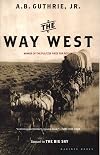
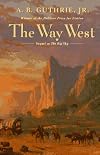
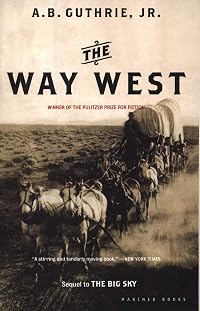
Second in the epic adventure Big Sky series. The wise and paternal mountain man Dick Summers agrees to pilot a wagon train full of 'greenhorns' on a journey from Missouri to Oregon. The passengers confront not only the wild grandeur of the untamed west, but also their own reasons for leavign everything behind. They struggle with the imperfect reality of their long held dreams. Resolve is tested, nature is conquered, and men are made or unmade in this timeless classic.Tags
Recommendations



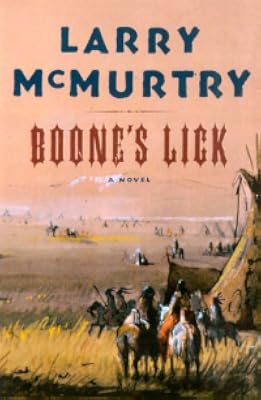
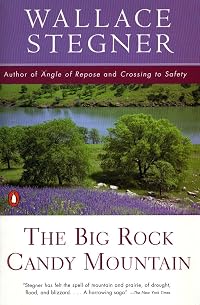
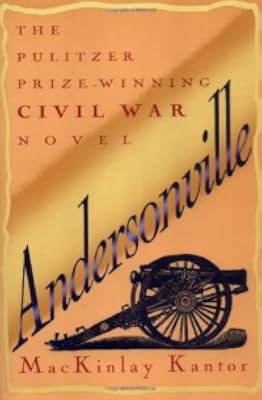
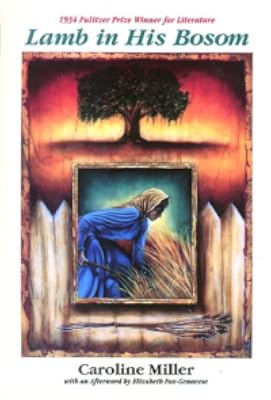














Member Reviews
"What a person wondered was, were other people like him underneath or, more likely, solider and properer and not moved by crazy notions? He wouldn't want to tell about how it was with him, not even about the way his chest filled sometimes when he came to a rise and looked over the country or how his heart turned just at the smell of camp smoke…" (pp95-96)
Despite being a Pulitzer Prize winner, back when that really meant something, and a successor to one of my favourite recent reads, The Big Sky, there were times when I wasn't sure if I loved The Way West, or saw it as a great book. I enjoyed it throughout, but there were moments when something on the path A. B. Guthrie had laid out would wobble underfoot and make me unsure of my show more place. But then, there's a scene where the mountain man Dick Summers (the only character to return from The Big Sky) recognises that he made the right choice in coming out West again and taking in the glorious country. One of the other characters asks him why he's smiling, and Dick replies, "Was I smilin'? Just feelin' good, I reckon" (pg. 225). It's a warm moment and I realised that, for all its minor wobbles, I too had been smiling throughout.
Those wobbles were legitimate; stones come loose from the path. The Big Sky was a slow book and The Way West is too, but more happened in The Big Sky. It seems strange to say that, as it often seemed like not much happened and the book was all landscape and thought. But though The Way West has more characters – it follows the members of a wagon train on the famous Oregon Trail – they don't sit as deeply in the memory as characters from the first book, even minor ones, sat. They do just fine, and better than most novels, but a "captain ought to know his company down to the last pup" (pg. 132), and by the end too many of the characters remain strangers. Of those who are more prominent, Higgins becomes forgotten despite having some point-of-view chapters earlier on in the book. Brownie, the teenage boy, is one that seems set up to grow into a man, but his waxing confidence ("he was more like Dick Summers all the time" (pg. 97)) is less show than tell, and by the end he remains in a bit-part role and seems to have reverted into boyishness. Furthermore, though there are storms, river crossings, hardships, conflicts within the group and encounters with Indians, we never feel as though the wagon train is in great peril. There's very little circling of the wagons.
All that said, Guthrie's path is still a sturdy one even after some of those stones have come loose. The prose style is a good example of this; there are moments when I thought some of the sentences were strangled or overcooked, and others where I had to re-read a paragraph to get the sense of it, but then every time I thought this, Guthrie would go on to produce some astonishing piece of writing or touching dialogue between characters or some well-staged scene, and I would forgive the moment where things had drifted slightly. It's as though Guthrie is a prize-fighter who has feinted with his left hand, the better to knock you down with his right.
As in The Big Sky, the great redeemer in The Way West is the American landscape, and the thoughts it evokes in the characters and in the reader. I wrote in my review of The Big Sky that the book demanded you take it slow, and The Way West is the same in that it rewards those who are willing to treat with it on its own terms. The prose, like the West's prairie air, has "a taste to it" (pg. 126), and oftentimes you can tell Guthrie is writing a character towards an outcrop or a stream, solely to provide them a moment of solitude so they can paint the land they see with their eyes and Guthrie can deliver his potent inner monologue on how it makes them feel. In a lesser book, this would seem manipulative or writerly, but in The Way West you can easily imagine these characters wanting to steal away for a moment and look out on the mountains or the plains or the stars or the mighty rivers. Like them, the reader gets the wanderlust where he just wants to say 'goddamn', or moments where he "felt he couldn't speak for the crowding in his chest" (pg. 318). Guthrie's ability to do this is unmatched and it's the most compelling reason to invest in one of his books.
I began to value this all the more highly as it is rare, particularly nowadays, to find a book which does its own thing rather than pandering to a target audience. In fact, I don't know of many books which grant themselves this extent of license, and like the unbroken Western landscape our characters traverse, we're sometimes overwhelmed by its extent but grateful for the sense of freedom such space provides. Like one character realises at the very end, for all the tough moments, the "hardships, sorrows, partings… the heart [was] still ready to beat high" (pg. 340). Wagh! show less
Despite being a Pulitzer Prize winner, back when that really meant something, and a successor to one of my favourite recent reads, The Big Sky, there were times when I wasn't sure if I loved The Way West, or saw it as a great book. I enjoyed it throughout, but there were moments when something on the path A. B. Guthrie had laid out would wobble underfoot and make me unsure of my show more place. But then, there's a scene where the mountain man Dick Summers (the only character to return from The Big Sky) recognises that he made the right choice in coming out West again and taking in the glorious country. One of the other characters asks him why he's smiling, and Dick replies, "Was I smilin'? Just feelin' good, I reckon" (pg. 225). It's a warm moment and I realised that, for all its minor wobbles, I too had been smiling throughout.
Those wobbles were legitimate; stones come loose from the path. The Big Sky was a slow book and The Way West is too, but more happened in The Big Sky. It seems strange to say that, as it often seemed like not much happened and the book was all landscape and thought. But though The Way West has more characters – it follows the members of a wagon train on the famous Oregon Trail – they don't sit as deeply in the memory as characters from the first book, even minor ones, sat. They do just fine, and better than most novels, but a "captain ought to know his company down to the last pup" (pg. 132), and by the end too many of the characters remain strangers. Of those who are more prominent, Higgins becomes forgotten despite having some point-of-view chapters earlier on in the book. Brownie, the teenage boy, is one that seems set up to grow into a man, but his waxing confidence ("he was more like Dick Summers all the time" (pg. 97)) is less show than tell, and by the end he remains in a bit-part role and seems to have reverted into boyishness. Furthermore, though there are storms, river crossings, hardships, conflicts within the group and encounters with Indians, we never feel as though the wagon train is in great peril. There's very little circling of the wagons.
All that said, Guthrie's path is still a sturdy one even after some of those stones have come loose. The prose style is a good example of this; there are moments when I thought some of the sentences were strangled or overcooked, and others where I had to re-read a paragraph to get the sense of it, but then every time I thought this, Guthrie would go on to produce some astonishing piece of writing or touching dialogue between characters or some well-staged scene, and I would forgive the moment where things had drifted slightly. It's as though Guthrie is a prize-fighter who has feinted with his left hand, the better to knock you down with his right.
As in The Big Sky, the great redeemer in The Way West is the American landscape, and the thoughts it evokes in the characters and in the reader. I wrote in my review of The Big Sky that the book demanded you take it slow, and The Way West is the same in that it rewards those who are willing to treat with it on its own terms. The prose, like the West's prairie air, has "a taste to it" (pg. 126), and oftentimes you can tell Guthrie is writing a character towards an outcrop or a stream, solely to provide them a moment of solitude so they can paint the land they see with their eyes and Guthrie can deliver his potent inner monologue on how it makes them feel. In a lesser book, this would seem manipulative or writerly, but in The Way West you can easily imagine these characters wanting to steal away for a moment and look out on the mountains or the plains or the stars or the mighty rivers. Like them, the reader gets the wanderlust where he just wants to say 'goddamn', or moments where he "felt he couldn't speak for the crowding in his chest" (pg. 318). Guthrie's ability to do this is unmatched and it's the most compelling reason to invest in one of his books.
I began to value this all the more highly as it is rare, particularly nowadays, to find a book which does its own thing rather than pandering to a target audience. In fact, I don't know of many books which grant themselves this extent of license, and like the unbroken Western landscape our characters traverse, we're sometimes overwhelmed by its extent but grateful for the sense of freedom such space provides. Like one character realises at the very end, for all the tough moments, the "hardships, sorrows, partings… the heart [was] still ready to beat high" (pg. 340). Wagh! show less
The characters are well drawn and interesting. I enjoyed the read, even though I wouldn't count it among the world's all-time best novels. Guthrie introduces his characters from the inside out, letting us into their heads to hear their motives the way they see them, as well as the way they see each other. There were a few careless errors that I would have thought an editor would catch. The buffalo stampede was particularly well written, but then I was distracted a few pages later when he discusses the signs that the buffalo were nearby. In one instance he wrote about an Indian attack, then a few pages later people hadn't seen Indians. There were some really lovely metaphors. I particularly liked "silence closed around" the cry of a child.
This book might be as close as you will ever come to knowing what it was like to leave Independence, Missouri in 1836 and make your way by wagon along the Oregon Trail to the wilderness that was Oregon. Lije Evans, his wife Rebecca, and his son Brownie are one of a group of families who sign on with a wagon train to make the journey, and they represent, in my eyes, the perfect depiction of the kind of strong individuals who carved out this new land into civilization. During the journey, Lije discovers himself as a leader and we discover that a good man can be a strong man; that a quiet man can make all the noise that is needed.
There is one more member of the Evans family that I have not mentioned, but for whom I developed a great show more attachment, the dog, Rock. At the outset of the story, there is a move to kill all the dogs, many thinking they would be a nuisance on such a long trip. Evans figured he would have some business with the man who came to shoot Rock. That was the moment I knew I was going to love Lije, no going back.
My favorite character, by far, however, was Dick Summers. A seasoned mountain man who has been farming in Missouri, he signs on to pilot the group as far as the Dalles. I recognized right away that without men like Dick, none of the others would have ever survived to do the settling. In fact, they would hardly have known how to get where they were going. What I loved the most about him, however, was his open mind; never thinking the world should be like him or give him any particular homage.
He didn’t blame the Oregoners as he had known old mountain men to do. Everybody had his life to make, and every time its way, one different from another. The fur hunter didn’t have title to the mountain no matter if he did say finders keepers. By that system the country belonged to the Indians, or maybe someone before them or someone before them. No use to stand against the stream of change and time.
I felt I got to know Dick Summers in a way that I could strangely relate to. Of course, his lost youth was danger and mountains and the capability to survive, but wasn’t he longing for what most of us older people long for?
At the nub of it did he just want his youth back? Beaver, streams, squaws, danger--were they just names for his young time?
When I went back to review the passages I had marked while reading, almost all of them were Dick. His was the voice that spoke to me.
Guthrie shows us the physical hardships of the journey, which would surely be enough to defeat most of us, but which we could all fairly well imagine; but he also shows us the emotional toll that such a choice entails. Makes you wonder how anyone ever had the courage to set out, particularly with children in tow. The thought of the women, visibly pregnant, prodding the oxen while walking the trail, wore me to a bone. Guthrie’s men are both strong and weak, as are the women, and he seems to know both sexes well...what makes them the same and what makes them different, and how much both were needed to make such an undertaking work at all.
She wondered if he felt the same as she did. Did any two people ever feel the same? Did ever one soul know another, though they talked at night, though sometimes in hunger and in isolation they sought to make their bodies one, the all-mother in her loneliness trying to take back home the lost child-man?
I could picture these people, a mix of quite different backgrounds and incomes, growing closer and more understanding or more leery and wiser as the migration became a way of life. I could feel how tired and weary they felt at the end of even a good day. I could see the young faces becoming withered and crusted by exposure to wind and sun, and the older faces becoming hardened and set. At the same time, I could feel the yearning they all shared to start a new life, find a new adventure, see something they had never seen before. If they were still heading trains West, and if I were thirty years younger, I could see myself being convinced by Guthrie that the travails would be worth it; that Oregon could be home, and that a sturdy wagon and a good man might be all you would need. show less
There is one more member of the Evans family that I have not mentioned, but for whom I developed a great show more attachment, the dog, Rock. At the outset of the story, there is a move to kill all the dogs, many thinking they would be a nuisance on such a long trip. Evans figured he would have some business with the man who came to shoot Rock. That was the moment I knew I was going to love Lije, no going back.
My favorite character, by far, however, was Dick Summers. A seasoned mountain man who has been farming in Missouri, he signs on to pilot the group as far as the Dalles. I recognized right away that without men like Dick, none of the others would have ever survived to do the settling. In fact, they would hardly have known how to get where they were going. What I loved the most about him, however, was his open mind; never thinking the world should be like him or give him any particular homage.
He didn’t blame the Oregoners as he had known old mountain men to do. Everybody had his life to make, and every time its way, one different from another. The fur hunter didn’t have title to the mountain no matter if he did say finders keepers. By that system the country belonged to the Indians, or maybe someone before them or someone before them. No use to stand against the stream of change and time.
I felt I got to know Dick Summers in a way that I could strangely relate to. Of course, his lost youth was danger and mountains and the capability to survive, but wasn’t he longing for what most of us older people long for?
At the nub of it did he just want his youth back? Beaver, streams, squaws, danger--were they just names for his young time?
When I went back to review the passages I had marked while reading, almost all of them were Dick. His was the voice that spoke to me.
Guthrie shows us the physical hardships of the journey, which would surely be enough to defeat most of us, but which we could all fairly well imagine; but he also shows us the emotional toll that such a choice entails. Makes you wonder how anyone ever had the courage to set out, particularly with children in tow. The thought of the women, visibly pregnant, prodding the oxen while walking the trail, wore me to a bone. Guthrie’s men are both strong and weak, as are the women, and he seems to know both sexes well...what makes them the same and what makes them different, and how much both were needed to make such an undertaking work at all.
She wondered if he felt the same as she did. Did any two people ever feel the same? Did ever one soul know another, though they talked at night, though sometimes in hunger and in isolation they sought to make their bodies one, the all-mother in her loneliness trying to take back home the lost child-man?
I could picture these people, a mix of quite different backgrounds and incomes, growing closer and more understanding or more leery and wiser as the migration became a way of life. I could feel how tired and weary they felt at the end of even a good day. I could see the young faces becoming withered and crusted by exposure to wind and sun, and the older faces becoming hardened and set. At the same time, I could feel the yearning they all shared to start a new life, find a new adventure, see something they had never seen before. If they were still heading trains West, and if I were thirty years younger, I could see myself being convinced by Guthrie that the travails would be worth it; that Oregon could be home, and that a sturdy wagon and a good man might be all you would need. show less
"The Way West" is a classic tale of American pioneers traveling the wilderness to seek a better life in the year 1836. North America has just acquired Arkansas and Michigan as official states and is still claiming new colonies west of Missouri. With visions of miles upon miles of unsettled land, fertile pastures, blue skies, clear lakes, and majestic mountains, citizens are encouraged to make the voyage to Oregon to ‘occupy the land’ that is free for the taking.
The opening scene takes place as 8 or 9 families from Missouri prepare for the journey gathering horses and wagons loaded with all their worldly personal possessions and meager supplies, cows, oxen, dogs, pregnant wives, a few teens and children, a preacher, and Dick show more Summers, a rugged experienced guide with a few hired hands. They set off for the 2000 mile trek with a total count of twenty-two wagons and 30 armed men.
The wagon train must brave flooding, desert heat, mosquitoes and snakes, peaceful Indians and hostile Indians, sometimes unpassable terrain of narrow rutted paths up steep mountain sides, and crossing raging rivers. This is the story of humble men and adventurous courageous men, strong supportive wives, and optimistic children told in simple but poetic prose. Anything can happen, and many unexpected things do. But it wasn’t all high drama and heart-thumping action. Sometimes it was days upon days of tedious repetition, as one pioneer says, “Watch the stock. Fix the wagons. Unload, load, unload. Sleep dead like a brute while the wheels keep turning in your head, and then up and go. Drove, plod, push, tug. Damn the bugs. Damn distance. Damn gullies, streams, trees. Keep going. Three cheers for Oregon.”
One of the themes is a coming-of-age tale of 17 year-old Brownie Evans, and 15 year-old Mercy McBee. A poignant scene occurs when Brownie is troubled about the future and asking Dick Summers for advice. “Dick tried to put himself In Brownie’s place- put there the him that used to be, not the him of now, worn hard and doubtful by the knocks of living. You couldn’t tell a boy how few were the things that mattered and how little was their mattering… The dreams dreamed and the hopes hoped and the hurts felt and the jolts suffered, they all got covered by the years. They buried themselves in.” Dick may be the most experienced, wisest man on the journey but he seems to be pondering his own troubled past- you get the feeling he didn’t necessarily follow his own advice and has regrets. Dick is the most interesting character of the story and Guthrie could have cashed in on a sequel.
A. B. Guthrie was born in 1901 and was a historian, journalist, and penned several novels. Guthrie grew up in the mid-west and his storytelling has an authentic early American flare. "The Way West" won the Pulitzer Prize in 1950. show less
The opening scene takes place as 8 or 9 families from Missouri prepare for the journey gathering horses and wagons loaded with all their worldly personal possessions and meager supplies, cows, oxen, dogs, pregnant wives, a few teens and children, a preacher, and Dick show more Summers, a rugged experienced guide with a few hired hands. They set off for the 2000 mile trek with a total count of twenty-two wagons and 30 armed men.
The wagon train must brave flooding, desert heat, mosquitoes and snakes, peaceful Indians and hostile Indians, sometimes unpassable terrain of narrow rutted paths up steep mountain sides, and crossing raging rivers. This is the story of humble men and adventurous courageous men, strong supportive wives, and optimistic children told in simple but poetic prose. Anything can happen, and many unexpected things do. But it wasn’t all high drama and heart-thumping action. Sometimes it was days upon days of tedious repetition, as one pioneer says, “Watch the stock. Fix the wagons. Unload, load, unload. Sleep dead like a brute while the wheels keep turning in your head, and then up and go. Drove, plod, push, tug. Damn the bugs. Damn distance. Damn gullies, streams, trees. Keep going. Three cheers for Oregon.”
One of the themes is a coming-of-age tale of 17 year-old Brownie Evans, and 15 year-old Mercy McBee. A poignant scene occurs when Brownie is troubled about the future and asking Dick Summers for advice. “Dick tried to put himself In Brownie’s place- put there the him that used to be, not the him of now, worn hard and doubtful by the knocks of living. You couldn’t tell a boy how few were the things that mattered and how little was their mattering… The dreams dreamed and the hopes hoped and the hurts felt and the jolts suffered, they all got covered by the years. They buried themselves in.” Dick may be the most experienced, wisest man on the journey but he seems to be pondering his own troubled past- you get the feeling he didn’t necessarily follow his own advice and has regrets. Dick is the most interesting character of the story and Guthrie could have cashed in on a sequel.
A. B. Guthrie was born in 1901 and was a historian, journalist, and penned several novels. Guthrie grew up in the mid-west and his storytelling has an authentic early American flare. "The Way West" won the Pulitzer Prize in 1950. show less
I read this book while flying from Dallas to LA, and what struck me was the contrast between my three hour flight and the months-long life changing epic that these pioneers undertook to travel the same distance. I wonder how much the ease of travel has changed our romantic notions of travel, far off places, and new beginnings. This was a great read, capturing the expanse of the western scenery in an age where thoughts and people moved slowly enough to notice it while it was still young-old. Guthrie has some other particularly elegant turns of phrase on Mack's love for his wife, Brownie's still innocent admiration for Mercy McBee, and on a fight that destroys a strong man.
In this series, from The Big Sky to Fair Land, Fair Land, Summers show more really comes to life, and you come to admire him and to identify with him. show less
In this series, from The Big Sky to Fair Land, Fair Land, Summers show more really comes to life, and you come to admire him and to identify with him. show less
One of my all-time favourite books, The Way West by A. B. Guthrie, Jr was originally published in 1949 and won the Pulitzer Prize in 1950. It is part of series of novels that the author wrote about the American West and is an entertaining and inspiring classic.
One character from his first book, The Big Sky returns to this book and becomes the guide for a wagon train travelling from Independence, Missouri to the Willamette River Valley in Oregon. This novel brings to life the hardships and adventure these hardy souls endured on their difficult journey. The author delivers his story in straight forward prose, and saves his dramatic flair for the stark and beautiful scenery through which they travel.
Although the book starts out being show more driven by men, as they move along the trail, the women eventually come to the forefront as well and we learn of their strength, fortitude and grit. They are the backbone of the party and share the work alongside their men as well as fulfilling the traditional woman’s roles. I originally read this book over forty years ago and it is one of a handful of books that made historical fiction so important to me. I highly recommend this book to anyone who loves historical fiction and wants to read about American expansion. show less
One character from his first book, The Big Sky returns to this book and becomes the guide for a wagon train travelling from Independence, Missouri to the Willamette River Valley in Oregon. This novel brings to life the hardships and adventure these hardy souls endured on their difficult journey. The author delivers his story in straight forward prose, and saves his dramatic flair for the stark and beautiful scenery through which they travel.
Although the book starts out being show more driven by men, as they move along the trail, the women eventually come to the forefront as well and we learn of their strength, fortitude and grit. They are the backbone of the party and share the work alongside their men as well as fulfilling the traditional woman’s roles. I originally read this book over forty years ago and it is one of a handful of books that made historical fiction so important to me. I highly recommend this book to anyone who loves historical fiction and wants to read about American expansion. show less
The Way West is the second in the series of great Western novels by A.B. Guthrie. The story picks up in 1846 in Independence, Missouri, jumping off point for the Oregon Trail.
Former mountain man Dick Summers is coaxed out of farm life and back in to the saddle as the pilot of an early wagon train bound for the Willamette Valley. Summers is an American archetype - doesn't say much, doesn't get excited, knows how do the important outdoor things, he's beyond mere competence, but not braggy, even-tempered, yet underneath it, a compassionate man. Elijah ('Lije') Evans, the main new protagonist, becomes an unlikely leader of the cavalcade.
Guthrie introduces the characters that populated the Old West - big and small, courageous and cowering, show more mostly ordinary people. The book is excellent in historical detail - you feel like you are climbing Independence Rock along with Brownie Evans or crossing the Snake. The reader gets a real sense of the extreme difficulty of these early wagon train trips. To quote Dick Summers, "It ain't easy, but it ain't beyond doin' either."
Highest recommendation for anyone interested in the American West. show less
Former mountain man Dick Summers is coaxed out of farm life and back in to the saddle as the pilot of an early wagon train bound for the Willamette Valley. Summers is an American archetype - doesn't say much, doesn't get excited, knows how do the important outdoor things, he's beyond mere competence, but not braggy, even-tempered, yet underneath it, a compassionate man. Elijah ('Lije') Evans, the main new protagonist, becomes an unlikely leader of the cavalcade.
Guthrie introduces the characters that populated the Old West - big and small, courageous and cowering, show more mostly ordinary people. The book is excellent in historical detail - you feel like you are climbing Independence Rock along with Brownie Evans or crossing the Snake. The reader gets a real sense of the extreme difficulty of these early wagon train trips. To quote Dick Summers, "It ain't easy, but it ain't beyond doin' either."
Highest recommendation for anyone interested in the American West. show less
Members
- Recently Added By
Lists

Pulitzer Prize Winners for Fiction
102 works; 54 members

Best Historical Fiction
620 works; 261 members

Top Five Books of 2014
1,064 works; 397 members

The American West
18 works; 2 members
Author Information

42+ Works 3,160 Members
A. B. Guthrie, Jr., is one of America's most celebrated writers of western literature. He received the 1950 Pulitzer Prize in fiction for "The Way West". Guthrie died in 1991. (Bowker Author Biography)
Awards and Honors
Awards
Distinctions
Series

Belongs to Publisher Series
Work Relationships
Has the adaptation
Common Knowledge
- Canonical title
- The Way West
- Original title
- The Way West
- Original publication date
- 1949
- People/Characters
- Dick Summers; Evans
- Related movies
- The Way West (1967 | IMDb)
- Dedication
- To Harriet
- First words
- The day dawned clear, but it had rained the night before, the sudden squally rain of middle March.
- Last words
- (Click to show. Warning: May contain spoilers.)"Becky," he said, "hurrah for Oregon!"
Classifications
Statistics
- Members
- 806
- Popularity
- 34,382
- Reviews
- 24
- Rating
- (4.05)
- Languages
- 5 — English, French, German, Italian, Portuguese
- Media
- Paper, Audiobook, Ebook
- ISBNs
- 27
- UPCs
- 2
- ASINs
- 34