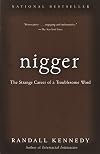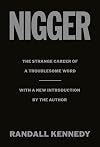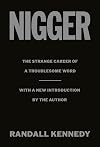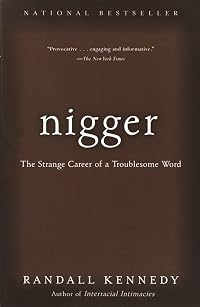
Nigger: The Strange Career of a Troublesome Word
by Randall Kennedy
On This Page
Description
The twentieth anniversary edition of one of the most controversial books ever published on race and language is now more relevant than ever in this season of racial reckoning.In addition to a brave and bracing inquiry into the origins, uses, and impact of the infamous word, this edition features an extensive new introduction that addresses major developments in its evolution during the last two decades of its vexed history.
In the new introduction to his classic work, Kennedy questions the show more claim that “nigger” is the most tabooed term in the American language, faced with the implacable prevalence of its old-fashioned anti-Black sense. “Nigger” continues to be part of the loud soundtrack of the worst instances of racial aggression in American life—racially motivated assaults and murders, arson, intentional infliction of emotional distress, and workplace harassment.
Consider this: twenty years ago, Kennedy wrote that any major politician credibly accused of using “nigger” would be immediately abandoned and ostracized. He was wrong. Donald Trump, former POTUS himself, was credibly charged, and the allegation caused little more than a yawn. No one doubted the accuracy of the claim but amidst all his other racist acts his “nigger-baiting” no longer seemed shocking. “Nigger” is still very much alive and all too widely accepted.
On the other hand, Kennedy is concerned to address the many episodes in which people have been punished for quoting, enunciating, or saying “nigger” in circumstances that should have made it clear that the speakers were doing nothing wrong—or at least nothing sufficiently wrong to merit the extent of the denunciation they suffered.
He discusses, for example, the inquisition of Bill Maher (and his pathetic apology) and the (white) teachers who have been disciplined for reading out loud texts that contain “nigger.” He argues that in assessing these controversies, we ought to be more careful about the use/mention distinction: menacingly calling someone a “nigger” is wholly different than quoting a sentence from a text by James Baldwin or Toni Morrison or Flannery O’Connor or Mark Twain.
Kennedy argues against the proposition that different rules should apply depending upon the race of the speaker of “nigger,” offering stunningly commonsensical reasons for abjuring the erection of such boundaries.
He concludes by venturing a forecast about the likely status of “nigger” in American culture during the next twenty years when we will see the clear ascendance of a so-called “minority majority” body politic—which term itself is redolent of white supremacy. show less
Tags
Recommendations



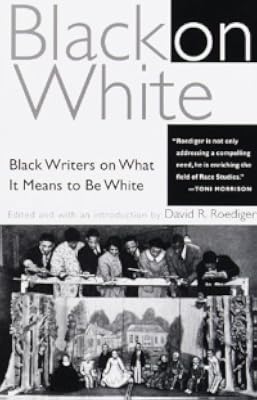
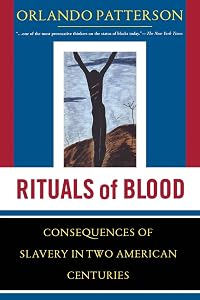
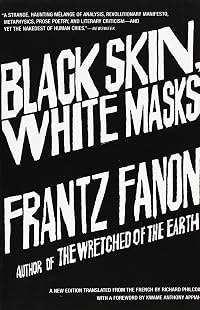
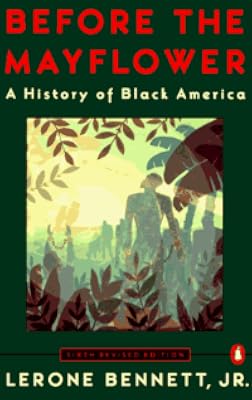
Member Recommendations
Member Reviews
I cannot resist a book with a provocative title, and there can't be many that top this.
I was slightly disappointed to see that this was actually a 20th anniversary edition of a book originally released in 2002, fearing it would be out of date, but aside from multiple references to Bill Cosby as a respected authority and thanks to a new introduction, it holds up pretty well, racism having a horrible timelessness to it. It's still too bad though, because it would be interesting to see how recent developments with Joe Rogan and Morgan Wallen might effect the author's viewpoint.
I was surprised that the author was a first amendment absolutist who has a negative opinion about cancel culture, political correctness, hate speech laws, and show more eradication of the N-word. As an academic he wants to be sure to examine and assess the context, nuance, and relativism associated with specific uses of the word instead of coming up with arbitrary rules. I did not always agree with him, but could usually follow the logic of his stance. I'm a firm believer in free speech -- after all, it's the quickest and easiest way to find out who the assholes in any group are, and that's always useful information to have -- but too many people confuse free speech with consequence-free speech, and I worry that this book might be seen by certain idiots as a hall pass.
I do find it contradictory that the author criticized N-word eradicationists for not having hard and specific statistics to prove a rise in the use of the N-word while at the same time seeming to advocate that Black Americans harden their skin against its use toward them and not report it or make a big deal of it, ensuring we won't have meaningful and accurate statistics.
Author opinions aside, I do appreciate the history provided, tracing the word's appearance through law, court cases, culture, and entertainment. Lots of fascinating tidbits are unearthed and revisited. show less
I was slightly disappointed to see that this was actually a 20th anniversary edition of a book originally released in 2002, fearing it would be out of date, but aside from multiple references to Bill Cosby as a respected authority and thanks to a new introduction, it holds up pretty well, racism having a horrible timelessness to it. It's still too bad though, because it would be interesting to see how recent developments with Joe Rogan and Morgan Wallen might effect the author's viewpoint.
I was surprised that the author was a first amendment absolutist who has a negative opinion about cancel culture, political correctness, hate speech laws, and show more eradication of the N-word. As an academic he wants to be sure to examine and assess the context, nuance, and relativism associated with specific uses of the word instead of coming up with arbitrary rules. I did not always agree with him, but could usually follow the logic of his stance. I'm a firm believer in free speech -- after all, it's the quickest and easiest way to find out who the assholes in any group are, and that's always useful information to have -- but too many people confuse free speech with consequence-free speech, and I worry that this book might be seen by certain idiots as a hall pass.
I do find it contradictory that the author criticized N-word eradicationists for not having hard and specific statistics to prove a rise in the use of the N-word while at the same time seeming to advocate that Black Americans harden their skin against its use toward them and not report it or make a big deal of it, ensuring we won't have meaningful and accurate statistics.
Author opinions aside, I do appreciate the history provided, tracing the word's appearance through law, court cases, culture, and entertainment. Lots of fascinating tidbits are unearthed and revisited. show less
I approached this book as I would an unexploded landmine, acknowledging the effect the title word has had over the United States, and throughout the world.
The book turned out to be more academic than I initially expected (I was looking for something akin to the popular history genre of the history of an inanimate object, fish, a particular year et al) but I found Kennedy's writing style to be far less dry than many academic tomes I've been forced to read over the years. The book is also short enough to finish in a few sittings.
Being a white man I had to be very careful as to how I physically read this in public. When people asked me what I was reading, I was very careful to say something like "This is a book by an Afro-American show more scholar on language and how it can subverted." Then I showed them the cover. show less
The book turned out to be more academic than I initially expected (I was looking for something akin to the popular history genre of the history of an inanimate object, fish, a particular year et al) but I found Kennedy's writing style to be far less dry than many academic tomes I've been forced to read over the years. The book is also short enough to finish in a few sittings.
Being a white man I had to be very careful as to how I physically read this in public. When people asked me what I was reading, I was very careful to say something like "This is a book by an Afro-American show more scholar on language and how it can subverted." Then I showed them the cover. show less
A strange career indeed. This slim volume is written in what I tend to think of as "the college structure". Namely it is packed to the gills with historical and contemporary examples arranged categorically. In terms of volume most of these relate to pejorative racist usage, but, true to his byline, Kennedy is just as committed ironic, satirical and affectionate uses of the word.
As someone that abhors taboos of any sort and loves words, slurs have long occupied a difficult status for me. I don't think they should be afforded special status, off limits to all but those who would use them to attack, but I can't ignore their baggage or people's sensitivity to them. Randall seems to have a similar feeling on the matter. He certainly doesn't show more excuse vile usage of the titular word, but he knows that attempts to regulate it's usage, or excise it from the English language entirely are not only naive, they would undercut freedom of speech and turn victims of verbal attacks into agents of censure. As ugly as words can be it it's important to remember that freedom of speech doesn't mean much if we can pick and choose what speech it applies to.
But back to the book. Kennedy briefly looks at the origin of the word and when it picked up it's nasty connotations before diving into historical and contemporary examples or it's uses and abuses. There are some pretty nasty stories, but thankfully as you read on the breadth of the "N-word" becomes more apparent. Kennedy celebrates ironic, sarcastic and affectionate uses of the word within the black community citing people like Richard Pryor and Chris Rock as examples of people that wouldn't let the fact that white people might hear them and not understand their usage dictate how they spoke. Positive uses of "nigger" from literature, music, and comedy are reprinted and discussed.
The last segment is dedicated to controversial usage of the word and this section is done especially well. Kennedy presents the facts of the situation at hand before weighing in on the subject. This allows the reader time to think over what they think of the usage in question before Kennedy makes his case.
All and all I found this quick and edifying. It gave me fuller perspective on the use of the word and it gives me great pleasure that members of the black community are bending the word to there own purposes. Despite Kennedy's defense of non-blacks using the word in positive manners I think I'll leave wrecking this particular taboo to those better suited to it. As it is I'm perfectly happy taking the teeth out of "cunt" anyways.
The one thing I wish was included but wasn't was commentary on the recent censoring of Huckleberry Finn. Kennedy defends the book and Twain's usage of nigger in it, but this book was published years before the regualtionists excised all usage of the word from an edition of Huck Finn.
To close out, it's not the words you use, it's what you say with them. show less
As someone that abhors taboos of any sort and loves words, slurs have long occupied a difficult status for me. I don't think they should be afforded special status, off limits to all but those who would use them to attack, but I can't ignore their baggage or people's sensitivity to them. Randall seems to have a similar feeling on the matter. He certainly doesn't show more excuse vile usage of the titular word, but he knows that attempts to regulate it's usage, or excise it from the English language entirely are not only naive, they would undercut freedom of speech and turn victims of verbal attacks into agents of censure. As ugly as words can be it it's important to remember that freedom of speech doesn't mean much if we can pick and choose what speech it applies to.
But back to the book. Kennedy briefly looks at the origin of the word and when it picked up it's nasty connotations before diving into historical and contemporary examples or it's uses and abuses. There are some pretty nasty stories, but thankfully as you read on the breadth of the "N-word" becomes more apparent. Kennedy celebrates ironic, sarcastic and affectionate uses of the word within the black community citing people like Richard Pryor and Chris Rock as examples of people that wouldn't let the fact that white people might hear them and not understand their usage dictate how they spoke. Positive uses of "nigger" from literature, music, and comedy are reprinted and discussed.
The last segment is dedicated to controversial usage of the word and this section is done especially well. Kennedy presents the facts of the situation at hand before weighing in on the subject. This allows the reader time to think over what they think of the usage in question before Kennedy makes his case.
All and all I found this quick and edifying. It gave me fuller perspective on the use of the word and it gives me great pleasure that members of the black community are bending the word to there own purposes. Despite Kennedy's defense of non-blacks using the word in positive manners I think I'll leave wrecking this particular taboo to those better suited to it. As it is I'm perfectly happy taking the teeth out of "cunt" anyways.
The one thing I wish was included but wasn't was commentary on the recent censoring of Huckleberry Finn. Kennedy defends the book and Twain's usage of nigger in it, but this book was published years before the regualtionists excised all usage of the word from an edition of Huck Finn.
To close out, it's not the words you use, it's what you say with them. show less
Very interesting, especially since three of the novels I teach every year use the "N-word." Kennedy gives a historical account of the word and argues that some (not all) of the attempts to eliminate the word from literature, rap, etc. are misguided. I've always thought the word to be reprehensible, but reading this book gave me more insight as to why.
Though I don't read much non-fiction nowadays, I put this book on my TBR a few years ago after reading several positive reviews. And, I am glad I did.
The author, Randall Kennedy, explores the use of the N-word in American culture through personal experience, anecdotes, court cases, and many other sources. The book is well written and thoroughly researched (25 pages for the 93 endnotes!) making it an interesting, thought-provoking read. I highly recommend it.
Rating: 4
The author, Randall Kennedy, explores the use of the N-word in American culture through personal experience, anecdotes, court cases, and many other sources. The book is well written and thoroughly researched (25 pages for the 93 endnotes!) making it an interesting, thought-provoking read. I highly recommend it.
Rating: 4
A good history of the word and its usages in American life with a large focus on the legal system (the author is a lawyer). Probably the best straight history of the subject. The author does suggest the word could be used properly in art, writing, and teaching, and he argues that non-insulting, non-racist usages should not be punished. Oh, we've come a long way since 2002!
A legal-historical review of the racial epithet's long and troubled road throughout American history. Its conservative bent becomes more evident as the book goes on, i.e. the author takes a broader view and clearly disagrees with the eradicationist view of the word.
Recommended for those interested in American race relations and linguistics.
Recommended for those interested in American race relations and linguistics.
Members
- Recently Added By
Lists

Books Read in 2023
5,638 works; 147 members

List of Removed Books from Nimitz Library
353 works; 1 member
Author Information

Awards and Honors
Distinctions
Common Knowledge
- Canonical title
- Nigger: The Strange Career of a Troublesome Word
- Alternate titles
- Nigger: The Strange Career of a Troublesome Word - with a New Introduction by the Author (20th anniversary edition, 2022) (20th anniversary edition, 2022)
- Original publication date
- 2002
- People/Characters
- Randall Kennedy; Hank Aaron; Delphine Abraham; Phillip Adamo; Muhammad Ali; Elijah Anderson (show all 264); Natalie Anderson; Tisha Anderson; William Andrews; Frank Artiles; James Baldwin; Alben Barkley; Daisy Bates; Thaddeus Bell; Cheryl Bentsen; Coleman Livingston Blease; James L. Bolden; Julian Bond; Tawana Brawley; Cecil Brown; Claude Brown; Henry Brown; H. Rap Brown; Lenny Bruce; Ed Bullins; George W. Bush; James Byrnes; Godfrey Cambridge; Jonathan Capehart; Rob Carmona; Rebecca Carroll; Jackie Chan; Chance The Rapper; Iris Chang; Dave Chappelle; Chevy Chase; Charles Chesnutt; Farai Chideya; Agatha Christie; Ta-Nehisi Coates; Johnny Cochran; Avern Cohn; Louis Coleman (reverend); Sabrina Collins; Joseph Conrad; Coolio; Bill Cosby; Ann Coughlin; Countee Cullen; Cypress Hill; Keith Dambrot; Christopher Darden; Allison Davis; Benjamin Jefferson Davis; Jarvis DeBerry; Richard Delgado; Ron Dellums; Emily Dexter; Charles Dickens; Debra Dickerson; Charles C. Diggs, Jr.; DMX; E. L. Doctorow; Frederick Douglass; Dr. Dre; Theodore Dreiser; Kevin Dua; David Duke; Henry Dumas; Lena Dunham; Michael Eric Dyson; Hosea Easton; Ralph Ellison; Eminem; Halford H. Fairchild; Julius Fisher; Redd Foxx; Felix Frankfurter; John Hope Franklin; Mark Fuhrman; Henry Louis Gates, Jr.; Jeanie Suk Gersen; Geto Boys; Erving Goffman; Ronald Goldman; Stanley Z. Goodfarb; Lawrence Graham; Ely Green; Jeff Greenberg; Dick Gregory; John Grisham; Adam Habib; Andrew Hacker; William Henry Hance; Ken Hardy; Lucius Harper; Persey Harris III; John Hartigan; Umar Bin Hassan; William Hastie; Patrick Henry; Angelo Herndon; James Hicks; A. Leon Higginbotham; Marc Lamont Hill; James Hinton; Oliver Wendell Holmes, Jr.; Charles Hamilton Houston; David Howard; William Dean Howells; Langston Hughes; Ice Cube; Ice-T; Lance Ito; Linda Jackson; Bruce A. Jacobs; Harriet Jacobs; Ray Jacobs; Sonia James; Jaz-Z; Brandi Johnson; Charles S. Johnson; James Weldon Johnson; Lyndon Baines Johnson; Paul Johnson; Ira Jones; Michael Jordan; Karen Kaivola; John F. Kennedy; Martin Luther King, Jr.; Larry Kramer; Robin Tolmach Lakoff; Lisa Lampanelli; Nella Larsen; Charles Lawrence; Helen Jackson Lee; Spike Lee; Tom S. Lee; William Lee; John Lennon; Sinclair Lewis; Theophilus Lewis; Abraham Lincoln; Huey Long (Huey P. Long); Jennifer Lopez; Audre Lorde; Moms Mabley; Claude McKay; Charles McLaurin; James Clark McReynolds; Michael Brad Magleby; Bill Maher; Clarence Major; Malcolm X; Julianne Malveaux; Branford Marsalis; Thurgood Marshall; Mari Matsuda; Scott Matusick; DeRay Mckesson; Kweisi Mfume; Courtland Milloy; Lansing L. Mitchell; Liza Mixon; Robert Montgomery; Toni Morrison; John R. Morse; J. Kevin Mulroy; Benjamin Murdock; Elie Mystal; Ron Nelson; Richard M. Nixon; Joyce Carol Oates; Barack Obama; Flannery O'Connor; Eugene O'Neill; Yoko Ono; Gwyneth Paltrow; Lonnae O'Neal Parker; Adam Clayton Powell, Jr.; Paul C. Pribbenow; Richard Pryor; Tom Pyszczynki; Marjorie Kinnan Rawlings; Catherine Cooper Reardon; Stephen Reinhardt; Paul Robeson; Aleia Robinson; Jackie Robinson; Chris Rock; John Rolfe; Eleanor Roosevelt; Theodore Roosevelt; Otis Ross; Carl Rowan; Nipsey Russell; Richard Russell; Mort Sahl; Carl Sandburg; Symone Sanders; Ben Sasse; Barry Saunders; Tony Sayger; George S. Schuyler; Gil Scott-Heron; David O. Selznick; Samuel Sewall; Tupac Shakur; Laurie Sheck; Edward Sheldon; E. R. Shipp; Beanie Sigel; Nicole Brown Simpson; O. J. Simpson; Frederic N. Smalkin; Lillian Smith; Otis Smith; Patti Smith; Tommie Smith; Tony Snow; Arthur K. Spears; Jerry L. Spivey; James H. Spriggs; Ernest Stickell; Harriet Beecher Stowe; Charles Sumner; Curtis L. Swango; Eugene Talmadge; Quentin Tarantino; Strom Thurmond; Emmett Till; Benjamin Tillman; Jack William Tocco; A Tribe Called Quest; Harry S. Truman; Donald Trump; Chris Tucker; Mark Twain; Stewart Udall; Craig Unger; Robert L. Vann; Carl Van Vechten; Charles Duane Van Vechten; Eugene Volokh; John H. Wallace; W. J. Walls; Booker T. Washington; Mel Watkins; Rufus Coley Watson, Jr.; Noah Webster; Theodore V. Wells, Jr.; Walter White; Stephen J. Whitfield; Roy Wilkins; Anthony Williams; Katt Williams; August Wilson; Brenda Woodford; Tiger Woods; Richard Wright; Adele Young; Amos Jones (Amos 'n' Andy); Andrew Hogg "Andy" Brown (Amos 'n' Andy); George "Kingfish" Stevens (Amos 'n' Andy)
- Important places
- United States of America; USA
- Dedication
- This book is dedicated to
The Board
Gary E. Bell, Chairman for Life
Thaddeus J. Bell
Reginald S. Bell
Veta T. Bell Faison
William Hopkins
Henry H. Kennedy Jr.
Angela s. Kennedy Acree
Randall L. ... (show all)Kennedy
James L. Price Jr.
Clement A. Price
Jarmila L. Price
Cyril O. "Butch" Spann Jr.
This book is also dedicated to the parents of all the board members. Special recognition is given to Anna Spann Price, Hattie Lillian Spann Bell, and Rachel Spann Kennedy, the surviving daughters of Seller Spann and Lillian V. Spann (Big Mama). These three extraordinary women have generously offered guidance, support, discipline, wisdom, and love to all the members of The Board. - First words
- How should nigger be defined?
- Last words
- (Click to show. Warning: May contain spoilers.)For bad and for good, nigger is thus destined to remain with us for many years to come -- a reminder of the ironies and dilemmas, the tragedies and glories, of the American experience.
- Original language
- English
- Disambiguation notice
- Contents: [Introduction to the Twentieth-Anniversary Edition -- ] Introduction -- One. The Protean N-Word -- Two. Nigger in Court -- Three. Pitfalls in Fighting Nigger: Perils of Deception, Censoriousness, and E... (show all)xcessive Anger -- Four. How Are We Doing with Nigger? -- Afterword -- Endnotes -- Acknowledgments -- Index
Classifications
- Genres
- Nonfiction, General Nonfiction, History, Politics and Government
- DDC/MDS
- 305.896073 — Society, government, & culture Social sciences, sociology & anthropology Social group - Age, Gender, Ethnicity Ethnic and national groups Other ethnic and national groups Africans and people of African descent; Blacks of African origin standard subdivisions / located in North America African Americans {United States Blacks}
- LCC
- E185.625 .K46 — History of the United States United States
- BISAC
Statistics
- Members
- 624
- Popularity
- 46,917
- Reviews
- 12
- Rating
- (3.80)
- Languages
- English
- Media
- Paper, Audiobook, Ebook
- ISBNs
- 9
- UPCs
- 1
- ASINs
- 7