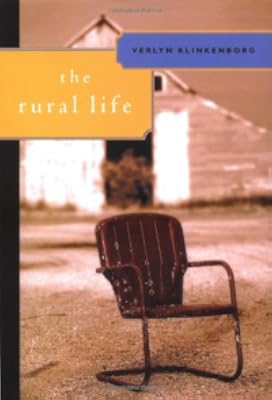
The Rural Life
by Verlyn Klinkenborg
On This Page
Description
Celebrates the rural life, its pleasures and hardships, and the beauty of the American landscape, in a series of reflections corresponding to the months of the year.Tags
Recommendations



















Member Reviews
Klinkenborg writes about life in the country with humour, elegant prose and poetic imagery. He is a marvelous observer and every word seems just right. Take this passage about a late spring:
The signs of spring are thrown away, like unheeded hints. Robins mope in the lower branches of a thick-budded magnolia, waiting for the worms of open turf. The red-winged blackbird I heard in a treetop the other day sounded, somehow, like an asterisk. The chorus of birdsong is entirely different than it was a few weeks ago, but to me it lacks an objective correlative. The tip of a single crocus would do. The house is full of seedlings, especially basil seedlings, all of them at the two-leaf stage, but hooded and mum. The horses are shedding, and it show more looks like bad management on their part.
I couldn't write like that if I tried for a hundred years but Klinkenborg writes regularly like this for the New York Times. I get a kick out of the mental picture of some uptight suited lawyer in Manhattan reading his columns. It seems ironic that people who have no idea of real country life have access to his views while people who live in the real country can read them only when they are collected like this. However, maybe New Yorkers need this point of view more than those immersed in the country. show less
The signs of spring are thrown away, like unheeded hints. Robins mope in the lower branches of a thick-budded magnolia, waiting for the worms of open turf. The red-winged blackbird I heard in a treetop the other day sounded, somehow, like an asterisk. The chorus of birdsong is entirely different than it was a few weeks ago, but to me it lacks an objective correlative. The tip of a single crocus would do. The house is full of seedlings, especially basil seedlings, all of them at the two-leaf stage, but hooded and mum. The horses are shedding, and it show more looks like bad management on their part.
I couldn't write like that if I tried for a hundred years but Klinkenborg writes regularly like this for the New York Times. I get a kick out of the mental picture of some uptight suited lawyer in Manhattan reading his columns. It seems ironic that people who have no idea of real country life have access to his views while people who live in the real country can read them only when they are collected like this. However, maybe New Yorkers need this point of view more than those immersed in the country. show less
The Rural Life made this city girl almost want to move to a farm. It's a month-by-month journal of rural life, mostly on the author's upstate New York farm but also including some memories of the Iowa farm he grew up on along with others from time spent in the west. I found it charming and the language often beautiful. Here are some excerpts:
(from April) "The signs of spring are thrown away, like unheeded hints. Robins mope in the lower branches of a thick-budded magnolia, waiting for the worms of open turf. The red-winged black-bird I heard in a treetop the other day sounded, somehow, like an asterisk."
(from September) I planted the dark side of the garden in squash and pumpkins, and for a few weeks the seedlings grew and the race was show more on. The French pumpkins have ovetaken the butternut squash, and they are all bearing down in a dead heat on the hops arbor, where the hops have lapped the climbing roses."
(from September) Real frost will come tonight, and it will bring down the garden, which was doing a good job of bringing itself down already. We should stack wood or lift tomato cages or till ground for next year's garlic. Instead we'll sit in the autumn sunshine and enjoy being bone tired, harvesting our fatigue."
"harvesting our fatigue"...isn't that a wonderful phrase? show less
(from April) "The signs of spring are thrown away, like unheeded hints. Robins mope in the lower branches of a thick-budded magnolia, waiting for the worms of open turf. The red-winged black-bird I heard in a treetop the other day sounded, somehow, like an asterisk."
(from September) I planted the dark side of the garden in squash and pumpkins, and for a few weeks the seedlings grew and the race was show more on. The French pumpkins have ovetaken the butternut squash, and they are all bearing down in a dead heat on the hops arbor, where the hops have lapped the climbing roses."
(from September) Real frost will come tonight, and it will bring down the garden, which was doing a good job of bringing itself down already. We should stack wood or lift tomato cages or till ground for next year's garlic. Instead we'll sit in the autumn sunshine and enjoy being bone tired, harvesting our fatigue."
"harvesting our fatigue"...isn't that a wonderful phrase? show less
still reading but so far I love it! finished and still do:
... there's almost nothing you can't make use of if you put your mind to it, and that includes frost. In late February or early March, when the snow has melted but the ground is still frozen, I'm going to scatter of mix of red clover and bird's foot trefoil seed across the pasture. This is called frost seeding.
... there's almost nothing you can't make use of if you put your mind to it, and that includes frost. In late February or early March, when the snow has melted but the ground is still frozen, I'm going to scatter of mix of red clover and bird's foot trefoil seed across the pasture. This is called frost seeding.
About: A year-long chronicle of life on rural farms. Horses, weather, birds, insects and gardens are prominently featured.
Pros: Wonderful sense of place, well written.
Cons: Klinkenborg jumps around between several locations: Montana, Wyoming, New York, Colorado, Utah etc. It would have been much less jarring if he stuck to one place. Doesn't note until the last page of the book that this January-December organized work was not only written in several places but also written over several years and was originally just a bunch of essays. It would've been much more helpful if this information was given at the beginning of the book, so the reader knew what to expect. It would probably have flowed much better if he actually wrote the book as show more a book and not just tried to turn a bunch of essays into a book. show less
Pros: Wonderful sense of place, well written.
Cons: Klinkenborg jumps around between several locations: Montana, Wyoming, New York, Colorado, Utah etc. It would have been much less jarring if he stuck to one place. Doesn't note until the last page of the book that this January-December organized work was not only written in several places but also written over several years and was originally just a bunch of essays. It would've been much more helpful if this information was given at the beginning of the book, so the reader knew what to expect. It would probably have flowed much better if he actually wrote the book as show more a book and not just tried to turn a bunch of essays into a book. show less
I haven't been a reader of the NY Times, so when I saw this book on a bargain table - didn't realize the author wrote a regular column for them, only that the last name had ties to my Iowa hometown.
Guess he's not from my area, but originally from NW Iowa, then has 'rural' ties to other states.
It's a collection of columns - tracing seasons in various parts of the country.
The writing is lovely and I pick it up often to re-read something from a month.
A most enjoyable book.
Read in 2009.
Guess he's not from my area, but originally from NW Iowa, then has 'rural' ties to other states.
It's a collection of columns - tracing seasons in various parts of the country.
The writing is lovely and I pick it up often to re-read something from a month.
A most enjoyable book.
Read in 2009.
Charming book.
Essays about moving and starting over in the country. I never got deeply involved in this book; don't know why.
Members
- Recently Added By
Author Information

18+ Works 1,455 Members
Verlyn Klinkenborg comes form a family of Iowa farmers. He is a member of the editorial board of The New York Times and has written for The New Yorker, Mother Jones, and Harper's. He lives on a small farm in upstate New York.
Work Relationships
Is abridged in
Common Knowledge
- Original publication date
- 2003
- Dedication
- The Rural Life is dedicated to my dad, Ronald Klinkenborg who got us all back to the country in the first place.
- First words
- Every year about now, I feel the need to keep a journal.
- Last words
- (Click to show. Warning: May contain spoilers.)Now when I get up in the middle of the night and see the chicken light burning, throwing a yellow glow out into the darkness, I find myself comforted and go back to bed and to sleep.
Classifications
Statistics
- Members
- 320
- Popularity
- 99,502
- Reviews
- 8
- Rating
- (3.74)
- Languages
- English
- Media
- Paper, Ebook
- ISBNs
- 5
- ASINs
- 5