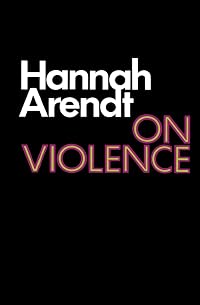
On Violence
by Hannah Arendt 
On This Page
Description
An analysis of the nature, causes, and significance of violence in the second half of the twentieth century. Arendt also reexamines the relationship between war, politics, violence, and power.Tags
Recommendations


















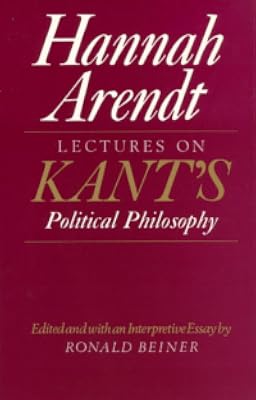


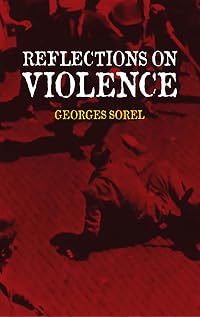




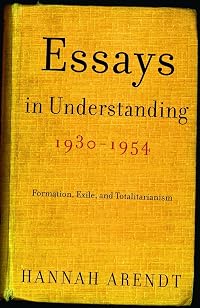


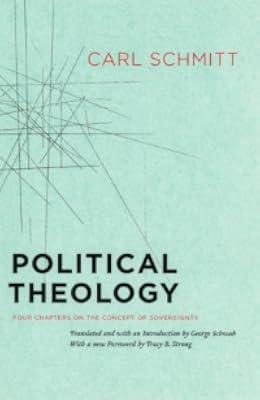


Member Reviews
Now this was a very interesting read. I expected this to be book about nature of violence but it is actually book that looks at rise of violence in 1960's during the student riots that shook the Western world and also had an occurrence in the East at the time but (as expected) with lesser effect than in the West.
Author makes a very good distinction between power and violence and what links them. Power as a means of controlling the society through majority of populace and violence that gets used when power is not possible in order to subdue the populace by minority [of populace]. Once power that-is gets challenged and it does not have proper answer to critique it starts to lose its authority and this is something every politician is show more scared sh**less off. This is why it is important to ridicule every idiotic decision government makes - laughter is sometimes more powerful weapon than actual weapon.
It is important to remember that knife-drawing never happens at the beginning but at the end and one needs to make sure that final moment never takes place.
With this in mind we are given rather disturbing picture of the 60's from where all the couch revolutionaries come from. I say couch revolutionaries because all these fiery philosophers are very akin to stock market analysts of our days - they will spit on the very society that gives them means to live (majority are professors) and they will talk whatever they think is the ultimate truth while constantly avoiding the fact that their speeches will incite the masses that are trying to find the way to communicate with the powers-to-be to change things for a better. And when finally proverbial sh*t hits the fan they will just stand aside and say "who, me? nooooo I was misunderstood". I find it very disturbing that people that live off the spoken word so blatantly disregard the power of the same spoken word.
So in 60's Left (same one as today) became more and more violent (same as today), led by philosophers arguing that violent action is required to force the change. This was a shift because so far at that moment call to violence was coming usually from the Right while Left was usually concentrated on peaceful (or as peaceful as possible, or even short-lived violent approach) action. So turning to the violent ways was unexpected for the Left but that is what happened for the first time in 60's.
So what was the goal? Roots for rise of violence in Left can be found in what author calls loss of trust in the institutions and growing disaffection of people with the way states were ran and frustration because there seems to be no way of initiating the change through normal means. Governments and other state institutions got heavily bureaucratized in such a way that ordinary people get frustrated because they dont have anyone to contact to talk about their problems. Entire government basically became one after another commission that has no responsibility for anything, everything feels like a quick sand. But even in that case current governments are elected through democratic process so what is alternative? I agree with author that change needs to be done on existing system because pursuing some utopian dream will only bring tyranny through forced change - simply for a reason that such change brings vacuum that gets quickly populated by very aggressive and power hungry people (usually very unscrupulous) that can not be removed from power that easily (just look at Soviet Revolution or last year when it became obvious how unwilling are politicians to denounce their powers once they attain them). Chaos is never good starting point.
Author gives a very disturbing observations on how people during the riotous 60's started to raise important questions that were constantly addressed in a very sloppy way that laid the foundation for future discord (especially in case of racial questions). She shows how universities started to decay through introduction of ever more useless classes that become nothing more but verbal exercise of the futile kind. In the 1960's universities were tightly coupled to industrial and military endeavors and it was rightly so that students and academics wanted this to stop, but what was the result? Research (and people) from universities moved to private sectors thus leaving universities to develop more and more unproductive studies. I especially liked author's observations on rise of various studies about violence from almost everyone - from zoologists to political theoreticians that are nothing more than reiterations of already known facts.
Author also gives a very chilling (considering this was written in 1970) view of influence of science and technology - people from scientific fields (physical science, not metaphysical one) did not have much impact in the 60's but given time they would gain more and more (and that happened) until finally we dont end up in technocratic tyranny (where it seems we are going to, I hope this does not happen). And that will be tyranny no matter the prefix.
I like how author constantly brings forth the fact that humans are humans, we react to certain things in a certain way and as long despair and feeling of futility and frustration rises in populace (and current situation for me does not look much different than 60's) levels of violence will also rise. Government needs to find the way to connect back to the very people that gave them power and hopefully they will do it in a productive way like De Gaulle did in 60's that actually brought some change.
Very interesting read, sometimes dense (German passage were tough) but with good insight into working of government-politics-populace. Author does not seem to be pure theoretician but someone who has hands-on experience with how political activities can deviate in a matter of seconds.
Recommended. show less
Author makes a very good distinction between power and violence and what links them. Power as a means of controlling the society through majority of populace and violence that gets used when power is not possible in order to subdue the populace by minority [of populace]. Once power that-is gets challenged and it does not have proper answer to critique it starts to lose its authority and this is something every politician is show more scared sh**less off. This is why it is important to ridicule every idiotic decision government makes - laughter is sometimes more powerful weapon than actual weapon.
It is important to remember that knife-drawing never happens at the beginning but at the end and one needs to make sure that final moment never takes place.
With this in mind we are given rather disturbing picture of the 60's from where all the couch revolutionaries come from. I say couch revolutionaries because all these fiery philosophers are very akin to stock market analysts of our days - they will spit on the very society that gives them means to live (majority are professors) and they will talk whatever they think is the ultimate truth while constantly avoiding the fact that their speeches will incite the masses that are trying to find the way to communicate with the powers-to-be to change things for a better. And when finally proverbial sh*t hits the fan they will just stand aside and say "who, me? nooooo I was misunderstood". I find it very disturbing that people that live off the spoken word so blatantly disregard the power of the same spoken word.
So in 60's Left (same one as today) became more and more violent (same as today), led by philosophers arguing that violent action is required to force the change. This was a shift because so far at that moment call to violence was coming usually from the Right while Left was usually concentrated on peaceful (or as peaceful as possible, or even short-lived violent approach) action. So turning to the violent ways was unexpected for the Left but that is what happened for the first time in 60's.
So what was the goal? Roots for rise of violence in Left can be found in what author calls loss of trust in the institutions and growing disaffection of people with the way states were ran and frustration because there seems to be no way of initiating the change through normal means. Governments and other state institutions got heavily bureaucratized in such a way that ordinary people get frustrated because they dont have anyone to contact to talk about their problems. Entire government basically became one after another commission that has no responsibility for anything, everything feels like a quick sand. But even in that case current governments are elected through democratic process so what is alternative? I agree with author that change needs to be done on existing system because pursuing some utopian dream will only bring tyranny through forced change - simply for a reason that such change brings vacuum that gets quickly populated by very aggressive and power hungry people (usually very unscrupulous) that can not be removed from power that easily (just look at Soviet Revolution or last year when it became obvious how unwilling are politicians to denounce their powers once they attain them). Chaos is never good starting point.
Author gives a very disturbing observations on how people during the riotous 60's started to raise important questions that were constantly addressed in a very sloppy way that laid the foundation for future discord (especially in case of racial questions). She shows how universities started to decay through introduction of ever more useless classes that become nothing more but verbal exercise of the futile kind. In the 1960's universities were tightly coupled to industrial and military endeavors and it was rightly so that students and academics wanted this to stop, but what was the result? Research (and people) from universities moved to private sectors thus leaving universities to develop more and more unproductive studies. I especially liked author's observations on rise of various studies about violence from almost everyone - from zoologists to political theoreticians that are nothing more than reiterations of already known facts.
Author also gives a very chilling (considering this was written in 1970) view of influence of science and technology - people from scientific fields (physical science, not metaphysical one) did not have much impact in the 60's but given time they would gain more and more (and that happened) until finally we dont end up in technocratic tyranny (where it seems we are going to, I hope this does not happen). And that will be tyranny no matter the prefix.
I like how author constantly brings forth the fact that humans are humans, we react to certain things in a certain way and as long despair and feeling of futility and frustration rises in populace (and current situation for me does not look much different than 60's) levels of violence will also rise. Government needs to find the way to connect back to the very people that gave them power and hopefully they will do it in a productive way like De Gaulle did in 60's that actually brought some change.
Very interesting read, sometimes dense (German passage were tough) but with good insight into working of government-politics-populace. Author does not seem to be pure theoretician but someone who has hands-on experience with how political activities can deviate in a matter of seconds.
Recommended. show less
Hannah Arendt has some fascinating things to say about the difference between violence and power. This book couldn't be more timely given the invasion of Ukraine by Russia.
That said, her logic is glaringly broken when she diminishes the interests of Black students during the protests of the 60s, and this is shockingly out of place as a Jew who escaped the Nazis; to minimize the needs of a whole group of people given the racism of the time defies explanation.
Outside of this incongruity, it is a book worth reading given our seeming destiny to pursue aggression.
That said, her logic is glaringly broken when she diminishes the interests of Black students during the protests of the 60s, and this is shockingly out of place as a Jew who escaped the Nazis; to minimize the needs of a whole group of people given the racism of the time defies explanation.
Outside of this incongruity, it is a book worth reading given our seeming destiny to pursue aggression.
Had this been written by Joan Bloggs, it would be out of print and almost certainly ignored. But it was written by Hannah Arendt, so it's in print. And given the lack of books on violence, that's probably a good thing. Unfortunately I suspect that it can easily be misread. The historical context here is everything: Arendt isn't writing about violence, she's writing about violence at the end of the 'sixties and start of the 'seventies, when for a brief moment fairly large numbers of people thought it was okay to blow up unjust things. Arendt makes her standard republican (not the party, which is increasingly less, you know, republican) argument that communal action can interrupt unjust structures, whereas violence can do so only very show more rarely, and for very short periods of time.
And she's also arguing against sociobiology's first golden age (if that's really the right term for it); people like Lorenz tried to find biological or psychological grounds for aggression, which has the obvious effect of naturalizing it and making it impossible to argue against. Not to mention being extremely silly, but that doesn't stop anyone in today's golden (again, wrong term) age of evo-psycho-sociobiology.
She argues by distinguishing between 'power,' which is what we have when we act communally; 'strength,' which is what an individual can do on her own; 'force,' which "should be reserved" for natural or structural force rather than intentional force; 'authority,' which is the possession of unquestioned leaders; and finally 'violence,' which is only ever an instrument to the ends of power or authority. This is all tendentious, but she puts it to good use.
Arendt argues on the basis of these definitions that revolution begins with a loss of authority, not with violent deeds; and that violence is not necessarily irrational. Fair enough.
But that seventies moment is far in the past. There aren't many people left who favor revolutionary violence (for better and worse); evo-psycho-sociobiologists spend their time naturalizing addictions rather than aggression; and making republican (not the party) arguments in public is met everywhere with scorn (on the right because you don't want the government's hand in your wallet; on the left because you don't want the government's hand on your privates).
What's left are a couple of interesting obiter dicta:
i) That the U.S.A. started out as an anti-sovereigntist entity, but then took over the idea of sovereignty from Old Europe.
ii) More bureaucracy will lead to more violence, because when there's nobody to blame with words, people lash out with limbs and weapons. show less
And she's also arguing against sociobiology's first golden age (if that's really the right term for it); people like Lorenz tried to find biological or psychological grounds for aggression, which has the obvious effect of naturalizing it and making it impossible to argue against. Not to mention being extremely silly, but that doesn't stop anyone in today's golden (again, wrong term) age of evo-psycho-sociobiology.
She argues by distinguishing between 'power,' which is what we have when we act communally; 'strength,' which is what an individual can do on her own; 'force,' which "should be reserved" for natural or structural force rather than intentional force; 'authority,' which is the possession of unquestioned leaders; and finally 'violence,' which is only ever an instrument to the ends of power or authority. This is all tendentious, but she puts it to good use.
Arendt argues on the basis of these definitions that revolution begins with a loss of authority, not with violent deeds; and that violence is not necessarily irrational. Fair enough.
But that seventies moment is far in the past. There aren't many people left who favor revolutionary violence (for better and worse); evo-psycho-sociobiologists spend their time naturalizing addictions rather than aggression; and making republican (not the party) arguments in public is met everywhere with scorn (on the right because you don't want the government's hand in your wallet; on the left because you don't want the government's hand on your privates).
What's left are a couple of interesting obiter dicta:
i) That the U.S.A. started out as an anti-sovereigntist entity, but then took over the idea of sovereignty from Old Europe.
ii) More bureaucracy will lead to more violence, because when there's nobody to blame with words, people lash out with limbs and weapons. show less
Arendt's book begins by commenting on the paradoxical nature of violence during the Cold War. She says, "The technical development of the implements of violence has now reached the point where no political goal could conceivably correspond to their destructive potential or justify their actual use in armed conflict." She is, of course, referring to the advent of the atomic age. In an age, then, when the victory of one party of another means the virtual annihilation of both, what political and ideological redress does one have?
The first part of "On Violence" argues that the United States is no longer a country which can feel the sharp throes of political populism; she argues that individual action has been deadened by an show more institutionalized bureaucracy, aided by brain trusters in the illustrious think tanks whose hypotheses eventually turn into "facts," which in turn beget other "facts," and whose magical thinking has a way of hypnotizing us. The most common countervailing force to this phenomenon was the group of student protests in the 1960s whose use of violent resistance was often Marxian or Leninist in orientation. These were often set off in the name of "participatory democracy." Yet what makes this a bit of bittersweet irony is that neither Marx nor Lenin advocated any such like a participatory democracy. Especially in Leninism, the socialist utopia would have been run by a one-party, top-down system which would have rendered both political participation and democracy superfluous.
In the second part, Arendt adduces some very interesting, if semantically peculiar, distinctions that I would agree are fundamental to understanding the politics of the twentieth century. She differentiates between "power," "force," "strength," "authority," and "violence," which she says are often - mistakably - used interchangeably. Here is a short apercu of some of her definitions. Power applies uniquely to the ability to act not alone, but in concert with others; it can only be maintained by a group, and as soon as the group dissolves (physically or ideologically), so does the power. Strength is what the individual has, and applies only to a single person. Authority is most frequently abused, and "can be vested in persons - there is such a thing as personal authority, as, for instance, between teacher and pupil - or it can be vested in offices, as, for instance, in the Roman senate, or in the hierarchical offices of the Church (a priest can grant valid absolution even though he is drunk.)" Finally, violence is characterized by its instrumental character, i.e., that we use an object to commit violence other than the physical force of the individual or the group.
Most interestingly, Arendt intimates that while using radical tactics and espousing antiestablishment means, the student protesters of the 1960s had bourgeois, Enlightenment, technocratic ideas of "progress" and "betterment" in mind. That the means and the ends of these protests were out of synch, for Arendt, posts one of the most interesting questions of twentieth-century American protest politics. show less
The first part of "On Violence" argues that the United States is no longer a country which can feel the sharp throes of political populism; she argues that individual action has been deadened by an show more institutionalized bureaucracy, aided by brain trusters in the illustrious think tanks whose hypotheses eventually turn into "facts," which in turn beget other "facts," and whose magical thinking has a way of hypnotizing us. The most common countervailing force to this phenomenon was the group of student protests in the 1960s whose use of violent resistance was often Marxian or Leninist in orientation. These were often set off in the name of "participatory democracy." Yet what makes this a bit of bittersweet irony is that neither Marx nor Lenin advocated any such like a participatory democracy. Especially in Leninism, the socialist utopia would have been run by a one-party, top-down system which would have rendered both political participation and democracy superfluous.
In the second part, Arendt adduces some very interesting, if semantically peculiar, distinctions that I would agree are fundamental to understanding the politics of the twentieth century. She differentiates between "power," "force," "strength," "authority," and "violence," which she says are often - mistakably - used interchangeably. Here is a short apercu of some of her definitions. Power applies uniquely to the ability to act not alone, but in concert with others; it can only be maintained by a group, and as soon as the group dissolves (physically or ideologically), so does the power. Strength is what the individual has, and applies only to a single person. Authority is most frequently abused, and "can be vested in persons - there is such a thing as personal authority, as, for instance, between teacher and pupil - or it can be vested in offices, as, for instance, in the Roman senate, or in the hierarchical offices of the Church (a priest can grant valid absolution even though he is drunk.)" Finally, violence is characterized by its instrumental character, i.e., that we use an object to commit violence other than the physical force of the individual or the group.
Most interestingly, Arendt intimates that while using radical tactics and espousing antiestablishment means, the student protesters of the 1960s had bourgeois, Enlightenment, technocratic ideas of "progress" and "betterment" in mind. That the means and the ends of these protests were out of synch, for Arendt, posts one of the most interesting questions of twentieth-century American protest politics. show less
50 years old, and simultaneously frighteningly up-to-date and hopelessly dated. Arendt picks up issues and dynamics that are still (and maybe always were) relevant in her attempt to define violence and power as not two sides of a coin but antitheses; power can employ violence, but violence destroys the base for power, which based on the situation in the late 60s - Vietnam, student revolts, Prague - asks questions of "Where do we go from here?" that largely remain unanswered, even though several of her warnings certainly ring even more true now. Unfortunately her definition of "power" feels flat and simplistic (not least in her glib dismissal of the Black Power movement and anticolonialism) which sort of makes her whole building shake a show more bit.
Good summary show less
Good summary show less
Why include Arendt's dissection of violence in the nonviolent stories shelf? Because she has some thought-provoking observations and insights into the nature of violence and nonviolence. I particularly appreciated this short work's discussion of the relationship and difference between violence and power.
Interesante reflexión acerca de cómo el vacío de poder es suplido por la violencia como recurso.
Members
- Recently Added By
Lists

Jewish Books
367 works; 24 members

Reading LIst
648 works; 1 member

Writers In Public Domain 2026
90 works; 1 member
Author Information

260+ Works 26,323 Members
Born in Hanover, Germany, Hannah Arendt received her doctorate from Heidelberg University in 1928. A victim of naziism, she fled Germany in 1933 for France, where she helped with the resettlement of Jewish children in Palestine. In 1941, she emigrated to the United States. Ten years later she became an American citizen. Arendt held numerous show more positions in her new country---research director of the Conference on Jewish Relations, chief editor of Schocken Books, and executive director of Jewish Cultural Reconstruction in New York City. A visiting professor at several universities, including the University of California, Columbia, and the University of Chicago, and university professor on the graduate faculty of the New School for Social Research, in 1959 she became the first woman appointed to a full professorship at Princeton. She also won a number of grants and fellowships. In 1967 she received the Sigmund Freud Prize of the German Akademie fur Sprache und Dichtung for her fine scholarly writing. Arendt was well equipped to write her superb The Origins of Totalitarianism (1951) which David Riesman called "an achievement in historiography." In his view, "such an experience in understanding our times as this book provides is itself a social force not to be underestimated." Arendt's study of Adolf Eichmann at his trial---Eichmann in Jerusalem (1963)---part of which appeared originally in The New Yorker, was a painfully searching investigation into what made the Nazi persecutor tick. In it, she states that the trial of this Nazi illustrates the "banality of evil." In 1968, she published Men in Dark Times, which includes essays on Hermann Broch, Walter Benjamin, and Bertolt Brecht (see Vol. 2), as well as an interesting characterization of Pope John XXIII. (Bowker Author Biography) show less
Hannah Arendt has a Legacy Library. Legacy libraries are the personal libraries of famous readers, entered by LibraryThing members from the Legacy Libraries group.
All Editions
Some Editions
Series
Belongs to Publisher Series
Work Relationships
Is contained in
Common Knowledge
- Canonical title
- On Violence
- Original title
- On violence
- Original publication date
- 1969
- Dedication
- For Mary
In Friendship - First words
- THESE REFLECTIONS were provoked by the events and debates of the last few years as seen against the background of the twentieth century, which has become indeed, as Lenin predicted, a century of wars and revolutions, hence a ... (show all)century of that violence which is currently believed to be their common denominator.
- Last words
- (Click to show. Warning: May contain spoilers.)Again, we do not know where these developments will lead us, but we know, or should know, that every decrease in power is an open invitation to violence -- if only because those who hold power and feel it slipping from their hands, be they the government or be they the governed, have always found it difficult to resist the temptation to substitute violence for it.
- Original language
- English
Classifications
- Genres
- Philosophy, Nonfiction, Sociology, General Nonfiction, Politics and Government, History
- DDC/MDS
- 303.6 — Society, government, & culture Social sciences, sociology & anthropology Social processes Conflict and conflict resolution ; Violence
- LCC
- HM886 .A74 — Social sciences Sociology (General) Sociology Social change
- BISAC
Statistics
- Members
- 1,231
- Popularity
- 20,085
- Reviews
- 12
- Rating
- (3.73)
- Languages
- 13 — Catalan, Czech, Danish, Dutch, English, German, Greek, Italian, Farsi/Persian, Portuguese, Spanish, Swedish, Turkish
- Media
- Paper, Ebook
- ISBNs
- 40
- UPCs
- 1
- ASINs
- 4