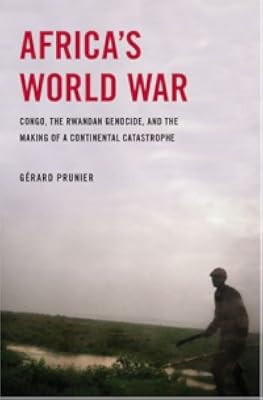
Africa's World War: Congo, the Rwandan Genocide, and the Making of a Continental Catastrophe
by Gerard Prunier
On This Page
Description
The Rwandan genocide sparked a horrific bloodbath that swept across sub-Saharan Africa, ultimately leading to the deaths of some four million people. In this extraordinary history of the recent wars in Central Africa, Gerard Prunier offers a gripping account of how one grisly episode laid the groundwork for a sweeping and disastrous upheaval. Prunier vividly describes the grisly aftermath of the Rwandan genocide, when some two million refugees--a third of Rwanda's population--fled to exile show more in Zaire in 1996. The new Rwandan regime then crossed into Zaire and attacked the refugees, slaughtering upwards of 400,000 people. The Rwandan forces then turned on Zaire's despotic President Mobutu and, with the help of a number of allied African countries, overthrew him. But as Prunier shows, the collapse of the Mobutu regime and the ascension of the corrupt and erratic Laurent-D#65533;sir#65533; Kabila created a power vacuum that drew Rwanda, Uganda, Angola, Zimbabwe, Sudan, and other African nations into an extended and chaotic war. The heart of the book documents how the whole core of the African continent became engulfed in an intractible and bloody conflict after 1998, a devastating war that only wound down following the assassination of Kabila in 2001. Prunier not only captures all this in his riveting narrative, but he also indicts the international community for its utter lack of interest in what was then the largest conflict in the world. Praise for the hardcover: "The most ambitious of several remarkable new books that reexamine the extraordinary tragedy of Congo and Central Africa since the Rwandan genocide of 1994." --New York Review of Books "One of the first books to lay bare the complex dynamic between Rwanda and Congo that has been driving this disaster." --Jeffrey Gettleman, New York Times Book Review "Lucid, meticulously researched and incisive, Prunier's will likely become the standard account of this under-reported tragedy." --Publishers Weekly show lessTags
Recommendations


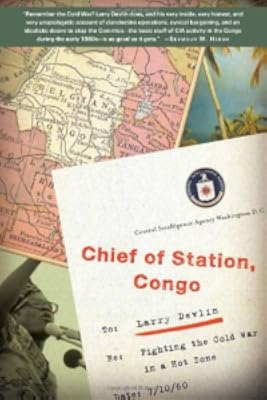
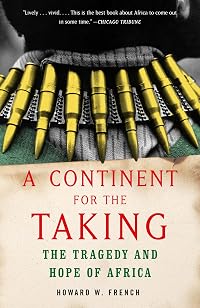
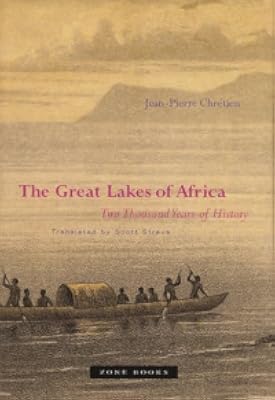
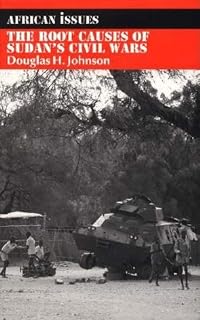

Member Recommendations
Member Reviews
http://nwhyte.livejournal.com/1344506.html
It is a tremendously detailed account of how, in the aftermath of the 1994 genocide, the new Rwandan government invaded its neighbour Zaire (now the Democratic Republic of Congo) kicking off a conflict that sucked in military interventions from Burundi, Uganda, Zimbabwe, Angola, Chad, Sudan and Namibia, and which also entangled Libya, the Central African Republic, Congo-Brazzaville, Zambia and South Africa before it ended in 2002. Roughly four million people were killed. The conflict was complex and remote, and got almost no coverage in international media. The Rwandans essentially got a free pass from the rest of the world because of the genocide, and because nobody like the Zairean/DRC rulers. show more Prunier details the horror that resulted, and does not spare his criticism of the local and international actors who made it possible. He even criticises his own earlier book on Rwanda, where he admits having believed the government when he should not have. (Interesting to note that his Rwanda book is quoted several times by Jared Diamond in Collapse.)
An excellent final chapter reflects that probably there will not be another African conflict that is as far-reaching geographically, although the basic conditions for future smaller wars remain. Prunier also analyses the failure of international policy-makers to get to grips with the realities of African political life. I found this point particularly compelling (it should be read as if all in the present tense):
'These states were universally weak because they lacked both legitimacy and money. Legitimacy was the biggest problem because even those states that did or could have money, such as the mining states, were also weak. Loyalty to the state is not an internalised feeling in today's Africa... Internally states are seen as cows to be milked. But because there is little milk and the cow can go dry at any time, it would perhaps be better to say that the state is a cow to be bled quickly before it slips into somebody else's hands. The state is an asset for the group in power, but that asset is fragile, there are no commonly accepted rules for future devolution of power, and things have to be grabbed while they last... The state is always somebody's state, never the State in the legal abstract form beloved of Western constitutional law. It is the Museveni dictatorship for the Acholi [Uganda], the Arab state for th southern Sudanese, the mestiço state for UNITA [Angola], or the Tutsi state for the Hutu [Rwanda]. When tribes are not the main problem, pseudo-tribes or other groupings will do.'
There is nothing deterministic about conflict: these wars begin because of rational choices made by individuals in leadership positions, reacting to the set of circumstances they find themselves in. Ending them, however, is much more difficult. show less
It is a tremendously detailed account of how, in the aftermath of the 1994 genocide, the new Rwandan government invaded its neighbour Zaire (now the Democratic Republic of Congo) kicking off a conflict that sucked in military interventions from Burundi, Uganda, Zimbabwe, Angola, Chad, Sudan and Namibia, and which also entangled Libya, the Central African Republic, Congo-Brazzaville, Zambia and South Africa before it ended in 2002. Roughly four million people were killed. The conflict was complex and remote, and got almost no coverage in international media. The Rwandans essentially got a free pass from the rest of the world because of the genocide, and because nobody like the Zairean/DRC rulers. show more Prunier details the horror that resulted, and does not spare his criticism of the local and international actors who made it possible. He even criticises his own earlier book on Rwanda, where he admits having believed the government when he should not have. (Interesting to note that his Rwanda book is quoted several times by Jared Diamond in Collapse.)
An excellent final chapter reflects that probably there will not be another African conflict that is as far-reaching geographically, although the basic conditions for future smaller wars remain. Prunier also analyses the failure of international policy-makers to get to grips with the realities of African political life. I found this point particularly compelling (it should be read as if all in the present tense):
'These states were universally weak because they lacked both legitimacy and money. Legitimacy was the biggest problem because even those states that did or could have money, such as the mining states, were also weak. Loyalty to the state is not an internalised feeling in today's Africa... Internally states are seen as cows to be milked. But because there is little milk and the cow can go dry at any time, it would perhaps be better to say that the state is a cow to be bled quickly before it slips into somebody else's hands. The state is an asset for the group in power, but that asset is fragile, there are no commonly accepted rules for future devolution of power, and things have to be grabbed while they last... The state is always somebody's state, never the State in the legal abstract form beloved of Western constitutional law. It is the Museveni dictatorship for the Acholi [Uganda], the Arab state for th southern Sudanese, the mestiço state for UNITA [Angola], or the Tutsi state for the Hutu [Rwanda]. When tribes are not the main problem, pseudo-tribes or other groupings will do.'
There is nothing deterministic about conflict: these wars begin because of rational choices made by individuals in leadership positions, reacting to the set of circumstances they find themselves in. Ending them, however, is much more difficult. show less
Gérard Prunier’s Africa’s World War: Congo, the Rwandan Genocide, and the Making of a Continental Catastrophe is a masterful study of the causes and consequences of the Rwandan Genocide (1994) and the First and Second Congo Wars (1996-1997, 1998-2003).
The Rwandan Civil War (1990-1994) began when Paul Kagame’s Rwandan Patriotic Front (RPF) invaded Rwanda from Uganda. After the assassination of Rwandan President Juvénal Habyarimana, Hutu extremists, both inside and outside of the Rwandan regime, massacred in door-to-door violence 500,000 to 1,000,000 people between April and July 1994. The RPF resumed the civil war and overthrew the regime, which fled with hundreds of thousands of refugees into neighbouring Zaire (now the show more Democratic Republic of the Congo).
The flight of the former Rwandan regime and génocidaires and hundreds of thousands of Rwandan refugees into Zaire transformed the conflict between a rebel movement and an African regime into an ethnopolitical quagmire that is almost impossible to understand. This is not to deny the ethnic complexities of the Rwandan Civil War. As René Lemarchand writes in Burundi: Ethnic Conflict and Genocide, the terms Hutu and Tutsi are not mutually exclusive, and an individual can identify as both Hutu and Tutsi. “In Kirundi, the term [Hutu] has two separate meanings: one refers to its cultural or ethnic underpinnings, the other to its social connotations. In the latter sense, Hutu refers to a ‘social subordinate’ in relation to somebody higher up in the pecking order. […] Thus a Tutsi cast in the role of a client vis-à-vis a wealthier patron would be referred to as ‘Hutu,’ even though his cultural identity remained Tutsi. Similarly, a [Tutsi] prince was a Hutu in relation to the [Tutsi] king, and a high-ranking Tutsi was a Hutu in relation to a [Tutsi] prince.” (pp. 9-10). This ambiguity regarding the terms “Hutu” and “Tutsi” made it impossible to accurately distinguish a person’s ethnic identity during the Rwandan or Burundian genocides. Often a victim was massacred with a machete or bludgeoned to death by their neighbour for no other reason than to steal the victim’s belongings or house. “Other genocides have been committed by strangers killing other strangers, and their violence was often engulfed in the wider violence of large international wars or revolutions,” Prunier writes. In Rwanda, the genocide “was a hill-by-hill and a home-by-home thing. And it is this neighborly quality, this grisly homespun flavor, that contaminated the world of the survivors after the killing had stopped.” The Rwandan Genocide “was so intertwined with everyday life that it could be used at every turn to secure an economic advantage, to settle an old grudge or to cover one’s tracks. Many people were killed by former Interahamwe simply because they might give evidence against them. Other people quickly found out that having survived the genocide could be a profitable business. They created ‘accusation cooperatives,’ which would sell their denunciations of real or supposed Interahamwe activities to those who could use such testimonies for economic or political benefit.” Tutsis survivors “were caught in nightmarish world between their Hutu neighbors, some of whom had been their saviors and some who had tried to murder them, and strange returnees from abroad who often accused them of compromising with the killers in order to save their lives. As for Hutu survivors, they were looked on as génocidaires by the returnee Tutsi and as traitors by the sympathizers of the old regime. Nobody was automatically innocent, and suspicion was everywhere.” (pp. 1-3).
When the former Rwandan regime, the génocidaires, and hundreds of thousands of refugees fled to Zaire, this created additional ethnic, social, economic, and political factors to the already complex Rwandan conflict.
Before the Rwandan Genocide, the corrupt Mobuto regime in Zaire was already on its last legs. The end of the Cold War transformed Mobuto from an anti-communist freedom fighter into an anachronistic African dictator in the eyes of the West. Mobuto’s support for, tolerance of, or simple incapacity to deal with foreign rebel movements active in Zaire — including UNITA fighting the MPLA regime in Angola; the génocidaires and former Rwandan regime fighting Kagame’s Rwandan regime; and various Ugandan rebels supported by Sudan and fighting the new Ugandan regime of Yoweri Museveni; the CNDD–FDD fighting against the Burundian regime — alienated many of the West’s new African allies. Many of these states, in turn, supported anti-Mobuto rebels in Zaire. Adding to this social, economic, ethnic, and political quagmire, the massive influx of foreigners — including the heavily armed forces of a former African regime — into the impoverished and ethnically volatile Zaire, especially its Kivu region, added further pressure on the land and environment the populace depended on for its subsistence. This created conflicts between the multitude of different peoples in the eastern Congo: the autochthonous peoples in the Kivus and Ituri, the Tutsi in South Kivu (Banyamulenge), the Hutu and Tutsi in North Kivu (Banyarwanda), the Rwandan and Burundi refugees that arrived in the 1960s and 1970s, the recent Rwandan and Burundian refugees, and the génocidaires and former Rwandan regime, which continued the genocide of Tutsis and moderate Hutus within the refugee camps in eastern Zaire.
“Does the reader at this point want to throw in the towel and give up on the ethnopolitical complexities of the region? I would not blame him,” writes Prunier (p. 201). YES — at least that’s what I thought.
In 1994, although for entirely different reasons, multiple African countries invaded or deployed troops in Zaire, including Rwanda, Uganda, Burundi, Angola, and Eritrea, and supported Laurent-Désiré Kabila’s rebel movement to overthrow Mobuto. After Kabila toppled Mobuto in 1997, he turned against his African masters, and multiple African countries again invaded Zaire, newly renamed the Democratic Republic of the Congo. According to Prunier, there were four layers of this second conflict (pp. 201-202):
The Core Conflict. This involved the Rwandan RPF regime, with Ugandan support, trying to overthrow Kabila.
The Second Layer. This involved several powerful African neighbours, including Angola, Zimbabwe, and Namibia, who were not involved and did not care about the Hutu-Tutsi conflict but wanted Kabila to remain in power for their own reasons.
The Third Layer. This involved countries such as Libya, Sudan, and Chad that got involved for reasons related to each other (ex. Chadian-Libyan conflict, the Chadian-Sudanese conflict) and their relations with other states involved in the Congo.
The Fourth Layer. This involved countries such as Burundi and the Central African Republic that were geographically close to the Congo and that were entangled with other countries active in the Congo
Added to this were the economic interests of the belligerents. Rwanda and Uganda were trying to wage war on the cheap, which involved the self-financing of troops and allied militias in the Congo. At the same time, Zimbabwean mining companies wanted to block South African mining interests in mineral-rich Katanga. Thus, Rwandan and Ugandan troops, while nominally fighting for the same objective — the overthrow of Kabila — engaged in brutal street fighting with each other in the Congo’s third-largest city, Kisangani, to control the airport and the diamond trade in August 1999, May 2000, and June 2000. What began as a “rational” war, Prunier writes, thus degenerated into “myriad ‘privatized,’ socially and economically motivated subconflicts.” (p. 225).
Prunier is a brilliant scholar of Africa and an excellent writer. His ‘tell-like-it-is’ manner of writing is both comical and to the point and makes understanding African complexities easier. After reading this book, I cannot honestly say that I understand Africa’s so-called World War, the deadliest conflict since WWII, with 5.8 million deaths. Still, Prunier’s analysis helped shed much-needed light on the conflict, one that I was not adequately acquainted with before. show less
The Rwandan Civil War (1990-1994) began when Paul Kagame’s Rwandan Patriotic Front (RPF) invaded Rwanda from Uganda. After the assassination of Rwandan President Juvénal Habyarimana, Hutu extremists, both inside and outside of the Rwandan regime, massacred in door-to-door violence 500,000 to 1,000,000 people between April and July 1994. The RPF resumed the civil war and overthrew the regime, which fled with hundreds of thousands of refugees into neighbouring Zaire (now the show more Democratic Republic of the Congo).
The flight of the former Rwandan regime and génocidaires and hundreds of thousands of Rwandan refugees into Zaire transformed the conflict between a rebel movement and an African regime into an ethnopolitical quagmire that is almost impossible to understand. This is not to deny the ethnic complexities of the Rwandan Civil War. As René Lemarchand writes in Burundi: Ethnic Conflict and Genocide, the terms Hutu and Tutsi are not mutually exclusive, and an individual can identify as both Hutu and Tutsi. “In Kirundi, the term [Hutu] has two separate meanings: one refers to its cultural or ethnic underpinnings, the other to its social connotations. In the latter sense, Hutu refers to a ‘social subordinate’ in relation to somebody higher up in the pecking order. […] Thus a Tutsi cast in the role of a client vis-à-vis a wealthier patron would be referred to as ‘Hutu,’ even though his cultural identity remained Tutsi. Similarly, a [Tutsi] prince was a Hutu in relation to the [Tutsi] king, and a high-ranking Tutsi was a Hutu in relation to a [Tutsi] prince.” (pp. 9-10). This ambiguity regarding the terms “Hutu” and “Tutsi” made it impossible to accurately distinguish a person’s ethnic identity during the Rwandan or Burundian genocides. Often a victim was massacred with a machete or bludgeoned to death by their neighbour for no other reason than to steal the victim’s belongings or house. “Other genocides have been committed by strangers killing other strangers, and their violence was often engulfed in the wider violence of large international wars or revolutions,” Prunier writes. In Rwanda, the genocide “was a hill-by-hill and a home-by-home thing. And it is this neighborly quality, this grisly homespun flavor, that contaminated the world of the survivors after the killing had stopped.” The Rwandan Genocide “was so intertwined with everyday life that it could be used at every turn to secure an economic advantage, to settle an old grudge or to cover one’s tracks. Many people were killed by former Interahamwe simply because they might give evidence against them. Other people quickly found out that having survived the genocide could be a profitable business. They created ‘accusation cooperatives,’ which would sell their denunciations of real or supposed Interahamwe activities to those who could use such testimonies for economic or political benefit.” Tutsis survivors “were caught in nightmarish world between their Hutu neighbors, some of whom had been their saviors and some who had tried to murder them, and strange returnees from abroad who often accused them of compromising with the killers in order to save their lives. As for Hutu survivors, they were looked on as génocidaires by the returnee Tutsi and as traitors by the sympathizers of the old regime. Nobody was automatically innocent, and suspicion was everywhere.” (pp. 1-3).
When the former Rwandan regime, the génocidaires, and hundreds of thousands of refugees fled to Zaire, this created additional ethnic, social, economic, and political factors to the already complex Rwandan conflict.
Before the Rwandan Genocide, the corrupt Mobuto regime in Zaire was already on its last legs. The end of the Cold War transformed Mobuto from an anti-communist freedom fighter into an anachronistic African dictator in the eyes of the West. Mobuto’s support for, tolerance of, or simple incapacity to deal with foreign rebel movements active in Zaire — including UNITA fighting the MPLA regime in Angola; the génocidaires and former Rwandan regime fighting Kagame’s Rwandan regime; and various Ugandan rebels supported by Sudan and fighting the new Ugandan regime of Yoweri Museveni; the CNDD–FDD fighting against the Burundian regime — alienated many of the West’s new African allies. Many of these states, in turn, supported anti-Mobuto rebels in Zaire. Adding to this social, economic, ethnic, and political quagmire, the massive influx of foreigners — including the heavily armed forces of a former African regime — into the impoverished and ethnically volatile Zaire, especially its Kivu region, added further pressure on the land and environment the populace depended on for its subsistence. This created conflicts between the multitude of different peoples in the eastern Congo: the autochthonous peoples in the Kivus and Ituri, the Tutsi in South Kivu (Banyamulenge), the Hutu and Tutsi in North Kivu (Banyarwanda), the Rwandan and Burundi refugees that arrived in the 1960s and 1970s, the recent Rwandan and Burundian refugees, and the génocidaires and former Rwandan regime, which continued the genocide of Tutsis and moderate Hutus within the refugee camps in eastern Zaire.
“Does the reader at this point want to throw in the towel and give up on the ethnopolitical complexities of the region? I would not blame him,” writes Prunier (p. 201). YES — at least that’s what I thought.
In 1994, although for entirely different reasons, multiple African countries invaded or deployed troops in Zaire, including Rwanda, Uganda, Burundi, Angola, and Eritrea, and supported Laurent-Désiré Kabila’s rebel movement to overthrow Mobuto. After Kabila toppled Mobuto in 1997, he turned against his African masters, and multiple African countries again invaded Zaire, newly renamed the Democratic Republic of the Congo. According to Prunier, there were four layers of this second conflict (pp. 201-202):
The Core Conflict. This involved the Rwandan RPF regime, with Ugandan support, trying to overthrow Kabila.
The Second Layer. This involved several powerful African neighbours, including Angola, Zimbabwe, and Namibia, who were not involved and did not care about the Hutu-Tutsi conflict but wanted Kabila to remain in power for their own reasons.
The Third Layer. This involved countries such as Libya, Sudan, and Chad that got involved for reasons related to each other (ex. Chadian-Libyan conflict, the Chadian-Sudanese conflict) and their relations with other states involved in the Congo.
The Fourth Layer. This involved countries such as Burundi and the Central African Republic that were geographically close to the Congo and that were entangled with other countries active in the Congo
Added to this were the economic interests of the belligerents. Rwanda and Uganda were trying to wage war on the cheap, which involved the self-financing of troops and allied militias in the Congo. At the same time, Zimbabwean mining companies wanted to block South African mining interests in mineral-rich Katanga. Thus, Rwandan and Ugandan troops, while nominally fighting for the same objective — the overthrow of Kabila — engaged in brutal street fighting with each other in the Congo’s third-largest city, Kisangani, to control the airport and the diamond trade in August 1999, May 2000, and June 2000. What began as a “rational” war, Prunier writes, thus degenerated into “myriad ‘privatized,’ socially and economically motivated subconflicts.” (p. 225).
Prunier is a brilliant scholar of Africa and an excellent writer. His ‘tell-like-it-is’ manner of writing is both comical and to the point and makes understanding African complexities easier. After reading this book, I cannot honestly say that I understand Africa’s so-called World War, the deadliest conflict since WWII, with 5.8 million deaths. Still, Prunier’s analysis helped shed much-needed light on the conflict, one that I was not adequately acquainted with before. show less
[b:From Genocide to Continental War: The Congolese Conflict and the Crisis of Contemporary Africa|6495081|From Genocide to Continental War The Congolese Conflict and the Crisis of Contemporary Africa|Gerard Prunier|https://i.gr-assets.com/images/S/compressed.photo.goodreads.com/books/1348566836l/6495081._SY75_.jpg|3381348] begins just after the 1994 Rwandan genocide and traces the complex conflict that engulfed much of central Africa for the subsequent 13 years. Prunier assumes that the reader is already familiar with the genocide itself; my knowledge of it was limited and hazy. In retrospect I should have looked up a reminder of what happened first, as it took me longer to get into the book as a consequence of not doing so. show more Nonetheless, Prunier is adept at breaking down the details of a war that the Western media largely ignored and I knew practically nothing about. The vast majority of the fighting happened in the Democratic Republic of Congo (known as Zaire until 1997), but twelve other African nations were involved to a greater or lesser extent. It was a truly continental war that killed around four million people and had a devastating impact on those who survived. Prunier's intention is to explain this war, which doesn't even have a name, to those who never had to pay it any attention. He writes clearly and uncompromisingly:
The book's aim of explanation is challenging given the nature of the conflict. It isn't simply that readers outside Africa have limited contextual knowledge, but also that there were so many national, ethnic, and political dimensions. The sheer number of groups fighting each other, directly or indirectly, is hard to get your head around, as Prunier wryly acknowledges:
Prunier then divides the nations involved into the core (Rwanda, Uganda, DRC), the second layer of 'powerful players' (Angola, Zimbabwe, Namibia), the third layer involved due to their own regional politics (Libya, Chad, Sudan), and fourth layer peripherally/reluctantly involved due to proximity (Burundi, Central African Republic, Tanzania). And hovering in the background observing was South Africa. Meanwhile, the UN, US, and Europe did not grasp what was happening and had limited interest in knowing, as the region involved was peripheral to their security and economic interests.
The uselessness of the 1999 Lusaka Peace Agreement is shown by the fact that the war continued unabated for another eight years. I found this analysis particularly helpful:
Under these circumstances, it was extremely difficult for international organisations to provide much-needed humanitarian aid. Prunier points out that adopting the approach of offering aid without attempting to address the conflict itself was ineffectual:
Needless to say, [b:From Genocide to Continental War: The Congolese Conflict and the Crisis of Contemporary Africa|6495081|From Genocide to Continental War The Congolese Conflict and the Crisis of Contemporary Africa|Gerard Prunier|https://i.gr-assets.com/images/S/compressed.photo.goodreads.com/books/1348566836l/6495081._SY75_.jpg|3381348] is not particularly cheering to read, albeit powerful and informative. I found the maps, glossary, and list of abbreviations included at the beginning extremely useful. It was published in 2009, so I looked up the current situation in the DRC. I was saddened but not terribly surprised to learn that essentially the same conflict continues to this day on a smaller scale in the Kivu region (east of DRC and bordering Rwanda and Uganda). An article explaining the 'latest iteration' of the conflict from 21st June 2022 and a brief update from 6th September 2023. This book provides valuable background and context for an ongoing humanitarian crisis, elucidating a complicated tragedy. show less
In plain language, the [mid-1990s] Zairian economy reverted to its precolonial, pre-monetary existence, but with three major differences. First, the precolonial economy was a complex affair in which purely economic matters were intimately mixed with ritual, religion, social prestige, and cultural exchanges. These rich precolonial complexities were by now largely dead. Second, the precolonial economy had served a population of probably fewer than ten million, whereas by 2000 there would be fifty million Congolese. Third, the precolonial economy had operated as a system of pleasant autarky supplemented by limited regional trade mostly made up of nonessentials. By now the people had been taught to expect that they could purchase a number of products and services from a circuit of commercial exchanges; thus the shrinking of the money economy turned what had been a dignified scarcity into humiliating grinding poverty. The social consequences were enormous.
The book's aim of explanation is challenging given the nature of the conflict. It isn't simply that readers outside Africa have limited contextual knowledge, but also that there were so many national, ethnic, and political dimensions. The sheer number of groups fighting each other, directly or indirectly, is hard to get your head around, as Prunier wryly acknowledges:
Does the reader at this point want to throw in the towel and give up on the ethnopolitical complexities of the region? I would not blame him, although I can assure him that I am honestly trying to simplify the picture. If we stand back for a moment and try to assess the situation, what do we see?
Prunier then divides the nations involved into the core (Rwanda, Uganda, DRC), the second layer of 'powerful players' (Angola, Zimbabwe, Namibia), the third layer involved due to their own regional politics (Libya, Chad, Sudan), and fourth layer peripherally/reluctantly involved due to proximity (Burundi, Central African Republic, Tanzania). And hovering in the background observing was South Africa. Meanwhile, the UN, US, and Europe did not grasp what was happening and had limited interest in knowing, as the region involved was peripheral to their security and economic interests.
For what was happening in Kisangani [in 1999] was only a portent of things to come: the disintegration of a 'rational' war into myriad 'privatised', socially and economically motivated subconflicts. But at that stage the international community did not understand the nature of the problem and still believed that it faced a conventional conflict that could be treated by traditional diplomatic methods. So when the various contenders finally agreed to sign on August 31st, the document they agreed upon was outwardly 'normal' but in fact completely unfit for dealing with the reality on the ground.
The uselessness of the 1999 Lusaka Peace Agreement is shown by the fact that the war continued unabated for another eight years. I found this analysis particularly helpful:
African wars can only be carried out part time. The 'total war' concept invented by Germany during World War I and since seen to apply to many conflicts worldwide cannot apply in Africa because the means are simply not available. Military action is largely disconnected from the rest of socioeconomic life and cannot be sustained relentlessly. Thus, if war can only be carried out only part time because of financial constraints, the combatants sooner or later tend to privatise their action. And if looting can at times be supervised by the state, as in the case of Rwanda, it is a 'natural' tendency for all the combatants to practice it on a large scale, particularly for those belonging to nonstate militias, who are usually left without pay for long periods of time.
In this respect, as in several others, the Great Lakes or 'Congolese' conflict resembles the European Thirty years' War (1618-1648), in which looting was one of the fundamental activities of the contending armies. [...] Because civilians are the ones from the whom the military can take its means of survival, armed violence is more often directed at civilians (including, at times, those of one's own camp) than at the enemy army. Direct armed confrontation is often avoided, and straightforward military victory is only one of the various options in the field. It is actually this nonstate, decentralised form of violence that makes conflicts so murderous and hard to stop.
Under these circumstances, it was extremely difficult for international organisations to provide much-needed humanitarian aid. Prunier points out that adopting the approach of offering aid without attempting to address the conflict itself was ineffectual:
Faced with this the international community could only utter truisms, such as the central message of the Brahimi Report: 'The key conditions for the success of future complex operations are political support, rapid deployment with a robust force posture and a sound peace-building strategy.' Who could quarrel with that? But equally truly, who was ready to do it?
Needless to say, [b:From Genocide to Continental War: The Congolese Conflict and the Crisis of Contemporary Africa|6495081|From Genocide to Continental War The Congolese Conflict and the Crisis of Contemporary Africa|Gerard Prunier|https://i.gr-assets.com/images/S/compressed.photo.goodreads.com/books/1348566836l/6495081._SY75_.jpg|3381348] is not particularly cheering to read, albeit powerful and informative. I found the maps, glossary, and list of abbreviations included at the beginning extremely useful. It was published in 2009, so I looked up the current situation in the DRC. I was saddened but not terribly surprised to learn that essentially the same conflict continues to this day on a smaller scale in the Kivu region (east of DRC and bordering Rwanda and Uganda). An article explaining the 'latest iteration' of the conflict from 21st June 2022 and a brief update from 6th September 2023. This book provides valuable background and context for an ongoing humanitarian crisis, elucidating a complicated tragedy. show less
What lifts this “ethno-political” history above being a digest of journalistic accounts covering the ultimate culmination point of the Cold War in Africa is Prunier’s combination of wit and cool analysis; which he even brings to bear on his past errors of understanding. One is also given a good background briefing on the swirl of personalities, social factions, and political organizations that were sucked into the maelstrom created by Rwandan drive for power. As for the import of it all, Prunier suggests that the “transcontinental” war probably doesn’t count as Africa’s Great War, in that outside of Rwanda and Zaire there was no great emotional involvement in the general populations of the warring states, but that the show more Thirty Years War makes a better point of comparison. This is between the conduct of the war under ‘broken back’ conditions, where war had to support itself, and how this conflict has cleared the deck of obsolete intellectual impediments in understanding how Africa’s problems need to be understood in terms of the underlying structural problems of the continent. show less
As a more-than-interested observer of events in the Democratic Republic of Congo, I found Gerard Prunier's Africa's World War a worthwhile if dense expression of one man's opinions about an incredibly complex chapter in the continent's history. Is it rife with supposition, self-serving sources, and subjective interpretation of events? Certainly. But that's the nature of the conflict, so readers expecting a black-hat-white-hat cast of good guys and bad guys are going to be dismissive of the work if not outraged at the author's audacity to present it as history. I suspect this is as close to an actual history of this period as we're ever going to see.
What I found particularly useful was Prunier's run down of the multitude of nations show more involved in the two wars. The roles played by everyone from Libya to South Africa are examined in sometimes mind-numbing detail. The whys and wherefores of each player's participation are by necessity speculative; the Angolan military doesn't have much in the way of neat regimental histories posted on the Web to use as sources and neither Yoweri Museveni or Paul Kagame are known for giving lengthy confessional interviews. Still, if you approach the material with patience and several grains of salt, you can come away with a better understanding of how the conflict in Congo was shaped by numerous outside forces.
It should be noted that this isn't light, recreational reading. I studied the DRC for five years as I was researching my novel Heart of Diamonds and I still found it essential to refer to Prunier's list of abbreviations and glossary time and time again. The sheer number of acronyms is enough to slow comprehension to a crawl, but again, this is no more than an accurate portrait of a 15-year conflict where six men with an RPG can declare themselves a rebel militia, take over a village, and eventually sit down at the negotiating table with representatives from several sovereign countries and the United Nations before splitting up to join opposing armies where they start the process all over again. Any account of alliances in Congo reads like alphabet soup in a blender.
Prunier could have provided a little more specficity and clarity about two big topics. One was the role the United States played (and plays) in the Congo wars. With his somewhat fragmented organizational approach, it was difficult to piece together what we did to whom and who did what to us. America's hands have come away soiled every time we lay them on Congo (dating to our rush to be the first country in the world to endorse King Leopold's bold claim to own the nation), and I would have liked a more detailed account of what happened and when we did it during the period covered by the book.
The other is Rwanda's major involvement in the game. Prunier certainly provides an exhaustive account of the genocide's aftermath and how it played out in the eastern provinces of the DRC, but the big picture seemed to have been obscured by the details. Maybe my mind was dulled by slogging through account after account of what was happening to the refugees and which ones were the good Tutsis and which ones where the bad Tutsis, but I have to say I didn't come away from the book with a clear understanding of what Prunier thinks Kagame really hopes to accomplish.
Those looking for a simple definitive account of war in Congo had best look elsewhere, but readers who are sophisticated enough to take one man's observations and opinions and weigh them accordingly will find Africa's World War a useful addition to the shelf. show less
What I found particularly useful was Prunier's run down of the multitude of nations show more involved in the two wars. The roles played by everyone from Libya to South Africa are examined in sometimes mind-numbing detail. The whys and wherefores of each player's participation are by necessity speculative; the Angolan military doesn't have much in the way of neat regimental histories posted on the Web to use as sources and neither Yoweri Museveni or Paul Kagame are known for giving lengthy confessional interviews. Still, if you approach the material with patience and several grains of salt, you can come away with a better understanding of how the conflict in Congo was shaped by numerous outside forces.
It should be noted that this isn't light, recreational reading. I studied the DRC for five years as I was researching my novel Heart of Diamonds and I still found it essential to refer to Prunier's list of abbreviations and glossary time and time again. The sheer number of acronyms is enough to slow comprehension to a crawl, but again, this is no more than an accurate portrait of a 15-year conflict where six men with an RPG can declare themselves a rebel militia, take over a village, and eventually sit down at the negotiating table with representatives from several sovereign countries and the United Nations before splitting up to join opposing armies where they start the process all over again. Any account of alliances in Congo reads like alphabet soup in a blender.
Prunier could have provided a little more specficity and clarity about two big topics. One was the role the United States played (and plays) in the Congo wars. With his somewhat fragmented organizational approach, it was difficult to piece together what we did to whom and who did what to us. America's hands have come away soiled every time we lay them on Congo (dating to our rush to be the first country in the world to endorse King Leopold's bold claim to own the nation), and I would have liked a more detailed account of what happened and when we did it during the period covered by the book.
The other is Rwanda's major involvement in the game. Prunier certainly provides an exhaustive account of the genocide's aftermath and how it played out in the eastern provinces of the DRC, but the big picture seemed to have been obscured by the details. Maybe my mind was dulled by slogging through account after account of what was happening to the refugees and which ones were the good Tutsis and which ones where the bad Tutsis, but I have to say I didn't come away from the book with a clear understanding of what Prunier thinks Kagame really hopes to accomplish.
Those looking for a simple definitive account of war in Congo had best look elsewhere, but readers who are sophisticated enough to take one man's observations and opinions and weigh them accordingly will find Africa's World War a useful addition to the shelf. show less
Following the 1994 genocide in Rwanda, the largely Tutsi RPF government built a repressive regime after a short pretence at national reconciliation, while hundreds of thousands of Hutu, many of whom had perpetrated the genocide, fled to Zaire. The two parties clashed when the Rwandan government attacked the refugee camps in September 1996, forcing some of the refugees back home and killing others. Their military success led the victorious Rwandan forces to push their advantage and overthrow President Mobutu with the help of several African allies and the discreet support of the United States. The collapse of the Zairian regime marked the passing of an era and the implosion of the Cold War postcolonial order in Africa. As a result the show more heart of the African continent has been engulfed in a low intensity but high civilian casualty conflict involving seven countries directly and another seven indirectly. The international community has shown little interest, yet this massive conflict will probably play a key role in reshaping the continent's future in terms of border definition, governance and economic change, all of which are addressed in this work. show less
Ratings
Members
- Recently Added By
Published Reviews
The bloodiest modern conflict you've never heard of gets a searching appraisal in this exhaustive history. Africanist Prunier (The Rwanda Crisis) follows the 1996-2002 war in the Democratic Republic of Congo through many bewildering twists and turns. Sparked by a Rwandan army incursion to clear out Hutu-dominated refugee camps on the border between the two countries, the conflict dragged in show more the armies of eight surrounding countries and an alphabet soup of Congolese guerrilla movements and tribal militias; millions died in the fighting and attendant massacres, starvation and disease. Prunier discerns many layers to the upheaval; a conventional struggle for political control of what had been called Zaire, it was also a multisided act of piracy aimed at looting the country's mineral wealth, an outbreak of generations-long ethnic hatreds and a ghastly symptom of Africa's ongoing crisis of weak and illegitimate governments. The author carefully untangles these complexities while offering unsparing assessments of the participants, including a vigorous indictment of Rwanda's Tutsi leaders for using the 1994 genocide as an excuse for their own atrocities. Lucid, meticulously researched and incisive, Prunier's will likely become the standard account of this under-reported tragedy. show less
added by HurstPub
This remarkable book sets out to explain the way in which the 1994 Rwandan genocide triggered what is sometimes termed "Africa's first world war", the conflict in the Congo basin that sucked Rwanda, Burundi, Uganda, Angola, Namibia and Zimbabwe into war, and ultimately saw the overthrow of the Mobutu regime in Zaire (now the Democratic Republic of Congo) and the death of 4m people
added by HurstPub
Mr Prunier, elaborate, anecdotal and discursive, enjoys demolishing the idea that the war is a conspiracy of English-speaking countries to prise Congo away from the French sphere of influence. He points out that despite the intervention of Congo's neighbours in 1998, this was never a world war. [...] Rather, Prunier points out, the genocide in Rwanda acted as an incendiary bomb, setting fire show more to disputes that go back generations. show less
added by HurstPub
Author Information

14 Works 618 Members
Awards and Honors
Common Knowledge
- Canonical title
- Africa's World War: Congo, the Rwandan Genocide, and the Making of a Continental Catastrophe
- Original publication date
- 2009
- Important places
- Rwanda; Congo; Zaire
- Important events
- Rwandan Genocide
- Dedication
- To the memory of Seth Sendashonga
Classifications
- Genres
- History, Nonfiction, General Nonfiction, Politics and Government
- DDC/MDS
- 967.03 — History & geography History of Africa Central Africa: Congo, Angola, Chad
- LCC
- DT658.26 .P78 — History of Europe, Asia, Africa and Oceania Africa History of Africa West Africa. West Coast Zaire. Congo (Democratic Republic). Belgian Congo History
- BISAC
Statistics
- Members
- 283
- Popularity
- 114,395
- Reviews
- 6
- Rating
- (4.42)
- Languages
- English, Finnish
- Media
- Paper, Ebook
- ISBNs
- 7
- UPCs
- 2
- ASINs
- 2