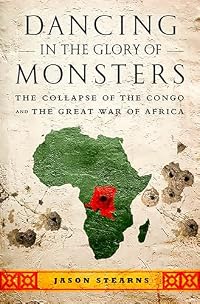
Dancing in the Glory of Monsters: The Collapse of the Congo and the Great War of Africa
by Jason Stearns
On This Page
Description
At the heart of Africa is Congo, a country the size of Western Europe, bordering nine other nations, that since 1996 has been wracked by a brutal and unstaunchable war in which millions have died. And yet, despite its epic proportions, it has received little sustained media attention. In this deeply reported book, Jason K. Stearns vividly tells the story of this misunderstood conflict through the experiences of those who engineered and perpetrated it. He depicts village pastors who survived show more massacres, the child soldier assassin of President Kabila, a female Hutu activist who relives the hunting and methodical extermination of fellow refugees, and key architects of the war that became as great a disaster as-and was a direct consequence of-the genocide in neighboring Rwanda. Through their stories, he tries to understand why such mass violence made sense, and why stability has been so elusive. Through their voices, and an astonishing wealth of knowledge and research, Stearns chronicles the political, social, and moral decay of the Congolese State. show lessTags
Recommendations

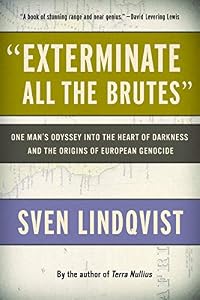
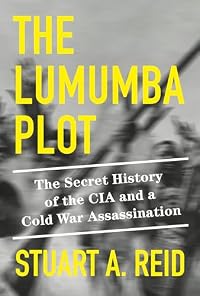
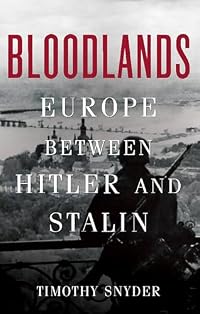



Member Recommendations
Member Reviews
In the hundred years of bloodshed that was the 20th century, the Congo War is a tragedy that has mostly been ignored by the West, and forgotten by history. Something like five million people died, placing the Congo War as the the 6th largest mass killing in the 20th century, the deadliest event since the Second World War, and the 27th largest in recorded history, according to The Great Big Book of Horrible Things. And there is a reason for this, beyond Western dismissals of Africa in general. As Stearns puts it in his introduction, "How do you cover a war that involves at least twenty different rebel groups and the armies of nine countries, yet does not seem to have a clear cause or objective?"
He does his best, using his skills as an show more investigative journalist to move through the key players in a rolling series of conflicts that started with the Rwandan Genocide in 1994, and linger today, despite a peace conference in 2002. While no one can speak for all the dead, Stearns lets the survivors of genocidal attacks, epidemic ridden refugee camps, death marches, mass rape, and induction into armies of child soldiers tell their own stories. It is impossible not to be moved.
On the broader political front, Stearns has a lot to say about the failures of institutions. The Congo was systematically hollowed out, first by the colonial slave trade, then the nightmare of King Leopold's Free State, and then by the decades long rule of Mobutu Sésé Seko, who turned divide and rule into an art, leaving a military that was incapable of conducting a coup against him, but also incapable of mounting any sort of defense against the innumerable rebel groups, foreign armies, and bandit gangs who rose up in the power vacuum. When the Rwandan government sought vengeance on Hutu génocidaires who had fled to the Congo with millions of refugee/hostages and were planning a return, the Congo was unable to resist. Rebel leader and new President Laurent Kabila had barely a year in office before the international coalition that installed him tried to oust him. This aggression, undoubtedly Tutsi lead, inspired retaliation against the Tutsi minority inside the Congo, and instigated a spiral of ethnic violence. It's impossible to blame people for turning to their primary loyalties, their family and ethnic group, and also impossible not to see the political exacerbation of ethnic tension as a major driver of violence. Whatever one's affiliation, it is too easy to see people with differently shaped noses as vermin to be exterminated.
There's also plenty of military daring and horrific absurdity to go around. Rwandan military plans involved marching 1,000 miles from the border to Kinshasa, about the same distance as Moscow to Berlin, except this time it is through practically trackless jungle. Congolese soldiers deserted in droves, their armor-heavy columns cut to shreds by motivated guerrilla bands of child soldiers. Laurent Kabila's authoritarian regime imposed taxes which would come to 230% of profits, if anyone ever payed. At one of the collapses of the government, the minister of finance announced "Gentlemen, I have taken the precaution of emptying the treasury. It is in bags in trucks outside. You each get $22,000. Do the best that you can."
As I write this, President Joseph Kabila is planning to step down after elections in December 2018, after unconstitutionally extending his rule for two years, and the country may be slipping into war again. It's hard to fault the international community for not doing more, in a country with such terrible infrastructure, and without a clear moral narrative to support. There's always money to be made in turmoil, with the Congo's mineral wealth available to the daring and unscrupulous. The people of the Congo deserve better. If not justice, they at least deserve a memorial for their dead. show less
He does his best, using his skills as an show more investigative journalist to move through the key players in a rolling series of conflicts that started with the Rwandan Genocide in 1994, and linger today, despite a peace conference in 2002. While no one can speak for all the dead, Stearns lets the survivors of genocidal attacks, epidemic ridden refugee camps, death marches, mass rape, and induction into armies of child soldiers tell their own stories. It is impossible not to be moved.
On the broader political front, Stearns has a lot to say about the failures of institutions. The Congo was systematically hollowed out, first by the colonial slave trade, then the nightmare of King Leopold's Free State, and then by the decades long rule of Mobutu Sésé Seko, who turned divide and rule into an art, leaving a military that was incapable of conducting a coup against him, but also incapable of mounting any sort of defense against the innumerable rebel groups, foreign armies, and bandit gangs who rose up in the power vacuum. When the Rwandan government sought vengeance on Hutu génocidaires who had fled to the Congo with millions of refugee/hostages and were planning a return, the Congo was unable to resist. Rebel leader and new President Laurent Kabila had barely a year in office before the international coalition that installed him tried to oust him. This aggression, undoubtedly Tutsi lead, inspired retaliation against the Tutsi minority inside the Congo, and instigated a spiral of ethnic violence. It's impossible to blame people for turning to their primary loyalties, their family and ethnic group, and also impossible not to see the political exacerbation of ethnic tension as a major driver of violence. Whatever one's affiliation, it is too easy to see people with differently shaped noses as vermin to be exterminated.
There's also plenty of military daring and horrific absurdity to go around. Rwandan military plans involved marching 1,000 miles from the border to Kinshasa, about the same distance as Moscow to Berlin, except this time it is through practically trackless jungle. Congolese soldiers deserted in droves, their armor-heavy columns cut to shreds by motivated guerrilla bands of child soldiers. Laurent Kabila's authoritarian regime imposed taxes which would come to 230% of profits, if anyone ever payed. At one of the collapses of the government, the minister of finance announced "Gentlemen, I have taken the precaution of emptying the treasury. It is in bags in trucks outside. You each get $22,000. Do the best that you can."
As I write this, President Joseph Kabila is planning to step down after elections in December 2018, after unconstitutionally extending his rule for two years, and the country may be slipping into war again. It's hard to fault the international community for not doing more, in a country with such terrible infrastructure, and without a clear moral narrative to support. There's always money to be made in turmoil, with the Congo's mineral wealth available to the daring and unscrupulous. The people of the Congo deserve better. If not justice, they at least deserve a memorial for their dead. show less
Given their massive death toll, the Congo wars since 1996 have received remarkably little attention in western media, even compared with other African wars without direct western involvement (eg. Darfur). Stearns' book was therefore near enough an automatic purchase.
Stearns aims to render the wars, with their attendant atrocities and chaos, comprehensible, which he attempts to achieve on the one hand by analyzing the background in which the actors actions made sense (to themselves at least), on the other by focusing on various key or typical individuals and incidents. For example, he argues that Mobutu allowed his army to rot to the point that they, in 1996, were routed by less numerous and worse equipped Rwandan soldiers and Congolese show more rebels because, until it was much too late, he was more afraid of coups from within the power structure than of foreign invasion or regional rebellion. We're then treated to scenes of generals selling jet fighters on the black market and soldiers more interested in raising chickens than doing the job they in any case weren't being paid for.
The weakness of such an approach is, of course, that one cannot understand why something happened if one does not know what happened. As a narrative history of the wars and attendant events, Stearns' book is not very complete, and few readers are likely to have got away with much coherent background knowledge from previous western coverage. Now, given the sheer size and complexity of the conflict, a more complete narrative would have massively have expanded the book, but a decent chronology and more detailed maps would have gone a good way to keep me oriented, and only added a few pages.
Despite that weakness, my overall verdict is positive. It didn't increase my understanding as much as it perhaps may have, but it still increased it. Coupled with the dearth of alternatives, that makes it a no-brainer recommendation for anyone interested in the subject. show less
Stearns aims to render the wars, with their attendant atrocities and chaos, comprehensible, which he attempts to achieve on the one hand by analyzing the background in which the actors actions made sense (to themselves at least), on the other by focusing on various key or typical individuals and incidents. For example, he argues that Mobutu allowed his army to rot to the point that they, in 1996, were routed by less numerous and worse equipped Rwandan soldiers and Congolese show more rebels because, until it was much too late, he was more afraid of coups from within the power structure than of foreign invasion or regional rebellion. We're then treated to scenes of generals selling jet fighters on the black market and soldiers more interested in raising chickens than doing the job they in any case weren't being paid for.
The weakness of such an approach is, of course, that one cannot understand why something happened if one does not know what happened. As a narrative history of the wars and attendant events, Stearns' book is not very complete, and few readers are likely to have got away with much coherent background knowledge from previous western coverage. Now, given the sheer size and complexity of the conflict, a more complete narrative would have massively have expanded the book, but a decent chronology and more detailed maps would have gone a good way to keep me oriented, and only added a few pages.
Despite that weakness, my overall verdict is positive. It didn't increase my understanding as much as it perhaps may have, but it still increased it. Coupled with the dearth of alternatives, that makes it a no-brainer recommendation for anyone interested in the subject. show less
Dancing in the Glory of Monsters is an exceptionally well written set of accounts of the actions in and around the Congo Wars. This is not a history of the wars themselves but a series of expertly interwoven narratives charting some of the actions of the people involved. It is the story of politicians, perpetrators, and victims. The logic and reasoning behind some of the myriad different actors in the Wars is touched on and offers a great introduction to understanding Africa's World War.
The book rightly starts at the genesis of the Wars - the Rwanda massacres of Tutsis by Hutus. Strange that so much suffering in Congo can have been caused by this bout of outrageous violence in small, neighbouring Rwanda. Jason Stearns takes an holistic show more view, not just looking at the actions within Congo but the motivations of those around. Of course Rwanda is the most important because it was the Government of Paul Kagame who toppled Mobutu Sese Seko.
The thinking behind the Rwandan intervention is fascinating. Impressive to see such access to some of those in the inner circle that Kagame put together. Of course the Rwandans made a terrible mistake in installing Laurent Kabila and there is not really enough here to explain how come they made that error. Kabila does not seem to be such an obvious leader that the Rwandans had to choose him given the comments of those who were around him in the early going.
The capability of the Rwandan forces compared to the impoverished Congolese ones is well laid out. The depredations of Mobutu and his systematic dismantling of the Congolese forces is described as the ultimate cause of their futility. It was only foreign intervention that held the Rwandans in check at all.
The international element is not fully explored. There is description of the Angolan and Zimbabwean intervention gains some coverage but this is not really their story. It is mostly the story of the Congolese themselves and in many cases the proxies used by others for purposes both moral and self-interested.
Some of the savagery carried out in the DRC was utterly heartbreaking. Stearns tells some of those stories like the worshippers burned in a church or villagers being wiped out. The tales told by survivors are devastating to read and there is a lot of human tragedy in this work. Stearns tells victims stories sympathetically without being overly sentimental. It is fascinating that different sides see things so differently and that each side only really knows about atrocities carried out by the other.
Stearns also engages with perpetrators. He meets with some of those who led factions or militias and tells their story or retells the descriptions of those who were close to leadership. These are classic stories of Big Men. Many of them seem to be out to enrich themselves and in a few instances they seem to be utterly incompetent. The tales of people who emerged from the jungle to glorify themselves and then fade away when their facade falls are a level of detail that those without more than a passing interest in the subject will not necessarily have. It is understanding these factions that leads to understanding the overall tragedy.
The reason this book works so well though is because it is structured and written so effectively. The narrative spreads over so many different angles because there are so many different aspects to the conflict. Stearns does not take a strictly chronological order but it is roughly a guide from the Rwanda massacre to the time of Joseph Kabila.
Dancing in the Glory of Monsters is not a military history but is an important analysis of the politics and people. It is a seminal work on a conflict that has had a devastating effect in Central Africa. Stearns shines a light on dark corners of the violence and does so with a dispassionate sympathy which makes it so easy to identify with all of those involved. show less
The book rightly starts at the genesis of the Wars - the Rwanda massacres of Tutsis by Hutus. Strange that so much suffering in Congo can have been caused by this bout of outrageous violence in small, neighbouring Rwanda. Jason Stearns takes an holistic show more view, not just looking at the actions within Congo but the motivations of those around. Of course Rwanda is the most important because it was the Government of Paul Kagame who toppled Mobutu Sese Seko.
The thinking behind the Rwandan intervention is fascinating. Impressive to see such access to some of those in the inner circle that Kagame put together. Of course the Rwandans made a terrible mistake in installing Laurent Kabila and there is not really enough here to explain how come they made that error. Kabila does not seem to be such an obvious leader that the Rwandans had to choose him given the comments of those who were around him in the early going.
The capability of the Rwandan forces compared to the impoverished Congolese ones is well laid out. The depredations of Mobutu and his systematic dismantling of the Congolese forces is described as the ultimate cause of their futility. It was only foreign intervention that held the Rwandans in check at all.
The international element is not fully explored. There is description of the Angolan and Zimbabwean intervention gains some coverage but this is not really their story. It is mostly the story of the Congolese themselves and in many cases the proxies used by others for purposes both moral and self-interested.
Some of the savagery carried out in the DRC was utterly heartbreaking. Stearns tells some of those stories like the worshippers burned in a church or villagers being wiped out. The tales told by survivors are devastating to read and there is a lot of human tragedy in this work. Stearns tells victims stories sympathetically without being overly sentimental. It is fascinating that different sides see things so differently and that each side only really knows about atrocities carried out by the other.
Stearns also engages with perpetrators. He meets with some of those who led factions or militias and tells their story or retells the descriptions of those who were close to leadership. These are classic stories of Big Men. Many of them seem to be out to enrich themselves and in a few instances they seem to be utterly incompetent. The tales of people who emerged from the jungle to glorify themselves and then fade away when their facade falls are a level of detail that those without more than a passing interest in the subject will not necessarily have. It is understanding these factions that leads to understanding the overall tragedy.
The reason this book works so well though is because it is structured and written so effectively. The narrative spreads over so many different angles because there are so many different aspects to the conflict. Stearns does not take a strictly chronological order but it is roughly a guide from the Rwanda massacre to the time of Joseph Kabila.
Dancing in the Glory of Monsters is not a military history but is an important analysis of the politics and people. It is a seminal work on a conflict that has had a devastating effect in Central Africa. Stearns shines a light on dark corners of the violence and does so with a dispassionate sympathy which makes it so easy to identify with all of those involved. show less
It's often claimed that the Congo Wars are too confusing for outsiders to understand. Pshaw.
It's really quite simple. The RFP pushed into DRC in the guise of the AFDL, originally pursuing ex-FAR. Naturally with UNITA and FLEC in the area Angola had an interest in getting involved and Uganda was wrestling with the WNBLF, UMLA, the ADM and of course the NALU; the Burundians, meanwhile, were contending with the FDD and FNL, all of whom were laden with RPGs and AKs. OK? After Kabila père turned on them, Rwanda backed the RCD, until it splintered at which point the RCD-A and RCD-O went one way while the RCD-N won support from Kampala on the QT. Bemba, who was running the MLC like an IPO, was in the middle. The UN and EU were not sure who to show more help and the ICRC, IMF and NGOs like MSF were reporting widespread FUBAR leading most commentators to conclude simply WTF.
Jason Stearns, a journalist who worked for a decade in the Congo, including for the UN and various human rights organisations, is only moderately successful in unpicking the tangle of the two conflicts which between 1996 and 2003 killed around five million people. He is much stronger, though, in making the general point that the violence in the Congo, however complex, does in fact result from comprehensible social and political conditions and that these need to be examined; it must not be left to the ascription of some inexplicable African capacity for evil or savagery, which is the implication that lies behind much coverage of the wars.
They are not alien; they are not evil; they are not beyond our comprehension. […] The principal actors are far from just savages, mindlessly killing and being killed, but thinking, breathing Homines sapientes, whose actions, however abhorrent, are underpinned by political rationales and motives.
So let me have another run at summarising what happened.
The Congo Wars began as a sequel to the genocide in Rwanda, when thousands of Hutu refugees fled over the border into eastern Zaire (as it was then called). Because perpetrators of the genocide were among these refugees, the Rwandans crossed the border to hunt them down and the international community, feeling somewhat guilty about having done so little during the Rwandan genocide, mostly let them do it.
Seeking to give this incursion more legitimacy, the Rwandans (along with Uganda, who had their own motives for getting involved) now picked from obscurity a minor Congolese rebel, then living in exile, called Laurent Kabila, and made him the head of a new rebel group called the AFDL. This was presented as a home-grown rebellion against President Mobutu, but really it was an elaborate fig-leaf for Rwandan and Ugandan invasion. With this foreign support, Kabila made it to Kinshasa, deposed Mobutu, and became president, having paused en route to slaughter all the Hutu refugees in the country.
The international community, starting to lose track of who was supposed to be the goodies and baddies in this story, again did very little.
Kabila was a fairly weak president, since he'd come to power with little local support. Whipping up some nationalist fervour, he now ordered all foreign powers out of the country and turned his guns on the Rwandans and Ugandans who had brought him to power. They were annoyed. Apart from anything else, they had been profiting handsomely from the eastern Congo's mineral wealth. So they simply invaded again, and began busily supporting whatever local rebellions they could find. To make matters more confusing, Rwanda and Uganda also fell out with each other, which meant they were both funding different rebel groups which now fought against each other as well as against the Congolese army, and all of these groups were framing their arguments in divisively ethnic terms.
What becomes abundantly clear, reading through the details of these messy conflicts, is the absence of any functioning state in the Congo. The Economist once commented that it wasn't a country but rather a ‘Zaire-shaped hole in the middle of Africa’, and you soon start realising that the comparisons are not with other countries around the world now but with the Italian states familiar to Machiavelli, or with seventeenth-century Germany. Nothing that a state needs to do is done. There are, for instance, only two thousand miles of paved road in what is the world's twelfth-largest country. The tax system is not designed to finance the state, but is set deliberately high to encourage bribes to local officials (a World Bank report found that if you actually paid all your taxes in DRC you would be shelling out 230 percent of your profits); so the entire economy is shifted into the informal sector. But most of all, the Congo is not able to assume the monopoly on violence that we expect from a nation-state, and local militia and foreign proxies fill the vacuum in their dozens.
This background is important. When lazy articles boil DRC down to a series of shock images – violent gang-rapes, women forced to eat their dead babies and so on – these things happen, but they are not the result of evil monsters but the result, quite predictable, of generations of intertribal violence and state weakness. Reading about such scenes – and Stearns, without being gratuitous, does not shy away from some extremely upsetting close-ups – I realised that I had been reading about exactly the same thing in a European context a few months ago when I was boning up on the Thirty Years' War.
Sometimes in here we can almost catch the cycle taking place in front of us. One of Stearns's interviewees, a young man who ran off to join a local AFDL unit – little more than a group of armed kids in the forest – describes the horrific brutalisation that new recruits were put through, something that in a way represents the brutalisation of all young men in a society so regularly at war: the hazing, the beating, the constant reinforcement of the duty to kill and beyond that to exercise cruelty. This is drummed into you. Every weakness is penalised and every misdemeanour exploited:
After committing a minor infraction, Kizito was told to step in front of his fellow recruits and dig a small hole in the pitch. ““This is your vagina,’ the commander said. ‘Take out your dick and fuck it!’” Kizito told me, blushing and looking down. In front of all of his fellow recruits, he was forced to hump the hole until he ejaculated. “In front of all those people, it was almost impossible,” he muttered. At sixteen, he was still a virgin.
A few weeks later, at graduation, they were made to slit the throats of some captured prisoners. Then they were soldiers, and real men.
Those who go on to be responsible for atrocities or massacres here justify themselves in much the same way as we've seen in Cambodia or Nazi Germany or anywhere else: they were professionals who followed the orders they were given. One RPF officer, discussing the mass slaughter of Hutu refugees, quite cheerfully explains how he went about it:
“We could do over a hundred a day,” Papy told me. I had a hard time believing him; it seemed so outrageous. “We used ropes, it was the fastest way and we didn't spill blood. Two of us would place a guy on the ground, wrap a rope around his neck once, then pull hard.” It would break the victim's windpipe and then strangle him to death. There was little noise or fuss.
But trying to ascribe blame in this plexus of revenge and counter-counterinsurgency is, even in individual cases, almost impossible. Even the victims, asked to address the matter of responsibility, are overwhelmed.
I asked him whom he blamed for their deaths. He shrugged. “There are too many people to blame. Mobutu for ruining our country. Rwanda and Uganda for invading it. Ourselves for letting them do so. None of that will help bring my children back.”
How western countries and international agencies should insert themselves into this situation is a complicated question. Stearns is sceptical about aid, seeing it too often as a way of assuaging guilt without dealing with problems at the root level, which is to say in terms of political structures. ‘All development,’ he points out, I think rightly, ‘is deeply political. By taking over the financing of most public services, donors take pressure off the Congolese government to respond to the needs of its citizens.’ He cannot find any really new solutions, but he does point to tighter regulation of international business as one area that could easily make a difference: at the moment, too many companies can turn a blind eye to the source of their coltan or copper, and industry guidelines about how such minerals are produced are just not very firmly enforced.
The Congo's problems will only start to turn around through new relationships between the people, the politicians, and businesses, and outside elements need to think carefully about how they are affecting this process instead of just chucking money into the whirlpool. Ultimately, he thinks: ‘We simply do not care enough.’
He does care, and for those who want to understand the region better his book makes a good starting-point. By focusing on the war, the book unfortunately does nothing to deconstruct the constant harmful equation between the Congo and conflict – but at least you come away from it feeling a little more informed, and a little less like the whole thing is just an inexplicable bloody mess. show less
It's really quite simple. The RFP pushed into DRC in the guise of the AFDL, originally pursuing ex-FAR. Naturally with UNITA and FLEC in the area Angola had an interest in getting involved and Uganda was wrestling with the WNBLF, UMLA, the ADM and of course the NALU; the Burundians, meanwhile, were contending with the FDD and FNL, all of whom were laden with RPGs and AKs. OK? After Kabila père turned on them, Rwanda backed the RCD, until it splintered at which point the RCD-A and RCD-O went one way while the RCD-N won support from Kampala on the QT. Bemba, who was running the MLC like an IPO, was in the middle. The UN and EU were not sure who to show more help and the ICRC, IMF and NGOs like MSF were reporting widespread FUBAR leading most commentators to conclude simply WTF.
Jason Stearns, a journalist who worked for a decade in the Congo, including for the UN and various human rights organisations, is only moderately successful in unpicking the tangle of the two conflicts which between 1996 and 2003 killed around five million people. He is much stronger, though, in making the general point that the violence in the Congo, however complex, does in fact result from comprehensible social and political conditions and that these need to be examined; it must not be left to the ascription of some inexplicable African capacity for evil or savagery, which is the implication that lies behind much coverage of the wars.
They are not alien; they are not evil; they are not beyond our comprehension. […] The principal actors are far from just savages, mindlessly killing and being killed, but thinking, breathing Homines sapientes, whose actions, however abhorrent, are underpinned by political rationales and motives.
So let me have another run at summarising what happened.
The Congo Wars began as a sequel to the genocide in Rwanda, when thousands of Hutu refugees fled over the border into eastern Zaire (as it was then called). Because perpetrators of the genocide were among these refugees, the Rwandans crossed the border to hunt them down and the international community, feeling somewhat guilty about having done so little during the Rwandan genocide, mostly let them do it.
Seeking to give this incursion more legitimacy, the Rwandans (along with Uganda, who had their own motives for getting involved) now picked from obscurity a minor Congolese rebel, then living in exile, called Laurent Kabila, and made him the head of a new rebel group called the AFDL. This was presented as a home-grown rebellion against President Mobutu, but really it was an elaborate fig-leaf for Rwandan and Ugandan invasion. With this foreign support, Kabila made it to Kinshasa, deposed Mobutu, and became president, having paused en route to slaughter all the Hutu refugees in the country.
The international community, starting to lose track of who was supposed to be the goodies and baddies in this story, again did very little.
Kabila was a fairly weak president, since he'd come to power with little local support. Whipping up some nationalist fervour, he now ordered all foreign powers out of the country and turned his guns on the Rwandans and Ugandans who had brought him to power. They were annoyed. Apart from anything else, they had been profiting handsomely from the eastern Congo's mineral wealth. So they simply invaded again, and began busily supporting whatever local rebellions they could find. To make matters more confusing, Rwanda and Uganda also fell out with each other, which meant they were both funding different rebel groups which now fought against each other as well as against the Congolese army, and all of these groups were framing their arguments in divisively ethnic terms.
What becomes abundantly clear, reading through the details of these messy conflicts, is the absence of any functioning state in the Congo. The Economist once commented that it wasn't a country but rather a ‘Zaire-shaped hole in the middle of Africa’, and you soon start realising that the comparisons are not with other countries around the world now but with the Italian states familiar to Machiavelli, or with seventeenth-century Germany. Nothing that a state needs to do is done. There are, for instance, only two thousand miles of paved road in what is the world's twelfth-largest country. The tax system is not designed to finance the state, but is set deliberately high to encourage bribes to local officials (a World Bank report found that if you actually paid all your taxes in DRC you would be shelling out 230 percent of your profits); so the entire economy is shifted into the informal sector. But most of all, the Congo is not able to assume the monopoly on violence that we expect from a nation-state, and local militia and foreign proxies fill the vacuum in their dozens.
This background is important. When lazy articles boil DRC down to a series of shock images – violent gang-rapes, women forced to eat their dead babies and so on – these things happen, but they are not the result of evil monsters but the result, quite predictable, of generations of intertribal violence and state weakness. Reading about such scenes – and Stearns, without being gratuitous, does not shy away from some extremely upsetting close-ups – I realised that I had been reading about exactly the same thing in a European context a few months ago when I was boning up on the Thirty Years' War.
Sometimes in here we can almost catch the cycle taking place in front of us. One of Stearns's interviewees, a young man who ran off to join a local AFDL unit – little more than a group of armed kids in the forest – describes the horrific brutalisation that new recruits were put through, something that in a way represents the brutalisation of all young men in a society so regularly at war: the hazing, the beating, the constant reinforcement of the duty to kill and beyond that to exercise cruelty. This is drummed into you. Every weakness is penalised and every misdemeanour exploited:
After committing a minor infraction, Kizito was told to step in front of his fellow recruits and dig a small hole in the pitch. ““This is your vagina,’ the commander said. ‘Take out your dick and fuck it!’” Kizito told me, blushing and looking down. In front of all of his fellow recruits, he was forced to hump the hole until he ejaculated. “In front of all those people, it was almost impossible,” he muttered. At sixteen, he was still a virgin.
A few weeks later, at graduation, they were made to slit the throats of some captured prisoners. Then they were soldiers, and real men.
Those who go on to be responsible for atrocities or massacres here justify themselves in much the same way as we've seen in Cambodia or Nazi Germany or anywhere else: they were professionals who followed the orders they were given. One RPF officer, discussing the mass slaughter of Hutu refugees, quite cheerfully explains how he went about it:
“We could do over a hundred a day,” Papy told me. I had a hard time believing him; it seemed so outrageous. “We used ropes, it was the fastest way and we didn't spill blood. Two of us would place a guy on the ground, wrap a rope around his neck once, then pull hard.” It would break the victim's windpipe and then strangle him to death. There was little noise or fuss.
But trying to ascribe blame in this plexus of revenge and counter-counterinsurgency is, even in individual cases, almost impossible. Even the victims, asked to address the matter of responsibility, are overwhelmed.
I asked him whom he blamed for their deaths. He shrugged. “There are too many people to blame. Mobutu for ruining our country. Rwanda and Uganda for invading it. Ourselves for letting them do so. None of that will help bring my children back.”
How western countries and international agencies should insert themselves into this situation is a complicated question. Stearns is sceptical about aid, seeing it too often as a way of assuaging guilt without dealing with problems at the root level, which is to say in terms of political structures. ‘All development,’ he points out, I think rightly, ‘is deeply political. By taking over the financing of most public services, donors take pressure off the Congolese government to respond to the needs of its citizens.’ He cannot find any really new solutions, but he does point to tighter regulation of international business as one area that could easily make a difference: at the moment, too many companies can turn a blind eye to the source of their coltan or copper, and industry guidelines about how such minerals are produced are just not very firmly enforced.
The Congo's problems will only start to turn around through new relationships between the people, the politicians, and businesses, and outside elements need to think carefully about how they are affecting this process instead of just chucking money into the whirlpool. Ultimately, he thinks: ‘We simply do not care enough.’
He does care, and for those who want to understand the region better his book makes a good starting-point. By focusing on the war, the book unfortunately does nothing to deconstruct the constant harmful equation between the Congo and conflict – but at least you come away from it feeling a little more informed, and a little less like the whole thing is just an inexplicable bloody mess. show less
If you want to understand the tragedy that is the Congo, put aside the mythology and read Dancing In The Glory of Monsters. Jason Stearns has untangled the snarling mess that is the history of this sad nation.
As someone who's researched and written about the Congo myself (Heart Of Diamonds: A novel of scandal, love, and death in the Congo), I found new insights into the interminable conflicts that have wracked the country for it's entire modern history. Stearns delineates the players, putting them into context and showing how they interacted to make the Congo what it is today. He clearly explains the role of Rwanda's Paul Kagame and other outsiders in the turmoil, but also delineates the power hunger and shortcomings of the Congo's own show more leaders, including current President Joseph Kabila.
Most importantly, Stearns demonstrates that there is no one single cause of the Congo's troubles. He calmly shows how tribal rivalries fuel the strife just as much as the struggle to control the country's mineral wealth. He explains how the internal politics of Zimbabwe, Uganda, Angola, and other countries in addition to Rwanda led to their deep involvement in the DRC's wars. While he rightfully deplores the epidemic of rape in the Congo, he puts it in context and doesn't dwell on it--not because it's not important, but because there's more to the story.
I found it refreshing that Stearns resists the impulse to blame rapacious multinational corporations for much of anything except trying to find a way to do business in the Congo. He doesn't ignore the many shortcomings of most of the deals to exploit the Congo's riches, but correctly points out that most of them were struck by Congolese leaders eager to fund their own ambitions. He leaves the conspiracy theories to other, less informed writers.
Dancing In The Glory Of Monsters is an objective, clear-eyed look at one of the greatest ongoing tragedies in modern history. show less
As someone who's researched and written about the Congo myself (Heart Of Diamonds: A novel of scandal, love, and death in the Congo), I found new insights into the interminable conflicts that have wracked the country for it's entire modern history. Stearns delineates the players, putting them into context and showing how they interacted to make the Congo what it is today. He clearly explains the role of Rwanda's Paul Kagame and other outsiders in the turmoil, but also delineates the power hunger and shortcomings of the Congo's own show more leaders, including current President Joseph Kabila.
Most importantly, Stearns demonstrates that there is no one single cause of the Congo's troubles. He calmly shows how tribal rivalries fuel the strife just as much as the struggle to control the country's mineral wealth. He explains how the internal politics of Zimbabwe, Uganda, Angola, and other countries in addition to Rwanda led to their deep involvement in the DRC's wars. While he rightfully deplores the epidemic of rape in the Congo, he puts it in context and doesn't dwell on it--not because it's not important, but because there's more to the story.
I found it refreshing that Stearns resists the impulse to blame rapacious multinational corporations for much of anything except trying to find a way to do business in the Congo. He doesn't ignore the many shortcomings of most of the deals to exploit the Congo's riches, but correctly points out that most of them were struck by Congolese leaders eager to fund their own ambitions. He leaves the conspiracy theories to other, less informed writers.
Dancing In The Glory Of Monsters is an objective, clear-eyed look at one of the greatest ongoing tragedies in modern history. show less
I really did not know much about the Congo and it's 15 year war, but was interested in the country after reading In The Footsteps of Mr Kurtz, about Mubutu's reign in that country. I thought things were bad when Mubutu was running things, I had no idea how horrible things are now. The book is loaded with facts and interviews but it never gives any suggestions or solutions, which is something you usually expect. What you do get is a clear picture of why there is no clear picture, no one group or even groups you can point a finger and lay blame at. One thing that is clear is that while it would be great if Belgium were forced, along with the rest of Europe to clean up the mess they made in Africa, that will not happen, which is probably show more also a good thing. No amount of money, military assistance, or meddling intervention from the UN, the USA, or Europe, can fix the problems in the Congo, yes there are the usual wishful thinking ideas that someone like the author (who was/is employed by the UN, comes up with, but saying if they do this and that is a lot different than mapping out HOW THEY NEED TO DO IT), and ignores the fact that Congo as well as a number of other countries in Africa, is at least as bad off if not worse, than when they were either governed by murderous dictators, or under colonial rule. That is why I say there seemed to be no answers, but so far everything that has been tried has failed, and so the slaughter of people continues on a daily basis. A very sad commentary on the human race. show less
I really did not know much about the Congo and it's 15 year war, but was interested in the country after reading In The Footsteps of Mr Kurtz, about Mubutu's reign in that country. I thought things were bad when Mubutu was running things, I had no idea how horrible things are now. The book is loaded with facts and interviews but it never gives any suggestions or solutions, which is something you usually expect. What you do get is a clear picture of why there is no clear picture, no one group or even groups you can point a finger and lay blame at. One thing that is clear is that while it would be great if Belgium were forced, along with the rest of Europe to clean up the mess they made in Africa, that will not happen, which is probably show more also a good thing. No amount of money, military assistance, or meddling intervention from the UN, the USA, or Europe, can fix the problems in the Congo, yes there are the usual wishful thinking ideas that someone like the author (who was/is employed by the UN, comes up with, but saying if they do this and that is a lot different than mapping out HOW THEY NEED TO DO IT), and ignores the fact that Congo as well as a number of other countries in Africa, is at least as bad off if not worse, than when they were either governed by murderous dictators, or under colonial rule. That is why I say there seemed to be no answers, but so far everything that has been tried has failed, and so the slaughter of people continues on a daily basis. A very sad commentary on the human race. show less
Members
- Recently Added By
Published Reviews
added by doomjesse
Author Information

15 Works 635 Members
Awards and Honors
Awards
Distinctions
Notable Lists
Common Knowledge
- People/Characters
- Paul Rwarakabije; Beatrice Umutesi; Mobutu Sese Seko; Paul Kagame; Benjamin Serukiza; Deogratias Bugera (show all 11); Laurent Kabila; Kizito Maheshe; Ernest Wamba dia Wamba; Jean-Pierre Bemba; Joseph Kabila
- Important places
- Rwanda; Zaire; Congo; Goma, North Kivu, Democratic Republic of the Congo; Bukavu, Democratic Republic of the Congo; Kinshasa, Democratic Republic of the Congo (show all 7); Kisangani, Democratic Republic of the Congo
- Important events
- Rwandan Genocide; First Congo War (1996-1997); Second Congo War (1998-2003)
- Publisher's editor
- Priddle, Clive
- Blurbers
- le Carre, John; Wrong, Michela; Green Matthew; Meredith, Martin
- Original language
- English
Classifications
- Genres
- History, Nonfiction, General Nonfiction
- DDC/MDS
- 967.5103 — History & geography History of Africa Central Africa and offshore islands Democratic Republic of the Congo (Congo-Kinshasa); Rwanda & Burundi Democratic Republic of the Congo (Congo-Kinshasa -- former Zaire)
- LCC
- DT658.26 .S74 — History of Europe, Asia, Africa and Oceania Africa History of Africa West Africa. West Coast Zaire. Congo (Democratic Republic). Belgian Congo History
- BISAC
Statistics
- Members
- 568
- Popularity
- 51,791
- Reviews
- 10
- Rating
- (4.08)
- Languages
- English
- Media
- Paper, Audiobook, Ebook
- ISBNs
- 8
- ASINs
- 7