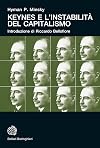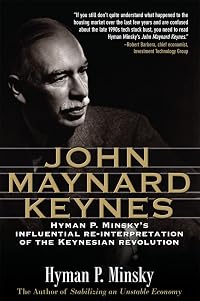
John Maynard Keynes
by Hyman P. Minsky
On This Page
Description
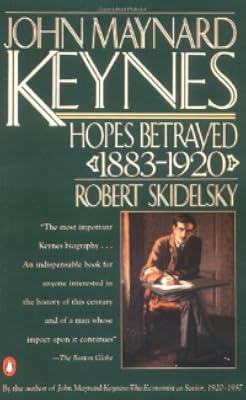
“Today, Mr. Minsky's view [of economics] is more relevant than ever.”- The New York Times “Indeed, the Minsky moment has become a fashionable catch phrase on Wall Street.”-The Wall Street Journal John Maynard Keynes offers a timely reconsideration of the work of the revered economics icon. Hyman Minsky argues that what most economists consider Keynesian economics is at odds with the major points of Keynes's The General Theory of Employment, Interest, and Money. Keynes and Minsky show more refuse to ignore pervasive uncertainty. Once uncertainty is given center stage, recurring episodes of financial system crises are all but inescapable. As Robert Barbera notes in a new preface, “Benign economic circumstances…invite increasingly aggressive financial market wagers. Innovation in finance is a signature development in a capitalist economy. Once leveraged wagers are in place, small disappointments can have exaggerated consequences.” Thus for Minsky economic calm on Main Street engenders financial system fragility which, in turn, ensures a perpetuation of boom and bust cycles. Minsky colleagues Dimitri B. Papadimitriou and L. Randall Wray write in a new introduction, “We offer this new edition, in the hope that it will contribute to the reformation of economic theory so that it can address the world in which we actually live-the world that was always the topic of Minsky's analysis.” show lessTags
Recommendations






















Member Reviews
Economics > Economics > Keynesianism > Schools > Social Sciences > Theory
Ratings
Members
- Recently Added By
Author Information

Series
Belongs to Publisher Series
Common Knowledge
- Canonical title*
- Keynes e l'instabilita del capitalismo
- Original title
- John Maynard Keynes
- Original publication date
- 1975
- People/Characters
- John Maynard Keynes
- First words
- Ciò che fa di John Maynard Keynes un economista del tutto particolare è il carattere "rivoluzionario" della sua opera principale: la Teoria generale dell'occupazione, dell'interesse e della moneta (1936).
Nella storia intellettuale di una disciplina scientifica vi sono periodi durante i quali le strutture teoriche su cui essa poggia sono salde e sicure, mentre al contrario durante altri esse appaiono deboli e precarie. Nel pri... (show all)mo caso si registra un'ampia convergenza di opinioni circa i tratti caratteristici della disciplina stessa [...]. Nel secondo caso invece i membri della comunità scientifica non si trovano d'accordo neppure sui principi fondamentali della disciplina in questione... - Last words
- (Click to show. Warning: May contain spoilers.)Se, come nel caso di Keynes, si è a favore di un sistema misto che preserva le proprietà fondamentali del capitalismo, lo si è non a causa delle virtù del libero regime capitalistico, ma nonostante i suoi difetti che, per quanto gravi, possono in linea di principio venir limitati. Ma se si vuole regolamentare il capitalismo così da realizzare la triade di efficienza, giustizia e libertà, allora nel delineare i controlli necessari bisogna partire da un dato di fatto che a Keynes risultava perfettamente ovvio: per quanto riguarda la stabilità dell'occupazione e la distribuzione del reddito, il sistema capitalistico è intrinsecamente tarato.
*Some information comes from Common Knowledge in other languages. Click "Edit" for more information.
Classifications
- Genres
- Economics, Nonfiction, General Nonfiction, History, Biography & Memoir, Business
- DDC/MDS
- 330.156 — Society, government, & culture Economics Jobs & Careers Theory Schools Keynesianism
- LCC
- HB99.7 .K38 .M55 — Social sciences Economic theory. Demography Economic theory. Demography History of economics. History of economic
- BISAC
Statistics
- Members
- 108
- Popularity
- 298,038
- Reviews
- 1
- Rating
- (4.00)
- Languages
- English, German, Italian, Portuguese
- Media
- Paper, Ebook
- ISBNs
- 13
- ASINs
- 1