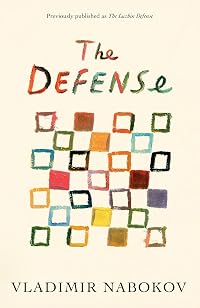
The Defense
by Vladimir Nabokov
On This Page
Description
Nabokov's third novel, The Luzhin Defense, is a chilling story of obsession and madness. As a young boy, Luzhin was unattractive,nbsp;nbsp;distracted, withdrawn, sullen--an enigma to his parents and an object of ridicule to his classmates. He takes up chess as a refuge from the anxiety of his everyday life.nbsp;nbsp;His talent is prodigious and he rises to the rank of grandmaster--but at a cost:nbsp;nbsp;in Luzhin' s obsessive mind, the game of chess gradually supplants the world of show more reality.nbsp;nbsp; His own world falls apart during a crucial championship match, when the intricate defense he has devised withersnbsp;nbsp;under his opponent's unexpected and unpredictabke lines of assault. show lessTags
Recommendations














Member Recommendations
Member Reviews
Nabokovians delight in The Defense, the first work that made the world really stand up and take notice of the master's abilities. And rightfully so: while not his best work, and far from flawless, the novel has the easily discernible confidence that abounds in his later novels, and marries that confidence to a story and structure that are meticulous and thought-provoking.
The novel tells the story of the frustrating life of Luzhin who, as a boy, was a social and emotional outcast. After an accidental meeting with an old friend of his father, he takes up chess and immerses himself so completely in the game that he becomes enormously accomplished, soon one of the world's best. But it comes at the cost of his sanity, and after a breakdown show more during a critical championship match, he struggles to reconstruct his life--if he can.
If there is one thing that makes the novel incredibly difficult to digest, it is Nabokov's insistence on shying away, for the most part, from dialogue. Rather, the chapters consist of long, elaborate paragraphs that often stretch on for pages at a time. At first, the technique can seem alarming and challenging, but as we delve deeper into the novel, we become immersed in Luzhin's personality, and find that the form of the book mirrors his delusional (de-Luzhin-al?) ramblings. It is a mark of great confidence, one that Nabokov executes with care.
Where the novel is perhaps most impressive, however, is in how it handles the incredible amount of abstraction that its subject matter lends it to. Mental deterioration and chess, by definition, are largely cerebral topics, and both require a great deal of concentration and specialized knowledge to completely comprehend. Nevertheless, Nabokov succeeds at making the reader not feel underinformed: he uses very little chess notation so that it is accessible to the chess amateur, but one who knows the game will get even more out of the novel. It is a very difficult line to have to straddle, but Nabokov manages to walk it wonderfully.
Naturally, a novel about a crazy chess player is not likely to appeal to everyone, but The Defense works hard to be both accessible and substantial. Much like the game of chess itself, this novel will not be for everyone: the opening is slow, sometimes agonizingly so, and while the larger picture is ultimately not too surprising, it does take a long while to set up. But to that end, the novel (intentionally) feels like a chess match--and for the work to be executed in such a manner and still be effective makes it an impressive achievement indeed. show less
The novel tells the story of the frustrating life of Luzhin who, as a boy, was a social and emotional outcast. After an accidental meeting with an old friend of his father, he takes up chess and immerses himself so completely in the game that he becomes enormously accomplished, soon one of the world's best. But it comes at the cost of his sanity, and after a breakdown show more during a critical championship match, he struggles to reconstruct his life--if he can.
If there is one thing that makes the novel incredibly difficult to digest, it is Nabokov's insistence on shying away, for the most part, from dialogue. Rather, the chapters consist of long, elaborate paragraphs that often stretch on for pages at a time. At first, the technique can seem alarming and challenging, but as we delve deeper into the novel, we become immersed in Luzhin's personality, and find that the form of the book mirrors his delusional (de-Luzhin-al?) ramblings. It is a mark of great confidence, one that Nabokov executes with care.
Where the novel is perhaps most impressive, however, is in how it handles the incredible amount of abstraction that its subject matter lends it to. Mental deterioration and chess, by definition, are largely cerebral topics, and both require a great deal of concentration and specialized knowledge to completely comprehend. Nevertheless, Nabokov succeeds at making the reader not feel underinformed: he uses very little chess notation so that it is accessible to the chess amateur, but one who knows the game will get even more out of the novel. It is a very difficult line to have to straddle, but Nabokov manages to walk it wonderfully.
Naturally, a novel about a crazy chess player is not likely to appeal to everyone, but The Defense works hard to be both accessible and substantial. Much like the game of chess itself, this novel will not be for everyone: the opening is slow, sometimes agonizingly so, and while the larger picture is ultimately not too surprising, it does take a long while to set up. But to that end, the novel (intentionally) feels like a chess match--and for the work to be executed in such a manner and still be effective makes it an impressive achievement indeed. show less
Nabokov's The Defense is the story of Luzhin, who even as a child, is slightly odd. His oddness becomes less of a flaw, though he is not really aware of this oddness, when he discovers his true calling--chess. We follow him through his life going from chess prodigy to chess master, from his parents' estate in Russia to his odd marriage to a Russian emigre in Berlin. His life is one chess problem after another, so much so that he cannot separate his own existence from the game itself. And so we follow his game to its inevitable and terrifying conclusion. Wonderfully and frighteningly well told story of madness.
If Nabokov's second novel reminded me of one of my favorite writers—Marcel Proust—his third, The Luzhin Defense, brings to mind another: Virginia Woolf. Given that The Luzhin Defense concerns the gradual mental disintegration of a Russian chess grandmaster, and given that Nabokov had apparently not yet read Woolf (when he did, in 1933, he claimed a low opinion of her work), its Woolfian overtones are a bit surprising. But consider this passage, in which the now-middle-aged Luzhin remembers how his asthmatic French governess used to get stuck in the family elevator:
Despite the asthma and the liquorice candies, I can hardly fail to think of Clarissa Dalloway here, remembering her days at Bourton, or Cam, in To the Lighthouse, looking back at the family house from the boat:
Even the inter-leaved sentence structure with its many comma-delineated phrases, that repeated "whither" and the reiterated "Empty," are viscerally reminiscent of Woolf. So too is the way in which the physical objects of the past—Luzhin's veranda and bushes, Cam's life-knotted paths—are melded with the character's mental image of them, so that the mental image attains a tangible solidity whereas the objects are capable of disappearing or floating away, thought-like. The unreality of the past is stressed in both cases: both characters are substantially unable to access the memories they have left behind, even as those memories alter almost physically the reality in which they currently find themselves. Even as Luzhin acknowledges the gulf between himself and his childhood memories, for example, the image of the vacant elevator provides him with the very metaphor he uses to describe his mental state: "the recollection also came back empty."
Indeed, The Luzhin Defense, like much of Woolf's work, is preoccupied with the past and memory—specifically, in the case of Luzhin, with the effects on memory and perception of a concrete breaking-point in a character's personal history. Luzhin's boyhood is divided neatly into the aimlessly morose existence preceding his discovery of chess, and the single-minded, initially joyful obsession that follows it. In another instance of the mental and physical worlds bleeding into one anther, though, Luzhin's chess obsession becomes a burden as his perception of the world around him becomes ever-more dominated by chess imagery. Any dappling of light and shadow become, for him, a chess board; any arrangement of objects in relation to one another become a problem to be solved. As his perception of his actual tournament games becomes more vital—he sees the relation of pieces on the board during a game as a "thunderous harmony" that "breathe[s] with life"—the vitality of the the people and places around him, of his own past and any aspect of himself unrelated to the game, wanes. It eventually becomes so imperceptible that he can no longer sleep, feed himself, or find his way out of rooms.
After Luzhin's mental break, when he is encouraged by his doctors and fiancée not to think of chess any longer, he struggles to recover some version of himself independent of his obsession. He reverts to memories of himself before his discovery of chess, which although unhappy at the time, become a source of safety for the middle-aged man:
To make yet another possibly misguided comparison, Luzhin's story strikes me as akin to a religious conversion narrative of the type pioneered by Augustine of Hippo. In the Augustine model, there is a complete, definitive break between the outlook and personality of the narrator before religious conversion (or in Luzhin's case, before discovering chess), and the outlook and personality of that same person after conversion. Augustine's Confessions present a new convert who is changed utterly by inviting the Christian God into his heart. Once he has finally converted there is no more earthly struggle or strife; he is elevated into a spiritual realm. There's no possibility, for example, that the post-conversion Augustine might be tempted to back-slide into stealing pears or frequenting prostitutes; his conversion changes him utterly. Not only is he relieved of the temptations of his former life, but his perceptions of the events of that former life also change, so that he is looking back at them through the altering lens of his newfound Christian faith.1
Similarly, Luzhin is altered completely with the discovery of chess, to the extent that his entire world comes to be composed of nothing but chess boards and chess pieces, and he exiles his pre-chess self almost completely from his consciousness. On those rare occasions when he thinks of it at all, he associates his non-chess past with "dormant horrors" and "humiliating insults": in other words, through a lens that privileges his current, chess-centric lifestyle as the thing that bestows value on his existence. Central questions of the latter half of the book, after Luzhin has been denied chess and attempts to reestablish some version of himself outside the game, are what happens when "salvation" becomes "damnation" (when the thing that bestowed value on one's life threatens to wipe out all meaning from that life), and whether Augustine was right about the irreversibility of a conversion. Quite apart from the question of whether or not a chess-less life could be compelling or worthwhile to him, is Luzhin even capable of converting back, once the fatal discovery has been made?
Let's just say that his attempt to talk about his childhood in chess-like terms, "rapidly sketching the outlines and marking a complex move, rich in possibilities, with just a letter and a number," does not bode well. What's more, it sheds new light on the hundred-plus pages of waffling that precedes Augustine's Christian epiphany. There can be dire consequences, in this model, for a misplaced or overly zealous conversion. show less
show more
Finally something would shudder and stir and after a little while the elevator would descend—now empty. Empty. Goodness knows what had happened to her—perhaps she had
traveled up to heaven and remained there with her asthma, her liquorice candies and her pince-nez on a black cord. The recollection also came back empty, and for the first time in all his life, perhaps, Luzhin asked himself the question—where exactly had it all gone, what had become of his childhood, whither had the veranda floated, whither, rustling through the bushes, had the familiar paths crept away?
Despite the asthma and the liquorice candies, I can hardly fail to think of Clarissa Dalloway here, remembering her days at Bourton, or Cam, in To the Lighthouse, looking back at the family house from the boat:
But Cam could see nothing. She was thinking how all those paths and the lawn, thick and knotted with the lives they had lived there, were gone: were rubbed out; were past; were unreal, and now this was real: the boat and the sail with its patch; Macalister with his earrings; the noise of the waves—all this was real.
Even the inter-leaved sentence structure with its many comma-delineated phrases, that repeated "whither" and the reiterated "Empty," are viscerally reminiscent of Woolf. So too is the way in which the physical objects of the past—Luzhin's veranda and bushes, Cam's life-knotted paths—are melded with the character's mental image of them, so that the mental image attains a tangible solidity whereas the objects are capable of disappearing or floating away, thought-like. The unreality of the past is stressed in both cases: both characters are substantially unable to access the memories they have left behind, even as those memories alter almost physically the reality in which they currently find themselves. Even as Luzhin acknowledges the gulf between himself and his childhood memories, for example, the image of the vacant elevator provides him with the very metaphor he uses to describe his mental state: "the recollection also came back empty."
Indeed, The Luzhin Defense, like much of Woolf's work, is preoccupied with the past and memory—specifically, in the case of Luzhin, with the effects on memory and perception of a concrete breaking-point in a character's personal history. Luzhin's boyhood is divided neatly into the aimlessly morose existence preceding his discovery of chess, and the single-minded, initially joyful obsession that follows it. In another instance of the mental and physical worlds bleeding into one anther, though, Luzhin's chess obsession becomes a burden as his perception of the world around him becomes ever-more dominated by chess imagery. Any dappling of light and shadow become, for him, a chess board; any arrangement of objects in relation to one another become a problem to be solved. As his perception of his actual tournament games becomes more vital—he sees the relation of pieces on the board during a game as a "thunderous harmony" that "breathe[s] with life"—the vitality of the the people and places around him, of his own past and any aspect of himself unrelated to the game, wanes. It eventually becomes so imperceptible that he can no longer sleep, feed himself, or find his way out of rooms.
After Luzhin's mental break, when he is encouraged by his doctors and fiancée not to think of chess any longer, he struggles to recover some version of himself independent of his obsession. He reverts to memories of himself before his discovery of chess, which although unhappy at the time, become a source of safety for the middle-aged man:
On the other hand, constantly nudged by such interrogations, his thoughts would return again and again to the sphere of his childhood. It was impossible to express his recollections in words—there simply were no grown-up words for his childish impressions—and if he ever related anything, then he did so jerkily and unwillingly—rapidly sketching the outlines and marking a complex move, rich in possibilities, with just a letter and a number. His pre-school, pre-chess childhood, which he had never thought about before, dismissing it with a slight shudder so as not to find dormant horrors and humiliating insults there, proved now to be an amazingly safe spot...
To make yet another possibly misguided comparison, Luzhin's story strikes me as akin to a religious conversion narrative of the type pioneered by Augustine of Hippo. In the Augustine model, there is a complete, definitive break between the outlook and personality of the narrator before religious conversion (or in Luzhin's case, before discovering chess), and the outlook and personality of that same person after conversion. Augustine's Confessions present a new convert who is changed utterly by inviting the Christian God into his heart. Once he has finally converted there is no more earthly struggle or strife; he is elevated into a spiritual realm. There's no possibility, for example, that the post-conversion Augustine might be tempted to back-slide into stealing pears or frequenting prostitutes; his conversion changes him utterly. Not only is he relieved of the temptations of his former life, but his perceptions of the events of that former life also change, so that he is looking back at them through the altering lens of his newfound Christian faith.1
Similarly, Luzhin is altered completely with the discovery of chess, to the extent that his entire world comes to be composed of nothing but chess boards and chess pieces, and he exiles his pre-chess self almost completely from his consciousness. On those rare occasions when he thinks of it at all, he associates his non-chess past with "dormant horrors" and "humiliating insults": in other words, through a lens that privileges his current, chess-centric lifestyle as the thing that bestows value on his existence. Central questions of the latter half of the book, after Luzhin has been denied chess and attempts to reestablish some version of himself outside the game, are what happens when "salvation" becomes "damnation" (when the thing that bestowed value on one's life threatens to wipe out all meaning from that life), and whether Augustine was right about the irreversibility of a conversion. Quite apart from the question of whether or not a chess-less life could be compelling or worthwhile to him, is Luzhin even capable of converting back, once the fatal discovery has been made?
Let's just say that his attempt to talk about his childhood in chess-like terms, "rapidly sketching the outlines and marking a complex move, rich in possibilities, with just a letter and a number," does not bode well. What's more, it sheds new light on the hundred-plus pages of waffling that precedes Augustine's Christian epiphany. There can be dire consequences, in this model, for a misplaced or overly zealous conversion. show less
The story centers on Luzhin, a melancholy, lonesome ten-year-old boy at the start of the book, spending the final days of summer at the family's country home outside of St. Petersburg. His father just broke the bad news that he must start school when they get back to town. He despises going to school. He only has any passion for his attractive young aunt, who turns out to be his father's mistress. On the same day that his mother discovers the affair, she teaches young Luzhin how to play chess. He rapidly becomes a prodigy making his debut in front of the public the following summer.
Dropping out of school, Luzhin devotes himself exclusively to chess until he falls ill. During a prolonged recuperation, he resides in a German health resort show more where, by chance, a major international chess tournament is being held. Luzhin’s career is launched. In the space of one paragraph, sixteen years passes, and Luzhin is still at the same spa, speaking to his future bride-to-be. At age 30, Luzhin hasn't changed much socially from the melancholy, reserved boy he was as a child. In the intervening years, a Svengali-like chess promoter named Valentinov has been in charge of managing his young prodigy's career. Now that he must compete in a significant competition, Luzhin has traveled to the resort to get ready. He leaves for his tournament in Berlin, the city where his fiancee's horrified parents reside, after an odd romance.
Luzhin plays superbly, moving on to the last round against Turati, whose original opening move he has developed a new defensive for. (He had previously fallen to Turati in a match.) Luzhin spends his evenings at the tacky house of his fiancée's philistine parents. As the days go by, Luzhin, who at best has a shaky hold of reality, loses himself more and more in the chess patterns he imposes on his surroundings. The initial move against which Luzhin had created his unique defense is absent when the final match versus Turati starts. Luzhin is so immersed in the world of chess that he cannot return to reality. He hears a voice say, "Go home," as the game ends for the night.
The denouement that follows is as fascinating as the narrative that precedes it, while Nabokov's novel ends with a strange vision of eternity. This was the third of Nabokov's first ten novels originally written in Russian. It is one of his best. show less
Dropping out of school, Luzhin devotes himself exclusively to chess until he falls ill. During a prolonged recuperation, he resides in a German health resort show more where, by chance, a major international chess tournament is being held. Luzhin’s career is launched. In the space of one paragraph, sixteen years passes, and Luzhin is still at the same spa, speaking to his future bride-to-be. At age 30, Luzhin hasn't changed much socially from the melancholy, reserved boy he was as a child. In the intervening years, a Svengali-like chess promoter named Valentinov has been in charge of managing his young prodigy's career. Now that he must compete in a significant competition, Luzhin has traveled to the resort to get ready. He leaves for his tournament in Berlin, the city where his fiancee's horrified parents reside, after an odd romance.
Luzhin plays superbly, moving on to the last round against Turati, whose original opening move he has developed a new defensive for. (He had previously fallen to Turati in a match.) Luzhin spends his evenings at the tacky house of his fiancée's philistine parents. As the days go by, Luzhin, who at best has a shaky hold of reality, loses himself more and more in the chess patterns he imposes on his surroundings. The initial move against which Luzhin had created his unique defense is absent when the final match versus Turati starts. Luzhin is so immersed in the world of chess that he cannot return to reality. He hears a voice say, "Go home," as the game ends for the night.
The denouement that follows is as fascinating as the narrative that precedes it, while Nabokov's novel ends with a strange vision of eternity. This was the third of Nabokov's first ten novels originally written in Russian. It is one of his best. show less
Unlovable, flabby Luzhin has lost his mind, unfortunately right in the middle of a paramount chess match against another reigning international champion. Leaving the game at a cliffhanger, the forename-less Russian prodigy waddles off into the Berlin night, where he will ultimately collapse on a curb in an emotional fugue and, for some time, cease to exist.
Following this, imprisoned in the banalities of pleasantries, doilies and dinner parties, Luzhin for some time occupies an infantile dream state, cared for by his equally nameless wife (she doesn't even get a surname until she share his, post wedding)...until the momentum of Luzhin's original impetus—chess, chess, chess—comes pounding back at him in a furious tyrannical show more inevitability, and all is lost.
Nabokov's third novel, a Russian-German mash of European humanity between the wars, is a heavy tale of fate and obsession. Here Nabokov sheds most of the charming, naive elements of his earlier books, instead giving glimpses of the headstrong and flawlessly self-confident literary powerhouse that he would continue to display for the next half century.
The novel's cornerstone is one of Nabokov's hallmark character themes: the social outcast. Where the novelist's genius blazes is in his unflinching ability to flaunt the grievous shortcomings and depravities of his protagonists, whether lecherous Humbert Humbert in Lolita or possibly sociopathic Charles Kinbote (Pale Fire). And yet, as the reader, you grind your teeth and wonder why you don't hate these people. But you don't, exactly. Only Dostoevsky leaps to mind as someone with comparable facility to make the anti-hero into, if not the hero, the acceptable protagonist.
We start in Luzhin's childhood. Luzhin, poor Luzhin, who only warrants a surname, as he isn't so much an extant child as an extension of his literary father, a container of vague aspirations for those around him. He slouches, he avoids contact. He's not good in school or with people.
As we watch Luzhin remain, mostly, an uncompelling null, Nabokov takes some time to throw literary daggers at those assholes we all had to deal with in our adolescent school years, those ruddy youngsters who never seem to be beset by angst or awkwardness, who assign nonsensical, retroactive depth to schoolyard friendships and look back on the regimented, conformist years in bleak classrooms with a wistful smile. Those idiots. We identify, ever so briefly, with Luzhin here.
But it's difficult to gain footing with Luzhin. He is a tight shell within a tight shell of a novel, and I lost some fingernails trying to prise into his psyche. He sulks until one day he discovers chess, which he learns in secret from his father (a friendly, philandering and vapid writer whom Luzhin thoroughly rejects by the age of ten), building up a world-class skill and single-mindedness in the game that launch him into the international spotlight.
Time meanders on, we imagine, but we don't see Luzhin again until he's 40; his father has died; an unmoved Luzhin is puttering around a spa hotel in Germany, re-living teenage chess tournament highlights, preparing for a significant showdown with the Italian master, Turati, in Berlin. It is here that he meets the young, graceful girl who, perplexingly, falls for him and marries him against the wishes of her dull, Russian emigré parents.
By this time, Luzhin has suffered his mental collapse. He swears off chess. But it's a mere, futile pause—the shadow of the 8-squared grid, the strategic metaphors of the game keep leaking into his life. Elaborate constructs, in particular his failed defensive strategy with Turati, swap out of abstract existence and become, to Luzhin, concrete inevitabilities. Consummately selfish, diabolical Valentinov—erstwhile chaperone/"chess father" to Luzhin's teenage European chess career—reappears, now Luzhin's arch-nemesis. There is no hope here, see, except to make a move so bold as to break the fated game's outcome, once and for all. show less
Following this, imprisoned in the banalities of pleasantries, doilies and dinner parties, Luzhin for some time occupies an infantile dream state, cared for by his equally nameless wife (she doesn't even get a surname until she share his, post wedding)...until the momentum of Luzhin's original impetus—chess, chess, chess—comes pounding back at him in a furious tyrannical show more inevitability, and all is lost.
Nabokov's third novel, a Russian-German mash of European humanity between the wars, is a heavy tale of fate and obsession. Here Nabokov sheds most of the charming, naive elements of his earlier books, instead giving glimpses of the headstrong and flawlessly self-confident literary powerhouse that he would continue to display for the next half century.
The novel's cornerstone is one of Nabokov's hallmark character themes: the social outcast. Where the novelist's genius blazes is in his unflinching ability to flaunt the grievous shortcomings and depravities of his protagonists, whether lecherous Humbert Humbert in Lolita or possibly sociopathic Charles Kinbote (Pale Fire). And yet, as the reader, you grind your teeth and wonder why you don't hate these people. But you don't, exactly. Only Dostoevsky leaps to mind as someone with comparable facility to make the anti-hero into, if not the hero, the acceptable protagonist.
We start in Luzhin's childhood. Luzhin, poor Luzhin, who only warrants a surname, as he isn't so much an extant child as an extension of his literary father, a container of vague aspirations for those around him. He slouches, he avoids contact. He's not good in school or with people.
As we watch Luzhin remain, mostly, an uncompelling null, Nabokov takes some time to throw literary daggers at those assholes we all had to deal with in our adolescent school years, those ruddy youngsters who never seem to be beset by angst or awkwardness, who assign nonsensical, retroactive depth to schoolyard friendships and look back on the regimented, conformist years in bleak classrooms with a wistful smile. Those idiots. We identify, ever so briefly, with Luzhin here.
But it's difficult to gain footing with Luzhin. He is a tight shell within a tight shell of a novel, and I lost some fingernails trying to prise into his psyche. He sulks until one day he discovers chess, which he learns in secret from his father (a friendly, philandering and vapid writer whom Luzhin thoroughly rejects by the age of ten), building up a world-class skill and single-mindedness in the game that launch him into the international spotlight.
Time meanders on, we imagine, but we don't see Luzhin again until he's 40; his father has died; an unmoved Luzhin is puttering around a spa hotel in Germany, re-living teenage chess tournament highlights, preparing for a significant showdown with the Italian master, Turati, in Berlin. It is here that he meets the young, graceful girl who, perplexingly, falls for him and marries him against the wishes of her dull, Russian emigré parents.
By this time, Luzhin has suffered his mental collapse. He swears off chess. But it's a mere, futile pause—the shadow of the 8-squared grid, the strategic metaphors of the game keep leaking into his life. Elaborate constructs, in particular his failed defensive strategy with Turati, swap out of abstract existence and become, to Luzhin, concrete inevitabilities. Consummately selfish, diabolical Valentinov—erstwhile chaperone/"chess father" to Luzhin's teenage European chess career—reappears, now Luzhin's arch-nemesis. There is no hope here, see, except to make a move so bold as to break the fated game's outcome, once and for all. show less
A very curious and interesting novel. The key player is a chess enthusiast who becomes a champion and chronicles his rise and fall with the tidings of time. However, there was not the sense of poetic, versatile lines that I am familiar with reading in Nabokov and this, for me, was a slightly different experience. Nevertheless, it was a character study and a novel worth putting the time in for.
3.75 stars.
3.75 stars.
One of Nabokov's masterpieces, a wonderful novel. Its most remarkable feature is the intricacy and beauty of its mirroring patterns and motifs, which make the novel a kind of chess game between the hero and his fate. Luzhin is one of Nabokov's most delightful and moving creations: he is a chess genius acutely aware of the dangers and lures of artistic obsession but unable to invent a suitable defence against them.. The narrative structure is dazzingly and daringly brilliant, particularly the use of prolepsis in the first part, and the unbearable narrative tension of the last movement.
Members
- Recently Added By
Published Reviews
ThingScore 75
In these early novels of Nabokov's, one sees the later complexities often in surprisingly well-developed form, and they are interesting for that reason. But they have, in addition, a special charm of their own. Nabokov's world is not austerely intellectual (like the worlds conceived by Borges). It is haunted by certain memories of nineteenth-century baroque (a memory of mad King Ludwig, a show more melody of overwrought Schumann, something rhapsodic and rotten). show less
added by jburlinson
Lists

Russian Literature
187 works; 33 members

20th Century Literature
1,161 works; 55 members

Anthony Burgess 99 Post War Novels
99 works; 7 members

Books Read in 2016
4,666 works; 197 members

2015 Reading challenge
18 works; 1 member

National Book Award Finalists - Fiction
377 works; 12 members

Stuff from Bard
70 works; 1 member

Canon de la narrativa universal del s. XX (cicutadry)
499 works; 3 members

My Favorite Russian Novels
37 works; 2 members
Author Information

Vladimir Vladimirovich Nobokov was born April 22, 1899 in St. Petersburg, Russia to a wealthy family. He attended Trinity College, Cambridge. When he left Russia, he moved to Paris and eventually to the United States in 1940. He taught at Wellesley College and Cornell University. Nobokov is revered as one of the great American novelists of the show more 20th Century. Before he moved to the United States, he wrote under the pseudonym Vladimir Serin. Among those titles, were Mashenka, his first novel and Invitation to a Beheading. The first book he wrote in English was The Real Life of Sebastian Knight. He is best know for his work Lolita which was made into a movie in 1962. In addition to novels, he also wrote poetry and short stories. He was a finalist for the National Book Award for Fiction seven times, but never won it. Nabokov died July 2, 1977. show less
Some Editions
Awards and Honors
Awards
Notable Lists
Series
Belongs to Publisher Series
Work Relationships
Common Knowledge
- Canonical title*
- Zaschita Luzinia
- Original title
- Защита Лужина
- Alternate titles
- The Luzhin Defence; The Defense; The Luzhin Defense
- Original publication date
- 1930 (original Russian) (original Russian); 1964 (English: Scammell) (English: Scammell)
- People/Characters
- Aleksandr Ivanovich Luzhin; Leo Valentinov; Turati; Oleg Sergeyevich Smirnovski
- Important places
- Berlin, Germany
- Related movies
- The Luzhin Defence (2000 | IMDb)
- Dedication
- To Vera
- First words
- What struck him most was the fact that from Monday on he would be Luzhin.
- Quotations*
- Nelle prefazioni all'edizione inglese dei miei romanzi russi scritte di recente (e ce ne sono altre in arrivo) mi sono imposto la regola di rivolgere qualche parola d'incoraggiamento alla delegazione viennese. La presente non... (show all) farà eccezione. Analisti e analizzati apprezzeranno, spero, alcuni particolari del trattamento a cui Luzin viene sottoposto a seguito dell'esaurimento nervoso (quali l'insinuazione terapeutica che un giocatore di scacchi vede la Mamma nella regina e il Papà nel re dell'avversario), e il freudiano in erba che scambia un grimaldello da lucchetto per la chiave di un romanzo continuerà senz'altro a identificare i miei personaggi con la propria nozione fumettistica dei miei genitori, delle mie amichette e dei miei molteplici ego.
- Last words
- (Click to show. Warning: May contain spoilers.)The door was burst in. "Aleksandr Ivanovich, Aleksandr Ivanovich," roared several voices.
But there was no Aleksandr Ivanovich. - Original language
- Russian
*Some information comes from Common Knowledge in other languages. Click "Edit" for more information.
Classifications
- Genres
- General Fiction, Fiction and Literature
- DDC/MDS
- 891.7342 — Literature & rhetoric Literatures of other languages East Indo-European and Celtic literatures Russian and East Slavic languages Russian fiction USSR 1917–1991 Early 20th century 1917–1945
- LCC
- PG3476 .N3 .Z2413 — Language and Literature Slavic languages and literatures. Baltic languages. Albanian language Slavic. Baltic. Albanian Russian literature Individual authors and works 1917-1960
- BISAC
Statistics
- Members
- 1,996
- Popularity
- 10,607
- Reviews
- 44
- Rating
- (3.90)
- Languages
- 23 — Danish, Dutch, English, Estonian, Finnish, French, German, Greek, Hebrew, Hungarian, Icelandic, Indo-European (Other), Italian, Japanese, Latvian, Portuguese, Romanian, Russian, Croatian, Slovenian, Spanish, Swedish, Turkish
- Media
- Paper, Audiobook, Ebook
- ISBNs
- 66
- ASINs
- 24