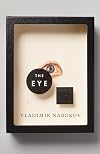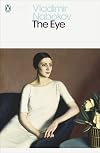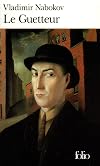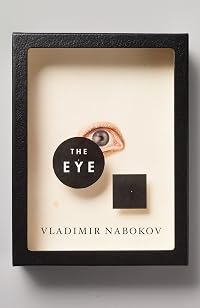
The Eye
by Vladimir Nabokov
On This Page
Description
Nabokov's fourth novel, The Eye is as much a farcical detective story as it is a profoundly refractive tale about the vicissitudes of identities and appearances. Smurov, a lovelorn, excruciatingly self-conscious Russian emigre living in pre-war Berlin, commits suicide after being humiliated by a jealous husband, only to suffer even greater indignities in the afterlife as he searches for proof of his existence among fellow emigres who are too distracted to pay him any heed. "Nabokov writes show more prose the only way it should be written, that is, ecstatically." --John Updike show lessTags
Recommendations










Member Reviews
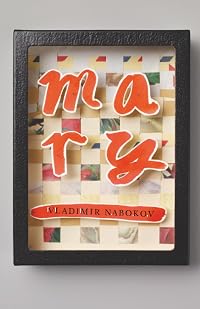
I read Nabokov's fourth novel this past weekend (and quite quickly—it's a novella) and the connective tissue bonding his Russian works is starting to become manifest. In Mary we were introduced to the Russian emigré crowd; in King, Queen, Knave: grotesque love and the faulty sense of self-worth; in The Luzhin Defense the obsessive swapping of reality with dream-state. The Eye pulls in pieces of all these themes and toys around with a few more, not the least of which is the nature of our existence and a personality as refractive of the perceptions of those around it.
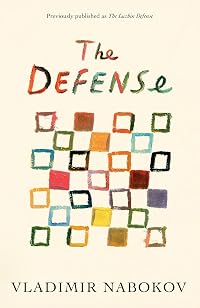
That is, can we ever know ourselves—can we ever exist?—as, really, all we are all, as Luzhin contemplates in The Defense: "...as in two mirrors reflecting a show more candle...only a vista of converging lights..." Luzhin here, too, realizes to some degree that we may all just be the incomplete sum of all of our own reflections off of others' beliefs of us.
Oh, there is also a story here, nominally a metaphysical detective plot. Heady stuff for a mere 100 pages. I'm starting to doubt I exist.
In The Eye we continue our acquaintance with the generally jovial, mostly borgeois and slightly boorish collection of Russian emigrés. We feel how Nabokov was once part of this motley culture, at once an echo of the Motherland and an aspiring intelligentsia with (sometimes silly) cosmopolitan goals. We first get introduced to this community in Mary. Its importance was less central in King, Queen, Knave (a more German feel) and The Luzhin Defense (slightly more Russian). But it's back perforce in The Eye and will continue on into his next novel chronologically: Glory (at least, based on what I've read of the back flap).
Our narrator is a peevish young man in Berlin, a recent Russian immigrant who is serving as the tutor to some snotnosed young boys. He hates it. Despite the lack of anything morally substantial in his life, he seems a preening, over-confident dandy. He takes up with a slightly sloppy mistress, whose husband wises to the liaison and gives the protagonist a summary beating—in front of his pupils. Mortified, he shoots himself.
Now ostensibly dead, he spends the following three-quarters of the story living a dream-like extension of the same life. He becomes obsessed with the identity of a young man named Smurov. We're told that Smurov is a fair, wonderful, temperature man who is impeccably well-spoken and generally sensitive. Almost immediately, Smurov's actions belie this and we're left with the duty of deciding what is really happening, or what it means for something to really happen, or, anyway, to peel through the conceit of the narrator's own life and identity.
In the narrator's opinion, Smurov only exists as others see him to exist, through their own keyhole perspective into his existence. Each person has their own Smurov-image: pompous fool, liar, latent homosexual, weird, would-be suitor.
The narrator explains: We think of ourselves as a knowable collection of things, but, really, we're unbounded, there is no snapshot of knowing that anyone can bundle up. We're all fragmentary refractions of others' glimpses of us (or even unglimpsed shards we will never know about?), unknowable, reduced to the anecdotes and opinions of our observers, which disperse like steam after our corporeal existence ends.
As the narrator unfolds Smurov from different angles, he wrangles with other human conditions, stumbling through the agony and ecstasy of unrequited love along the way. We don't care, alas, because his character is so repellant as to make him laughable, not pitiable. Or is it just that we think we understand the narrator's smug shallowness because we've seen 100 pages of its description? Maybe the reader, just like any of the individual watchers of Smurov (or the watcher of the watchers of Smurov) think we know the entirety of him, but merely know one fragment in time, from one specific perch. show less
That is, can we ever know ourselves—can we ever exist?—as, really, all we are all, as Luzhin contemplates in The Defense: "...as in two mirrors reflecting a show more candle...only a vista of converging lights..." Luzhin here, too, realizes to some degree that we may all just be the incomplete sum of all of our own reflections off of others' beliefs of us.
Oh, there is also a story here, nominally a metaphysical detective plot. Heady stuff for a mere 100 pages. I'm starting to doubt I exist.
In The Eye we continue our acquaintance with the generally jovial, mostly borgeois and slightly boorish collection of Russian emigrés. We feel how Nabokov was once part of this motley culture, at once an echo of the Motherland and an aspiring intelligentsia with (sometimes silly) cosmopolitan goals. We first get introduced to this community in Mary. Its importance was less central in King, Queen, Knave (a more German feel) and The Luzhin Defense (slightly more Russian). But it's back perforce in The Eye and will continue on into his next novel chronologically: Glory (at least, based on what I've read of the back flap).
Our narrator is a peevish young man in Berlin, a recent Russian immigrant who is serving as the tutor to some snotnosed young boys. He hates it. Despite the lack of anything morally substantial in his life, he seems a preening, over-confident dandy. He takes up with a slightly sloppy mistress, whose husband wises to the liaison and gives the protagonist a summary beating—in front of his pupils. Mortified, he shoots himself.
Now ostensibly dead, he spends the following three-quarters of the story living a dream-like extension of the same life. He becomes obsessed with the identity of a young man named Smurov. We're told that Smurov is a fair, wonderful, temperature man who is impeccably well-spoken and generally sensitive. Almost immediately, Smurov's actions belie this and we're left with the duty of deciding what is really happening, or what it means for something to really happen, or, anyway, to peel through the conceit of the narrator's own life and identity.
In the narrator's opinion, Smurov only exists as others see him to exist, through their own keyhole perspective into his existence. Each person has their own Smurov-image: pompous fool, liar, latent homosexual, weird, would-be suitor.
The narrator explains: We think of ourselves as a knowable collection of things, but, really, we're unbounded, there is no snapshot of knowing that anyone can bundle up. We're all fragmentary refractions of others' glimpses of us (or even unglimpsed shards we will never know about?), unknowable, reduced to the anecdotes and opinions of our observers, which disperse like steam after our corporeal existence ends.
As the narrator unfolds Smurov from different angles, he wrangles with other human conditions, stumbling through the agony and ecstasy of unrequited love along the way. We don't care, alas, because his character is so repellant as to make him laughable, not pitiable. Or is it just that we think we understand the narrator's smug shallowness because we've seen 100 pages of its description? Maybe the reader, just like any of the individual watchers of Smurov (or the watcher of the watchers of Smurov) think we know the entirety of him, but merely know one fragment in time, from one specific perch. show less
There is an episode in the first season of Torchwood in which Toshiko can hear what all of her friends secretly think of her. Of course, this turns out to be more of a curse than a gift, as Tosh quickly realizes.
The Eye reminded me of this, insofar as the main character Smurov exists only as that which others perceive him to be. As far as he's concerned, in fact, he no longer exists at all, but has killed himself. All of those around him exist only as mirrors of himself - he can look at them, through them, as windows into his own existence. The implication, though, is that there is no "he" that is remarked upon by others. They aren't seeing him at all. He's invisible - and as he sees himself through their eyes, they aren't seeing him at show more all, but only what they wish to see.
This is a quick book, one to be read in an afternoon, but one that stays with you and forces you to spend some time thinking. Not my favorite of Nabokov's, but that's liable to change the more I think on it. Needless to say, very worthy of a read. show less
The Eye reminded me of this, insofar as the main character Smurov exists only as that which others perceive him to be. As far as he's concerned, in fact, he no longer exists at all, but has killed himself. All of those around him exist only as mirrors of himself - he can look at them, through them, as windows into his own existence. The implication, though, is that there is no "he" that is remarked upon by others. They aren't seeing him at all. He's invisible - and as he sees himself through their eyes, they aren't seeing him at show more all, but only what they wish to see.
This is a quick book, one to be read in an afternoon, but one that stays with you and forces you to spend some time thinking. Not my favorite of Nabokov's, but that's liable to change the more I think on it. Needless to say, very worthy of a read. show less
Essentially a fictional illustration of the sociologist Erving Goffman's [b:The Presentation of Self in Everyday Life|931984|The Presentation of Self in Everyday Life|Erving Goffman|https://d.gr-assets.com/books/1400075101s/931984.jpg|2268805], though predating it by 26 years. Following a failed suicide attempt, Smurov appears to suffer from dissassociation - believing himself to be dead, he thinks his life is merely the continuation of his imagination, and he partly adopts a dispassionate outsider's view of himself.
I don't know if Goffman knew of The Eye when he wrote his book detailing his great contribution to sociological theory, though The Eye was not translated into English until 1965, nine years after Goffman's work was first published in Scotland, so perhaps not. But he would have known exactly what Nabokov was up to here. show less
Ever since the shot - that shot which, in my opinion, had been fatal - I had observed myself with curiosity instead of sympathy, and my painful past - before the shot - was now foreign to me... In respect to myself I wasshow more
now an onlooker.While his "real" self rents a room, gets a job, and falls in love, his "observer" self evaluates the theatrical presentation of his "real" self to other people, and seeks to find out how they view his "real" self, and how these views differ from person to person, each one essentially creating a new Smurov.
The situation was becoming a curious one. I could already count three versions of Smurov, while the original remained unknown... Just as the scientist does not care whether the color of a wing is pretty or not, or whether its markings are delicate or lurid (but is interested only in its taxonomic characters), I regarded Smurov, without any aesthetic tremor; instead, I found a keen thrill in the classification of Smurovian masks that I had so casually undertaken.The parallels with Goffman's book just smack an old sociology major over the head - Nabokov even explicitly uses Goffman's idea of "masks" here! And what is Smurov doing if not Goffman's description of dramaturgical analysis: "If we imagine ourselves as directors observing what goes on in the theatre of everyday life, we are doing what Goffman called dramaturgical analysis, the study of social interaction in terms of theatrical performance."
I don't know if Goffman knew of The Eye when he wrote his book detailing his great contribution to sociological theory, though The Eye was not translated into English until 1965, nine years after Goffman's work was first published in Scotland, so perhaps not. But he would have known exactly what Nabokov was up to here. show less
Reading The Eye has fuelled my desire to read everything by Nabokov that I can lay my hands on. Beautifully woven, with a cluster of characters living in their own, claustrophobic social world set the scene for the second act of this book. The Eye is a story about selfhood; about who we are, to ourselves and far more importantly, who we are in the eyes of others. Are we really just one person? Is not the personality of someone largely a mirror of what we contain in ourselves, as opposed to their own thought processes?
As usual, Nabokov places the reader in a frame of mind which causes them to explore their own assumptions; not of the outside world, but of that which lay inside.
As usual, Nabokov places the reader in a frame of mind which causes them to explore their own assumptions; not of the outside world, but of that which lay inside.
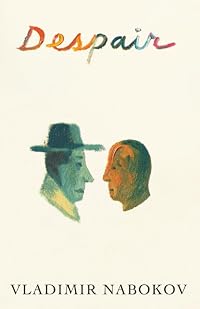
Nothing in Nabokov is ever exactly what it seems. Few of his books so obviously express this like The Eye, in which our title character kills himself within the first few pages, then must deal with an intense psychological mystery through the remainder of the proceedings. Though not as strong as much of Nabokov's other fiction, this is a bizarre journey through a disturbed mind that pairs nicely with other works like Despair.
The novella opens with our unnamed narrator, a self-proclaimed womanizer, attempting to seduce a married woman. When the cuckolded husband exacts violent revenge for his transgression, our narrator decides that he must kill himself. But no sooner does he pull the trigger on his gun than he finds himself in a show more fantastical world populated by people that, we sense, are entities from his earlier life. It is his task, as well as ours, to piece the puzzle together, figure out who everyone is, and decipher how he managed to find himself in this purgatory in the first place.
Nabokov's introduction to the Vintage edition essentially reveals the central secret of the novel, which I will not unveil here (despite the blurb on the back committing the same egregious fault), but the author simultaneously confesses that the mystery is in fact besides the point. The novella seems far more interested in capturing the essence of the moment of death as life flashing before one's eyes. The central question, it seems, is to try and make sense of one's life when one can only observe it: the narrator is powerless to effect any change on the proceedings, which makes it feel less like a mystery than an inexorability.
While this type of immersion in the novella is the best approach to the text, the fact remains that the true explanation is well within the reach of even the most cursory reader. Nabokov's plotting here, normally very subtle and surprising, falls short of being truly enthralling. The clues placed along the way are occasionally so obvious that it becomes distracting: the "a-ha!" moment, despite not being at Nabokov's forefront, seems lurking around every corner. It takes away from the impact of the ethereal tone once the secret is discovered, and it renders the final few pages unexpectedly unsatisfying.
There is little mind-blowing content in this work, but it is an interesting marker in Nabokov's early career. It is a treatment of the idea of a doppelgänger that pairs interestingly with Despair, and forces us to consider the function of such double-figures, particularly in his Russian fiction. As a critical lens, The Eye is a fascinating view, but as a pleasure read, it is enjoyable though slight. show less
The novella opens with our unnamed narrator, a self-proclaimed womanizer, attempting to seduce a married woman. When the cuckolded husband exacts violent revenge for his transgression, our narrator decides that he must kill himself. But no sooner does he pull the trigger on his gun than he finds himself in a show more fantastical world populated by people that, we sense, are entities from his earlier life. It is his task, as well as ours, to piece the puzzle together, figure out who everyone is, and decipher how he managed to find himself in this purgatory in the first place.
Nabokov's introduction to the Vintage edition essentially reveals the central secret of the novel, which I will not unveil here (despite the blurb on the back committing the same egregious fault), but the author simultaneously confesses that the mystery is in fact besides the point. The novella seems far more interested in capturing the essence of the moment of death as life flashing before one's eyes. The central question, it seems, is to try and make sense of one's life when one can only observe it: the narrator is powerless to effect any change on the proceedings, which makes it feel less like a mystery than an inexorability.
While this type of immersion in the novella is the best approach to the text, the fact remains that the true explanation is well within the reach of even the most cursory reader. Nabokov's plotting here, normally very subtle and surprising, falls short of being truly enthralling. The clues placed along the way are occasionally so obvious that it becomes distracting: the "a-ha!" moment, despite not being at Nabokov's forefront, seems lurking around every corner. It takes away from the impact of the ethereal tone once the secret is discovered, and it renders the final few pages unexpectedly unsatisfying.
There is little mind-blowing content in this work, but it is an interesting marker in Nabokov's early career. It is a treatment of the idea of a doppelgänger that pairs interestingly with Despair, and forces us to consider the function of such double-figures, particularly in his Russian fiction. As a critical lens, The Eye is a fascinating view, but as a pleasure read, it is enjoyable though slight. show less
In the Berlin of 1925 a Russian emigré, one Smurov, accosted and humiliated by a jealous husband, goes home and shoots himself. What follows is the story of his bifurcated, pseudo-afterlife. As if he weren't mixed up enough, in his dissociative state he has the ill luck to fall in love. Breathtaking narrative patterning here, beautiful in a way simple crystalline forms are beautiful. A marvel that can be read in a single sitting. My second reading, I've upgraded it to 5 stars.
Early on in this brief novel, the first-person narrator commits suicide (!) and then, too late, is startled to discover that he has entered into an afterlife that is remarkably similar to the real world he has just left -- even to the point of his needing a job in order to pay for food to eat! Baffled, and quite surprised that such an afterlife existed, he bows to the inevitable and starts putting together a new so-called 'life' by seeking out a new circle of friends, while both he and the reader each try to figure out what is going on in this very realistic spectral existence.
In this still-early fourth novel by Nabokov, he introduces the skill that he will subsequently perfect, for artfully deceiving the reader and producing show more multi-layered and cleverly intertwined story arcs that gain fuller appreciation on second thought. To read a Nabokov novel for the first time, therefore, is not only to enjoy the story but frequently also to accept the author's game-like challenge to discern the complexity of the real story being told. In this slender book, Nabokovians will see yet another step forward in their author's development toward the famous writer he will eventually become. show less
In this still-early fourth novel by Nabokov, he introduces the skill that he will subsequently perfect, for artfully deceiving the reader and producing show more multi-layered and cleverly intertwined story arcs that gain fuller appreciation on second thought. To read a Nabokov novel for the first time, therefore, is not only to enjoy the story but frequently also to accept the author's game-like challenge to discern the complexity of the real story being told. In this slender book, Nabokovians will see yet another step forward in their author's development toward the famous writer he will eventually become. show less
Members
- Recently Added By
Lists

Russian Literature
187 works; 33 members
Author Information

434+ Works 96,433 Members
Vladimir Vladimirovich Nobokov was born April 22, 1899 in St. Petersburg, Russia to a wealthy family. He attended Trinity College, Cambridge. When he left Russia, he moved to Paris and eventually to the United States in 1940. He taught at Wellesley College and Cornell University. Nobokov is revered as one of the great American novelists of the show more 20th Century. Before he moved to the United States, he wrote under the pseudonym Vladimir Serin. Among those titles, were Mashenka, his first novel and Invitation to a Beheading. The first book he wrote in English was The Real Life of Sebastian Knight. He is best know for his work Lolita which was made into a movie in 1962. In addition to novels, he also wrote poetry and short stories. He was a finalist for the National Book Award for Fiction seven times, but never won it. Nabokov died July 2, 1977. show less
Some Editions
Series
Belongs to Publisher Series
Work Relationships
Is contained in
Common Knowledge
- Canonical title*
- Het oog
- Original title
- Соглядатай
- Original publication date
- 1930 (Russian) (Russian); 1965 (English) (English)
- People/Characters
- Smurov; Matilda; Kashmarin; Evgenia; Vanya; Mukhin (show all 9); Roman Bogdanovich; Weinstock; Marianna
- Important places
- Berlin, Germany
- Original language
- Russian
*Some information comes from Common Knowledge in other languages. Click "Edit" for more information.
Classifications
Statistics
- Members
- 910
- Popularity
- 29,675
- Reviews
- 24
- Rating
- (3.60)
- Languages
- 15 — Czech, Dutch, English, Finnish, French, German, Greek, Italian, Japanese, Polish, Portuguese, Romanian, Russian, Spanish, Swedish
- Media
- Paper, Audiobook, Ebook
- ISBNs
- 39
- ASINs
- 18