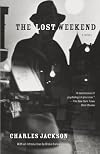
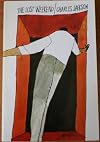
The Lost Weekend
by Charles Jackson
On This Page
Description
Reprint of modern classic originally published in 1944 by Farrar & Rinehart, Inc. The classic tale of one man's struggle with alcoholism, this revolutionary novel remains Charles Jackson's best-known book--a daring autobiographical work that paved the way for contemporary addiction literature. It is 1936, and on the East Side of Manhattan, a would-be writer named Don Birnam decides to have a drink. And then another, and then another, until he's in the midst of what becomes a five-day binge. show more "The Lost Weekend" moves with unstoppable speed, propelled by a heartbreaking but unflinching truth. It catapulted Charles Jackson to fame, and endures as an acute study of the ravages of alcoholism, as well as an unforgettable parable of the condition of the modern man. show lessTags
Recommendations



















Member Reviews
The 80 years since this book was published haven’t changed a thing about the alcoholic experience. What does feel slightly dated is the way Jackson writes dipso Don’s train of thought, and especially the dream scene. Too much telling vs. showing? A minor complaint though, and I did love his reverie of Cleopatra, her matchless beauty a metaphor for the bottle. The action of Don’s spree — his repeated careenings from bar to liquor store to temporary unconsciousness, his tragicomic search for a pawn shop on Yom Kippur — is terrifyingly out of control. Absolutely a classic booze novel.
https://nwhyte.livejournal.com/3089967.html
It’s as grim reading as the film is grim viewing, tight third throughout, vividly realised, and without the film’s happy ending.
Don Birnam is bisexual in the original novel, but firmly straight on screen; in the book, his ambiguous sexuality is part of the root of his addiction - which of course rather ignores the fact that in real life, many alcoholics are entirely secure in their sexual identities; but I guess Jackson had to tell the story he himself knew best.
The penultimate section of the book has Don hallucinating at his girlfriend Helen’s apartment, rather than his own - this gives a stronger sense of displacement, and of course reinforces the point that when he does get home he show more starts drinking again, ending the book in the same place he started, only worse off.
Several of the great visuals of the film (including the opera scene) were written for the screen and were not in the original book. The passage in the hospital is memorable in a very different way in the book - the nurse, Bim Nolan, hints at seducing Don as part of his treatment, though Don is not really interested either in being seduced or in being treated. (In fairness this is hinted at on screen, but it is text rather than subtext in the original.) show less
It’s as grim reading as the film is grim viewing, tight third throughout, vividly realised, and without the film’s happy ending.
Don Birnam is bisexual in the original novel, but firmly straight on screen; in the book, his ambiguous sexuality is part of the root of his addiction - which of course rather ignores the fact that in real life, many alcoholics are entirely secure in their sexual identities; but I guess Jackson had to tell the story he himself knew best.
The penultimate section of the book has Don hallucinating at his girlfriend Helen’s apartment, rather than his own - this gives a stronger sense of displacement, and of course reinforces the point that when he does get home he show more starts drinking again, ending the book in the same place he started, only worse off.
Several of the great visuals of the film (including the opera scene) were written for the screen and were not in the original book. The passage in the hospital is memorable in a very different way in the book - the nurse, Bim Nolan, hints at seducing Don as part of his treatment, though Don is not really interested either in being seduced or in being treated. (In fairness this is hinted at on screen, but it is text rather than subtext in the original.) show less
Of all the novels I’ve read about alcoholics, I think Charles Jackson’s The Lost Weekend (1944) comes closest to giving you an idea of what it’s like to be an alcoholic. It’s probably only remembered today because of Billy Wilder’s surprisingly good movie adaptation, which garnered four Oscars, including best picture of 1945. The book is not very well written – Jackson is awkward and his literary references and dips into stream of consciousness come across as pretentious – but its realism and unflinching honesty still shock.
The semi-autobiographical story revolves around a five-day drinking binge rife with blackouts, humiliations and overwhelming desperation. The protagonist, Don Birnam, is a failed writer tortured by his show more repressed homosexuality and guilt towards his younger brother and his girlfriend. The book is so agonizing largely because of Birnam’s self-awareness; he realizes how horribly he’s acting and how helpless he is to stop it. There are many harrowing scenes, but possibly the most distressful one has Birnam, in terrible physical pain and desperate for another drink, hobbling through New York City looking for a place to pawn the coat he stole from his girlfriend.
Lacking any humor and suffused with anxiety and regret, The Lost Weekend is a tough read. Where the movie ends in an ambiguous note – optimistic viewers could interpret the scene as a turning point in Birnam’s drinking – the book does not offer any palliatives. Neither does the author’s life – after a long period of sobriety he relapsed and eventually committed suicide.
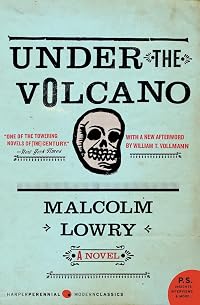
Judging from the book’s modernist flourishes, I think Jackson would have preferred to have written Under the Volcano, but he clearly didn’t have the chops. Which might have been a good thing, as too much art would have blunted his novel’s impact. show less
The semi-autobiographical story revolves around a five-day drinking binge rife with blackouts, humiliations and overwhelming desperation. The protagonist, Don Birnam, is a failed writer tortured by his show more repressed homosexuality and guilt towards his younger brother and his girlfriend. The book is so agonizing largely because of Birnam’s self-awareness; he realizes how horribly he’s acting and how helpless he is to stop it. There are many harrowing scenes, but possibly the most distressful one has Birnam, in terrible physical pain and desperate for another drink, hobbling through New York City looking for a place to pawn the coat he stole from his girlfriend.
Lacking any humor and suffused with anxiety and regret, The Lost Weekend is a tough read. Where the movie ends in an ambiguous note – optimistic viewers could interpret the scene as a turning point in Birnam’s drinking – the book does not offer any palliatives. Neither does the author’s life – after a long period of sobriety he relapsed and eventually committed suicide.
Judging from the book’s modernist flourishes, I think Jackson would have preferred to have written Under the Volcano, but he clearly didn’t have the chops. Which might have been a good thing, as too much art would have blunted his novel’s impact. show less
Wow. I can't say I've read many books centered on addiction to begin with, but I also find it hard to believe that anyone has ever written as believable an account of it as this. Don Birnam is clearly a man who is more introspective and sensitive than most, but he is also a man completely beholden to the vice of liquor. He will do absolutely anything (well, almost anything) for a drink, all the while understanding that his desire will lead to nothing more than wanton destruction. From the very beginning of the weekend and the novel, Don fully acknowledges that he knows exactly the path he will take in his quest for booze and further that he understands where this quest will ultimately lead. He knows he is hurting many more people aside show more from himself, but he persists with his behavior because he quite literally cannot stop. Hospital visits, near-run-ins with the law, a lack of money...all of these are minor obstacles for Don as he seeks out alcohol. Mr. Jackson has captured the mindset of the alcoholic perfectly (he unfortunately speaks from experience) and it is a paralyzing sad account indeed.
I think what struck me most was Don's understanding of self, even while drunk, while still being completely powerless to stop his own sickening behavior. There are only a few true events that occur to Don over the course of his lost weekend, but through the lens of these happenings he truly examines every nook and corner of his psyche. This is a must read for anyone who wants to understand the addict or for anyone who wants to observe how one singular, terrible character flaw can absolutely render destruction at every turn. show less
I think what struck me most was Don's understanding of self, even while drunk, while still being completely powerless to stop his own sickening behavior. There are only a few true events that occur to Don over the course of his lost weekend, but through the lens of these happenings he truly examines every nook and corner of his psyche. This is a must read for anyone who wants to understand the addict or for anyone who wants to observe how one singular, terrible character flaw can absolutely render destruction at every turn. show less
Don Birnam is thirty-three, unemployed, supported by his younger brother, and he's an alcoholic. His brother is desperate to block Don's access to liquor, but Don manages to get left behind in Manhattan instead of going for the weekend in the country his brother planned. Don's weekend is spent drinking, finding money to buy liquor, stealing, pawning and hitting people up for money to buy liquor, worrying about running out of liquor, hallucinating and passing out. Don swings between feeling sophisticated, imagining himself as a literary professor lecturing on Fitzgerald or a great Shakespearean actor, to loathing himself for his weaknesses, his treatment of friends and his sexuality.
This is deeply introspective, with little dialogue. Don show more lives in his head, which tortures him, but the author really lays the delirium on pretty thick. His hallucinations and delirium seem more in line with heroin use than alcohol, even if Don is throwing back enough to kill a horse in an hour. My copy is only 244 pages, but the story would have benefited from losing around 60 pages, as Don's drinking, worry and hallucinations turned into an endless cycle a hundred pages in, then, after so much suffering, the ending had too much of a "all's well that ends well" feeling. I'd expected something more. show less
This is deeply introspective, with little dialogue. Don show more lives in his head, which tortures him, but the author really lays the delirium on pretty thick. His hallucinations and delirium seem more in line with heroin use than alcohol, even if Don is throwing back enough to kill a horse in an hour. My copy is only 244 pages, but the story would have benefited from losing around 60 pages, as Don's drinking, worry and hallucinations turned into an endless cycle a hundred pages in, then, after so much suffering, the ending had too much of a "all's well that ends well" feeling. I'd expected something more. show less
his is a wild ride of a book. Don is a struggling writer, and a massive alcoholic. His brother reluctantly leaves him alone for a long weekend, and Don goes on a bender. He does whatever he can to make sure he has his next pint of booze, lie, steal, borrow if he can. It is a definite cautionary tale for the toll that alcoholism can take on a person. Excellent read.
This extended internal monologue of a gay alcoholic loose on the streets of Manhattan was in very modern in many ways despite its 1936 setting. Jackson gets very deep into the erratic, diseased alcoholic logic; his depictions of hangovers and lust for alcohol are moving and at times comic. The passing characters are a mix of distinct portraits (e.g., Bim, the nurse in the drunk tank at the hospital) and weak caricatures (e.g., the hostess at the narrator's customary bar). Indeed, the female characters in particular suffer in depth relative to the males. But what ultimately doomed this work was its repetition and length; it desperately needed an editor. The interminable dream sequence on his last day was both unnecessary and distracting.
Members
- Recently Added By
Lists

Books featuring alcoholics
103 works; 18 members

Pre-1969 LGBTQ Literature
182 works; 69 members

1940s
221 works; 25 members

Hidden Classics
73 works; 14 members

Best books read in 2011
200 works; 50 members

LibraryThingers' 1001 Books You Must Read Before You Die
442 works; 30 members

Five star books
1,755 works; 108 members

Favorite Books from the 1940s
38 works; 3 members
Best Books of the 20th Century
193 works; 5 members

Good LGBT fiction for LGBT folk and friends
545 works; 50 members

Books Read in 2011
684 works; 19 members

Books Read in 2024
4,623 works; 126 members

Books in Riverdale
123 works; 3 members
Author Information

7+ Works 743 Members
Some Editions
Awards and Honors
Distinctions
Notable Lists
Series
Belongs to Publisher Series
Work Relationships
Has the adaptation
Common Knowledge
- Original publication date
- 1944
- People/Characters
- Don Birnam; Wick Birnam
- Important places
- Manhattan, New York, New York, USA; New York, New York, USA; New York, USA
- Related movies
- The Lost Weekend (1945 | IMDb)
- Epigraph
- And can you, by no drift of circumstance,
Get from him why he puts on this confusion,
Grading so harshly all his days of quiet
With turbulent and dangerous lunacy?
- HAMLET, III, I - Dedication
- TO
MY WIFE - First words
- 'The barometer of his emotional nature was set for a spell of riot.'
- Quotations*
- Ik ken je. O ja? Zijn woede nam ote. Dat was het probleem met de homa en hij had het niet over de homo sapiens. Zw waren er altijd zo verdomd op gebrand om iedere man die ze niet konden versieren ervan te verdenken dat hij al... (show all)leen maar onverschilligheid veinsde om zich daardoor des te aantrekkelijker te maken, zw earen er zo verdomd op gebrand om te geloven dat ze hun eigen ontaarding met alle anderen deelden. Hij had er nog nooit een gekend die niet dacht dat iedere andere nog levende of dode of not ve verwekken man er ook een zweempje van had. Tja, wie had er geen zweempje van, of zelfs tien zweempjes. Maar gaf die discutabele mogelijkheid hun het recht door het leven te gaan met dat zelfgenoegzaam grijnzende weten dat van hun mooie gezicht afstraalde alsof het een vaststaand feit was? Alsof ze stonden te popelen om de wereld te vertellen dat ze meer over jou wisten dan jij? Ena als hun blik er een van herkenning was, waarom sprak er dan ook minachting uit? Wanneer ze je als broeder verwelkomden, verachtten ze je om dezelfde reden. Niemand was sneller met het 'mietje', en ook nog eens spottend gebruikt, dan het mietje zelf - zoals de Jood die ineenkrimpt bij het woord 'smous' maar het twee keer zo vaak bezigt als alle anderen; zoals de neger die om de haverklap ' nikker' zeg; zoals de tbc-patient die met heimelijke voldoening glimlacht vanaf zijn kussen omdat de veelbetekenende blos op de wangen van zijn medelijdende bezoeker al te duidelijk verraadt dat hij de volgende zals zijn. 2014 blz. 190 -191
- Original language
- English
*Some information comes from Common Knowledge in other languages. Click "Edit" for more information.
Classifications
Statistics
- Members
- 556
- Popularity
- 53,210
- Reviews
- 13
- Rating
- (3.95)
- Languages
- 8 — Danish, Dutch, English, Finnish, German, Italian, Spanish, Turkish
- Media
- Paper, Audiobook, Ebook
- ISBNs
- 23
- ASINs
- 29