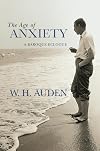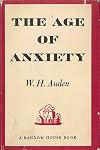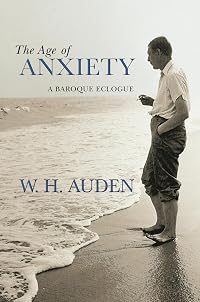
The Age of Anxiety: A Baroque Eclogue
by W. H. Auden 
On This Page
Description
When it was first published in 1947,The Age of Anxiety- W.H. Auden's last, longest, and most ambitious book-length poem- immediately struck a powerful chord, capturing the imagination of the cultural moment that it diagnosed and named. Beginning as a conversation among four strangers in a barroom on New York's Third Avenue, Auden's analysis of Western culture during the Second World War won the Pulitzer Prize and inspired a symphony by Leonard Bernstein as well as a ballet by Jerome Robbins. show more Yet reviews of the poem were sharply divided, and today, despite its continuing fame, it is unjustly neglected by readers. This volume - the first annotated, critical edition of the poem- introduces this important work to a new generation of readers by putting it in historical and biographical context and elucidating its difficulties. Alan Jacobs's introduction and thorough annotations help today's readers understand and appreciate the full richness of a poem that contains some of Auden's most powerful and beautiful verse, and that still deserves a central place in the canon of twentieth-century poetry. -- Book Jacket. show lessTags
Recommendations















Member Reviews
The writing is often magnificent and, really, unsurpassable, but in passages of a stanza or in groups of several lines. What use is this book as a book, as an entire statement? Because Auden certainly intended it to have a use: it's a classification, a Pilgrim's Progress, an anatomy, a taxonomy of the state of human affairs and culture after World War II. There's a wonderful introduction by Alan Jacobs (wonderful: not insistent, but not rambling), which makes it clear that Auden's classifications of types, journeys, and temperaments comes from Jung, the Kabbalah, and other sources. In its ambition and its reliance on mythopoetic types, the book is like a rationalist's answer to "A Vision," and now that I've belatedly read it I see its show more confidence in classification as a shadow on "the Changing Light in Sandover."
But what use is it, this classification of temperaments into four types, this journey into disappointment, this faint reprieve at the end granted by love and the passive acknowledgment of the impossibility of salvation? Can anyone, now, see themselves in this? Is it possible to read this as something other than a mid-century project, impelled by its author's transient constellation of literary sources and idiosyncratic poetic ambition? I don't think so. I cannot imagine a state of mind in which I would feel comforted, or feel I'd gained insight, from being told there are Four Faculties, or that we need to be "too resigned" for happiness (that's Jacobs, but it's accurate), or that the necessary journey has seven stages, or that "age softens the sense of defeat / As well as the will to success" (p. 103), or that "we are mocked by unmeaning" (p. 33), and so on... the poem is filled with quotable conclusions, as hesitant and contextual as they may be.
The passivism (as opposed to pacifism) of the book's politics has attracted the attention of some writers, and "The Age of Anxiety" has been said to be exemplary for "our" age of political skepticism. Whether or not it makes sense to say we're in such an age (and it very nearly doesn't, because the notion is so thoroughly riddled with exceptions), this is not the book to give that position to the twenty-first century. It's a book of individual, isolated passages, some of which are really magnificent (pp. 30, 32, 33, 87, 103...). show less
But what use is it, this classification of temperaments into four types, this journey into disappointment, this faint reprieve at the end granted by love and the passive acknowledgment of the impossibility of salvation? Can anyone, now, see themselves in this? Is it possible to read this as something other than a mid-century project, impelled by its author's transient constellation of literary sources and idiosyncratic poetic ambition? I don't think so. I cannot imagine a state of mind in which I would feel comforted, or feel I'd gained insight, from being told there are Four Faculties, or that we need to be "too resigned" for happiness (that's Jacobs, but it's accurate), or that the necessary journey has seven stages, or that "age softens the sense of defeat / As well as the will to success" (p. 103), or that "we are mocked by unmeaning" (p. 33), and so on... the poem is filled with quotable conclusions, as hesitant and contextual as they may be.
The passivism (as opposed to pacifism) of the book's politics has attracted the attention of some writers, and "The Age of Anxiety" has been said to be exemplary for "our" age of political skepticism. Whether or not it makes sense to say we're in such an age (and it very nearly doesn't, because the notion is so thoroughly riddled with exceptions), this is not the book to give that position to the twenty-first century. It's a book of individual, isolated passages, some of which are really magnificent (pp. 30, 32, 33, 87, 103...). show less
Stilted. Not one of Auden's many brilliant works, even though it did get a Pulitzer. Maybe I have no taste.
scansionato tutto
Oct 28, 2020Italian
Ratings
Members
- Recently Added By
Lists

New York Public Library's Books of the Century - All
170 works; 14 members
Author Information

306+ Works 14,508 Members
W. H. Auden, who was born in York, England, on February 21, 1907, is one of the most successful and well-known poets of the 20th century. Educated at Oxford, Auden served in the Spanish Civil War, which greatly influenced his work. He also taught in public schools in Scotland and England during the 1930s. It was during this time that he rose to show more public fame with such works as "Paid on Both Sides" and "The Orators." Auden eventually immigrated to the United States, becoming a citizen in 1946. It was in the U.S. that he met his longtime partner Chester Kallman. Stylistically, Auden was known for his incomparable technique and his linguistic innovations. The term Audenesque became an adjective to describe the contemporary sounding speech reflected in his poems. Auden's numerous awards included a Bollingen Prize in Poetry, A National Book Award for "The Shield of Achilles," a National Medal for Literature from the National Book Committee, and a Gold Medal from the National Institute of Arts and Letters. Numerous volumes of his poetry remain available today, including "About the House" and "City Without Walls." W.H. Auden died on September 28, 1973 in Vienna. (Bowker Author Biography) show less
W. H. Auden has a Legacy Library. Legacy libraries are the personal libraries of famous readers, entered by LibraryThing members from the Legacy Libraries group.
Some Editions
Awards and Honors
Series
Belongs to Publisher Series
Common Knowledge
- Canonical title
- The Age of Anxiety: A Baroque Eclogue
- Original publication date
- 1947
- Dedication
- To John Betjeman
Classifications
Statistics
- Members
- 227
- Popularity
- 143,123
- Reviews
- 3
- Rating
- (3.71)
- Languages
- English, German, Italian
- Media
- Paper
- ISBNs
- 6
- ASINs
- 8