
Francesco Petrarca (1304–1374)
Author of Canzoniere
About the Author
Son of an exiled Florentine clerk, Petrarch was born in Arezzo, Italy, but was raised at the court of the Pope in Avignon in southern France. He studied the classics in France and continued his education at the University of Bologna in Italy. Less than a year after his return to Avignon in 1326, show more Petrarch fell in love with the woman he referred to as Laura in his most famous poetry. Although he never revealed her true name, nor, apparently, ever expressed his love to her directly, he made her immortal with his Canzoniere (date unknown), or songbook, a collection of lyric poems and sonnets that rank among the most beautiful written in Italian, or in any other language. Like the major Italian poet Dante Alighieri, Petrarch chose to write his most intimate feelings in his native Italian, rather than the Latin customary at that time. Petrarch used Latin for his more formal works, however. He incorrectly assumed that he would be remembered for the Latin works, but it was his Italian lyric poetry that influenced both the content and form of all subsequent European poetry. Petrarch's sonnet form was prized by English poets as an alternative to English poet William Shakespeare's sonnet form. (Bowker Author Biography) show less
Series
Works by Francesco Petrarca
The Secret: by Francesco Petrarch with Related Documents (Bedford Series in History & Culture) (2003) — Author — 59 copies
Della mia ignoranza e di quella di molti altri (GUM. Nuova serie) (Italian Edition) (1999) — Author — 15 copies, 1 review
Cancionero II / Collection of Poems (Letras Universales / Universal Writings) (Spanish Edition) (1989) 12 copies
Selected sonnets, odes 8 copies
Delphi Collected Poetical Works of Francesco Petrarch (Illustrated) (Delphi Poets Series) (2016) 8 copies
Petrarch, the first modern scholar and man of letters; a selection from his correspondence with Boccaccio and other frie (1970) 6 copies
Epistole — Author — 5 copies
Lord Morley's "Tryumphes of Fraunces Petrarcke: The First English Translation of the "Trionfi" (1971) 5 copies
The Sonnets of Petrarch. 4 copies
Letters 4 copies
Sonnets 4 copies
Petrarch: a humanist among princes;: An anthology of Petrarch's letters and of selections from his other works (1971) 4 copies
Poesie latine 4 copies
Ur Francesco Petrarcas brev 4 copies
Excelencia de la vida solitaria 3 copies
Sonets, cançons i madrigals 3 copies
Dal canzoniere 3 copies
Petrarca. eDal Canzonieree... Le Chansonnier : . Traduction, introduction et notes par Gérard Genot 3 copies
La vita di Scipione l'Africano 3 copies
Petrarque: Lettres Familieres, Tome V, Livres XX a XXIV Rerum Familiarium, Libri XX-XXIV (2015) 3 copies
PETRARCH SONNETS AND SONGS: ITALIAN-ENGLISH EDITION — Author — 3 copies
Sto sonetů Lauře 2 copies
Lettres de Vaucluse 2 copies
Petrarch's Penitential Psalms and Prayers (William and Katherine Devers Series in Dante and Medieval Italian Literature) (2024) 2 copies
Madonna Laura : verzen 2 copies
Francesco Petrarca: Prose 2 copies
Le rime del Petrarca 2 copies
Sonets i cançons 2 copies
Opere Filosofiche di Francesco Petrarca Recate in Volgare Favella (Classic Reprint) (Italian Edition) (2017) 2 copies
Sonetti di Petrarca 2 copies
I quattro poeti italiani: Dante, Petrarca, Ariosto, Tasso [lacks Dante and all pages up to p. 140] — Author — 2 copies
La lettera del Ventoso-The ascent of Mont Ventoux. Testo latino, traduzione e commento. Ediz. multilingue (2021) 2 copies
Rime e Trionfi: con il rimario 2 copies
Lettere Di Francesco Petrarca V4: Delle Cose Familiari Libri Ventiquattro Lettere Varie Libro Unico (1866) (Italian Edition) (2010) 2 copies
Zpěvník : Výbor z poezie 2 copies
Die schönsten Liebesgedichte. Vierzig Sonette und Canzonen. Italienisch und deutsch. (1997) 2 copies
Itinerario in terra santa 2 copies
I trionfi e rime varie 2 copies
Petrarch's Book Without a Name. A Translation of the Liber Sine Nomine by Norman P. Zacour. 2 copies
Le chansonnier / Dal canzoniere (Bilingue, texte et traduction en regard) - Traduction, chronologie, introduction et notes de Gérard Genot (1969) 2 copies
De sui ipsius et multorum ignorantia : Lateinisch - Deutsch = er seine und vieler anderer Unwissenheit (1993) 2 copies
Some Love Songs of Petrarch 2 copies
2: Francesco Petrarca 2 copies
Les Oeuvres amoureuses de Pétrarque, sonnets, triomphes, traduites en français, avec le texte en regard et précédées d'une notice sur la… (1937) 2 copies
Italia mia 2 copies
Concordanza delle Rime di Francesco Petrarca — Author — 1 copy
Uspinjanje na Mont Ventoux 1 copy
A dialogue between reason and adversity. A late middle English version of Petrarch's De Remediis 1 copy
Leopardi - Tutte le opere 1 copy
Mi secreto 1 copy
Luoghi dell'"Africa" 1 copy
Le Rime sparse 1 copy
Il De otio religioso 1 copy
De viris illustribus. 1 1 copy
Rime volume primo 1 copy
Francisci Petrarchæ Epistola quæ inter se editas est prima 12. Libri Senilium Ex autographo adnotat. et variant. lectionibus locupletata 1 copy, 1 review
Lettre de Pétrarque à Laure, suivie de Remarques sur ce poëte, et de la traduction de quelques-unes de ses plus jolies pièces 1 copy, 1 review
Rime di Francesco Petrarca colla interpretazione composta dal conte Giacomo Leopardi. Parte prima 1 copy, 1 review
Prose. 1 copy
Poeti italiani - Petrarca 1 copy
The Works of Petrarca 1 copy
OPERE LATINE DI FRANCESCO PETRARCA, VOLUME PRIMO SECUNDO. 2 vols. Edited by Antonietta Bufano. Classici Italiani. (1987) 1 copy
Эстетические фрагменты 1 copy
Obra poética Vol II 1 copy
Избранная лирика 1 copy
Epistolae Metricae 1 copy
The Canzoniere 1 1 copy
The Canzoniere 2 1 copy
Sonnets from Petrarch. 1 copy
Poesie d'amore 1 copy
Il Conzoniere 1 copy
As Rimas de Petrarca 1 copy
Selected Letters 1 copy
Petrarch's Testament 1 copy
Sonnets and Songs 1 copy
Lettere autobiografiche 1 copy
Selections 1 copy
Poesía completa (Tomo 1) 1 copy
Na Terra e no Céu 1 copy
Rime e trionfi 1 copy
Atti dei Convegni Lincei 10. 1 copy
Brief aan Giovanni Coronna 1 copy
Lyric Poems 1 copy
Pjesme Lauri 1 copy
Antologia 1 copy
Chansonnier - Rerum Vulgarium Fragmenta (Les Classiques de L'Humanisme) (French Edition) (2009) 1 copy
CANCIONERO -TOMO I 1 copy
Opere 1 copy
Le rime ;bI trionfi 1 copy
Le familiari : scelta 1 copy
Letters of Old Age I-IX 1 copy
Petrarca del Vellutello 1 copy
Dal Canzoniere e dai Trionfi 1 copy
O cancioneiro 1 copy
Itinerarium breve de Ianua usque ad Ierusalem et Terram Sanctam: volgarizzamento meridionale anonimo 1 copy
Dichtung und Prosa 1 copy
Petrarca Sonetten,3 1 copy
Phisicke Against Fortune, as Well Prosperous as Adverse. Forty-Six Dialogues by Francesco Petrarca (1993) 1 copy
Poesías 1 copy
Petrarch (3 vols.) 1 copy
Opere di Francesco Petrarca 1 copy
Soneti / Rime sparse 1 copy
Il Petrarcha 1 copy
Le cose volgari 1 copy
Secretum de contemptu mundi — Author — 1 copy
Lettere di m. Francesco Petrarca all'autor della prefazione, premessa alla Rettorica d'Aristotile fatta in lingua toscana dal commendatore Annibal Caro 1 copy, 1 review
Le Rime. Vol. 2 1 copy
Le Rime. Vol. 1 1 copy
Le rime 1 copy
Kanzóny pro Lauru 1 copy
LE RIME a Cura di Giosue Carducci e Severino Ferrari Nuova Presentazione di Gianfranco Contini (1965) 1 copy
Canzoniere & Trionfi - (Facsimile codice Queriniano G V 15 - Vindelino, Venezia, 1470) (1995) 1 copy
Libri i kengeve 1 copy
Il Canzoniere di Francesco Petrarca riprodotto letteralmente dal Cod. Vat. Lat. 3195: con tre fotoincisioni (2010) 1 copy
Francisco Petrarchai De Viris Illustribus Vitae, Nunc Primo Ex Codd. Uratislaviensi, Vaticano Ac Patavino in Lucem (2020) 1 copy
Rime del Petrarca Vol. 2 1 copy
Il canzoniere, con le note di Giuseppe Rigutini, rifuse e di molto accresciute da Michele Scherillo 1 copy
Lettere senili 1 copy
Des amours charmantes 1 copy
Sonetti, Canzoni, e Triomphi di messer Francesco Petrarcha con la spositione di Bernardino Daniello da Lucca 1 copy, 1 review
Il Petrarcha con l'espositione d'Alessandro Vellutello di nouo ristampato con le figure a i Triomphi, et con piu cose vtili in varii luoghi aggiunte 1 copy, 1 review
Invective contra medicum 1 copy
Rime del Petrarca Vol. 1 1 copy
Il Petrarca essenziale 1 copy
Delphi Collected Poetical Works of Francesco Petrarch (Illustrated) (Delphi Poets Series Book 64) 1 copy
Petrarch's Remedies for fortune fair and foul : a modern English transation of De remediis utriusque fortune, with a commentary / by Conrad H. Rawski 1 copy, 1 review
L'originale del Canzoniere di Francesco Petrarca : codice Vaticano Latino 3195 riprodotto in fototipia — Author — 1 copy
Poesía 1 copy
Brief aan het nageslacht 1 copy
One Hundred Sonnets: Translated After the Italian of Petrarca, with the Original Text, Notes, and a Life of Petrarch (2016) 1 copy
On His Own Ignorance 1 copy
Rime disperse di Francesco Petrarca o a lui attribuite, raccolte a cura di A. Solerti. Ed. postuma 1 copy
IL CAZONIERE 1 copy
Obras I. Prosas 1 copy
Il Petrarca 1 copy
Sonette italienisch-deutsch 1 copy
Los sonetos y canciones 1 copy
Associated Works
The Canterbury Tales [Norton Critical Edition, 2nd ed.] (2005) — Contributor — 677 copies, 5 reviews
World Poetry: An Anthology of Verse from Antiquity to Our Time (1998) — Contributor — 496 copies, 2 reviews
The Decameron : A New Translation, Contexts, Criticism (Norton Critical Edition) (1977) — Contemporary Reaction, some editions; Contributor, some editions — 379 copies, 4 reviews
Oogst Der Tijden. keur uit de werken van schrijvers en dichters aller volken en eeuwen (1940) — Contributor — 12 copies
Van Homerus tot Van Lennep : Griekse en Latijnse literatuur in Nederlandse vertaling (1992) — Author — 7 copies
Hymne an die Provence — Contributor — 1 copy
Tagged
Common Knowledge
- Canonical name
- Petrarch
- Legal name
- Petrarca, Francesco
- Birthdate
- 1304-07-20
- Date of death
- 1374-07-18
- Gender
- male
- Education
- University of Montpellier
University of Bologna - Occupations
- poet
scholar
traveller
diplomat - Awards and honors
- Poet Laureate (1341)
- Short biography
- Francesco Petrarca or Petrarch is called the father of Italian humanism. His earliest years were spent in Tuscany. His father, a law clerk, moved the family to Pisa and later to Avignon, France, then a seat of the Papacy. He was trained at the universities of Montpellier and Bologna for the legal profession but disliked it as a career and instead devoted himself to literature. He took minor clerical orders and entered the service of Cardinal Colonna. It was at Avignon in 1327 that Petrarch saw for the first time Laura, the lady who was to be the inspiration of his famous love poetry. His work was admired throughout Europe and became a model for other writers such as Boccaccio and Dante. Both Laura and Cardinal Colonna died in 1348; Petrarch thereafter became dedicated to the cause of Italian unification, pleaded for the return of the Popes to Rome, and served the Visconti family of Milan.
- Nationality
- Italy
- Birthplace
- Arezzo, Tuscany, Italy
- Places of residence
- Avignon, France
Rome, Italy
Milan, Italy
Venice, Italy - Place of death
- Arquà, Veneto, Italy
- Burial location
- Arqua, Italy
- Associated Place (for map)
- Italy
Members
Reviews
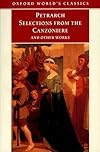
I came to Petrarch as part of my reading of the trio of Italian literary giants of the 14th century, which, in addition to Petrarch, includes Dante and Boccaccio. Whereas Boccaccio, at least in "The Decameron", is consumed with the visceral aspects of life (primarily sex, greed, and deceit), and Dante is, of course, occupied with presenting his view of the world as if it were the only view, Petrarch is something quite different. His greatness was universally acclaimed while he was still show more fairly young (he was invited to be poet laureate of both France and Italy), but he seems to have retained a surprising degree of humility and common sense. One thing that Dante and Petrarch shared was an odd obsession with women who seem to have barely recognized their existence. In Dante's case he elevated his Beatrice to the level of a god, whereas Petrarch kept his obsession for Laura to a more recognizable form that we might recognize as the gut-wrenching pining of a teenager who develops an infatuation with the most popular guy or girl in school.
This particular Oxford World's Classics volume is a selection from Petrarch's "Canzoniere", a poetry collection devoted to Laura and divided into parts written both before and after Laura's untimely and early death. In addition to the "Canzoniere", the volume includes the "Letter to Posterity", which provides a valuable biographical sketch of Petrarch, as well as his description of climbing Mont Ventoux in southern France. Being something of a mountaineer myself, I looked forward to Petrarch's account of the climb, which is regularly mentioned during Tour de France coverage when the Tour route either includes a climb of the daunting volcanic cone, or else gets anywhere near it. Unfortunately, Petrarch was not exactly inspired by his experience. Rather, once he reaches the summit after making many stupid decisions regarding the optimal route, he initially recognizes the spectacular view and seems prepared to set forth his description of the exhilaration that a climber feels on reaching the summit, but he instead allows his religious indoctrination to take over in declaring that, while the view from the top is spectacular, it is nothing more than a distraction from what he should be doing with his life, which is dedicating himself to the cultivation of his soul. The remainder of the time on the summit and then the descent are spent in a religiously-inspired daze.
As mentioned above, the Canzoniere divide themselves to the periods before and after Laura's death. While, I'm no poetry enthusiast in general, I was quite moved by Mark Musa's translations of the post-death selections, e.g. selection number 333. The pre-death selections, on the other hand, struck me as over-wrought and too enthusiastic, something of the feeling I get from reading Don Quixote's praise and lamentations of his Lady Dulcinea de Tobosa. show less
This particular Oxford World's Classics volume is a selection from Petrarch's "Canzoniere", a poetry collection devoted to Laura and divided into parts written both before and after Laura's untimely and early death. In addition to the "Canzoniere", the volume includes the "Letter to Posterity", which provides a valuable biographical sketch of Petrarch, as well as his description of climbing Mont Ventoux in southern France. Being something of a mountaineer myself, I looked forward to Petrarch's account of the climb, which is regularly mentioned during Tour de France coverage when the Tour route either includes a climb of the daunting volcanic cone, or else gets anywhere near it. Unfortunately, Petrarch was not exactly inspired by his experience. Rather, once he reaches the summit after making many stupid decisions regarding the optimal route, he initially recognizes the spectacular view and seems prepared to set forth his description of the exhilaration that a climber feels on reaching the summit, but he instead allows his religious indoctrination to take over in declaring that, while the view from the top is spectacular, it is nothing more than a distraction from what he should be doing with his life, which is dedicating himself to the cultivation of his soul. The remainder of the time on the summit and then the descent are spent in a religiously-inspired daze.
As mentioned above, the Canzoniere divide themselves to the periods before and after Laura's death. While, I'm no poetry enthusiast in general, I was quite moved by Mark Musa's translations of the post-death selections, e.g. selection number 333. The pre-death selections, on the other hand, struck me as over-wrought and too enthusiastic, something of the feeling I get from reading Don Quixote's praise and lamentations of his Lady Dulcinea de Tobosa. show less
The Canzoniere remains Petrarch's most celebrated work.
Famous for being a collection of love poems, the great bulk of it is dedicated to singing the praises of a woman called Laura. Who was she? We don't know. We assume she was Laura de Noves, a French noblewoman Petrarch claimed he had met in a church in France (Avignon) but, who rejected his advances as she was married to someone else. Well, so far so good. It's all very platonic, courtly, gallant, chevaleresque, and, so, nothing unusual show more or so it seems for the time. The thing with Petrarch, though, is that love is not sweet. It's not all flowers and butterflies and gazing at the sky dabbling with a mandoline while listening to singing birds. Love, for him, was indeed torture.
First of all, he was a Christian, deeply religious, who valued mysticism. To be so attracted by a woman, possessed with passion, love and lust as he was for a woman (let alone one he first had a glimpse at in a church!) was, if not sinful, at least unworthy of his ideal of a man of god. Then, of course, if he could feel happy thinking and writing about her (after all, here was a crush and so he wasn't spared the elated feelings coming with it all) it was nevertheless an unrequited love, as Laura rejected him. Perfectly knowing that, you can then sense his anguish and agony over his feelings over her. As a result, what a whirlwind of emotions the Canzoniere is! The turmoil tore him apart, and it makes for a very peculiar collection.
More, this book can also be hailed as a cultural turning point -for its impact on Italian language, and for kickstarting a fashion for sonnet writing.
Indeed, being a poet of the Renaissance Petrarch wrote this Canzoniere not in Latin (as would have been expected) but in Italian, his native language. Doing so, he would contribute (with Boccaccio, Dante...) to shape Italian language as we know it, showing it could be as complex, intricate, and creative as the language of the Ancients. Out of the 366 poems it contains, a remarkable 317 alone are also sonnets; sonnets of a particular form that will come to bear his name. The form will, we know, completely take Europe by storm; influencing from Ronsard in France to Sir Thomas Wyatt and, later, Shakespeare in England.
So there you go: emerging sonnets at the service of beautiful (even if quite masochistic) love poems, by a Renaissance man to whom his native language, Italian, owes a great deal... Here's a splendid work definitely worth knowing! show less
Famous for being a collection of love poems, the great bulk of it is dedicated to singing the praises of a woman called Laura. Who was she? We don't know. We assume she was Laura de Noves, a French noblewoman Petrarch claimed he had met in a church in France (Avignon) but, who rejected his advances as she was married to someone else. Well, so far so good. It's all very platonic, courtly, gallant, chevaleresque, and, so, nothing unusual show more or so it seems for the time. The thing with Petrarch, though, is that love is not sweet. It's not all flowers and butterflies and gazing at the sky dabbling with a mandoline while listening to singing birds. Love, for him, was indeed torture.
First of all, he was a Christian, deeply religious, who valued mysticism. To be so attracted by a woman, possessed with passion, love and lust as he was for a woman (let alone one he first had a glimpse at in a church!) was, if not sinful, at least unworthy of his ideal of a man of god. Then, of course, if he could feel happy thinking and writing about her (after all, here was a crush and so he wasn't spared the elated feelings coming with it all) it was nevertheless an unrequited love, as Laura rejected him. Perfectly knowing that, you can then sense his anguish and agony over his feelings over her. As a result, what a whirlwind of emotions the Canzoniere is! The turmoil tore him apart, and it makes for a very peculiar collection.
More, this book can also be hailed as a cultural turning point -for its impact on Italian language, and for kickstarting a fashion for sonnet writing.
Indeed, being a poet of the Renaissance Petrarch wrote this Canzoniere not in Latin (as would have been expected) but in Italian, his native language. Doing so, he would contribute (with Boccaccio, Dante...) to shape Italian language as we know it, showing it could be as complex, intricate, and creative as the language of the Ancients. Out of the 366 poems it contains, a remarkable 317 alone are also sonnets; sonnets of a particular form that will come to bear his name. The form will, we know, completely take Europe by storm; influencing from Ronsard in France to Sir Thomas Wyatt and, later, Shakespeare in England.
So there you go: emerging sonnets at the service of beautiful (even if quite masochistic) love poems, by a Renaissance man to whom his native language, Italian, owes a great deal... Here's a splendid work definitely worth knowing! show less
A model selected poems, inasmuch as it's short, contains a couple of prose pieces, and every single poem is worth reading. This is particularly impressive, inasmuch as I don't care at all about love poetry... and Petrarch launched more love poets than any one else, ever. But that's because he's so good, even if his epigones are not.
Of the two prose pieces, the 'Letter to Posterity' is less essential; Mark Musa's lovely introduction is more readable, and gives you the same information. But show more 'The Ascent of Mount Ventoux' is fascinating as a self-standing piece--a more or less fictional letter, describing events that probably didn't happen, obviously harking back to Dante and forward to anyone who's ever stood at the base of a mountain and thought "my, that's pretty," as well as everyone who's ever thought that maybe they could be a better person. I wasn't prepared for how approachable it was; highly recommended.
As for the poems, I can't help but prefer the more political, and the more melancholy, rather than the "my lover's super hot, man" stuff. Consider the anger in 136,
May heaven's fire pour down on your tresses
since doing evil gives you so much pleasure,
impious one, who, after stream and acrons
got fat and rich by starving other people,
you nest of treachery in which is hatched
all evil that today spreads through the world,
you slave of wine, of bedrooms, and of food,
high testing-ground for every kind of lust!
Usw. The New Atheists have nothing on the renaissance/medieval pious when it comes to ripping the church.
And Musa's translations are charming, and occasionally excellent self-standing poems. Consider the second stanza of 190, which inspired Wyatt's famous Whoso List to Hunt:
The sigh of her was so sweetly austere
that I left all my work to follow her,
just like a miser who in search of treasure
with pleasure makes his effort bitterless.
Not sure I know what that means, but who cares? I plan to use 'bitterless' in everything I say or write from now on. Not to mention, tackling more Petrarch. show less
Of the two prose pieces, the 'Letter to Posterity' is less essential; Mark Musa's lovely introduction is more readable, and gives you the same information. But show more 'The Ascent of Mount Ventoux' is fascinating as a self-standing piece--a more or less fictional letter, describing events that probably didn't happen, obviously harking back to Dante and forward to anyone who's ever stood at the base of a mountain and thought "my, that's pretty," as well as everyone who's ever thought that maybe they could be a better person. I wasn't prepared for how approachable it was; highly recommended.
As for the poems, I can't help but prefer the more political, and the more melancholy, rather than the "my lover's super hot, man" stuff. Consider the anger in 136,
May heaven's fire pour down on your tresses
since doing evil gives you so much pleasure,
impious one, who, after stream and acrons
got fat and rich by starving other people,
you nest of treachery in which is hatched
all evil that today spreads through the world,
you slave of wine, of bedrooms, and of food,
high testing-ground for every kind of lust!
Usw. The New Atheists have nothing on the renaissance/medieval pious when it comes to ripping the church.
And Musa's translations are charming, and occasionally excellent self-standing poems. Consider the second stanza of 190, which inspired Wyatt's famous Whoso List to Hunt:
The sigh of her was so sweetly austere
that I left all my work to follow her,
just like a miser who in search of treasure
with pleasure makes his effort bitterless.
Not sure I know what that means, but who cares? I plan to use 'bitterless' in everything I say or write from now on. Not to mention, tackling more Petrarch. show less
David Young’s translates all 366 poems of the Canzoniere. 366 poems written in the 14th century by a man lamenting his unrequited love for the woman of his dreams are an awful lot of poems to read unless you care about the development of poetry, or the subject of love of the most unrequited kind resonates with you. I read them all; I cared, I was enchanted and was able to share some of the emotions, and with the help of David Young’s introduction understand the points of view from a show more medieval perspective..
Petrarch was born in 1304 and on 6 April 1327 he saw Laura in the church of S. Claire, Avignon and immediately fell in love with her. His love was not returned. Laura was a respectable married Lady who would have nothing to do with the poet, she gave him no encouragement and when she saw him treated him mostly with disdain. Petrarch immediately started to write his poems about his love for Laura publishing them (this was before the availability of the printing press) as and when they were to hand. They were well received and he became the best known poet of his times. Laura died in 1348 probably of the Black Death, but Petrarch continued to love Laura and continued to write poems about her until he died in 1374.
The poems written in the first person document a one sided love affair and written over a period of 47 years, we are able to see how this developed in the thoughts and ruminations of Petrarch whose mind was in turmoil. The first batch of poems are all about the beauty of Laura, his love for her and his passionate desire. It is clear that she has not returned his love but the poet can look ahead to a time when she will, if he continues with his suit. Some of these early poems also show the poet’s suffering; his despair about not being able to see her and a possibility that his overriding passion will lead to his early death. The poems continue along in this vein with Petrarch inventing new ways of praising the beautiful Laura and of describing his feelings and despair at his set backs. There are anecdotes, there are letters to friends there are poems about his house in the country and of course there are poems about writing his poems, but they all connect or lead back to his love for Laura. A smile from Laura or a kind word to him when they meet at a function or in the street will lead him to fire off a new batch of poems about renewed hope, but then he is plunged into despair when next he sees her and she is purposely wearing a veil. The time period and the number of poems written have resulted in some of the poems sounding quite similar; the poet is often reduced to tears as the same thoughts re-occur, but this is also part of the joy of reading them through because we can chart the poets moods, we can see his rising hopes, his downward turns into despair and always we can feel how he suffers in myriads of different ways.
Laura’s early death does not stop the flow of poems and after the initial grief the moods subtly starts to change. We gradually feel a relief from his more acute suffering and the poet starts to look backwards at his passion and desire and to look forward to his own death when he fervently believes he will be reunited with Laura in heaven. He sees her as sitting at one with the saints and that she will lead him up to sit by her side. He starts to realise that her chastity and virtue have saved him from himself and the final longer poem in praise of the Virgin Mary whom he equates with Laura is moving indeed. His path however is not a smooth arc and this again is part of the pleasure of reading them through, some poems will express his doubts and fears and others will make the reader believe that the poet enjoys his suffering perhaps a little too much.
Petrarch was aware that he was writing these poems for an audience, who would be well aware of the conventions of courtly (adulterous) love; the idea that a noble woman worthy of love was regarded as an ideal being, to be approached with worship bordering on adoration. The lover derived personal force, virtue elevation and energy from his enthusiastic passion and his sole purpose was to do the wishes of his lady. He should be made to suffer for his love and his suffering and untainted love would also raise him in the eyes of God so that his path to salvation would be easier. All this is in the Canzoniere, but it leaves the conventions of courtly love well behind in its wake as the poems look forward to a much more modern approach, with its concentration on the feelings of the poet. It is also a collection of poems without any prose or connecting thread and so it is the reader who puts the story together. This is not a difficult proposition because the language and thoughts shy away from a mystical or allegorical approach. We are firmly in the idiom of real time and real events.
Petrarch was a devout Christian who firmly believed that he would get to heaven and there he would be united with Laura. His faith causes some of his inner turmoil; he finds it difficult to control his passion when Laura is alive and to control his self pity when Laura leaves him behind to suffer alone on earth, but towards the end of his life it gives him the comfort and the hope that he needs. Despite this being a Christian poem there are also pagan influences. Cupid the god of love or Amore is part of the triangle that enmeshes the poet and Laura and is an ambivalent force throughout.
Modern readers may feel that Petrarch over emphasises the suffering, it is either part of or alluded to in most of the poems. Yes, we have sympathy for him, but more often than not begin to lose patience with yet more bouts of self-pity. The suffering though was a significant part of medieval courtly love and his audience would have expected it to be foremost in the poetry, Petrarch is a figure that seems to me to be at the crossroads of medieval thought and the new humanism that was such an essential part of the Renaissance. Sonnet no. 134 is a good example of the points I have been making and demonstrates the quality of David Young’s translations:
“I find no peace, and yet I am not warlike;
I fear and hope, I burn and turn to ice;
I fly beyond the sky, stretch out on earth;
my hands are empty, yet I hold the world.
One holds me prisoner, not locked up, not free;
won’t keep me for her own but won’t release me;
Love does not kill me, does not loose my chains,
He’d like me dead, he’d like me still ensnared,
I see without my eyes, cry with no tongue,
I want to die yet I call for help,
Hating myself but loving someone else,
I feed on pain, I laugh while shedding tears,
Both death and life displease me equally;
And this state, Lady, is because of you.”
David Young’s translations have not attempted to keep Petrarch’s rhyming schemes, he explains that there are far more rhymes in the Italian vernacular than there are in modern English and attempts to force rhymes would be at the cost of the meaning of the poems. I think he has made the right choice here, he has given himself a far wider vocabulary to get to the heart of these lovely poems and has used internal rhymes and paid close attention to metre to give a feel for the original text. Petrarch was famous for his sonnets and there are over 300 here along with ballatas sestinas, madrigals and other longer forms. It is a wonderful experience to read them all and I heartily recommend that you do, but not all at once perhaps. A five star read
. show less
Petrarch was born in 1304 and on 6 April 1327 he saw Laura in the church of S. Claire, Avignon and immediately fell in love with her. His love was not returned. Laura was a respectable married Lady who would have nothing to do with the poet, she gave him no encouragement and when she saw him treated him mostly with disdain. Petrarch immediately started to write his poems about his love for Laura publishing them (this was before the availability of the printing press) as and when they were to hand. They were well received and he became the best known poet of his times. Laura died in 1348 probably of the Black Death, but Petrarch continued to love Laura and continued to write poems about her until he died in 1374.
The poems written in the first person document a one sided love affair and written over a period of 47 years, we are able to see how this developed in the thoughts and ruminations of Petrarch whose mind was in turmoil. The first batch of poems are all about the beauty of Laura, his love for her and his passionate desire. It is clear that she has not returned his love but the poet can look ahead to a time when she will, if he continues with his suit. Some of these early poems also show the poet’s suffering; his despair about not being able to see her and a possibility that his overriding passion will lead to his early death. The poems continue along in this vein with Petrarch inventing new ways of praising the beautiful Laura and of describing his feelings and despair at his set backs. There are anecdotes, there are letters to friends there are poems about his house in the country and of course there are poems about writing his poems, but they all connect or lead back to his love for Laura. A smile from Laura or a kind word to him when they meet at a function or in the street will lead him to fire off a new batch of poems about renewed hope, but then he is plunged into despair when next he sees her and she is purposely wearing a veil. The time period and the number of poems written have resulted in some of the poems sounding quite similar; the poet is often reduced to tears as the same thoughts re-occur, but this is also part of the joy of reading them through because we can chart the poets moods, we can see his rising hopes, his downward turns into despair and always we can feel how he suffers in myriads of different ways.
Laura’s early death does not stop the flow of poems and after the initial grief the moods subtly starts to change. We gradually feel a relief from his more acute suffering and the poet starts to look backwards at his passion and desire and to look forward to his own death when he fervently believes he will be reunited with Laura in heaven. He sees her as sitting at one with the saints and that she will lead him up to sit by her side. He starts to realise that her chastity and virtue have saved him from himself and the final longer poem in praise of the Virgin Mary whom he equates with Laura is moving indeed. His path however is not a smooth arc and this again is part of the pleasure of reading them through, some poems will express his doubts and fears and others will make the reader believe that the poet enjoys his suffering perhaps a little too much.
Petrarch was aware that he was writing these poems for an audience, who would be well aware of the conventions of courtly (adulterous) love; the idea that a noble woman worthy of love was regarded as an ideal being, to be approached with worship bordering on adoration. The lover derived personal force, virtue elevation and energy from his enthusiastic passion and his sole purpose was to do the wishes of his lady. He should be made to suffer for his love and his suffering and untainted love would also raise him in the eyes of God so that his path to salvation would be easier. All this is in the Canzoniere, but it leaves the conventions of courtly love well behind in its wake as the poems look forward to a much more modern approach, with its concentration on the feelings of the poet. It is also a collection of poems without any prose or connecting thread and so it is the reader who puts the story together. This is not a difficult proposition because the language and thoughts shy away from a mystical or allegorical approach. We are firmly in the idiom of real time and real events.
Petrarch was a devout Christian who firmly believed that he would get to heaven and there he would be united with Laura. His faith causes some of his inner turmoil; he finds it difficult to control his passion when Laura is alive and to control his self pity when Laura leaves him behind to suffer alone on earth, but towards the end of his life it gives him the comfort and the hope that he needs. Despite this being a Christian poem there are also pagan influences. Cupid the god of love or Amore is part of the triangle that enmeshes the poet and Laura and is an ambivalent force throughout.
Modern readers may feel that Petrarch over emphasises the suffering, it is either part of or alluded to in most of the poems. Yes, we have sympathy for him, but more often than not begin to lose patience with yet more bouts of self-pity. The suffering though was a significant part of medieval courtly love and his audience would have expected it to be foremost in the poetry, Petrarch is a figure that seems to me to be at the crossroads of medieval thought and the new humanism that was such an essential part of the Renaissance. Sonnet no. 134 is a good example of the points I have been making and demonstrates the quality of David Young’s translations:
“I find no peace, and yet I am not warlike;
I fear and hope, I burn and turn to ice;
I fly beyond the sky, stretch out on earth;
my hands are empty, yet I hold the world.
One holds me prisoner, not locked up, not free;
won’t keep me for her own but won’t release me;
Love does not kill me, does not loose my chains,
He’d like me dead, he’d like me still ensnared,
I see without my eyes, cry with no tongue,
I want to die yet I call for help,
Hating myself but loving someone else,
I feed on pain, I laugh while shedding tears,
Both death and life displease me equally;
And this state, Lady, is because of you.”
David Young’s translations have not attempted to keep Petrarch’s rhyming schemes, he explains that there are far more rhymes in the Italian vernacular than there are in modern English and attempts to force rhymes would be at the cost of the meaning of the poems. I think he has made the right choice here, he has given himself a far wider vocabulary to get to the heart of these lovely poems and has used internal rhymes and paid close attention to metre to give a feel for the original text. Petrarch was famous for his sonnets and there are over 300 here along with ballatas sestinas, madrigals and other longer forms. It is a wonderful experience to read them all and I heartily recommend that you do, but not all at once perhaps. A five star read
. show less
Lists
Western Canon (1)
Lectuurlijst (1)
Awards


You May Also Like


Associated Authors
Statistics
- Works
- 490
- Also by
- 10
- Members
- 4,166
- Popularity
- #6,045
- Rating
- 4.0
- Reviews
- 68
- ISBNs
- 450
- Languages
- 23
- Favorited
- 16

