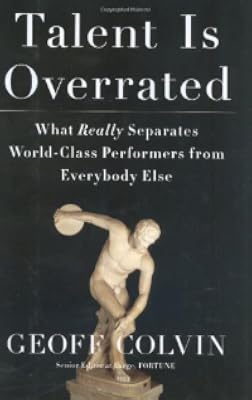
Talent Is Overrated: What Really Separates World-Class Performers from Everybody Else
by Geoff Colvin
On This Page
Description
An expansion on the author's popular Fortune article, "What It Takes to Be Great," builds on his premise about success being linked to the practice and perseverance of specific efforts, in a full-length report that draws on scientific principles and real-world examples to demonstrate his systematic process at work.Tags
Recommendations
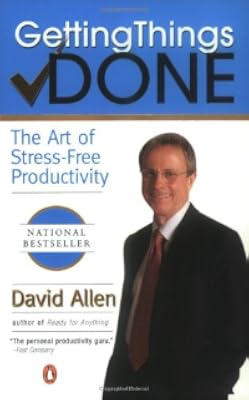
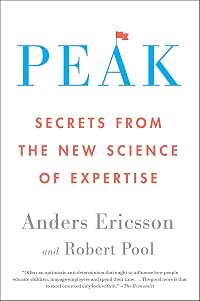
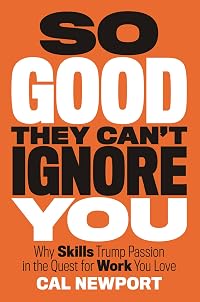
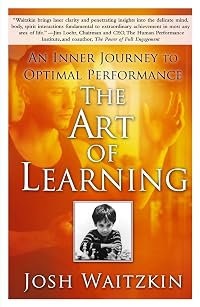



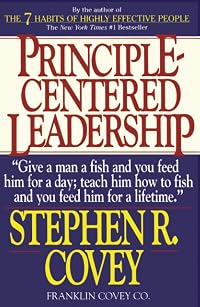
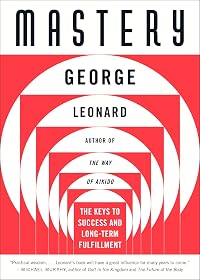
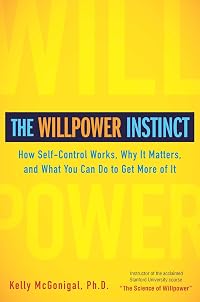
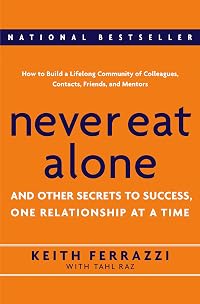
Member Recommendations
Member Reviews
Practice, Practice and Practice! Deliberate practice with the intention of achieving a goal that is on the way towards your final destination.
A beautiful book that illustrates the necessity of deliberate practice and the source of passion that drives one to endure the hardships of it.
However, I am not sure if I think this is the best possible title, especially since the definition of 'talent' as provided in the book is the ability of performing a task better than others. The whole purpose of deliberate practice is to develop talent. But then, Colvin does state that most people consider talent to be innate, which he goes on to argue sufficiently well, is not entirely true.
A beautiful book that illustrates the necessity of deliberate practice and the source of passion that drives one to endure the hardships of it.
However, I am not sure if I think this is the best possible title, especially since the definition of 'talent' as provided in the book is the ability of performing a task better than others. The whole purpose of deliberate practice is to develop talent. But then, Colvin does state that most people consider talent to be innate, which he goes on to argue sufficiently well, is not entirely true.
I've often been fascinated by what makes great performers, well...great. Is it talent? Genes? Hard work? A superhuman drive to succeed? Colvin argues it's none of these things, but rather the careful and disciplined application of something he calls "deliberate practice." This isn't what you or I do when we smack a tennis ball across the court. Instead, it's an activity "designed specifically to improve performance, often with a teacher's help; it can be repeated a lot; feedback on results is continuously available; it's highly demanding mentally...and it isn't much fun." Does this sound like something you do for 4-5 hours a day? Yeah. Me neither.
Colvin maintains that a minimum of 10 years of deliberate practice is what differentiates show more regular folk from great performers. He has some good (if rather vague) ideas for applying the concepts of deliberate practice to our everyday lives and our business organizations, but what I found most interesting were the many examples and case studies. Mozart, Tiger Woods, Jerry Rice...if they weren't prodigies struck by the hand of God, then maybe there is a glimmer of hope for the rest of us mere mortals to achieve just a little more than we think we can. show less
Colvin maintains that a minimum of 10 years of deliberate practice is what differentiates show more regular folk from great performers. He has some good (if rather vague) ideas for applying the concepts of deliberate practice to our everyday lives and our business organizations, but what I found most interesting were the many examples and case studies. Mozart, Tiger Woods, Jerry Rice...if they weren't prodigies struck by the hand of God, then maybe there is a glimmer of hope for the rest of us mere mortals to achieve just a little more than we think we can. show less
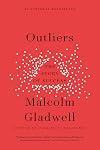
Outliers meets the concept of deliberate practice in this book by Geoff Colvin. Not only is the work an examination of why some people achieve and maintain greatness in their field, but it also argues that the concept of natural talent is limiting in that it closes off avenues of exploration for those not deemed "naturally talented." Colvin avoids slipping into the trite equation of "hard work equals greatness", though, by exploring the psychological factors that motivate people to difficult and deliberate practice in the first place. While some might object to the idea that few, if any, can lay claim to the spark of "natural talent," the message I came away with was much more positive: that greatness is truly within anyone's grasp.
Insightful analysis of excellence and excellent performance in any field. The point of the book is in the title: the concept of "innate talent", when it comes to great performance, is overrated in our society, because the number 1 element that generates great performance is something else. Taking the term from a paper published years ago by someone else, the author identifies this "holy grail" of excellence in "deliberate performance", that means: whoever is ready to spend more time than the others outside of his comfort zone, and work constantly hard at improving his skills, will eventually excel. Perfect example, even though not quoted by this book, is Jiro from "Jiro's dream of sushi", a documentary about the pursuit of excellence.
I show more felt the concept could have been presented in less chapters and with less words, but I do think this book goes beyond the usual "et voilà: here is common sense dressed up as a great new discovery" business books (99% of them). It's not just "hard work" that generates the best performances, it's something more specific, deliberate, and painful.
Negatives: chapter 10 promises to look at "why" some people accept to go through terrible training processes and most people don't, but it doesn't even scratch the surface. There could be a gene that determines the willingness to excel, or it could be that you get that drive while living your life. Truth is, nobody will know until we better understand how the brain works. Also, the author never seems to have any understanding or empathy at all for the majority of human beings, who normally get into comfortable daily patterns and dont give a crap about constant learning and achieving excellence.
However, the liberating principle by which virtually anyone can achieve excellent performance is a breath of fresh air, in a time when still too many people, while watching their favorite NBA or football player on TV, turn around and say to their kids "Wow, that guy is a genius! Why didn't God give those skills to your daddy instead?? We would be millionaires now!". show less
I show more felt the concept could have been presented in less chapters and with less words, but I do think this book goes beyond the usual "et voilà: here is common sense dressed up as a great new discovery" business books (99% of them). It's not just "hard work" that generates the best performances, it's something more specific, deliberate, and painful.
Negatives: chapter 10 promises to look at "why" some people accept to go through terrible training processes and most people don't, but it doesn't even scratch the surface. There could be a gene that determines the willingness to excel, or it could be that you get that drive while living your life. Truth is, nobody will know until we better understand how the brain works. Also, the author never seems to have any understanding or empathy at all for the majority of human beings, who normally get into comfortable daily patterns and dont give a crap about constant learning and achieving excellence.
However, the liberating principle by which virtually anyone can achieve excellent performance is a breath of fresh air, in a time when still too many people, while watching their favorite NBA or football player on TV, turn around and say to their kids "Wow, that guy is a genius! Why didn't God give those skills to your daddy instead?? We would be millionaires now!". show less
Insightful analysis of excellence and excellent performance in any field. The point of the book is in the title: the concept of "innate talent", when it comes to great performance, is overrated in our society, because the number 1 element that generates great performance is something else. Taking the term from a paper published years ago by someone else, the author identifies this "holy grail" of excellence in "deliberate performance", that means: whoever is ready to spend more time than the others outside of his comfort zone, and work constantly hard at improving his skills, will eventually excel. Perfect example, even though not quoted by this book, is Jiro from "Jiro's dream of sushi", a documentary about the pursuit of excellence.
I show more felt the concept could have been presented in less chapters and with less words, but I do think this book goes beyond the usual "et voilà: here is common sense dressed up as a great new discovery" business books (99% of them). It's not just "hard work" that generates the best performances, it's something more specific, deliberate, and painful.
Negatives: chapter 10 promises to look at "why" some people accept to go through terrible training processes and most people don't, but it doesn't even scratch the surface. There could be a gene that determines the willingness to excel, or it could be that you get that drive while living your life. Truth is, nobody will know until we better understand how the brain works. Also, the author never seems to have any understanding or empathy at all for the majority of human beings, who normally get into comfortable daily patterns and dont give a crap about constant learning and achieving excellence.
However, the liberating principle by which virtually anyone can achieve excellent performance is a breath of fresh air, in a time when still too many people, while watching their favorite NBA or football player on TV, turn around and say to their kids "Wow, that guy is a genius! Why didn't God give those skills to your daddy instead?? We would be millionaires now!". show less
I show more felt the concept could have been presented in less chapters and with less words, but I do think this book goes beyond the usual "et voilà: here is common sense dressed up as a great new discovery" business books (99% of them). It's not just "hard work" that generates the best performances, it's something more specific, deliberate, and painful.
Negatives: chapter 10 promises to look at "why" some people accept to go through terrible training processes and most people don't, but it doesn't even scratch the surface. There could be a gene that determines the willingness to excel, or it could be that you get that drive while living your life. Truth is, nobody will know until we better understand how the brain works. Also, the author never seems to have any understanding or empathy at all for the majority of human beings, who normally get into comfortable daily patterns and dont give a crap about constant learning and achieving excellence.
However, the liberating principle by which virtually anyone can achieve excellent performance is a breath of fresh air, in a time when still too many people, while watching their favorite NBA or football player on TV, turn around and say to their kids "Wow, that guy is a genius! Why didn't God give those skills to your daddy instead?? We would be millionaires now!". show less
My husband read this. I heard a lot of buzz about it on the radio (I think every show on NPR interviewed Colvin). I finally picked it up, and I was not disappointed. Colvin clearly outlines why the prevailing ideas about talent aren't supported by research and what ideas (ie, deliberate practice) are. His ideas help me understand how I might set about achieving my personal goals as well as how I might organize our homeschooling practice to give my daughter the best opportunity to excel in her field of interest. I found this book informative, well-researched, inspiring, and realistic (he outlines the drawbacks of pursuing greatness as well as the positives).
I picked up this book because I was really fascinated by the discussion of expertise in Joshua Foer's Moonwalking with Einstein, and I wanted to read more about it. The idea that deliberate practice is more important than innate ability is intriguing and often encouraging (or not, depending on how hard I've been working in the last while...). I think the book I really wanted to read was the Cambridge Handbook of Expertise and Expert Performance, but I was worried that it would be too dense and I felt like something lighter. So, I pretty much got what I bargained for; there were plenty of interesting anecdotes here, but since I had already been introduced to the basic principles before, it didn't feel very revolutionary. Also, there was show more an incredibly boring middle part where the author talked about how these concepts could be applied in the business world, and I really didn't care about that at all. So it was an okay book on the whole, but not great. I'd recommend Moonwalking with Einstein instead, at least as a starting point. That one isn't focused exclusively on expertise, but at least it's interesting throughout. show less
Members
- Recently Added By
Published Reviews
added by lemontwist
Lists

Books read in 2015
13 works; 2 members

Donald J. Trump Favorites
31 works; 1 member

Books Read in 2012
816 works; 34 members

Unshelved Book Clubs
579 works; 5 members

Books for Educators
164 works; 6 members

Books Read in 2018
4,360 works; 110 members

Shaykh Hamza's Book Recommendations
439 works; 3 members

Books & Films Referenced by Cal Newport's Deep Work
43 works; 1 member
Author Information
5 Works 1,443 Members
Common Knowledge
- Original publication date
- 2008
Classifications
Statistics
- Members
- 1,327
- Popularity
- 18,127
- Reviews
- 24
- Rating
- (3.75)
- Languages
- 5 — Chinese, English, German, Portuguese, Spanish
- Media
- Paper, Audiobook, Ebook
- ISBNs
- 22
- ASINs
- 13
