Travels in Arabia Deserta
by Charles M. Doughty
On This Page
Description
Western exploration of the Arabian Desert began in the mid-eighteenth century, but it was not until the nineteenth century that the British officers of the Indian colonial government undertook surveys of the areas remote from the major pilgrimage routes. Charles Doughty (1843-1926) spent two years among various nomad tribes and wrote in 1888 what would be the first comprehensive Western work on the geography of Arabia, in an attempt, as he says in the preface, to 'set forth faithfully some show more parcel of the soil of Arabia smelling of sàmn and camels'. His classic and justly famous account is a fantastic piece of travel writing that shows full understanding of the area, the people and all aspects of nomadic life in the desert. show lessTags
Recommendations































Member Reviews
In the late 1870's Charles M. Doughty embraced the Victorian fascination with all things Oriental and decided he would explore Arabia. He learned Arabic while living in Damascus, then embedded himself among nomad and Bedouin tribes and traveled the north and west portions of the Arabian peninsula for nearly two years. He wrote an exhaustive account of his travels, running to 1,000 pages in the first edition. This is Edward Garnett's heavily edited version which is still a hefty 450 pages. The book is written in an archaic style, a combination of Chaucerian and Old Testament English that can be tedious to work through but serves to evoke the simplicity and traditional formality of desert Arab life.
"Every man leans upon his own hand in show more the open desert, and there will none for nought take upon him a public service."
The landscape changes little from day to day: sand, gravel, and rock outcrops blasted by wind and distorted in the searing heat. He travels "at an ant's pace" from one watering place to another, sometimes resting a few days in settlements near oases, drinking coffee and keeping his head intact on his shoulders . Though generally courteous to him, his Arab hosts he describes as "cheerless" and petulant. Living only on dates and camel's milk, they are perpetually hungry. Few of them have ever seen a European. They have no knowledge of Western life apart from rumors and exaggerations told to them by traveling merchants.
"The Arabs are barren-minded in the emptiness of desert life," he writes, " and retchless of all that pertains not to their living." They think him a spy and a blasphemer (Christian), and nurture "a treacherous malice which is the natural condition of Bedouins". He is threatened almost daily with violence, sometimes abandoned mid-journey by faithless guides, deceived,robbed, and beaten. He has no choice but to continue. Toward the end of his travels his already fragile constitution has broken down, and he rides to Jidda propped up in the saddle by a man riding behind.
Doughty seems a bit cheerless himself -- plodding, humorless, obstinate and argumentative. Nevertheless, if you persevere in your reading, the arcane style will gradually become familiar, and you'll be able to absorb and appreciate his descriptions of Arab culture. The conversations he has with his Arab friends (and sometimes captors) ,which he meticulously transcribes, are the real gems in the book - the at times tense and tortured negotiations to keep his head on his shoulders and make it to the next water hole.
One reviewer here admits to having read less than half the book, yet leaves a one-half star rating. This is misleading and dishonest. The book wasn't read; therefore the reviewer's opinion is worthless. show less
"Every man leans upon his own hand in show more the open desert, and there will none for nought take upon him a public service."
The landscape changes little from day to day: sand, gravel, and rock outcrops blasted by wind and distorted in the searing heat. He travels "at an ant's pace" from one watering place to another, sometimes resting a few days in settlements near oases, drinking coffee and keeping his head intact on his shoulders . Though generally courteous to him, his Arab hosts he describes as "cheerless" and petulant. Living only on dates and camel's milk, they are perpetually hungry. Few of them have ever seen a European. They have no knowledge of Western life apart from rumors and exaggerations told to them by traveling merchants.
"The Arabs are barren-minded in the emptiness of desert life," he writes, " and retchless of all that pertains not to their living." They think him a spy and a blasphemer (Christian), and nurture "a treacherous malice which is the natural condition of Bedouins". He is threatened almost daily with violence, sometimes abandoned mid-journey by faithless guides, deceived,robbed, and beaten. He has no choice but to continue. Toward the end of his travels his already fragile constitution has broken down, and he rides to Jidda propped up in the saddle by a man riding behind.
Doughty seems a bit cheerless himself -- plodding, humorless, obstinate and argumentative. Nevertheless, if you persevere in your reading, the arcane style will gradually become familiar, and you'll be able to absorb and appreciate his descriptions of Arab culture. The conversations he has with his Arab friends (and sometimes captors) ,which he meticulously transcribes, are the real gems in the book - the at times tense and tortured negotiations to keep his head on his shoulders and make it to the next water hole.
One reviewer here admits to having read less than half the book, yet leaves a one-half star rating. This is misleading and dishonest. The book wasn't read; therefore the reviewer's opinion is worthless. show less
A remarkable account by Charles Doughty of his travels in 1876-78, in the deserts of what is modern day Saudi Arabia. T E Lawrence called it "The book has no date and can never grow old". The incidents recounted, both dramatic and mundane, give a vivid picture of the travails of living in this arid, sparsely settled region. However, the overriding theme is the considerable danger that Doughty lived with, simply by being there, a 'Nasrany' (Christian) in a Muslim country.
I really tried but found "Travels in Arabia Deserta" to be impossible to get through -- I gave up 200 pages in. The book is extremely dry and consists of Doughty mostly wandering around, describing the artifacts and landscape while dropping tons and tons of Arabic words into the mix. Apologies to T.E. Lawrence, who loved this work, but this book just hasn't aged well.
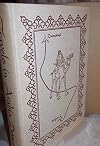
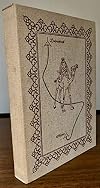
I hit the big 50 back in January and my wife gave me the folio society limited edition as a gift knowing that it is in my top 5 books of all time. I have to say its a wonderful thing to behold. If you love this book as I do or if you collect folio editions..get one
Facsimile reprint of the 'definitive version' of the third edition (London : Jonathan Cape, 1936, c1921). The first ed. was published by Cambridge University Press, 1888. 2 v.
Ratings
Members
- Recently Added By
Lists

CCE 1000 Good Books List
1,033 works; 12 members

Trinity College Booklist (1951): Class Five, Travel and Geography
52 works; 2 members

Edward Gorey Covers
150 works; 8 members
Talk Discussions
Past Discussions
Folio Archives 379: Travels in Arabia Deserta by Charles M. Doughty – LIMITED EDITION 2013 in Folio Society Devotees (June 2024)
Author Information

19+ Works 710 Members
Charles Doughty (1843-1926) was a poet, writer and one of the greatest of all Western travellers in Arabia. He was the author of several acclaimed books, most famously Travels in Arabia Deserta but also including The Dawn in Britain, Adam Cast Forth and Mansoul or the Riddle of the World. In 1912 he was awarded the Founder's Gold Medal by the show more Royal Geographical Society. show less
All Editions
Some Editions
Awards and Honors
Series
Belongs to Publisher Series
Work Relationships
Common Knowledge
- Original publication date
- 1888
- People/Characters
- Charles Montagu Doughty
- Important places
- Arabia
- Disambiguation notice
- Do not combine this with the version abridged by Edward Garnett, for example the Doubleday Anchor edition, which uses the same title.
Classifications
- Genres
- Travel, Nonfiction, General Nonfiction, Biography & Memoir, Religion & Spirituality
- DDC/MDS
- 915.3 — History & geography Geography & travel Geography of and travel in Asia Arabian Peninsula and adjacent areas
- LCC
- DS207 .D73 — History of Europe, Asia, Africa and Oceania Asia History of Asia Arabian Peninsula. Saudi Arabia
- BISAC
Statistics
- Members
- 339
- Popularity
- 93,920
- Reviews
- 5
- Rating
- (4.03)
- Languages
- 6 — English, French, German, Italian, Spanish, Swedish
- Media
- Paper, Ebook
- ISBNs
- 14
- ASINs
- 30