On This Page
Description
Accidents, evil plots, and general misfortune abound when, in their continuing search for a home, the Beaudelaire orphans are sent to live and work in a sinister lumber mill.Tags
Recommendations

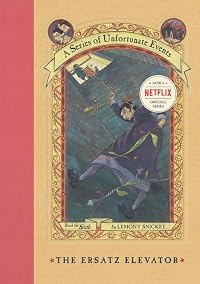





Member Recommendations
jbarry Smart, witty, clever kids!
30
Member Reviews
I hope, for your sake, that you have not chosen to read this book because you are in the mood for a pleasant experience. If this is the case, I advise you to put this book down instantaneously, because of all the books describing the unhappy lives of the Baudelaire orphans, The Miserable Mill might be the unhappiest yet. Violet, Klaus, and Sunny Baudelaire are sent to Paltryville to work in a lumber mill, and they find disaster and misfortune lurking behind every log. The pages of this book, I'm sorry to inform you, contain such unpleasantries as a giant pincher machine, a bad casserole, a man with a cloud of smoke where his head should be, a hypnotist, a terrible accident resulting in injury, and coupons. I have promised to write down show more the entire history of these three poor children, but you haven't, so if you prefer stories that are more heartwarming, please feel free to make another selection.
With all due respect,
Lemony Snicket show less
With all due respect,
Lemony Snicket show less
Reading The Miserable Mill took me on a wonderfully eerie journey through the dark and twisted world of the Baudelaire orphans. Lemony Snicket’s storytelling is like no other — blending wit, mystery, and a bit of gothic gloom with a sharp, clever narrative voice that keeps me hooked page after page.
What I love most about this book is how it balances the creepy industrial setting of the mill with the resilient spirit of Violet, Klaus, and Sunny. The characters feel so real, flawed, and brave, and you can’t help but root for them against the sinister Count Olaf’s latest scheme. The clever clues and dark humor make this more than just a children’s book — it’s a story that invites readers of all ages to think, wonder, and show more laugh through the sadness.
For me, The Miserable Mill isn’t just another installment; it’s a reminder of why I fell in love with the series — the way it respects its readers by challenging them with mystery and moral complexity while still delivering that classic quirky charm. I find myself recommending it to fellow book nerds who appreciate stories that are a little offbeat but deeply rewarding.
If you enjoy books that mix suspense, humor, and a touch of melancholy, this one is a must-have on your shelf. show less
What I love most about this book is how it balances the creepy industrial setting of the mill with the resilient spirit of Violet, Klaus, and Sunny. The characters feel so real, flawed, and brave, and you can’t help but root for them against the sinister Count Olaf’s latest scheme. The clever clues and dark humor make this more than just a children’s book — it’s a story that invites readers of all ages to think, wonder, and show more laugh through the sadness.
For me, The Miserable Mill isn’t just another installment; it’s a reminder of why I fell in love with the series — the way it respects its readers by challenging them with mystery and moral complexity while still delivering that classic quirky charm. I find myself recommending it to fellow book nerds who appreciate stories that are a little offbeat but deeply rewarding.
If you enjoy books that mix suspense, humor, and a touch of melancholy, this one is a must-have on your shelf. show less
Mr. Snicket begins each book in this series with a warning about how depressing the book will be and an offer for the reader to stop before things get really bad, but when I ask my boys if they want to stop, they clamor for more. The discouraging introduction for this particular book was particularly amusing:
“Sometime during your life—in fact, very soon—you may find yourself reading a book, and you may notice that a book’s first sentence can often tell you what sort of story your book contains. For instance, a book that began with the sentence 'Once upon a time there was a family of cunning little chipmunks who lived in a hollow tree' would probably contain a story full of talking animals who get into all sorts of mischief. A show more book that began with the sentence 'Emily sat down and looked at the stack of blueberry pancakes her mother had prepared for her, but she was too nervous about Camp Timbertops to eat a bite' would probably contain a story of giggly girls who have a grand old time. And a book that began with the sentence 'Gary smelled the leather of his brand-new catcher's mitt and waited impatiently for his best friend Larry to come around the corner' would probably contain a story full of sweaty boys who win some sort of trophy. And if you like mischief, a grand old time, or trophies, you would know which book to read, and you could throw the rest of them away.
But this book begins with the sentence 'The Baudelaire orphans looked out the grimy window of the train and gazed at the gloomy blackness of the Finite Forest, wondering if their lives would ever get any better,' and you should be able to tell that the story that follows will be very different from the story of Gary or Emily or the family of cunning little chipmunks, and this is for the simple reason that the lives of Violet, Klaus, and Sunny Baudelaire are very different from most people's lives, with the main difference being the amount of unhappiness, horror, and despair. The three children have no time to get into all sorts of mischief, because misery follows them wherever they go. They had not had a grand old time since their parents died in a terrible fire. And the only trophy they would win would be some sort of First Prize for Wretchedness. It is atrociously unfair, of course, that the Baudelaires have so many troubles, but that is the way the story goes. So now that I've told you that the first sentence will be 'The Baudelaire orphans looked out the grimy window of the train and gazed at the gloomy blackness of the Finite Forest, wondering if their lives would ever get any better,' if you wish to avoid an unpleasant story, you had best put this book down."
But we read it anyway.
No lovely Justice Strauss here. No quirky, but affectionate Uncle Monty. No pathetic, but kind Aunt Josephine. The closest thing we get to hope is Phil, the eternal optimist who is willing to work for coupons, and Charles, a spineless wimp who irons his business partner's shirts and does whatever he says.
Instead of a kind-but-clueless guardian, the Baudelaire orphans are foisted off -- a phrase which here means "dropped off at the train station by Mr. Poe who is too busy with work to actually lay eyes on his charges new guardian" -- on a mysterious, gruff lumber mill owner who immediately puts all three to work.
If you've read the first three books, you know the drill by now: Count Olaf shows up in disguise, along with an evil henchperson, the children figure out Olaf's diabolical plan just in time, Mr. Poe and other adults don't believe them, and when they finally do figure it out, Count Olaf & comrade still escape, vowing to get the children next time. Formulaic, yes, but entertaining nonetheless, especially for the target audience.
This book is also short on quirky little bits of wisdom. This is the only one that really stood out:
“The expression 'quiet as mice' is a puzzling one, because mice can often be very noisy, so people who are being quiet as mice may in fact be squeaking and scrambling around. The expression 'quiet as mimes' is more appropriate, because mimes are people who perform theatrical routines without making a sound. Mimes are annoying and embarrassing, but they are much quieter than mice, so 'quiet as mimes' is a more proper way to describe how Violet and Sunny got up from their bunk, tiptoed across the dormitory, and walked out into the night.” show less
“Sometime during your life—in fact, very soon—you may find yourself reading a book, and you may notice that a book’s first sentence can often tell you what sort of story your book contains. For instance, a book that began with the sentence 'Once upon a time there was a family of cunning little chipmunks who lived in a hollow tree' would probably contain a story full of talking animals who get into all sorts of mischief. A show more book that began with the sentence 'Emily sat down and looked at the stack of blueberry pancakes her mother had prepared for her, but she was too nervous about Camp Timbertops to eat a bite' would probably contain a story of giggly girls who have a grand old time. And a book that began with the sentence 'Gary smelled the leather of his brand-new catcher's mitt and waited impatiently for his best friend Larry to come around the corner' would probably contain a story full of sweaty boys who win some sort of trophy. And if you like mischief, a grand old time, or trophies, you would know which book to read, and you could throw the rest of them away.
But this book begins with the sentence 'The Baudelaire orphans looked out the grimy window of the train and gazed at the gloomy blackness of the Finite Forest, wondering if their lives would ever get any better,' and you should be able to tell that the story that follows will be very different from the story of Gary or Emily or the family of cunning little chipmunks, and this is for the simple reason that the lives of Violet, Klaus, and Sunny Baudelaire are very different from most people's lives, with the main difference being the amount of unhappiness, horror, and despair. The three children have no time to get into all sorts of mischief, because misery follows them wherever they go. They had not had a grand old time since their parents died in a terrible fire. And the only trophy they would win would be some sort of First Prize for Wretchedness. It is atrociously unfair, of course, that the Baudelaires have so many troubles, but that is the way the story goes. So now that I've told you that the first sentence will be 'The Baudelaire orphans looked out the grimy window of the train and gazed at the gloomy blackness of the Finite Forest, wondering if their lives would ever get any better,' if you wish to avoid an unpleasant story, you had best put this book down."
But we read it anyway.
No lovely Justice Strauss here. No quirky, but affectionate Uncle Monty. No pathetic, but kind Aunt Josephine. The closest thing we get to hope is Phil, the eternal optimist who is willing to work for coupons, and Charles, a spineless wimp who irons his business partner's shirts and does whatever he says.
Instead of a kind-but-clueless guardian, the Baudelaire orphans are foisted off -- a phrase which here means "dropped off at the train station by Mr. Poe who is too busy with work to actually lay eyes on his charges new guardian" -- on a mysterious, gruff lumber mill owner who immediately puts all three to work.
If you've read the first three books, you know the drill by now: Count Olaf shows up in disguise, along with an evil henchperson, the children figure out Olaf's diabolical plan just in time, Mr. Poe and other adults don't believe them, and when they finally do figure it out, Count Olaf & comrade still escape, vowing to get the children next time. Formulaic, yes, but entertaining nonetheless, especially for the target audience.
This book is also short on quirky little bits of wisdom. This is the only one that really stood out:
“The expression 'quiet as mice' is a puzzling one, because mice can often be very noisy, so people who are being quiet as mice may in fact be squeaking and scrambling around. The expression 'quiet as mimes' is more appropriate, because mimes are people who perform theatrical routines without making a sound. Mimes are annoying and embarrassing, but they are much quieter than mice, so 'quiet as mimes' is a more proper way to describe how Violet and Sunny got up from their bunk, tiptoed across the dormitory, and walked out into the night.” show less
More tragic absurdity in the lives of the poor little Baudelaire orphans. What I'm enjoying most about this series are the quotable bits of wisdom nestled between the outlandish characters and near-morbid humor. The best one in this book: "Whether it was Uncle Monty's library of reptile books, or Aunt Josephine's library of grammar books, or Justice Strauss's library of law books, or, best of all, their parents' library of all kinds of books - all burned up now, alas - libraries always made them feel a little bit better. Just knowing that they cold read made the Baudelaire orphans feel as if their wretched lives could be a little brighter."
Look, I don't have a problem.
The Baudelaire's series horribilus enters its child-labour stage as the children are placed in the none-too-caring hands of a mill-owner who expects them to work stupidly hard in return for his questionable protection. Dangerous machines, deplorable health and safety, oppression of the working class through the wage stagnation, hypnosis and advanced lumber techniques all feature in this entertaining tale of children being treated dreadfully.
The Baudelaire's series horribilus enters its child-labour stage as the children are placed in the none-too-caring hands of a mill-owner who expects them to work stupidly hard in return for his questionable protection. Dangerous machines, deplorable health and safety, oppression of the working class through the wage stagnation, hypnosis and advanced lumber techniques all feature in this entertaining tale of children being treated dreadfully.
This is the fourth book in the SoUE and, of the 6 that I've read up to this point, the worst of them all.
I've never been so bored in my life while reading a book. Not even Brave New World can compare. Besides a few new characters and a new setting, it's all the same as the first three.
What really did this one in for me was the unbelievable level of implausibility. The terrible situations the children face in the first three books are at least reasonable and believable, but this one goes beyond normal suspension of disbelief.
Also, it wasn't funny. Skip it, unless you have nothing better to read.
I've never been so bored in my life while reading a book. Not even Brave New World can compare. Besides a few new characters and a new setting, it's all the same as the first three.
What really did this one in for me was the unbelievable level of implausibility. The terrible situations the children face in the first three books are at least reasonable and believable, but this one goes beyond normal suspension of disbelief.
Also, it wasn't funny. Skip it, unless you have nothing better to read.
4/5
I think I'm starting to really get comfortable with this series, at the same time the author gets comfortable writing it. At this point, there's a certain model that the books follow, but it always innovates enough to keep the reader entertained and the story fresh enough.
As always, the Baudelaire orphans are delightful in their quick wit and strong personalities. A children's series with smart main characters is very refreshing to me and I love it. The adults are incredibly negligent and straight-up evil, even beyond Count Olaf and this time is not very different. The orphans are more victims of these people than of Olaf, most of the time.
The fact that their current tutor was an incredibly greedy and abusive capitalist was show more interesting and I hated that man with a passion. I got slightly frustrated towards the end of the book because the situation got a little too with the sword-teeth fight, even to a point that I felt went beyond the book's absurdist reality. But it wasn't that much of a problem and didn't distract too much from the suspense.
Overall, a very nice book for kids and adults. It makes me think a bit too much about how this series probably impacted the image of authority figures on the minds of the readers within it's intended audience, but I'll think more about it as I progress through the series. show less
I think I'm starting to really get comfortable with this series, at the same time the author gets comfortable writing it. At this point, there's a certain model that the books follow, but it always innovates enough to keep the reader entertained and the story fresh enough.
As always, the Baudelaire orphans are delightful in their quick wit and strong personalities. A children's series with smart main characters is very refreshing to me and I love it. The adults are incredibly negligent and straight-up evil, even beyond Count Olaf and this time is not very different. The orphans are more victims of these people than of Olaf, most of the time.
Overall, a very nice book for kids and adults. It makes me think a bit too much about how this series probably impacted the image of authority figures on the minds of the readers within it's intended audience, but I'll think more about it as I progress through the series. show less
Members
- Recently Added By
Lists

NPRs Ultimate Backseat Bookshelf: 100 Must-Reads for kids 9-14
222 works; 30 members

Books Read in 2015
3,298 works; 126 members

My Wishlist - YA
57 works; 2 members

al.vick-wishlist-YA
156 works; 3 members

Watched the Movie, Probably Won't Read the Book
185 works; 34 members

Books Read in 2009
464 works; 11 members
Books Read in 2016
4,666 works; 199 members

SYES Library Wishlist
1,080 works; 4 members

Books Read in 2007
323 works; 8 members
Author Information

149+ Works 209,213 Members
Lemony Snicket is the pen name of Daniel Handler, who was born on February 28, 1970. As Lemony Snicket, he is the author of and appears as a character in the children's book series A Series of Unfortunate Events. He has also written or contributed to other works using this pen name including Baby in the Manger, The Lump of Coal, The Composer Is show more Dead, and Where Did You See Her Last?. Under his real name, Handler is the author of several books for adults including The Basic Eight, Watch Your Mouth, and Adverbs. (Bowker Author Biography) show less
All Editions
Some Editions
Series

Work Relationships
Is contained in
Has the adaptation
Common Knowledge
- Canonical title
- The Miserable Mill
- Original title
- The Miserable Mill
- Original publication date
- 2000-04-05
- People/Characters
- Violet Baudelaire; Klaus Baudelaire; Sunny Baudelaire; Count Olaf; Sir; Charles (show all 10); Phil [in A Series of Unfortunate Events]; Shirley; Georgina Orwell; Foreman Flacutono
- Important places
- Lucky Smells Lumbermill, Paltryville
- Related movies
- A Series of Unfortunate Events (2017 | IMDb)
- Dedication
- To Beatrice -- My love flew like a butterfly Until death swooped down like a bat. The poet Emma Montana McElroy said: "That's the end of that."
- First words
- Sometime during your life - in fact, very soon - you may find yourself reading a book, and you may notice that a book's first sentence can often tell you what sort of story your book contains.
- Last words
- (Click to show. Warning: May contain spoilers.)The Baudelaire orphans were alive, and it seemed that maybe they had an inordinate amount of luck after all.
- Canonical DDC/MDS
- [Fic]--dc21
- Canonical LCC
- PZ7.S6795Mi
Classifications
- Genres
- Fiction and Literature, Kids, Tween, Children's Books
- DDC/MDS
- 813.6 — Literature & rhetoric American literature in English American fiction in English 2000-
- LCC
- PZ7 .S6795 .M — Language and Literature Fiction and juvenile belles lettres Fiction and juvenile belles lettres Juvenile belles lettres
- BISAC
Statistics
- Members
- 14,734
- Popularity
- 492
- Reviews
- 128
- Rating
- (3.64)
- Languages
- 21 — Chinese, Danish, Dutch, English, Estonian, Finnish, French, German, Greek, Hungarian, Italian, Norwegian (Bokmål), Farsi/Persian, Polish, Slovenian, Spanish, Swedish, Thai, Turkish, Welsh, Portuguese (Brazil)
- Media
- Paper, Audiobook, Ebook
- ISBNs
- 98
- UPCs
- 1
- ASINs
- 25