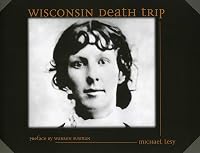
Wisconsin Death Trip
by Michael Lesy
On This Page
Description
First published in 1973, this remarkable book about life in a small turn-of-the-century Wisconsin town has become a cult classic. Lesy has collected and arranged photographs taken between 1890 and 1910 by a Black River Falls photographer, Charles Van Schaik.Tags
Recommendations

































Member Reviews
Got this one through inter-library loan and was very, very sorry to have to let it go today.
I (morbidly) loved everything about it except for Lesy's opening and closing essays, which are sometimes poetic, but more often cringe-inducing. Fortunately, they are also short, and the end result of this compilation of photographs and newspaper clippings from late 1800s Wisconsin newspapers is fantastically weird and totally absorbing.
Like many reviewers, I read this because it was mentioned in the notes in Goolrick's A Reliable Wife, a book I did not actually enjoy, but nonetheless could not stop reading. "Such things happened?" Apparently so... diphtheria, arson, murder, and madness abound in WDT. The suicides are what really got me, show more though.
"Mrs. Phillip Fredericks, aged 82 years, who was partly insane, threw herself in her neighbor's cistern at Beloit and was drowned. She had long planned death in this manner."
"Henry Johnson, an old bachelor of Grand Dyke, cut off the heads of all of his hens recently, made a bonfire of his best clothes, and killed himself with arsenic."
"The 80 year old mother of an imprisoned man threw herself in front of a train and was cut into 3 pieces. She was crazed by the disgrace."
"James Price, aged about 60 years, committed suicide at Omro by taking paris green and morphine. All attempts to save him he resisted. Despondency was the cause of the act. He fell last spring and broke the patella of his right knee and has been unable to work since. He leaves a wife and one daughter."
"Working men at Kenosha found the body of a man hanging from a rafter. The body was badly decomposed. Nothing was found to identify it."
"Gottlied Wagner, an old farmer living near Montello, set fire to all his farm buildings and then threw himself into the flames. All his grain and farm implements were destroyed... The cause of the act was supposed to have been a divorce procured by his wife. He destroyed the property to prevent it falling into her hands. Wagner kissed the children goodbye, gave each some money, and sent them to school. His wife left him a week before.
"Ludwig Senglaub, a German resident of Manitowoc, aged 74, committed suicide Friday morning at the home of William Radins. The old man had become enamored of Mrs. Radins and had been a frequent visitor at the house. She told him not to come any more. He went to the house, however, walked into the front room, and deliberately shot himself while looking into a mirror."
"Mary Karban, wife of Wenzel Karban, a farmer of the town of Neva, committed suicide by eating the heads of 4 boxes of matches. She was only 16 years of age and had been married last fall."
Mrs. Reuben C. Bartlett, an elderly woman living near the western limits of Eau Claire, partly filled a washtub with kerosene, partially disrobed, and poured kerosene over her head and set fire to it. She died in a horrible agony before help reached her. She was undoubtedly insane... She leaves several adult sons and daughters and a husband."
"Abraham Zweekbaum of the town of Holland committed suicide by battering himself on the head with a hammer... He attempted to take his life a few days ago by cutting his head from his body with a sharp instrument, but was prevented from doing so."
And this:
"Elsie Whitsan, 4 years old, child of Henry Whitsan, died at Neenah of grief... Her mother died a few days before and from then until her death the child cried without stopping. Physicians say that death was caused by a broken heart."
Wow.
Also watched the film adaptation last night, and it is a beautiful, delicate treatment of the subject -- highly recommended. show less
I (morbidly) loved everything about it except for Lesy's opening and closing essays, which are sometimes poetic, but more often cringe-inducing. Fortunately, they are also short, and the end result of this compilation of photographs and newspaper clippings from late 1800s Wisconsin newspapers is fantastically weird and totally absorbing.
Like many reviewers, I read this because it was mentioned in the notes in Goolrick's A Reliable Wife, a book I did not actually enjoy, but nonetheless could not stop reading. "Such things happened?" Apparently so... diphtheria, arson, murder, and madness abound in WDT. The suicides are what really got me, show more though.
"Mrs. Phillip Fredericks, aged 82 years, who was partly insane, threw herself in her neighbor's cistern at Beloit and was drowned. She had long planned death in this manner."
"Henry Johnson, an old bachelor of Grand Dyke, cut off the heads of all of his hens recently, made a bonfire of his best clothes, and killed himself with arsenic."
"The 80 year old mother of an imprisoned man threw herself in front of a train and was cut into 3 pieces. She was crazed by the disgrace."
"James Price, aged about 60 years, committed suicide at Omro by taking paris green and morphine. All attempts to save him he resisted. Despondency was the cause of the act. He fell last spring and broke the patella of his right knee and has been unable to work since. He leaves a wife and one daughter."
"Working men at Kenosha found the body of a man hanging from a rafter. The body was badly decomposed. Nothing was found to identify it."
"Gottlied Wagner, an old farmer living near Montello, set fire to all his farm buildings and then threw himself into the flames. All his grain and farm implements were destroyed... The cause of the act was supposed to have been a divorce procured by his wife. He destroyed the property to prevent it falling into her hands. Wagner kissed the children goodbye, gave each some money, and sent them to school. His wife left him a week before.
"Ludwig Senglaub, a German resident of Manitowoc, aged 74, committed suicide Friday morning at the home of William Radins. The old man had become enamored of Mrs. Radins and had been a frequent visitor at the house. She told him not to come any more. He went to the house, however, walked into the front room, and deliberately shot himself while looking into a mirror."
"Mary Karban, wife of Wenzel Karban, a farmer of the town of Neva, committed suicide by eating the heads of 4 boxes of matches. She was only 16 years of age and had been married last fall."
Mrs. Reuben C. Bartlett, an elderly woman living near the western limits of Eau Claire, partly filled a washtub with kerosene, partially disrobed, and poured kerosene over her head and set fire to it. She died in a horrible agony before help reached her. She was undoubtedly insane... She leaves several adult sons and daughters and a husband."
"Abraham Zweekbaum of the town of Holland committed suicide by battering himself on the head with a hammer... He attempted to take his life a few days ago by cutting his head from his body with a sharp instrument, but was prevented from doing so."
And this:
"Elsie Whitsan, 4 years old, child of Henry Whitsan, died at Neenah of grief... Her mother died a few days before and from then until her death the child cried without stopping. Physicians say that death was caused by a broken heart."
Wow.
Also watched the film adaptation last night, and it is a beautiful, delicate treatment of the subject -- highly recommended. show less
Wisconsin Death Trip is a unique historical perspective, or as its author, Michael Lesy says, "an exercise in historical actuality." It is an "alchemy" as he puts it, that allows us to experience the past at a gut level, a gestalt, something we feel and understand on levels that are bigger than the book itself.
The book is comprised of many black and white photos that were preserved from several thousand glass negative plates taken between the years of 1890 and 1910 by a photographer in Black River Falls, Wisconsin. It also contains text that is taken from the newspaper accounts of two journalists also from Black River Falls. The journalists subscribed to a state wire service so the accounts come from all over Wisconsin, including many show more from the area in which I currently live. It contains excerpts from the intake journal of the state mental institution, as well.
In the Introduction, Levy tells us, "None of the accounts are fictitious. Neither pictures nor the events were, when they were made or experienced, considered to be unique, extraordinary, or sensational."
He further states, "The people who looked at the pictures once they were taken weren't surprised, and the people who read about the events weren't shocked."
The photos and the text are like two separate streams that flow in and around each other, complimenting each other in an organic way, but not a prescribed way. The little snips of stories from the newspaper reveal a constantly repeated theme to which the faces and hands of the people in the photographs give testimony. You don't so much learn their stories as you absorb them. You sense the patterns of life during this time period in ways that would be impossible with a traditional history book.
The death trip is the commonplace presence of poverty, suicide, insanity, danger, violence, ignorance, disease, alcoholism, grief, deprivation, loneliness and boredom that were the weft in the weave of rural life at the turn of the 20th century. This book unveils the hardships that were seen as routine and to which no especial emotional response was displayed if even felt. It implies the guilt and sorrow that the diseases like diphtheria, small pox and cholera left in their wake, when they stalked the countryside taking the children and leaving the adults. How does someone manage to love a child that has every reasonable chance of falling to disease or farm accident, and who is more likely to end up in a miniature coffin in the parlor than he is to grow up? How does your mind keep from breaking when you cannot feed the ones who do live. Ponder these things and feel them and you are on the death trip into the darkness of the good ol' days.
My sister-in-law loaned me Wisconsin Death Trip when it was first published in 1973 and it creeped me out. I was young and inexperienced and the notion of a death trip seemed entirely foreign. This book seemed like a voyeuristic freak show to me back then. I glanced over the written accounts and photographs, skipping around, and ultimately missing out on the opportunity it brilliantly presents to go back in time and realize what was happening not only in people's physical lives but in their emotions and in their minds.
Life has dealt with me since I first read this book so when it came out in paperback in 2000 and I read it again, perhaps I was more seasoned, shall we say, and I was able to relate to its powerful observations from the standpoint of someone who herself, has struggled with the capriciousness of life, who has seen the random insanity that lives side by side with the mundane.
This book is a time machine indeed and can take us to the lives of people in ways that the usual historical texts do not. Rather than walking the streets of ghost towns in our minds, trying to imagine life, here we find ourselves perched on the horse-hair settee in the parlor, looking at the infant in her coffin, during the last of several funerals that week, breathing diphtheria air. We are cinched into our corsets over hot cook stoves and vats of lye soap, coerced by Calvinism into judgment of the frailties of others on one hand and acceptance of our own miseries on the other. There's no place this side of madness to even release a scream.
The second time around, I appreciated the brilliance of this book's author. This book is history but it is also art. It is psychology and sociology. It's the genealogy notes that you won't find in the middle of your family Bible. This book's lessons seep in through the pores of your skin. You smell the lessons. You cringe and poke at the lessons with the stick of your mind. No one here will tell you what it is that you should learn. You find yourself walking around in the rural Mid-west of 1890-1910 and seeing it for yourself. The conclusions are Lesy's but you come to feel that they are your own as well, seen with your own two eyes.
Excerpts like these are just the tips of the iceberg that this book contains.
"In a family consisting of 3 maiden sisters and 2 bachelor brothers named Niedtke in the town of Liberty, near Appleton, 2 sisters and a brother have gone insane within the past few weeks, one of the sisters being a school teacher. Saturday the insane brother became violent and was taken to the asylum. The two sisters are being cared for at home."
"Thomas Galt died at his home in this city Friday night last from the effects of the Ackerman anti-dipsomania gold cure which he was taking. He was 37...he contracted the drink habit and it so obtained the mastery of him that he was much of the time incapacitated for labor."
"An old man was found in a brush shanty a mile south of Peshtigo. He was unable to move owing to hunger and exposure. He came from Canada a month ago in search of work."
By digesting the many accounts we come to feel the creeping paranoia and obsessive-compulsive behaviors that resulted from the white Anglo-Saxon Protestant ethic. We stand in the shoes of people being unnaturally pressed and formed into fine upstanding American citizens despite the pressures and terrors on the road of progress. We see the corpses of the ones who buckled under the strain.
This book tells the story of rural decay. It strips the Sunday Best from our ancestors and tells their stories in a way that deserves to be heard all the more because it does not whitewash or otherwise hide the pain and the madness that were an integral part of our forebear's lives. The hardness of our grandmother's life has inevitably trickled into our own and so to know ourselves we must seek out hers.
The parade of tiny coffins that passed through my grandmother's parlor as her siblings succumbed to diphtheria had a direct effect on how my mother was loved and reared and her paranoia shaped my life. Our lives come clearer when we step through the mists of time, picking up the subtle, untold aspects of our history, examining the chaff as well as the wheat.
Wisconsin Death Trip could just as easily be called The Heartland Death Trip. It is fascinating, yes, creepy, and most definitely a part of our trip wherever that may lead. show less
The book is comprised of many black and white photos that were preserved from several thousand glass negative plates taken between the years of 1890 and 1910 by a photographer in Black River Falls, Wisconsin. It also contains text that is taken from the newspaper accounts of two journalists also from Black River Falls. The journalists subscribed to a state wire service so the accounts come from all over Wisconsin, including many show more from the area in which I currently live. It contains excerpts from the intake journal of the state mental institution, as well.
In the Introduction, Levy tells us, "None of the accounts are fictitious. Neither pictures nor the events were, when they were made or experienced, considered to be unique, extraordinary, or sensational."
He further states, "The people who looked at the pictures once they were taken weren't surprised, and the people who read about the events weren't shocked."
The photos and the text are like two separate streams that flow in and around each other, complimenting each other in an organic way, but not a prescribed way. The little snips of stories from the newspaper reveal a constantly repeated theme to which the faces and hands of the people in the photographs give testimony. You don't so much learn their stories as you absorb them. You sense the patterns of life during this time period in ways that would be impossible with a traditional history book.
The death trip is the commonplace presence of poverty, suicide, insanity, danger, violence, ignorance, disease, alcoholism, grief, deprivation, loneliness and boredom that were the weft in the weave of rural life at the turn of the 20th century. This book unveils the hardships that were seen as routine and to which no especial emotional response was displayed if even felt. It implies the guilt and sorrow that the diseases like diphtheria, small pox and cholera left in their wake, when they stalked the countryside taking the children and leaving the adults. How does someone manage to love a child that has every reasonable chance of falling to disease or farm accident, and who is more likely to end up in a miniature coffin in the parlor than he is to grow up? How does your mind keep from breaking when you cannot feed the ones who do live. Ponder these things and feel them and you are on the death trip into the darkness of the good ol' days.
My sister-in-law loaned me Wisconsin Death Trip when it was first published in 1973 and it creeped me out. I was young and inexperienced and the notion of a death trip seemed entirely foreign. This book seemed like a voyeuristic freak show to me back then. I glanced over the written accounts and photographs, skipping around, and ultimately missing out on the opportunity it brilliantly presents to go back in time and realize what was happening not only in people's physical lives but in their emotions and in their minds.
Life has dealt with me since I first read this book so when it came out in paperback in 2000 and I read it again, perhaps I was more seasoned, shall we say, and I was able to relate to its powerful observations from the standpoint of someone who herself, has struggled with the capriciousness of life, who has seen the random insanity that lives side by side with the mundane.
This book is a time machine indeed and can take us to the lives of people in ways that the usual historical texts do not. Rather than walking the streets of ghost towns in our minds, trying to imagine life, here we find ourselves perched on the horse-hair settee in the parlor, looking at the infant in her coffin, during the last of several funerals that week, breathing diphtheria air. We are cinched into our corsets over hot cook stoves and vats of lye soap, coerced by Calvinism into judgment of the frailties of others on one hand and acceptance of our own miseries on the other. There's no place this side of madness to even release a scream.
The second time around, I appreciated the brilliance of this book's author. This book is history but it is also art. It is psychology and sociology. It's the genealogy notes that you won't find in the middle of your family Bible. This book's lessons seep in through the pores of your skin. You smell the lessons. You cringe and poke at the lessons with the stick of your mind. No one here will tell you what it is that you should learn. You find yourself walking around in the rural Mid-west of 1890-1910 and seeing it for yourself. The conclusions are Lesy's but you come to feel that they are your own as well, seen with your own two eyes.
Excerpts like these are just the tips of the iceberg that this book contains.
"In a family consisting of 3 maiden sisters and 2 bachelor brothers named Niedtke in the town of Liberty, near Appleton, 2 sisters and a brother have gone insane within the past few weeks, one of the sisters being a school teacher. Saturday the insane brother became violent and was taken to the asylum. The two sisters are being cared for at home."
"Thomas Galt died at his home in this city Friday night last from the effects of the Ackerman anti-dipsomania gold cure which he was taking. He was 37...he contracted the drink habit and it so obtained the mastery of him that he was much of the time incapacitated for labor."
"An old man was found in a brush shanty a mile south of Peshtigo. He was unable to move owing to hunger and exposure. He came from Canada a month ago in search of work."
By digesting the many accounts we come to feel the creeping paranoia and obsessive-compulsive behaviors that resulted from the white Anglo-Saxon Protestant ethic. We stand in the shoes of people being unnaturally pressed and formed into fine upstanding American citizens despite the pressures and terrors on the road of progress. We see the corpses of the ones who buckled under the strain.
This book tells the story of rural decay. It strips the Sunday Best from our ancestors and tells their stories in a way that deserves to be heard all the more because it does not whitewash or otherwise hide the pain and the madness that were an integral part of our forebear's lives. The hardness of our grandmother's life has inevitably trickled into our own and so to know ourselves we must seek out hers.
The parade of tiny coffins that passed through my grandmother's parlor as her siblings succumbed to diphtheria had a direct effect on how my mother was loved and reared and her paranoia shaped my life. Our lives come clearer when we step through the mists of time, picking up the subtle, untold aspects of our history, examining the chaff as well as the wheat.
Wisconsin Death Trip could just as easily be called The Heartland Death Trip. It is fascinating, yes, creepy, and most definitely a part of our trip wherever that may lead. show less
This book had considerable impact on photographers and scholars, not all of whom approved of its approach. Lesy took all his material from the collection of one local photographer and from reports of the same local's newspaper. The news clips record the unfortunate and disastrous consequences of the human condition. Lots of fires and murders. The photographic record is typical of a highly competent small town late 19th century artist who often left the studio to record the belongings and doings of his customers. Sometimes Lesy creates mirror images or montages of his historic photographs rather than giving them straight. Lesy makes his point - not all was idyllic in this supposed bucolic time and place.
Amazing compilation of news items and photos supporting the premise that all is not rosy in the rural parts of America in the late 1800's. Recounts depression, suicide, abuse. This was the catalyst for the writing of the novel, "The Reliable Wife."
Wisconsin Death Trip by Michael Lesy, based on a collection of late 19th century photographs by Jackson County, Wisconsin, photographer Charles Van Schaick – mostly taken in the city of Black River Falls – and local news reports from the same period. It emphasizes the harsh aspects of Midwestern rural life under the pressures of crime, disease, mental illness, and urbanization.
The book was adapted into a film in 1999
The book was adapted into a film in 1999
“Wisconsin Death TripâÂ? (1973) is a combination of old photographs and news stories of the late 19th century. The photos were taken by Mr. Charley Van Schaick, a photographer in Black River Falls. There were 30,000 plates in the Van Schaick collection of which 200 were chosen for publication in âÂÂWisconsin Death TripâÂ?. The news accounts were taken from a newspaper called the Badger State Banner. Along with stories about arson, madness, drunkenness, and other high times of the good old days, this is typical:
Joseph Shotgoe, aged 45 years, who lived in the town of Rose, Waushara County, tried to kill his wife with a kettle of hot water. A 14-year-old daughter sprang between them and saved her mother but was badly show more burned herself. The father then got a rope and . . . attempted to hang himself, but being discovered by neighbors was rescued before life was extinct. His wife soon [afterward] went to the barn and discovered that her husband had taken the lines out of the harness, put them over a beam, and hung himself.
Looking at the photographs of country people at the end of the 19th century, during a terrible economic slump, I recalled in one of his essays Edmund White says the French see us Americans as simple and nice. WeâÂÂre uncomplicated, no sense of the tragic. Yeah, right. Check out these news stories and photographs of a happy-go-lucky people show less
Joseph Shotgoe, aged 45 years, who lived in the town of Rose, Waushara County, tried to kill his wife with a kettle of hot water. A 14-year-old daughter sprang between them and saved her mother but was badly show more burned herself. The father then got a rope and . . . attempted to hang himself, but being discovered by neighbors was rescued before life was extinct. His wife soon [afterward] went to the barn and discovered that her husband had taken the lines out of the harness, put them over a beam, and hung himself.
Looking at the photographs of country people at the end of the 19th century, during a terrible economic slump, I recalled in one of his essays Edmund White says the French see us Americans as simple and nice. WeâÂÂre uncomplicated, no sense of the tragic. Yeah, right. Check out these news stories and photographs of a happy-go-lucky people show less
Creepy yet mesmerising!
Members
- Recently Added By
Lists

Books Set in Wisconsin
25 works; 7 members

Books Cited in Digging Up the Dead by Michael Kammen
183 works; 1 member
Author Information

15 Works 1,253 Members
Michael Lesy is a professor of literary journalism at Hampshire College in Amherst, Massachusetts
Some Editions
Awards and Honors
Work Relationships
Has the adaptation
Common Knowledge
- Canonical title
- Wisconsin Death Trip
- Original publication date
- 1973
- Important places
- Black River Falls, Wisconsin, USA; Jackson County, Wisconsin, USA; Wisconsin, USA
- Related movies
- Wisconsin Death Trip (1999 | IMDb)
- Dedication
- To my mother and father. With special thanks to Bill Williams, Warren Susman, Paul Vanderbilt, Marsha Peters, Lillian Frary, Sal Sebastian, the Doanes, Morris Edelson, Heidi von Schreiner, Mark Knops, Jon Reilly, Donald Hilg... (show all)enberg, Caroline Hoffman, Elizabeth Spalter
- First words
- Writing over a hundred years ago, Hippolyte Taine congratulated those fellow historians who had preceded him for making "the first step in history" leading to a "revival of imagination" through a reconstruction of the past, n... (show all)o matter how incomplete, that enabled them to "see approximately the men of other days."
- Last words
- (Click to show. Warning: May contain spoilers.)They were later recalled by the matured individual in the presence of such simple things as sudden unemployment and early death.
- Original language
- English
- Disambiguation notice
- This is a book
Classifications
- Genres
- Nonfiction, History, General Nonfiction, Art & Design
- DDC/MDS
- 977.551 — History & geography History of North America North central United States Wisconsin Central counties Jackson
- LCC
- F589 .B6 .L47 — Local History of the United States, Canada and Latin America United States local history Wisconsin
- BISAC
Statistics
- Members
- 746
- Popularity
- 37,925
- Reviews
- 8
- Rating
- (3.98)
- Languages
- English, Japanese
- Media
- Paper, Ebook
- ISBNs
- 8
- ASINs
- 10