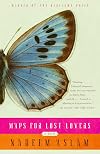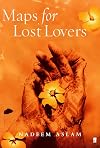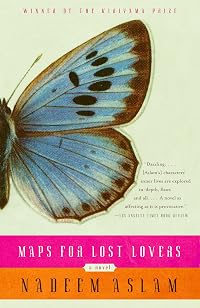
Maps for Lost Lovers
by Nadeem Aslam
On This Page
Description
If Gabriel García Márquez had chosen to write about Pakistani immigrants in England, he might have produced a novel as beautiful and devastating as Maps for Lost Lovers. Jugnu and Chanda have disappeared. Like thousands of people all over England, they were lovers and living together out of wedlock. To Chanda's family, however, the disgrace was unforgivable. Perhaps enough so as to warrant murder. As he explores the disappearance and its aftermath through the eyes of Jugnu's worldly show more older brother, Shamas, and his devout wife, Kaukab, Nadeem Aslam creates a closely observed and affecting portrait of people whose traditions threaten to bury them alive. The result is a tour de force, intimate, affecting, tragic and suspenseful. show lessTags
Recommendations

















Member Reviews
This novel was painful to read, being a seering indictment of superstition, hypocrisy, misogyny and vicious tribal brutalities rife and accepted as normal amongst the poorest and most poorly educated Muslims living in Britain - Muslims left behind by their more educated and more prosperous co-religionists who have fled the run-down urban areas such as the one in which the story is set for pleasanter, suburban, surroundings.
It was also a *beautiful* read, full of lyricism and poetry which contrast hideously with the ugly, backward culture which Aslam depicts. To be honest I'm rather surprised that Aslam hasn't found himself on the receiving end of a fatwa from some enraged cleric or other. As well as the aforementioned indictment of show more superstition etc, he puts words of blasphemy and apostasy into the mouth of Shamas and his younger son Ujala and writes graphically of the complicity of the mosque authorities in covering up serial sexual abuse of children by a junior cleric at the mosque. Perhaps things *have* moved on from the days when Rushdie was the subject of a fatwa for *his* writings perceived as critical of Islam.
Edited to add that I was surprised by the number of typographical errors in the book. I counted getting on for 20 of them, which is very high for a relatively expensive trade paperback. Anything more than a couple is very strange these days. show less
It was also a *beautiful* read, full of lyricism and poetry which contrast hideously with the ugly, backward culture which Aslam depicts. To be honest I'm rather surprised that Aslam hasn't found himself on the receiving end of a fatwa from some enraged cleric or other. As well as the aforementioned indictment of show more superstition etc, he puts words of blasphemy and apostasy into the mouth of Shamas and his younger son Ujala and writes graphically of the complicity of the mosque authorities in covering up serial sexual abuse of children by a junior cleric at the mosque. Perhaps things *have* moved on from the days when Rushdie was the subject of a fatwa for *his* writings perceived as critical of Islam.
Edited to add that I was surprised by the number of typographical errors in the book. I counted getting on for 20 of them, which is very high for a relatively expensive trade paperback. Anything more than a couple is very strange these days. show less
Shamas and Jugnu are the unconventional sons of an accidental Muslim, a Hindu boy rendered amnesiac by a bomb blast in the wake of the Amritsar riots and subsequently adopted by Muslims. His younger sons (now adults) live with the slight tarnish to their name his legacy brings; the hothouse gossip-beds of their immigrant community in Britain thrives on such morsels.
When Jugnu falls in love with Chanda, twice-divorced daughter of a local shopkeeper, they outrage the faithful - including Kaukab, his sister-in-law - by moving in together. Months later, they go on a trip home to Pakistan and are never seen again. When Kaukab asks some boys to peer in their window, it becomes evident that they came home, and a police investigation begins. show more
Picking up some months later, Maps for Lost Lovers explores the fractures and griefs within a community that holds itself wilfully separate from its host nation, fearful of ridicule, racism, and ritual pollution. Slowly unfolding stories that wind about the core tragedy, it is a little like a toccata and fugue, revisiting the same themes through varying iterations to underscore - or perhaps explain - the culturally acceptable murder that is an honour killing in Pakistan.
This is beautifully written stuff, shamelessly slow and given to evoking floral and butterfly imagery (Jugnu is a lepidopterist) in such detail that the colours and scents leap off the page, as do the sharp smells and rich flavours of Kaukab's glorious cooking. It contrasts harshly with the often-unthinkable beliefs that the novel confronts you with, and the human frailties that are exposed by them.
It lost me a little in the penultimate act, where it ultimately felt like polemic (in part because there is no illustration of a moderate or integrated Islam anywhere within the tale). Kaukab's confrontation with her beloved son Ujala is the only time we hear from him directly, and his assault on her faith feels like the voice of the author in part because Ujala has been given no voice of his own. I think I would have been happier too without the final act, where the truths of Jugnu's and Chanda's disappearance are spelled out; this wasn't a story that left me craving certainty.
It's a fairly minor gripe. This is a powerful novel, if difficult reading, and I highly recommend it. show less
When Jugnu falls in love with Chanda, twice-divorced daughter of a local shopkeeper, they outrage the faithful - including Kaukab, his sister-in-law - by moving in together. Months later, they go on a trip home to Pakistan and are never seen again. When Kaukab asks some boys to peer in their window, it becomes evident that they came home, and a police investigation begins. show more
Picking up some months later, Maps for Lost Lovers explores the fractures and griefs within a community that holds itself wilfully separate from its host nation, fearful of ridicule, racism, and ritual pollution. Slowly unfolding stories that wind about the core tragedy, it is a little like a toccata and fugue, revisiting the same themes through varying iterations to underscore - or perhaps explain - the culturally acceptable murder that is an honour killing in Pakistan.
This is beautifully written stuff, shamelessly slow and given to evoking floral and butterfly imagery (Jugnu is a lepidopterist) in such detail that the colours and scents leap off the page, as do the sharp smells and rich flavours of Kaukab's glorious cooking. It contrasts harshly with the often-unthinkable beliefs that the novel confronts you with, and the human frailties that are exposed by them.
It lost me a little in the penultimate act, where it ultimately felt like polemic (in part because there is no illustration of a moderate or integrated Islam anywhere within the tale). Kaukab's confrontation with her beloved son Ujala is the only time we hear from him directly, and his assault on her faith feels like the voice of the author in part because Ujala has been given no voice of his own. I think I would have been happier too without the final act, where the truths of Jugnu's and Chanda's disappearance are spelled out; this wasn't a story that left me craving certainty.
It's a fairly minor gripe. This is a powerful novel, if difficult reading, and I highly recommend it. show less
No need for a map to get lost in the millions of metaphors this book is sprinkled liberally with. A story of a Pakistani family and South Asian community lost in trying to finding ways of living (and loving) in Dasht-e-Tanhai (the "Desert of Solitutde") somewhere in England. In the way of (according to the author) Pakistani thinking, the language brims with flowers (and moths & butterflies) in a way that is entirely and utterly enjoyable.
Beautifully poetic writing, with a very sad story. I wish that a few things, particularly surrounding the murders at the center of the book, hadn't been made as clear by the end. The uncertainty was more powerful, I think. I was also bothered by the amount of hypocrisy in the words and actions of a number of characters. The hypocrisy of the more fundamentalist characters is clearly held against them, but there's a great deal of hypocrisy that goes less highlighted in the characters that we are meant to find more sympathetic. That said, the book is overall honest in showing the failings of both sides, and it provides a really interesting look at people caught between two cultures.
I first read this in 2006, re-read now as it was my choice for my book groups November read.
Maps for Lost Lovers is a stunningly brave and searingly brutal novel charting a year in the life of a working class community from the subcontinent--a group described by author Nadeem Aslam as "Pakistani, Bangladeshi, Indian and Sri Lankans living in a northern town". The older residents, who have left their homelands for the riches of England, have communally dubbed it Dasht-e-Tanhaii, which roughly translates as "the wilderness of solitude" or "the desert of loneliness". As the seasons change, from the first crystal flakes of snow that melt into "a monsoon raindrop", we slowly learn the fate of Jugnu and Chanda, a couple whose disappearance is show more rumoured to have been a result of their fatal decision to live in sin in a community where the phrase holds true meaning.
I liked this novel just as much as I did the first time, although you can never recapture that first impact a wonderful novel has for you as a reader. Although the opening sequence of the novel - Shamas standing in the doorway in the snow had stayed powerfully with me. This is a beautifully written novel, evocative and bravely honest. Some of the characters strain against their religious and cultural ties, others find strength in those traditional ways and beliefs.The stories of the people in this novel are generally sad, there is little reason to hope for the future (something I felt very much with Aslam's third novel A Wasted Vigil too). Lives are restricted because of strict religious or moral codes, a fear of "what people will think/say" is constant. Kaukab counting on the fingers of one hand the number of white people she has spoken to. Her constant misunderstandings with her children, her life so desperately sad. There is a feeling of tension throughout - the tension of a community where everyone knows who is who, and gossip is rife, and a life can be destroyed simply by been seen talking to someone in the street. This is a story of love in it's many guises, of loss, bigotry and injustice. show less
Maps for Lost Lovers is a stunningly brave and searingly brutal novel charting a year in the life of a working class community from the subcontinent--a group described by author Nadeem Aslam as "Pakistani, Bangladeshi, Indian and Sri Lankans living in a northern town". The older residents, who have left their homelands for the riches of England, have communally dubbed it Dasht-e-Tanhaii, which roughly translates as "the wilderness of solitude" or "the desert of loneliness". As the seasons change, from the first crystal flakes of snow that melt into "a monsoon raindrop", we slowly learn the fate of Jugnu and Chanda, a couple whose disappearance is show more rumoured to have been a result of their fatal decision to live in sin in a community where the phrase holds true meaning.
I liked this novel just as much as I did the first time, although you can never recapture that first impact a wonderful novel has for you as a reader. Although the opening sequence of the novel - Shamas standing in the doorway in the snow had stayed powerfully with me. This is a beautifully written novel, evocative and bravely honest. Some of the characters strain against their religious and cultural ties, others find strength in those traditional ways and beliefs.The stories of the people in this novel are generally sad, there is little reason to hope for the future (something I felt very much with Aslam's third novel A Wasted Vigil too). Lives are restricted because of strict religious or moral codes, a fear of "what people will think/say" is constant. Kaukab counting on the fingers of one hand the number of white people she has spoken to. Her constant misunderstandings with her children, her life so desperately sad. There is a feeling of tension throughout - the tension of a community where everyone knows who is who, and gossip is rife, and a life can be destroyed simply by been seen talking to someone in the street. This is a story of love in it's many guises, of loss, bigotry and injustice. show less
Nadeem Aslam is an amazingly gifted writer; his lyrical language infuses this story with unexpected grace and beauty in spite of the disturbing conflict central to the book—the murder of two lovers, Jugnu and Chanda. Jugnu’s older brother, Shamas deeply ponders his life and that of the Pakistani community in which he lives. Shamas is lonely and concerned about aging and death. Shamas’ wife, Kaukab, is caught between her longing for Pakistan and her adamant instance that she remains in England where her three children live. Kaukab exemplifies as few characters do the conflicts of the immigrant who seeks a better life for her family yet is afraid of the new culture taking her children away from her and her values. I found Kaukab’s show more strict adherence to her religious principles familiar in spite of my not being a Muslim. Those, like me, raised in strict, fundamentalist (Christian) homes will recognize the struggles of the younger generation to find their own way within competing cultures. The choices made by Kaukab’s children, her brother-in-law Jugnu and his lover Chanda represent only a few of the possible responses. Some reviewers criticize Aslam’s work as anti-Islamic and anti-Pakistani. I found his themes universal and enlightening. show less
This book describes the year following the disappearance of a Pakistani couple in England. They are presumed murdered, the victims of an honour killing perpetrated by the woman's two brothers. The story doesn't focus specifically on the murders, but more on the impact the couple had on the members of their community, and especially their family members. Problems with racism and immigration are an undertone, but central to the tale are the difficulties inherent in reconciling religious teachings (in this case, Islam) with changing morals and different lifestyles.
It is beautifully written, although a bit heavy on the descriptions from time to time. The subject matter is so difficult, so sad, and (coming from an atheist's point of view) show more so hard to understand, but it is a great book. Still, have something happy to read on hand next, as this is definitely not an uplifting story that ends with a lot of hope. show less
It is beautifully written, although a bit heavy on the descriptions from time to time. The subject matter is so difficult, so sad, and (coming from an atheist's point of view) show more so hard to understand, but it is a great book. Still, have something happy to read on hand next, as this is definitely not an uplifting story that ends with a lot of hope. show less
Members
- Recently Added By
Lists

Top Five Books of 2013
1,562 works; 721 members

Booker Prize
491 works; 62 members

International IMPAC Dublin Literary Award
179 works; 6 members

Man Booker Prize Longlist 2004
22 works; 2 members

Books Read in 2015
3,299 works; 129 members

Translingualism
191 works; 4 members
Author Information

6+ Works 1,922 Members
Awards and Honors
Awards
Common Knowledge
- Canonical title*
- Mappe per amanti smarriti
- Original title
- Maps for Lost Lovers
- Original publication date
- 2004
- Important places
- Pakistan
- Epigraph
- "A human being is never what he is but the self he seeks." Octavia Paz
- First words
- Shamas stands in the open door and watches the earth, the magnet that it is, pulling the snowflakes out of the sky towards itself.
- Last words
- (Click to show. Warning: May contain spoilers.)He moves away from the newsagent's window and resumes his journey along the snow-covered street.
*Some information comes from Common Knowledge in other languages. Click "Edit" for more information.
Classifications
Statistics
- Members
- 776
- Popularity
- 36,203
- Reviews
- 22
- Rating
- (3.85)
- Languages
- 11 — Danish, Dutch, English, French, German, Italian, Portuguese, Croatian, Spanish, Swedish, Turkish
- Media
- Paper, Ebook
- ISBNs
- 26
- ASINs
- 3