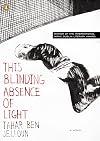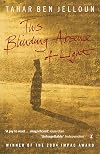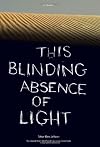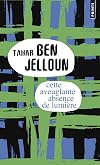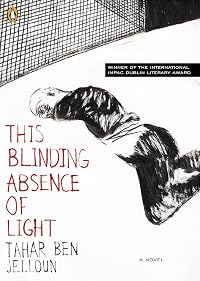
This Blinding Absence of Light
by Tahar Ben Jelloun
On This Page
Description
An immediate and critically acclaimed bestseller in France and winner of the 2004 International IMPAC Dublin Literary Award, This Blinding Absence of Light is the latest work by Tahar Ben Jelloun, the first North African winner of the Prix Goncourt and winner of the 1994 Prix Mahgreb. Ben Jelloun crafts a horrific real-life narrative into fiction to tell the appalling story of the desert concentration camps in which King Hassan II of Morocco held his political enemies under the most show more harrowing conditions. Not until September 1991, under international pressure, was Hassan's regime forced to open these desert hellholes. A handful of survivors--living cadavers who had shrunk by over a foot in height--emerged from the six-by-three-foot cells in which they had been held underground for decades. Working closely with one of the survivors, Ben Jelloun eschewed the traditional novel format and wrote a book in the simplest of language, reaching always for the most basic of words, the most correct descriptions. The result is a shocking novel that explores both the limitlessness of inhumanity and the impossible endurance of the human will. show lessTags
Recommendations











Member Reviews
Can anything so horrific, so dark, so degrading, yet actually be a joy to read? This Moroccan writer supplies the reader with gorgeous prose, imagery and mirrors the deepest parts of a human soul with this wonderful book.
Jelloun supplies the reader with a testament to human strength and survival with this fictionalized version of a true event – a man’s tormented 18 years in a black hole, in a prison in Morocco called Tazmamart (1973-1991).
The prison cell is without light, 10x5 feet, with a ventilation hole and a small hole for his excrement. Full of scorpions, cockroaches and subject to the heat and cold of the seasons, the occupant survives at the edge of death, half starved, without exercise and without light. When he finally show more emerges, he is a broken man, a foot shorter and riddled with medical problems. Most of the men did not survive.
For such an absolutely terrifying topic, the prose is crisp and forgiving and non-judgmental. Jelloun has a true gift for probing the depths of human character. He does not lecture, throw political arrows or in any way proselytize – he manages to convey the hopelessness, torment and human degradation in a way that is so much more effective than angry rhetoric can ever convey. Ultimately, the Islamic religion suffuses his life as his body begins to decay and wither away.
Highly recommended. show less
Jelloun supplies the reader with a testament to human strength and survival with this fictionalized version of a true event – a man’s tormented 18 years in a black hole, in a prison in Morocco called Tazmamart (1973-1991).
The prison cell is without light, 10x5 feet, with a ventilation hole and a small hole for his excrement. Full of scorpions, cockroaches and subject to the heat and cold of the seasons, the occupant survives at the edge of death, half starved, without exercise and without light. When he finally show more emerges, he is a broken man, a foot shorter and riddled with medical problems. Most of the men did not survive.
For such an absolutely terrifying topic, the prose is crisp and forgiving and non-judgmental. Jelloun has a true gift for probing the depths of human character. He does not lecture, throw political arrows or in any way proselytize – he manages to convey the hopelessness, torment and human degradation in a way that is so much more effective than angry rhetoric can ever convey. Ultimately, the Islamic religion suffuses his life as his body begins to decay and wither away.
Highly recommended. show less
"Most of those who died did not die of hunger but of hatred. Feeling hatred diminishes you. It eats at you from within and attacks the immune system. When you have hatred inside you, it always crushes you in the end."
This book is based on the testimony of Aziz Binebine, a young officer cadet, who in 1971 took part in the coup to overthrow King Hassan II of Morocco at his 42nd birthday celebration at his Skhirat palace. The plot failed, the king survived but almost 100 guests died. Despite claiming, like most of the coup participants, to have had no prior knowledge of the plot or having fired no shots Aziz Binebine was sentenced to 20 years in the hellhole prison at Tazmamart with 57 other men.
At Tazmamart the cells were 10ft long and show more 5ft wide, with ceilings so low the prisoners were unable to stand upright and worse of all were underground so in constant darkness. Each tomb had an air vent, a tiny hole in the floor that served as the lavatory and were crawling with scorpions the men could hear but not see. There was no medical attention, no exercise, and no light. The only time they were allowed out was to bury one of their fellow in-mates.
It took thirteen years before the outside world learnt that Tazmamart existed and another five years before it was shut down by which time there were only 28 survivors.
Despite it's grim background this can by no means be seen as outwardly political neither is it autobiographical although it is told in the first person. Rather it speaks of man's ability to adapt and will to survive. Rather coincidentally I re-watched the movie "Lucy" last night. In that film Morgan Freeman's character talks of human brains desire to propagate if conditions are favourable or to seek immortality if they are not.
To survive and to stay sane, each in-mate takes on a certain role. One becomes a talking clock, another recites passages from the Qur'an, whilst another invents a card game with imaginary cards. The narrator,Salim, becomes the groups storyteller, recounting stories from books that he's read or films that he's seen. He is not religious when he arrives in Tazmamart but to escape the torments of his body he must take on a certain religious mysticism, lose all memories of hate in his past,and seek out the hidden depths of his mind. Horrible deaths alternate with inspired collective efforts to stay alive.
Through Salim the reader realises that ideas can never be imprisoned, they are free to travel everywhere and anywhere, that the human spirit can adapt to almost any circumstances, that it is hatred not love that holds us back. Despite the grim background I found this an up-lifting tale, a shaft of light in a world of darkness, I really enjoyed the author's writing style and as such I would highly recommend it. show less
This book is based on the testimony of Aziz Binebine, a young officer cadet, who in 1971 took part in the coup to overthrow King Hassan II of Morocco at his 42nd birthday celebration at his Skhirat palace. The plot failed, the king survived but almost 100 guests died. Despite claiming, like most of the coup participants, to have had no prior knowledge of the plot or having fired no shots Aziz Binebine was sentenced to 20 years in the hellhole prison at Tazmamart with 57 other men.
At Tazmamart the cells were 10ft long and show more 5ft wide, with ceilings so low the prisoners were unable to stand upright and worse of all were underground so in constant darkness. Each tomb had an air vent, a tiny hole in the floor that served as the lavatory and were crawling with scorpions the men could hear but not see. There was no medical attention, no exercise, and no light. The only time they were allowed out was to bury one of their fellow in-mates.
It took thirteen years before the outside world learnt that Tazmamart existed and another five years before it was shut down by which time there were only 28 survivors.
Despite it's grim background this can by no means be seen as outwardly political neither is it autobiographical although it is told in the first person. Rather it speaks of man's ability to adapt and will to survive. Rather coincidentally I re-watched the movie "Lucy" last night. In that film Morgan Freeman's character talks of human brains desire to propagate if conditions are favourable or to seek immortality if they are not.
To survive and to stay sane, each in-mate takes on a certain role. One becomes a talking clock, another recites passages from the Qur'an, whilst another invents a card game with imaginary cards. The narrator,Salim, becomes the groups storyteller, recounting stories from books that he's read or films that he's seen. He is not religious when he arrives in Tazmamart but to escape the torments of his body he must take on a certain religious mysticism, lose all memories of hate in his past,and seek out the hidden depths of his mind. Horrible deaths alternate with inspired collective efforts to stay alive.
Through Salim the reader realises that ideas can never be imprisoned, they are free to travel everywhere and anywhere, that the human spirit can adapt to almost any circumstances, that it is hatred not love that holds us back. Despite the grim background I found this an up-lifting tale, a shaft of light in a world of darkness, I really enjoyed the author's writing style and as such I would highly recommend it. show less
Chilling tale of one of the few survivors of the secret prison in Tazmamart, Morocco. The book is called a novel, but is based on the true story of a group of young officers who took part in a failed coup in 1971 in Rabat. They were imprisoned, but after a year or so transferred to a secret prison in Tazmamart, a place in the desert. They were kept in tiny cells, that looked more like big graves than rooms (there was no light for example), and given no more than the very bare minimum to survive. Over the years most of them died of horrible diseases or simply of despair and loss of hope. The main character of this book describes how he survived 18 years of this hell because of his mental strength and his faith in Allah.
It is difficult show more to even try to imagine what it must have been like to have to survive these chilling circumstances. However, Tahar Ben Jelloun has found a way to at least let you get very close to this cruel reality. The prose is very bare and simple yet effective.
I love to read to imagine other realities. This is one of the most gruesome realities I have ever encountered, even more so because this is based on a true story. show less
It is difficult show more to even try to imagine what it must have been like to have to survive these chilling circumstances. However, Tahar Ben Jelloun has found a way to at least let you get very close to this cruel reality. The prose is very bare and simple yet effective.
I love to read to imagine other realities. This is one of the most gruesome realities I have ever encountered, even more so because this is based on a true story. show less
Although written as a novel, and listed in fiction, this account of life underground in a concentration camp in Morocco is based on interviews Ben Jelloun did with a survivor. This is a harrowing yet beautifully written book. In 1971, an attempted coup was planned against the king of Morocco. The coup failed, and the participants were sentenced to jail, which became for some, a small underground cell, where survival was not possible except for a very few, who lasted twenty years. In 1991 they were released due to international pressure.
The narrator takes us through the thought processes that enabled him to survive. How he erased the images of his family from his mind, how he prayed and was transported away, how he completely separated show more his body from his mind. He held no thoughts of revenge or hatred and really became a completely pure person, understanding only what is required to survive. And while this is disturbing, watching most of the prisoners die, ultimately it is uplifting, as this one man survives amidst the most horrible conditions. That a person is capable of being that strong and that religious, was quite beautiful. (read and reviewed in 2008) show less
The narrator takes us through the thought processes that enabled him to survive. How he erased the images of his family from his mind, how he prayed and was transported away, how he completely separated show more his body from his mind. He held no thoughts of revenge or hatred and really became a completely pure person, understanding only what is required to survive. And while this is disturbing, watching most of the prisoners die, ultimately it is uplifting, as this one man survives amidst the most horrible conditions. That a person is capable of being that strong and that religious, was quite beautiful. (read and reviewed in 2008) show less
The story of Salim's 18 year imprisonment in a pitch black cell in a Moroccan desert prison after his involvement in an attempted coup d'etat in 1971, based on a man's real-life experience, this should be a depressing read. Yet it isn't. It's a story of survival, faith and family as well as a tale of inhumanity and death. Jelloun uses a sparse yet effective style that effectively conveys the complexities and ambiguities of Salim's character. I found this sparseness difficult to get into for the first few pages but after that felt entirely drawn into the story. So much so that I started and finished it today.
This novel is based on real events, and is drawn from the testimony of a former inmate of Tazmamart prison in Morocco, where a group of young cadets is imprisoned after a failed coup attempt in which they unwittingly participated. Their cells are so small they cannot stand upright or stretch out full-length, and they are kept in constant darkness. They subsist on water and 'starch,' which they are given once a day. One by one, they begin to die, each in a unique and horrific manner (poisoned by thousands of roach eggs, stung by hundreds of scorpions, let your imagination do the rest).
Each cadet has a function in the loose society that is formed in the prison, and the narrator's function is that of storyteller: he relates the stories of show more books he has read and movies he has seen to keep the minds of the other prisoners occupied: 'My friends, I would like your attention and absolute quiet, because I am going to take you to America in the 1950's.' Thus begins a surreal narration of A Streetcar Named Desire. The other prisoners can hardly believe the scene of Marlon Brandon on his knees bellowing, 'Stella! Stella!'
He can contemplate a single word, 'coffee,' for an entire day, ending in a 'palace where a king or prince will not get out of bed until he has had two cups of a good brisk arabica imported from Costa Rica, roasted by Italians, and prepared by a Neapolitan chef.'
Despite the grim inhumanity of the subject matter, the small details of the prisoners' endurance prevent the novel from being totally bleak. I highly recommend this book.
4 1/2 stars show less
Each cadet has a function in the loose society that is formed in the prison, and the narrator's function is that of storyteller: he relates the stories of show more books he has read and movies he has seen to keep the minds of the other prisoners occupied: 'My friends, I would like your attention and absolute quiet, because I am going to take you to America in the 1950's.' Thus begins a surreal narration of A Streetcar Named Desire. The other prisoners can hardly believe the scene of Marlon Brandon on his knees bellowing, 'Stella! Stella!'
He can contemplate a single word, 'coffee,' for an entire day, ending in a 'palace where a king or prince will not get out of bed until he has had two cups of a good brisk arabica imported from Costa Rica, roasted by Italians, and prepared by a Neapolitan chef.'
Despite the grim inhumanity of the subject matter, the small details of the prisoners' endurance prevent the novel from being totally bleak. I highly recommend this book.
4 1/2 stars show less
How can a book about 18 years in prison in appalling conditions be so beautiful?
In 1971 a small group of army officers attempted a coup d'etat against Moroccan king Hassan II; it failed and they were arrested. Having spent several years in a standard prison (and already able to see the end of their sentences), they were unexpectedly transferred to a specially-created secret prison where they spent 18 years in small cells designed so no light came in (hence the title), and in which it was impossible to stand up.
Ben Jelloun's novel is a fictionalised account of life in the prison at Tazmamart, based on the story of one particular survivor, the narrator. Ben Jelloun's slightly detached style lends itself perfectly to describing the show more prisoners' life; I had to stop occasionally to take in what he was saying, not because it wasn't clear, but so as to let it sink in. I think he almost gives you a choice - you can read on quickly, or you can stop and think about what he's saying. There are descriptions of conditions so inhumane as to be almost unthinkable...and accounts of what the men did to counter them. One kept track of time over the years. One recited the Koran, teaching it to the others. The narrator, a cultured, well-educated man, recited books he had read - from memory. There are also matter-of-fact descriptions of descent into madness, of drawn-out, painful deaths in lonely cells...and of the careful burials accorded to each victim (the only time the men were allowed outside).
In a sense, all of human life is here in this small closed space - the cruelty of those responsible, the indifference of those who could change things but didn't, the quick deaths of the prisoners who gave up...and the breath-taking strength of character of those who didn't. It's the last that makes the book so beautiful, together with Ben Jelloun's style.
Whilst the English translation won the IMPAC award, when the original came out in 2001 it caused great controversy. The survivor on whom the narrator was based, Aziz Binebine, distanced himself from Ben Jelloun and the book in an open letter (he objected to the way in which the book had been produced and to some of the terms of the contract, and he says he was forced into the open letter because Ben Jelloun wouldn't communicate with him directly). Meanwhile Ben Jelloun was widely criticised for not having raised his voice and denounced Tazmamart earlier; he countered that like all Moroccans, he had been prevented from speaking out by fear (particularly understandable in his case, I'd say, since he was imprisoned by the regime for a couple of years as a young man).
Whilst the controversy raises what I think are fascinating questions about the role and responsibility of the writer, I'm not sure it detracts from this novel itself, which is a great work of fiction - and one without which I, for one, would still be ignorant of these events. I've often said on LT that one mark of good fiction, for me, is that it makes me want to go and find out about what actually happened, and that was the case here. show less
In 1971 a small group of army officers attempted a coup d'etat against Moroccan king Hassan II; it failed and they were arrested. Having spent several years in a standard prison (and already able to see the end of their sentences), they were unexpectedly transferred to a specially-created secret prison where they spent 18 years in small cells designed so no light came in (hence the title), and in which it was impossible to stand up.
Ben Jelloun's novel is a fictionalised account of life in the prison at Tazmamart, based on the story of one particular survivor, the narrator. Ben Jelloun's slightly detached style lends itself perfectly to describing the show more prisoners' life; I had to stop occasionally to take in what he was saying, not because it wasn't clear, but so as to let it sink in. I think he almost gives you a choice - you can read on quickly, or you can stop and think about what he's saying. There are descriptions of conditions so inhumane as to be almost unthinkable...and accounts of what the men did to counter them. One kept track of time over the years. One recited the Koran, teaching it to the others. The narrator, a cultured, well-educated man, recited books he had read - from memory. There are also matter-of-fact descriptions of descent into madness, of drawn-out, painful deaths in lonely cells...and of the careful burials accorded to each victim (the only time the men were allowed outside).
In a sense, all of human life is here in this small closed space - the cruelty of those responsible, the indifference of those who could change things but didn't, the quick deaths of the prisoners who gave up...and the breath-taking strength of character of those who didn't. It's the last that makes the book so beautiful, together with Ben Jelloun's style.
Whilst the English translation won the IMPAC award, when the original came out in 2001 it caused great controversy. The survivor on whom the narrator was based, Aziz Binebine, distanced himself from Ben Jelloun and the book in an open letter (he objected to the way in which the book had been produced and to some of the terms of the contract, and he says he was forced into the open letter because Ben Jelloun wouldn't communicate with him directly). Meanwhile Ben Jelloun was widely criticised for not having raised his voice and denounced Tazmamart earlier; he countered that like all Moroccans, he had been prevented from speaking out by fear (particularly understandable in his case, I'd say, since he was imprisoned by the regime for a couple of years as a young man).
Whilst the controversy raises what I think are fascinating questions about the role and responsibility of the writer, I'm not sure it detracts from this novel itself, which is a great work of fiction - and one without which I, for one, would still be ignorant of these events. I've often said on LT that one mark of good fiction, for me, is that it makes me want to go and find out about what actually happened, and that was the case here. show less
Members
- Recently Added By
Lists

International IMPAC Dublin Literary Award
179 works; 6 members

Arab and Arab Diaspora Literature We Recommend
112 works; 53 members

Vlogbrothers Book Recommendations
307 works; 4 members
Author Information

129+ Works 4,978 Members
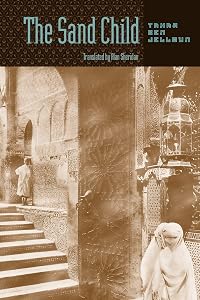
Controversial winner of the prestigious French Prix Goncourt (1987), Tahar Ben Jelloun is a Moroccan writer who has not found much favor at home, despite his growing popularity abroad. According to some North African critics, Ben Jelloun intentionally sets out to please foreign readers. The critics contend that his writing reinforces European show more stereotypes by pandering to western tastes for quaint folklore and traditions, and exotic scenery. Moroccan critics have accused Ben Jelloun of creating artificial, fabricated stories that fail to convey a true picture of Morocco. They have also been offended by his criticism of Morocco, and the fact that he reveals sides of Moroccan life that are usually kept hidden. Ben Jelloun's story of a girl dressed as a boy, L'Enfant du Sable (The Sand Child) (1985), was scandalous in their eyes. After Ben Jelloun won the Prix Goncourt, a number of critics changed their minds and have begun to praise his work. (Bowker Author Biography) show less
Some Editions
Awards and Honors
Notable Lists
Common Knowledge
- Canonical title
- This Blinding Absence of Light
- Original title
- Cette aveuglante absence de lumière
- Original publication date
- 2002 (English translation) (English translation); 2001 (original French) (original French)
- Important places
- Morocco
- First words
- I have long searched for the black stone that purifies the soul from death.
- Quotations
- Most of those who died did not die of hunger but of hatred. Feeling hatred diminishes you. It eats at you from within and attacks the immune system. When you have hatred inside you, it always crushes you in the end.
- Original language
- French
Classifications
- Genres
- Fiction and Literature, General Fiction
- DDC/MDS
- 843.914 — Literature & rhetoric French Literature French fiction 1900- 20th Century 1945-1999
- LCC
- PQ3989.2 .J4 .C4813 — Language and Literature French, Italian, Spanish and Portuguese literatures French literature Provincial, local, colonial, etc.
- BISAC
Statistics
- Members
- 597
- Popularity
- 48,978
- Reviews
- 18
- Rating
- (4.11)
- Languages
- 13 — Arabic, Catalan, Dutch, English, Finnish, French, German, Italian, Polish, Portuguese, Spanish, Swedish, Turkish
- Media
- Paper, Ebook
- ISBNs
- 26
- ASINs
- 7