On This Page
Description
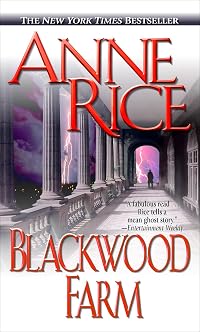
Perennial bestseller Anne Rice fuses her two uniquely seductive strains of narrative—her Vampire legend and her lore of the Mayfair witches—to give us a world of classic deep-south luxury and ancestral secrets.Welcome to Blackwood Farm: soaring white columns, spacious drawing rooms, bright, sun-drenched gardens, and a dark strip of the dense Sugar Devil Swamp. This is the world of Quinn Blackwood, a brilliant young man haunted since birth by a mysterious doppelgänger, “Goblin,” a show more spirit from a dream world that Quinn can’t escape and that prevents him from belonging anywhere. When Quinn is made a Vampire, losing all that is rightfully his and gaining an unwanted immortality, his doppelgänger becomes even more vampiric and terrifying than Quinn himself.
As the novel moves backwards and forwards in time, from Quinn’s boyhood on Blackwood Farm to present day New Orleans, from ancient Athens to 19th-century Naples, Quinn seeks out the legendary Vampire Lestat in the hope of freeing himself from the spectre that draws him inexorably back to Sugar Devil Swamp and the explosive secrets it holds.
A story of youth and promise, of loss and the search for love, of secrets and destiny, Blackwood Farm is Anne Rice at her mesmerizing best. show less
Tags
Recommendations

Member Reviews
I’ve had a copy of BLACKWOOD FARM on my shelf for a few years, waiting while I made my way through the rest of Anne Rice’s Vampire Chronicles, with a detour through the three books of The Mayfair Witches. I am a big fan of the former, which contains some of the most impressive world building to be found in horror fantasy, and not so much the latter, which I found indulgent even by Rice’s standards, with a side helping of erotica that wasn’t always to my liking. Nevertheless, with all that reading behind me, I wanted to see what BLACKWOOD FARM would bring forth, as it is a novel with a foot planted in both of Rice’s fictional worlds, which have now come to overlap and merge. In my opinion, we get the best of both in a book that show more will surely please any hard core Rice fan. There’s no end of the oddness, kinks and quirks, and the downright grotesque that longtime readers have come to expect.
Primarily this book is a vampire story, that vampire being the fledgling Quinn Blackwood, a young man turned into a blood drinker early in life. Young vampire Quinn has a problem named Goblin, a spirit who has haunted him since infancy, a doppelganger and companion whom only Quinn and those like him who are perceptive to spirits, can see, but now that Quinn is a creature of the night, the possessive Goblin has become truly monstrous and impossible to control. Since Quinn is the heir to a palatial farm in Louisiana, it is only natural that this inexperienced vampire journey to New Orleans and seek out Lestat, the brat prince of Undead, Rice’s most famous fictional creation. Of course this sets up one of the author’s most tried and true storytelling tropes, where Quinn sets down and tells Lestat his life’s story up to that moment, which encompasses about 500 pages, as learn the history of the Blackwood family, and of the land they’ve lived on for generations. We meet lots of characters along the way, including a few who cross over from the Mayfair books, and learn a few secrets. In the book’s finale, we learn who Goblin really is, and why he is attached to Quinn.
Like most of Anne Rice’s later books, readers seem to have run hot and cold on BLACKWOOD FARM in equal numbers, but I liked it better than just anything she’s written since THE QUEEN OF THE DAMNED. At this point, you either go with Rice’s style, or you don’t, and if you go with it, then it means overlooking a few flaws, especially her love of detail and description – the reader will know every inch of the Blackwood’s home and the swamp adjacent to it in their minds by the end. Then there is the thing with the cameos. I liked the main character of Quinn, who can come across as an indulged and spoiled little rich boy, one capable of simply going off on a three year tour of the finest and most culturally refined parts of Europe for one section of the story, but I found his earnestness a refreshing change from some of Rice’s other story narrators. My favorite moment in the book is when Quinn, newly made a Blood Hunter by Petronia (definitely not one of my favorite Rice characters), promptly announces that he is not going to be staying among the immortals in Italy, but returning to his human family in Louisiana, and resuming as normal a life as possible among them. I thought Quinn and Mona Mayfair were a wonderful couple (overlooking the fact that she’s only 15 years old), and I found myself rooting for them. Like many of Rice’s novels, this one could have been helped by some editing, though it never plodded along like some of the Mayfair books; there were enough dramatic twists and turns to satisfy me. Rice’s tendency to telegraph how you are to feel about her characters is very evident, everyone loves Aunt Queen, the Blackwood matriarch, while Patsy, Quinn’s errant mother, is to be held in low regard because she hates her son and makes no secret of it. Some plot threads feel underdeveloped, such as Rebecca, the ghost of the mistress of a long gone Blackwood, to whom Quinn loses his virginity. Others, like Quinn’s teenage Uncle Tommy, feel like a story line being planted for a future book. There are some things that just made me shake my head, such as Quinn having elderly Black female servants sleep with him (in a non sexual way) for comfort until he’s nearly an adult. And this book really drove home the fact that Anne Rice, despite her progressive politics, can be a real snob, especially in the way she handles Patsy, whose crime seems to be that she didn’t want to be a properly cultured little rich girl, but instead wanted to have career making low class country and pop music, and Tommy’s mother, Terry Sue, who sin is that she is poor, overweight, lives in a trailer, and can’t stop having children.
Like many other reviewers, I felt that Lestat had simply been shoe horned into the narrative to please the fans; his contribution to the story is fairly minimal. There are appearances by Rowan Mayfair and Michael Curry, the main characters from the Witches trilogy, and it is still apparent that Curry is Rice’s ideal man in the way she lovingly gives a physical description. Oncle Julian Mayfair shows up at one point, reminding me why he is one of my Top Five Anne Rice characters. For those not that familiar with Rice, it is not necessary to have read all of her previous books before opening BLACKWOOD FARM, but I would recommend reading INERVIEW WITH THE VAMPIRE and THE VAMPIRE LESTAT before cracking this one. Anyway, I’m looking forward to BLOOD CANTICLE; the next volume in Anne Rice’s enduring series, and seeing what she has in store for these characters. show less
Primarily this book is a vampire story, that vampire being the fledgling Quinn Blackwood, a young man turned into a blood drinker early in life. Young vampire Quinn has a problem named Goblin, a spirit who has haunted him since infancy, a doppelganger and companion whom only Quinn and those like him who are perceptive to spirits, can see, but now that Quinn is a creature of the night, the possessive Goblin has become truly monstrous and impossible to control. Since Quinn is the heir to a palatial farm in Louisiana, it is only natural that this inexperienced vampire journey to New Orleans and seek out Lestat, the brat prince of Undead, Rice’s most famous fictional creation. Of course this sets up one of the author’s most tried and true storytelling tropes, where Quinn sets down and tells Lestat his life’s story up to that moment, which encompasses about 500 pages, as learn the history of the Blackwood family, and of the land they’ve lived on for generations. We meet lots of characters along the way, including a few who cross over from the Mayfair books, and learn a few secrets. In the book’s finale, we learn who Goblin really is, and why he is attached to Quinn.
Like most of Anne Rice’s later books, readers seem to have run hot and cold on BLACKWOOD FARM in equal numbers, but I liked it better than just anything she’s written since THE QUEEN OF THE DAMNED. At this point, you either go with Rice’s style, or you don’t, and if you go with it, then it means overlooking a few flaws, especially her love of detail and description – the reader will know every inch of the Blackwood’s home and the swamp adjacent to it in their minds by the end. Then there is the thing with the cameos. I liked the main character of Quinn, who can come across as an indulged and spoiled little rich boy, one capable of simply going off on a three year tour of the finest and most culturally refined parts of Europe for one section of the story, but I found his earnestness a refreshing change from some of Rice’s other story narrators. My favorite moment in the book is when Quinn, newly made a Blood Hunter by Petronia (definitely not one of my favorite Rice characters), promptly announces that he is not going to be staying among the immortals in Italy, but returning to his human family in Louisiana, and resuming as normal a life as possible among them. I thought Quinn and Mona Mayfair were a wonderful couple (overlooking the fact that she’s only 15 years old), and I found myself rooting for them. Like many of Rice’s novels, this one could have been helped by some editing, though it never plodded along like some of the Mayfair books; there were enough dramatic twists and turns to satisfy me. Rice’s tendency to telegraph how you are to feel about her characters is very evident, everyone loves Aunt Queen, the Blackwood matriarch, while Patsy, Quinn’s errant mother, is to be held in low regard because she hates her son and makes no secret of it. Some plot threads feel underdeveloped, such as Rebecca, the ghost of the mistress of a long gone Blackwood, to whom Quinn loses his virginity. Others, like Quinn’s teenage Uncle Tommy, feel like a story line being planted for a future book. There are some things that just made me shake my head, such as Quinn having elderly Black female servants sleep with him (in a non sexual way) for comfort until he’s nearly an adult. And this book really drove home the fact that Anne Rice, despite her progressive politics, can be a real snob, especially in the way she handles Patsy, whose crime seems to be that she didn’t want to be a properly cultured little rich girl, but instead wanted to have career making low class country and pop music, and Tommy’s mother, Terry Sue, who sin is that she is poor, overweight, lives in a trailer, and can’t stop having children.
Like many other reviewers, I felt that Lestat had simply been shoe horned into the narrative to please the fans; his contribution to the story is fairly minimal. There are appearances by Rowan Mayfair and Michael Curry, the main characters from the Witches trilogy, and it is still apparent that Curry is Rice’s ideal man in the way she lovingly gives a physical description. Oncle Julian Mayfair shows up at one point, reminding me why he is one of my Top Five Anne Rice characters. For those not that familiar with Rice, it is not necessary to have read all of her previous books before opening BLACKWOOD FARM, but I would recommend reading INERVIEW WITH THE VAMPIRE and THE VAMPIRE LESTAT before cracking this one. Anyway, I’m looking forward to BLOOD CANTICLE; the next volume in Anne Rice’s enduring series, and seeing what she has in store for these characters. show less
Refreshingly, a new story set almost entirely in the recent past, a new (well, slightly related) family with paranormal secrets to explore, and a new lovable vampire hero. Tarquin Blackwood seeks out Lestat to tell his story and ask for help in banishing his lifelong companion, the spirit Goblin. Tarquin's narrative meanders with Rice's usual rapt attention to the details of architecture, clothing, and decor, which stretches the book to more than six hundred pages. Truthfully, my hand hurt from holding the book, but that's because I really couldn't put it down. I was fascinated, and really pleased, particularly since I just read Blood and Gold and Pandora which were basically the same story for the third and fourth time, from a slightly show more different perspective with slightly more detail. I am excited to finish out this series by reading Blood Canticle next. show less
This is my favorite book by Anne Rice. She incorporates the vampire world with the witch world, but not in an overbearing way. This melding was merely a side note of the story. This book stands on its own. Any reader could pick this up and understand the story. The main character and his story is fabulous! I was astounded by Anne Rice's abilities to still surprise me with her creativity, description, and plot twist. I felt it plausible that Lestat would listen to the story of the young vampire. After living for so long I'm sure one gets bored and would welcome any such entertainment. This is definitely a must read for any Anne Rice fans out there!
I liked that the vampire didn't sever his relationship with his family. He didn't let them show more know he had changed, and continued to love and care for them. The story of the little island on his property was riveting and I couldn't put the book down. I also enjoyed the uniqueness of some of the vampires introduced. Overall a lovely read! show less
I liked that the vampire didn't sever his relationship with his family. He didn't let them show more know he had changed, and continued to love and care for them. The story of the little island on his property was riveting and I couldn't put the book down. I also enjoyed the uniqueness of some of the vampires introduced. Overall a lovely read! show less
This book? ...Not so much. After the ending of Blood and Gold, I was hoping that perhaps Ms. Rice would write another novel where more of the vampire world would be revealed. Perhaps something on the adventures of Maharet and especially Mekare, now the Queen of the Damned. However, this story is not as good. The cast of characters is interesting in its own right, but as a novel it contributed pretty much nothing to the Vampire Chronicles. There's no
I was extremely angry and disappointed in the death of Merrick at the end of this book. It's too bad that this book and Blood Canticle was the sad end of the Vampire Chronicles and the Mayfair Witches saga.
Ever since Memnoch the Devil, I've become disenchanted with Anne Rice, and I stopped reading her books after the dull Vampire Armand. But rave reviews of this one persuaded me to give it a try.
Rice has regained the page-turning pace of her earlier novels. I was mesmerized by the main protagonist, Tarquinn Blackwood, and his story, and I had to restrain myself from finishing the book in one night. Unfortunately, the ending was a disappointment. The tense relationships that were cultivated during most of the novel were resolved in a way that seemed anti-climatic and unsatisfactory. Instead of concluding with a more mature character (I truly hoped that Tarquinn Blackwood would grow up and learn from his errors), the point of the book seems show more to be something like: "It's great to be a multi-billionaire immortal with powers to read minds and fly. Then you can do whatever you'd like." (That was not a spoiler, by the way; it's told within the first chapter, and one can surmise it from the back cover blurb.)
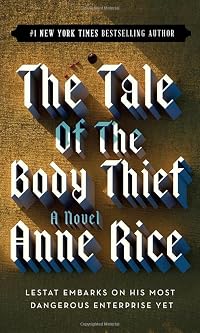
At least Rice took a huge leap forward, and instead of merely hinting that her vampires are bisexual or gay, she's finally allowed one to come out of the closet. Even more of a leap forward (in my humble opinion): This book features some genuine antagonists. Yes, bad guys. In an Anne Rice novel. We haven't seen one of those since, oh, say, Tale of the Body Thief, which was incidentally the most recently published Rice book I truly enjoyed. The antagonists in Blackwood Farm are painted in a sympathetic light--their motives make their actions almost condonable--but they're cruel enough so that I was rooting for them to die. One thing I've always liked about Rice is her talent for blurring the line between good and evil, and she did that beautifully here. Tarquinn Blackwood has a few rather severe personality flaws, and that makes him all the more human, and interesting, and I liked him in spite of his tendency to act like a spoiled little girl with the vocabulary of an English lord.
In closing, I'm going to gripe about the tone of the novel, which seemed to idealize and condone matters such as murder, incest, bribery, and sexual libido in children. At the same time, the tone was mildly squirmish about matters pertaining to masturbation and homosexuality. Some readers admire Rice for so boldly calling our modern ethics into question and for potentially taking us outside our comfort zones, but I feel that she has repeated these themes too often in her books, and my respect for her protagonists has deteriotated because of their cloned morality. The distinction between the personalities of Tarquinn, Goblin, Lestat, Merrick, Aunt Queen, Mona, Tommy, and Nash vary only slightly. They all have vastly different backgrounds, yet they view the world through similar eyes. I feel that the novel would have been stronger if they did not all stand on the same blurry piece of moral ground.
This review was originally published on my website. show less
Rice has regained the page-turning pace of her earlier novels. I was mesmerized by the main protagonist, Tarquinn Blackwood, and his story, and I had to restrain myself from finishing the book in one night. Unfortunately, the ending was a disappointment. The tense relationships that were cultivated during most of the novel were resolved in a way that seemed anti-climatic and unsatisfactory. Instead of concluding with a more mature character (I truly hoped that Tarquinn Blackwood would grow up and learn from his errors), the point of the book seems show more to be something like: "It's great to be a multi-billionaire immortal with powers to read minds and fly. Then you can do whatever you'd like." (That was not a spoiler, by the way; it's told within the first chapter, and one can surmise it from the back cover blurb.)
At least Rice took a huge leap forward, and instead of merely hinting that her vampires are bisexual or gay, she's finally allowed one to come out of the closet. Even more of a leap forward (in my humble opinion): This book features some genuine antagonists. Yes, bad guys. In an Anne Rice novel. We haven't seen one of those since, oh, say, Tale of the Body Thief, which was incidentally the most recently published Rice book I truly enjoyed. The antagonists in Blackwood Farm are painted in a sympathetic light--their motives make their actions almost condonable--but they're cruel enough so that I was rooting for them to die. One thing I've always liked about Rice is her talent for blurring the line between good and evil, and she did that beautifully here. Tarquinn Blackwood has a few rather severe personality flaws, and that makes him all the more human, and interesting, and I liked him in spite of his tendency to act like a spoiled little girl with the vocabulary of an English lord.
In closing, I'm going to gripe about the tone of the novel, which seemed to idealize and condone matters such as murder, incest, bribery, and sexual libido in children. At the same time, the tone was mildly squirmish about matters pertaining to masturbation and homosexuality. Some readers admire Rice for so boldly calling our modern ethics into question and for potentially taking us outside our comfort zones, but I feel that she has repeated these themes too often in her books, and my respect for her protagonists has deteriotated because of their cloned morality. The distinction between the personalities of Tarquinn, Goblin, Lestat, Merrick, Aunt Queen, Mona, Tommy, and Nash vary only slightly. They all have vastly different backgrounds, yet they view the world through similar eyes. I feel that the novel would have been stronger if they did not all stand on the same blurry piece of moral ground.
This review was originally published on my website. show less
"A great way to revisit the story around the vampire Lestat that neatly sidesteps the plot difficulties early books created. Feels like old times! Quinn Blackwood narrates the story his strange spirit doppleganger, Goblin, to Lestat, in much the same manner the Louis once dictated his own story. Lestat helps him solve the mystery of his own personal ghost and his home, Blackwood Farm."
Tarquin Blackwood, young vampire and heir to the impossibly rich Blackwood estate in Louisiana, recounts his life story to the vampire Lestat. He has spent his life haunted by a spirit named Goblin - a spirit who looks remarkably like himself - and would now be rid of it.
This book is primarily told in flashback style, with the only current action at the beginning and end of the book. I felt that it detracted from the intensity of the novel. Telling a story in the past tense gives a different mood to the novel and I would have preferred a current, what-is-happening-now type of story. I was also disappointed that Lestat did not play a bigger role in this book. Quinn, for me, was not that likable of a character. There was nothing wrong show more with him per se (well, he was a bit weird but it's Anne Rice and he's a vampire, so that goes without saying) but he did not strike me as someone I would want to hang out with. Too emotional, perhaps? Too impetuous? Too haunted and strange?
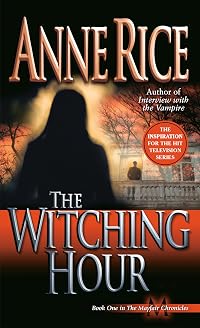
I have read Interview with the Vampire and The Vampire Lestat and I started The Witching Hour but did not finish it. I was happy about the mingling of the Mayfair witches with this story. I did not really care for the Goblin story. Goblin is creepy. Goblin is supposed to be creepy. I, however, found I liked the story better when Goblin was in the background or out of the picture.
Overall, this novel failed to "wow" me. It was an okay story with special guest appearances by our favorite vampire and our favorite witch family, but as for Quinn Blackwood - well, I just don't really care what happens to him after this. I am interested enough to try reading some of the other books in this vampire series. show less
This book is primarily told in flashback style, with the only current action at the beginning and end of the book. I felt that it detracted from the intensity of the novel. Telling a story in the past tense gives a different mood to the novel and I would have preferred a current, what-is-happening-now type of story. I was also disappointed that Lestat did not play a bigger role in this book. Quinn, for me, was not that likable of a character. There was nothing wrong show more with him per se (well, he was a bit weird but it's Anne Rice and he's a vampire, so that goes without saying) but he did not strike me as someone I would want to hang out with. Too emotional, perhaps? Too impetuous? Too haunted and strange?
I have read Interview with the Vampire and The Vampire Lestat and I started The Witching Hour but did not finish it. I was happy about the mingling of the Mayfair witches with this story. I did not really care for the Goblin story. Goblin is creepy. Goblin is supposed to be creepy. I, however, found I liked the story better when Goblin was in the background or out of the picture.
Overall, this novel failed to "wow" me. It was an okay story with special guest appearances by our favorite vampire and our favorite witch family, but as for Quinn Blackwood - well, I just don't really care what happens to him after this. I am interested enough to try reading some of the other books in this vampire series. show less
Members
- Recently Added By
Lists

A Rainbow of Books: Colors in the Title
570 works; 24 members

Vampire Chronicles - Anne Rice
13 works; 1 member
Author Information

132+ Works 189,697 Members
Anne Rice was born Howard Allen O'Brien on October 4, 1941 in New Orleans, Louisiana. She received a bachelor's degree in political science in 1964 and master's degree in English and creative writing in 1972 from San Francisco State University. She published her first short story in 1965 called October 4, 1948. Her first book, Interview with the show more Vampire, was published in 1976. It was made into a film starring Brad Pitt, Kirsten Dunst, and Tom Cruise in 1994. She wrote various series in the same genre including the rest of the Vampire Chronicles, the Mayfair Witches books, and The Wolf Gift Chronicles. Her novel, Feast of All Saints, became a Showtime mini-series in 2001. Her other works include Cry to Heaven, Servant of the Bones, and Violin. In 1998, Rice returned to the Catholic Church and for some time only wrote for Christ or about Christ. These works include Christ the Lord: Out of Egypt, Christ the Lord: The Road to Cana, and Called Out of Darkness. Anne Rice died on December 11, 2021 at the age of 80. (Bowker Author Biography) show less
Some Editions
Awards and Honors
Distinctions
Series


Belongs to Publisher Series
Goldmann (46169)
Work Relationships
Common Knowledge
- Canonical title
- Blackwood Farm
- Original title
- Blackwood Farm
- Original publication date
- 2002
- People/Characters
- Tarquin Blackwood; Mona Mayfair; Lestat de Lioncourt; Merrick Mayfair; Louis de Pointe du Lac
- Important places
- Blackwood Farm; New Orleans, Louisiana, USA; Athens, Greece; Naples, Campania, Italy; Sugar Devil Swamp; Louisiana, USA (show all 8); Greece; Italy
- Epigraph
- My days have passed away, my
thoughts are dissipated, tormenting my
heart.
They have turned night into day,
and after darkness I hope for light again.
If I wait hell is my house, and I have
m... (show all)ade my bed in darkness.
I have said to rottenness: thou art
my father; to worms, my mother and
my sister.
Where is now then my expectation
and who considereth my patience?
All that I have shall go down into
the deepest pit: thinkest thou that there
at least I shall have rest?
JOB 17:11 - 16 DV. - Dedication
- Dedicated to my son, Christopher Rice
- First words
- Lestat, If you find this letter in your house in Rue Royale, and I do sincerely think you will find it-- you'll know at once that I have broken your rules.
- Last words
- (Click to show. Warning: May contain spoilers.)"Yes. I want it," she said.
Classifications
Statistics
- Members
- 5,112
- Popularity
- 2,703
- Reviews
- 48
- Rating
- (3.64)
- Languages
- 10 — Danish, English, French, German, Hungarian, Italian, Polish, Portuguese, Russian, Spanish
- Media
- Paper, Audiobook, Ebook
- ISBNs
- 40
- ASINs
- 23