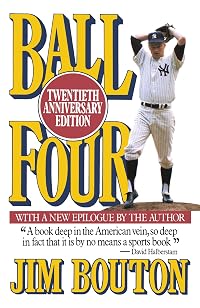
Ball Four: My Life and Hard Times Throwing the Knuckleball in the Big Leagues
by Jim Bouton
On This Page
Description
The 50th Anniversary edition of "the book that changed baseball" (NPR), chosen by Time magazine as one of the "100 Greatest Non-Fiction" books.When Ball Four was published in 1970, it created a firestorm. Bouton was called a Judas, a Benedict Arnold, and a "social leper" for having violated the "sanctity of the clubhouse." Baseball commissioner Bowie Kuhn tried to force Bouton to sign a statement saying the book wasn't true. Ballplayers, most of whom hadn't read it, denounced the book. It show more was even banned by a few libraries.
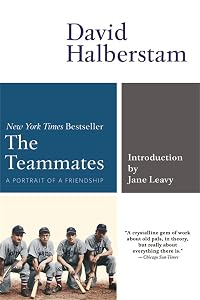
Almost everyone else, however, loved Ball Four. Fans liked discovering that athletes were real people—often wildly funny people. David Halberstam, who won a Pulitzer for his reporting on Vietnam, wrote a piece in Harper's that said of Bouton: "He has written . . . a book deep in the American vein, so deep in fact that it is by no means a sports book."
Today Ball Four has taken on another role—as a time capsule of life in the sixties. "It is not just a diary of Bouton's 1969 season with the Seattle Pilots and Houston Astros," says sportswriter Jim Caple. "It's a vibrant, funny, telling history of an era that seems even further away than four decades. To call it simply a 'tell all book' is like describing The Grapes of Wrath as a book about harvesting peaches in California."
Includes a new foreword by Jim Bouton's wife, Paula Kurman
"An irreverent, best-selling book that angered baseball's hierarchy and changed the way journalists and fans viewed the sports world." —The Washington Post. show less
Tags
Recommendations




















Member Recommendations
Member Reviews
Jim Bouton’s classic and entertaining tell-all book made from his diary written during his 1969 season with the Seattle Pilots (now the Milwaukee Brewers) and the Houston Astros. There was a huge uproar when it was published - how dare he mention Mickey Mantle’s drinking!? - and Bouton was persona non grata especially with his old team the Yankees for many years, and for some he still is - just read the other reviews here. The book is, of course, about baseball, but it is also about Bouton’s coming to grips with his own inadequacies and, maybe, learning about the nature of workplace sociology. Because, to me, this book only happens to be set on a baseball team; the facts are familiar to anyone who works anywhere, and that is why show more it remains popular. In a sense Bouton plays an innocent who is shocked to discover that his boss is interested in his own job, not Bouton’s. He is angry that the team won’t pay him as much as he thinks he is worth. He is mad that middle management is incompetent and that they get their jobs because they don’t give the big boss a hard time. Well, that’s how it is and how it will be. The book’s success also owes something to the fact that it appeared around the time of the coming of free-agency in baseball - and serves as a reminder that the only power at the bottom is through organization. show less
This 50th anniversary edition with several postscripts and an introduction by Bouton's second (and last) wife, will make you laugh and cry. You'll laugh at the baseball side, such as Bouton's teammate Mike Hegan saying it was hard to explain to his wife why she needed a shot of penicillin for his "kidney infection". You'll cry reading Bouton's emotional account of the death of his daughter in a car accident. At least you'll cry if you have any kids of your own. Throughout the book, you'll notice a few instances of Bouton perhaps overstating his accomplishments a wee bit, such as adding 1 to his number of victories in Savannah, but overall he comes across as smart, perceptive, and likable. The original Ball Four was as controversial for show more Bouton's out-of-step liberal political views as it was for revealing the less-than-heroic truths about players such as Mickey Mantle and Whitey Ford. It's clear that Bouton loved baseball, however, continuing to play it at some level as long as he was able. (I don't must mean the major and minor leagues, but playing for amateur teams as he aged.) Also, after reading about the cheapskate owners he encountered, you may not feel so bad about today's players' astronomical salaries. Or at least you can reason, as Bouton did, that it's less bad for the players to get all the money than for the owners to get it. In any case, this is highly recommended. If you're a baseball fan, be prepared to spend several hours looking up everyone who is mentioned on the baseball-reference website. It will give you a further appreciation for just how perilous and ephemeral a career in baseball could be. show less
Really glad I read this. Ball Four is terrific, very funny and eye-opening. Easy to read. Well written. It really feels like Jim is talking to you, directly. The baseball stuff is hilarious, and the decades later updates were both heartbreaking and melancholy.
What a fascinating individual. He's no saint, and he wouldn't say he was, but he certainly is one of the most significant baseball players ever and it has nothing to do with his ability to throw the Knuckleball. It's amazing to hear how controversial this was in 1970, obviously now a lot of the stuff he writes about is pretty tame, but back then it was a nuclear revolution that pro athletes weren't heroes, but regular funny/flawed dudes just like in real life. Many of his inner show more fears/thoughts are ones we have about our every day lives. You really feel like you're living in the dugout with him.
Getting a real kick out of my non-fiction binge lately. I used to not be as interested, but the best books I've read this year have all been non-fiction. Just a side note, that has nothing to do with Ball Four. show less
What a fascinating individual. He's no saint, and he wouldn't say he was, but he certainly is one of the most significant baseball players ever and it has nothing to do with his ability to throw the Knuckleball. It's amazing to hear how controversial this was in 1970, obviously now a lot of the stuff he writes about is pretty tame, but back then it was a nuclear revolution that pro athletes weren't heroes, but regular funny/flawed dudes just like in real life. Many of his inner show more fears/thoughts are ones we have about our every day lives. You really feel like you're living in the dugout with him.
Getting a real kick out of my non-fiction binge lately. I used to not be as interested, but the best books I've read this year have all been non-fiction. Just a side note, that has nothing to do with Ball Four. show less
“The world doesn’t want to hear about labor pains,” Johnny Sain used to say. “It only wants to see the baby.”
My A's just lost their Wild Card game, so I though I'd end my personal baseball season by finally reading this!
The book is about the author's 1969 season, spent with the Seattle Pilots and then the Houston Astros after a late-season trade. In it, Bouton also recounts much of his baseball career, spent mainly with the New York Yankees. He also describes how he attempts to make the Pilots out of spring training, and what happens when he gets demoted to the AAA Vancouver Mounties. All of the stories are extremely entertaining! And it's a pretty good detailing of a player who has won games in two World Series, and is now show more just hanging on and trying to land a pitching spot on an expansion team. With basically just a knuckleball left.
It is dated, and at times offensive, the "beaver hunting" probably being the most so. But even with that, it was interesting to read in the Editor's Forward by Leonard Shecter that they had to "make a decision, too, about the use of language.", and that the reader should, "Rate it X.". Now, he wrote that in January 1970, but I must say that by 2019's standards, this would be PG-13, or R at most! Crazy how times, and standards, change...
I really did enjoy this book, and found myself laughing out loud many times! But I do wonder how the author could justify revealing so many things about his friends, teammates, and the locker room itself. I would be pissed if I were his friend or teammate! So, a really good read, from a man I would have never, ever trusted! show less
My A's just lost their Wild Card game, so I though I'd end my personal baseball season by finally reading this!
The book is about the author's 1969 season, spent with the Seattle Pilots and then the Houston Astros after a late-season trade. In it, Bouton also recounts much of his baseball career, spent mainly with the New York Yankees. He also describes how he attempts to make the Pilots out of spring training, and what happens when he gets demoted to the AAA Vancouver Mounties. All of the stories are extremely entertaining! And it's a pretty good detailing of a player who has won games in two World Series, and is now show more just hanging on and trying to land a pitching spot on an expansion team. With basically just a knuckleball left.
It is dated, and at times offensive, the "beaver hunting" probably being the most so. But even with that, it was interesting to read in the Editor's Forward by Leonard Shecter that they had to "make a decision, too, about the use of language.", and that the reader should, "Rate it X.". Now, he wrote that in January 1970, but I must say that by 2019's standards, this would be PG-13, or R at most! Crazy how times, and standards, change...
I really did enjoy this book, and found myself laughing out loud many times! But I do wonder how the author could justify revealing so many things about his friends, teammates, and the locker room itself. I would be pissed if I were his friend or teammate! So, a really good read, from a man I would have never, ever trusted! show less
I’ve recently gotten back into baseball for reasons that aren’t entirely clear to me yet. It may have something to do with MLB’s recent rule changes making for a more exciting game, or the fact that my hometown Orioles are good again for the first time in what feels like forever. Baseball is the sport most prone to induce obsession. By that I don’t mean fanaticism - plenty of sports have fanatics, and I would venture to say others have more fanatics than baseball does. But there is something about the historical depth of baseball that attracts a certain type of person.
In a way, every game of baseball is a conversation with its history. It’s America’s oldest professional sport, and sometimes it really shows its age. On lists show more of the greatest players ever, there will be no shortage of those born in the 19th century. Everyday of the season, games are played in 100 year old stadiums. On TV, stat lines are constantly being compared to what came before. Trends are identified and analyzed with mathematical precision. Every few years a new type of stat is come up with, and it is used to reassess the entire history of the game. Innovations are rare, and are often views as heretical by a sizable portion of the players and fan base. Go to any ball game and you find some old timers keeping track of each at bat with a pencil and paper, despite the fact that every measure has long been digitalized down to the decimal point. If you just want to see some guys smash into each other or forum real fast, all of this is meaningless baggage. But if you are interested in data and history, reading about the game and its players can be as much of a pastime as the game itself.
I happen to fall into the latter camp. I was reading about one particularly interesting aspect of baseball history when I came across this book: the knuckleball. The knuckleball has an almost mystical aura, so much so that the men who have learned to use it are almost members of a secret society. In a league where the 100 mph fastball thrown with pinpoint precision is the platonic ideal, the knuckleball is an anomaly. It’s slow, inaccurate, and unpredictable, so much so that catchers have to practice catching it. The knuckleball’s cache lies in the fact that in a game where pattern recognition is everything, a certain degrees of randomness is an advantage. A knuckleball can move anywhere and any which way, and the average hitter simply doesn’t know how to respond.
This book, Ball Four, besides being seen as classic, is also an invaluable document of knuckleball pitching. In it Bouton documents his struggle with the Knuckle Goblin, a name I just made up for the force which rules whether a knuckleball will or won’t accomplish its goal. Bouton himself is constantly bewildered by what his chosen pitch decides to do. In a game so meticulously quantified and strategized, it’s things like the knuckleball that keep games from turning into a math equation.
Much praise has been lauded on this book as being the first of its kind, the first to break down the manicured artifice of the Major League player, the first to show what goes into the sausage so to speak. Though many are not keen to admit it, our sports are still a product for consumption, and the way that Bouton shows himself, his fellow players, and the league, isn’t flattering. You gotta admire the cahones on the guy: unlike lots of other tell alls, there is no anonymity granted here - he names names and shows receipts. It’s no surprise that he became persona non grata in the MLB after the book’s publication.
For works whose main attribute is being groundbreaking, it’s difficult to stand the test of time. What might have felt like revelations in Bouton’s time have long since permeated into the popular consciousness of how we view athletes in our culture. We no longer expect professional athletes to be upstanding role models, in fact we might anticipate the exact opposite. (I say that with no nostalgia- the point of Bouton’s book is that we never should have looked at our athletes that way ) Since the ground that was broken has long since be ground to dust, this book is robbed of a little bit of its power. There is also the question of Bouton’s prose - he was obviously a very good writer for being a baseball player, but that’s not a high standard. HIs prose is rather like his role in his team: respectable, hardworking, but not spectacular. This is a diary and feels like one. show less
In a way, every game of baseball is a conversation with its history. It’s America’s oldest professional sport, and sometimes it really shows its age. On lists show more of the greatest players ever, there will be no shortage of those born in the 19th century. Everyday of the season, games are played in 100 year old stadiums. On TV, stat lines are constantly being compared to what came before. Trends are identified and analyzed with mathematical precision. Every few years a new type of stat is come up with, and it is used to reassess the entire history of the game. Innovations are rare, and are often views as heretical by a sizable portion of the players and fan base. Go to any ball game and you find some old timers keeping track of each at bat with a pencil and paper, despite the fact that every measure has long been digitalized down to the decimal point. If you just want to see some guys smash into each other or forum real fast, all of this is meaningless baggage. But if you are interested in data and history, reading about the game and its players can be as much of a pastime as the game itself.
I happen to fall into the latter camp. I was reading about one particularly interesting aspect of baseball history when I came across this book: the knuckleball. The knuckleball has an almost mystical aura, so much so that the men who have learned to use it are almost members of a secret society. In a league where the 100 mph fastball thrown with pinpoint precision is the platonic ideal, the knuckleball is an anomaly. It’s slow, inaccurate, and unpredictable, so much so that catchers have to practice catching it. The knuckleball’s cache lies in the fact that in a game where pattern recognition is everything, a certain degrees of randomness is an advantage. A knuckleball can move anywhere and any which way, and the average hitter simply doesn’t know how to respond.
This book, Ball Four, besides being seen as classic, is also an invaluable document of knuckleball pitching. In it Bouton documents his struggle with the Knuckle Goblin, a name I just made up for the force which rules whether a knuckleball will or won’t accomplish its goal. Bouton himself is constantly bewildered by what his chosen pitch decides to do. In a game so meticulously quantified and strategized, it’s things like the knuckleball that keep games from turning into a math equation.
Much praise has been lauded on this book as being the first of its kind, the first to break down the manicured artifice of the Major League player, the first to show what goes into the sausage so to speak. Though many are not keen to admit it, our sports are still a product for consumption, and the way that Bouton shows himself, his fellow players, and the league, isn’t flattering. You gotta admire the cahones on the guy: unlike lots of other tell alls, there is no anonymity granted here - he names names and shows receipts. It’s no surprise that he became persona non grata in the MLB after the book’s publication.
For works whose main attribute is being groundbreaking, it’s difficult to stand the test of time. What might have felt like revelations in Bouton’s time have long since permeated into the popular consciousness of how we view athletes in our culture. We no longer expect professional athletes to be upstanding role models, in fact we might anticipate the exact opposite. (I say that with no nostalgia- the point of Bouton’s book is that we never should have looked at our athletes that way ) Since the ground that was broken has long since be ground to dust, this book is robbed of a little bit of its power. There is also the question of Bouton’s prose - he was obviously a very good writer for being a baseball player, but that’s not a high standard. HIs prose is rather like his role in his team: respectable, hardworking, but not spectacular. This is a diary and feels like one. show less
Ball Four has been a yearly read for me since I first discovered it on my Uncle Dick's bookcase back in, oh, I guess 73 or 74. It was the first sports book I'd ever read that portrayed its players as something other than superheroes. Rather, they are just men with a different sort of job, and they live the same wacky lives we do. And that's where this book truly shines, so much that it transcends the sports book genre and rises to the creme of literature. It is something to experience, to savor.
Now I feel should explain my background here. I played Little League ball when I was young. I felt it a family obligation... you're a Reyome male, you play a sport. Well, I sucked at baseball. I enjoyed tennis, and basketball, and street hockey, show more but was at best uninterested in all of them.
This, I thought, made me weird. A deviant. I was, God forbid, different. I loved to sing, I loved to act, I loved to write. Was there a place for me in this sports-obsessed Reyome family world?
Well, apparently there is. This book did two important things for me...it taught me that baseball--nay, sports in general--was not everyone's be-all end-all. There was a life beyond it, and I think I learned that a lot sooner than anyone has a right to. Pretty darned important news for a 13 year old.
Weirdly though my interest in sports, especially baseball, did not lessen after this reading. Instead it grew and grew. I became intrigued with the statistical side of games, and in no time found myself employed as official scorer for a men's softball league. $15 a game in 1978? Yes, please! It beat working, I was good at it, and I was taken seriously...ask any of the guys who contested hits versus errors with me.
Then came motor racing. Well, who knew, my first interest in that singular sport was the stats...and I have made a pretty decent supplemental living with this pretty much ever since. I was in Timing & Scoring at Fairgrounds Speedway Nashville this past weekend, a venue that's been a home away from home for me since 1992.
Inevitable Question: Do I really credit Jim Bouton and Ball Four for this?
Equally Certain Answer: You bet I do. By expressing the notion that there was a place for everyone in sports, even us deviants, he opened a lot of doors into worlds I never knew existed, worlds I am still exploring all these years later.
Read this book, cover to cover, even if you don't care a lick for baseball or sports of any kind. Truly, it might change your life. Otherwise you'll just enjoy a helluva entertaining read. Either way, there's no Loss...only a potential Win or a Save.
Thank you, Jim Bouton. show less
Now I feel should explain my background here. I played Little League ball when I was young. I felt it a family obligation... you're a Reyome male, you play a sport. Well, I sucked at baseball. I enjoyed tennis, and basketball, and street hockey, show more but was at best uninterested in all of them.
This, I thought, made me weird. A deviant. I was, God forbid, different. I loved to sing, I loved to act, I loved to write. Was there a place for me in this sports-obsessed Reyome family world?
Well, apparently there is. This book did two important things for me...it taught me that baseball--nay, sports in general--was not everyone's be-all end-all. There was a life beyond it, and I think I learned that a lot sooner than anyone has a right to. Pretty darned important news for a 13 year old.
Weirdly though my interest in sports, especially baseball, did not lessen after this reading. Instead it grew and grew. I became intrigued with the statistical side of games, and in no time found myself employed as official scorer for a men's softball league. $15 a game in 1978? Yes, please! It beat working, I was good at it, and I was taken seriously...ask any of the guys who contested hits versus errors with me.
Then came motor racing. Well, who knew, my first interest in that singular sport was the stats...and I have made a pretty decent supplemental living with this pretty much ever since. I was in Timing & Scoring at Fairgrounds Speedway Nashville this past weekend, a venue that's been a home away from home for me since 1992.
Inevitable Question: Do I really credit Jim Bouton and Ball Four for this?
Equally Certain Answer: You bet I do. By expressing the notion that there was a place for everyone in sports, even us deviants, he opened a lot of doors into worlds I never knew existed, worlds I am still exploring all these years later.
Read this book, cover to cover, even if you don't care a lick for baseball or sports of any kind. Truly, it might change your life. Otherwise you'll just enjoy a helluva entertaining read. Either way, there's no Loss...only a potential Win or a Save.
Thank you, Jim Bouton. show less
5431. Ball Four The Final Pitch, by Jim Bouton (read 13 Dec 2016) I have long wanted to read Ball Four, since it so famous a book. With my interest in major league baseball gloriously renewed in this fantastic year of Cubs glory, I thought this would be a good time to read it. The edition of the book I read came out in 2014 and includes not only Ball Four (published first in 1970) but Ball Five,published ten years later and Ball Six published 20 years later and Ball Seven published 30 years later and an Epilogue dated April 2014. I found I enjoyed the book a lot, and it was often LOL funny and I was always glad to read it and not hoping it would be finished. Ball Seven, which tells of Bouton's daughter Laurie's death is grippingly sad. show more Ball Four uses gutter talk, no doubt accurately echoing the language players often use, but such use did not repel me as the same type of use in some books does, since I knew Bouton was trying to give a realistic account of life as a player. I frankly had forgotten there was such a team as the Seattle Pilots--they existed only in 1969 and I have not in the years since my youth paid much attention to the American League--but that is the team which Bouton played for during most of the 1969 season, being traded to Houston in August 1969. One is struck by the salaries which players got in those days. In Ball Seven Bouton comments on whether one should deplore what players get these days and what he says makes a lot of sense--they get what they are able to induce owners to pay them. After all, it is the players who fans want to see. I found this book a thoroughly fascinating insight into life as a player and the New York Public library was right to include it in their 100 Books of the Century.list. show less
Members
- Recently Added By
Lists

Best Baseball Books
42 works; 20 members

Sports Illustrated's The Top 100 Sports Books of All Time
51 works; 7 members

100 Biographies and Memoirs to Read in a (Single) Lifetime
98 works; 12 members

New York Public Library's Books of the Century
120 works; 20 members

New York Public Library's Books of the Century - All
170 works; 14 members

New York Yankees
77 works; 2 members

Read These Too
458 works; 9 members

Publisher's Weekly NON-Fiction list - 1912 - 1975
486 works; 4 members

Recreation
93 works; 1 member
Author Information

8+ Works 1,963 Members
James Alan Bouton was born in Newark on March 8, 1939. He started out playing American Legion ball, trying to perfect his knuckleball pitch. He graduated from Bloom High School in Chicago Heights, Ill. He spent a year at Western Michigan University before he was signed by the Yankees in December 1958. He made it to the big leagues in 1962. He was show more a pitcher of modest achievement who wrote the baseball tell all book - Ball Four in 1970. It told of selfishness, dopiness, childishness and meanspiritedness of young men often lionized for playing a boy¿s game very well, and many readers saw it, approvingly or not, as a scandalous betrayal of the baseball clubhouse. The book was his account of the 1969 baseball season, seven years after his big-league debut with the Yankees. It was also his attempt at age 30 to salvage a once-promising career by developing the game¿s most peculiar and least predictable pitch: the knuckleball. He later wrote his follow -up book I¿m Glad You Didn¿t Take It Personally. James Alan Bouton passed away on July 10, 2019 at the age of 80 after a long struggle with vascular dementia. (Bowker Author Biography) show less
All Editions
Awards and Honors
Distinctions
Common Knowledge
- Canonical title
- Ball Four: My Life and Hard Times Throwing the Knuckleball in the Big Leagues
- Original publication date
- 1970
- People/Characters
- Jim Bouton; Bowie Kuhn; Joe Schultz; Sal Maglie; Mickey Mantle; Ray Oyler (show all 19); Don Mincher; Tommy Davis; Gary Bell; Sal Maglie; Mike Marshall; Elston Howard; Carl Yastrzemski; Jerry McNertney; Steve Hovley; Greg Goossen; Jim Pagliaroni; Gene Brabender; Fred Talbot
- Important places
- New York, New York, USA; Houston, Texas, USA; Seattle, Washington, USA; Vancouver, British Columbia, Canada
- Dedication
- FOR BOBBIE Thanks, coach
- First words
- I signed my contract today to play for the Seattle Pilots at a salary of $22,000 and it was a letdown because I didn't have to bargain.
- Last words
- (Click to show. Warning: May contain spoilers.)You see, you spend a good piece of your life gripping a baseball and in the end it turns out that it was the other way around all the time.
- Blurbers
- Halberstam, David
Classifications
- Genres
- Sports and Leisure, Biography & Memoir, General Nonfiction, Nonfiction
- DDC/MDS
- 796.357 — Arts & recreation Recreation, sports, and performing arts Athletic and outdoor sports and games Ball sports Ball and stick sports Baseball
- LCC
- GV865 .B69 .A3 — Geography, Anthropology and Recreation Recreation. Leisure Recreation. Leisure Sports Ball games: Baseball, football, golf, etc.
- BISAC
Statistics
- Members
- 1,590
- Popularity
- 14,290
- Reviews
- 40
- Rating
- (4.08)
- Languages
- English
- Media
- Paper, Audiobook, Ebook
- ISBNs
- 19
- UPCs
- 1
- ASINs
- 23