On This Page
Description
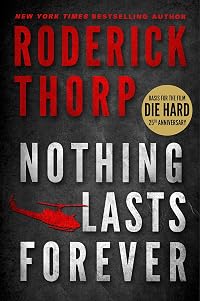
Traveling to Los Angeles for Christmas, Joe Leland, a veteran cop and former war hero, stumbles upon a sensational terrorist crime in progress and is forced to quickly make hard life or death decisions.Tags
Recommendations














Member Reviews
I’m obviously not a fan of action books but I am obviously a fan of Die Hard so here I am. Action on the page is just beyond me. It’s like some ineffable problem in geometry or topology – a long series of physical translations – this person goes here and does that with his elbow, this person ducks under the other person and rolls through a door, the first person fires off a dozen rounds so now he only has ten more rounds “in the clip” (it doesn’t help that I’m ignorant of firearms generally), this person is looking over here the other person’s looking at the back of the first person’s head and on and on it goes.
My personal action-dyslexia aside, this is worth reading if, like me, you consider McTiernan’s celluloid show more version a complete and total unimpeachable masterpiece. Grizzled ex-cop/P.I./ex-fighter pilot/security consultant Joe Leland is our hero, and he’s much bloodthirstier than his screen version, lovable lummox John McLane. Instead of the generally benign Nakatomi corporation the book is set in the HQ of Klaxon Oil, a nefarious multinational recently in bed with Pinochet’s junta to the tune of a hundred and fifty mill. And the leader of the terrorists is not the great Hans, but “Little Tony” Gruber, a smooth-chinned scion of the Baader Meinhoff whose motives are arguably, and confusingly for fans of the film’s morally unambiguous setup, not ignoble (he wants to rub the Americans’ noses in their dirty money). He is an annoying little prick though so there’s no danger of your sympathies being misdirected.
Purely a personal rating. This is probably a solid action novel, if your brain is wired for that. I’m glad I read it but gladder still it’s over. show less
My personal action-dyslexia aside, this is worth reading if, like me, you consider McTiernan’s celluloid show more version a complete and total unimpeachable masterpiece. Grizzled ex-cop/P.I./ex-fighter pilot/security consultant Joe Leland is our hero, and he’s much bloodthirstier than his screen version, lovable lummox John McLane. Instead of the generally benign Nakatomi corporation the book is set in the HQ of Klaxon Oil, a nefarious multinational recently in bed with Pinochet’s junta to the tune of a hundred and fifty mill. And the leader of the terrorists is not the great Hans, but “Little Tony” Gruber, a smooth-chinned scion of the Baader Meinhoff whose motives are arguably, and confusingly for fans of the film’s morally unambiguous setup, not ignoble (he wants to rub the Americans’ noses in their dirty money). He is an annoying little prick though so there’s no danger of your sympathies being misdirected.
Purely a personal rating. This is probably a solid action novel, if your brain is wired for that. I’m glad I read it but gladder still it’s over. show less
It was quite a discovery to find Die Hard was based on a book, although one with muted excitement given how it’s not well known and book-film relationships are historically uneven. Does it live up to the cleverness of the film? Are the characters the same flippant, wise cracking personalities we have grown up with? Does it even follow the same basic premise? The answer to all these is… sort of.
Nothing Lives Forever is mostly a pretty decent thriller standing on its own terms. Joe Leland is our protagonist (cast suitably as Frank Sinatra in the adaptation of the previous book, The Detective), a retired police consultant with military and special forces experience and takes the place of the younger John McClane. Age, experience and show more back story differences aside, they both share an indefatigable doggedness in the face of adversity and that is what elevates the core of the story. The only other character that is familiar is Gruber himself, although it’s clear that quite a few of the characters survive in some comparable way to the film - even down to the cop on the radio he chats to between the action scenes.
The story itself is recognisable even if the details are different. And a lot of the beloved action scenes can be seen given birth here in some form: the ventilation crawling (which is more claustrophobic here); the bare foot on glass; the “now I have a machine gun”; the elevator explosion; Klaus and his brother (who also dies from a broken neck); the cocky negotiator; swinging through a window on a hosepipe - they’re all here. And it’s these “Die Hard” moments which are where the book shines and gripped me to the point I couldn't stop reading throughout the night. And it’s all accompanied by the narration of Leland’s intelligent tactical thinking as he tries to outthink his equally smart adversaries.
There are some issues with the story though. Sometimes things unfold two steps ahead of the details and as the reader I felt too far behind what Leland was planning. The early third of the book is also a struggle to get through, focusing on Leland's backstory, moralising and social commentary. The reward for getting through the early sections are that when the dirty work starts, it made Leland seem more human, countering his blunt brutality when he became pushed to his limits and turning it into the story of the ageing hero forced to fight one last time. Whilst some of his kills were shocking, I found myself wincing at his pain, laughing at his banter and willing for him to win the day. And fundamentally it feels like the spirit of John McClane was born here, even if McClane is more the “down on your luck” good guy versus Leland who is the well trained, but brutally cold killing tactician.
It’s not a perfect thriller. It’s messily written at times, the social commentary contrasts with other more jarring reminders of the time and Leland’s constant running between floors will become repetitive for some readers, but it shines when it hits its stride throughout the second half of the book when the action comes thick and fast and the author shows their great skill in holding tension across a chapter. It’s also very effective in driving the story of an ageing hero (a favourite trope of mine). And it does have a twist which I wont spoil here.
Its biggest problem these days is that Die Hard as a film does everything better and has the more sympathetic hero, but as a book in its own right this was still a fun read and it deserves a more recognised place in the genre beyond just being the blueprint for one of the greatest (Christmas) films of all time show less
Nothing Lives Forever is mostly a pretty decent thriller standing on its own terms. Joe Leland is our protagonist (cast suitably as Frank Sinatra in the adaptation of the previous book, The Detective), a retired police consultant with military and special forces experience and takes the place of the younger John McClane. Age, experience and show more back story differences aside, they both share an indefatigable doggedness in the face of adversity and that is what elevates the core of the story. The only other character that is familiar is Gruber himself, although it’s clear that quite a few of the characters survive in some comparable way to the film - even down to the cop on the radio he chats to between the action scenes.
The story itself is recognisable even if the details are different. And a lot of the beloved action scenes can be seen given birth here in some form: the ventilation crawling (which is more claustrophobic here); the bare foot on glass; the “now I have a machine gun”; the elevator explosion; Klaus and his brother (who also dies from a broken neck); the cocky negotiator; swinging through a window on a hosepipe - they’re all here. And it’s these “Die Hard” moments which are where the book shines and gripped me to the point I couldn't stop reading throughout the night. And it’s all accompanied by the narration of Leland’s intelligent tactical thinking as he tries to outthink his equally smart adversaries.
There are some issues with the story though. Sometimes things unfold two steps ahead of the details and as the reader I felt too far behind what Leland was planning. The early third of the book is also a struggle to get through, focusing on Leland's backstory, moralising and social commentary. The reward for getting through the early sections are that when the dirty work starts, it made Leland seem more human, countering his blunt brutality when he became pushed to his limits and turning it into the story of the ageing hero forced to fight one last time. Whilst some of his kills were shocking, I found myself wincing at his pain, laughing at his banter and willing for him to win the day. And fundamentally it feels like the spirit of John McClane was born here, even if McClane is more the “down on your luck” good guy versus Leland who is the well trained, but brutally cold killing tactician.
It’s not a perfect thriller. It’s messily written at times, the social commentary contrasts with other more jarring reminders of the time and Leland’s constant running between floors will become repetitive for some readers, but it shines when it hits its stride throughout the second half of the book when the action comes thick and fast and the author shows their great skill in holding tension across a chapter. It’s also very effective in driving the story of an ageing hero (a favourite trope of mine). And it does have a twist which I wont spoil here.
Its biggest problem these days is that Die Hard as a film does everything better and has the more sympathetic hero, but as a book in its own right this was still a fun read and it deserves a more recognised place in the genre beyond just being the blueprint for one of the greatest (Christmas) films of all time show less
First, I have to say that Die Hard is one of my favourite movies. Second, I hate to admit it but I didn't know it was based on a book. Not that 'based on a book' necessarily means much - most of the time it just means the movie producers passed it on the street with a wink and a wag of the fingers and iiked the picture on the cover. Still, when I got the chance to read Nothing Lasts Forever, from Netgalley, how could I turn it down?
Not surprising, there are several differences between the book and the movie: first, the original character is an older ex-cop named Joe Leland and the head of the terrorists is younger than the Rickman character and is named Tony, not Hans Gruber; second, Joe is in San Francisco to meet his daughter and show more grandkids, not his wife, and the daughter is much less the innocent - in fact, Joe spends much of his time thinking about where she has gone wrong. The book also lacks the witty repartee between the two main characters which made Die Hard so much fun to watch. But most of these are really minor changes meant to appeal, I suspect, to a broader audience.
What is surprising is how much of the action in the movie was taken from the book. If anything, it is more intense...and chilling, in the novel. Interestingly, many of the young terrorists are women, something left from the movies, perhaps because Joe seems to act more cold bloodedly than the movie character. At times, even Joe, himself, questions his own actions and this is no more true than when he describes the youth and conviction he sees on the faces of these women right before he kills them.
Which brings us to another important difference between the book and the movie: we, the reader, are privy to Joe's inner thoughts making him a much more complex character than in the movie. His motives are not always clear and some of his actions seem incongruous. Joe is much less one-dimensional than the John McClane of the movies, more nuanced, more noir than cowboy. If the book lacks the humour of the movie, it is, overall, a much deeper and, therefore, more interesting story. show less
Not surprising, there are several differences between the book and the movie: first, the original character is an older ex-cop named Joe Leland and the head of the terrorists is younger than the Rickman character and is named Tony, not Hans Gruber; second, Joe is in San Francisco to meet his daughter and show more grandkids, not his wife, and the daughter is much less the innocent - in fact, Joe spends much of his time thinking about where she has gone wrong. The book also lacks the witty repartee between the two main characters which made Die Hard so much fun to watch. But most of these are really minor changes meant to appeal, I suspect, to a broader audience.
What is surprising is how much of the action in the movie was taken from the book. If anything, it is more intense...and chilling, in the novel. Interestingly, many of the young terrorists are women, something left from the movies, perhaps because Joe seems to act more cold bloodedly than the movie character. At times, even Joe, himself, questions his own actions and this is no more true than when he describes the youth and conviction he sees on the faces of these women right before he kills them.
Which brings us to another important difference between the book and the movie: we, the reader, are privy to Joe's inner thoughts making him a much more complex character than in the movie. His motives are not always clear and some of his actions seem incongruous. Joe is much less one-dimensional than the John McClane of the movies, more nuanced, more noir than cowboy. If the book lacks the humour of the movie, it is, overall, a much deeper and, therefore, more interesting story. show less
The movie Die Hard was very loosely based on this. The novel is much darker than the movie. The novel manages to be both didactic and cynically amoral; there are no good guys in it. The Marxist terrorists are just Marxist terrorists; they’re not glamorized at all. But at the same time, the corporation whose building they take over is also portrayed as a bad guy, looting the third world and engaging in arms dealing to fascists, etc. It’s weird. There’s a hint of “capitalists are evil and corrupt and deserve everything bad that happens to them,” but it is also made plain that the Marxists are nothing but killers who enjoy killing, and that when people like them obtain power, the next thing that happens is massacres and genocide. show more This is stated explicitly. Therefore, Thorp really does not seem to be taking anyone’s side. Also, instead of the cop’s ex-wife in the building, it’s his daughter, and she dies at the end, plunging to her death along with the head of the terrorist gang. Gah, why? Is there a message there? Or is it just a tragedy? It’s hard to tell what Thorp intended.
I think Hollywood made the right call when they transferred this to the screen. They removed the cynicism and political aspects (is nihilism political?) and turned it into a battle against a group of common thieves. In other words, they turned it into a good action movie.
Pacing and structure: The beginning is horribly slow. Nothing interesting happens until page 40, which is when our hero first hears screams from elsewhere in the building. Before that, it’s just a bunch of largely purposeless ruminations about his professional and personal past. It tells us the hero is familiar with anti-terrorism methods, but that could have been handled in less than a page. PAAAADDING! I admit it; skipped ahead. The Los Angeles Times called the novel, “A ferocious, bloody, raging book so single-mindedly brilliant in concept and execution it should be read at a single sitting.” Well... once it gets going, sure. In fact, I did read it in one day. But the beginning suggests that the first draft wasn’t long enough and Thorp had to pad it out.
I'm not sure who the target audience for this novel would be now. Even if you like the movie, that's not a good reason to read the novel because the movie is significantly better. I think perhaps the best candidate for this is an aspiring Tinseltown screenwriter who would like an example of how to take literary source material and turn it into a movie. Unlike many other cases that come to mind (cough, The Hobbit cough), Hollywood's choices in conversion here were spot-on. show less
I think Hollywood made the right call when they transferred this to the screen. They removed the cynicism and political aspects (is nihilism political?) and turned it into a battle against a group of common thieves. In other words, they turned it into a good action movie.
Pacing and structure: The beginning is horribly slow. Nothing interesting happens until page 40, which is when our hero first hears screams from elsewhere in the building. Before that, it’s just a bunch of largely purposeless ruminations about his professional and personal past. It tells us the hero is familiar with anti-terrorism methods, but that could have been handled in less than a page. PAAAADDING! I admit it; skipped ahead. The Los Angeles Times called the novel, “A ferocious, bloody, raging book so single-mindedly brilliant in concept and execution it should be read at a single sitting.” Well... once it gets going, sure. In fact, I did read it in one day. But the beginning suggests that the first draft wasn’t long enough and Thorp had to pad it out.
I'm not sure who the target audience for this novel would be now. Even if you like the movie, that's not a good reason to read the novel because the movie is significantly better. I think perhaps the best candidate for this is an aspiring Tinseltown screenwriter who would like an example of how to take literary source material and turn it into a movie. Unlike many other cases that come to mind (cough, The Hobbit cough), Hollywood's choices in conversion here were spot-on. show less
Read more crime and thriller reviews on CriminOlly.wordpress.com
As good as it is (and it is good), ‘Nothing Lasts Forever’ is one of those books that would probably have vanished from the shelves completely if it hadn’t been made into a blockbuster movie. It was written in 1979 and is the sequel to a 1966 book called ‘The Detective’ (which itself was filmed with Frank Sinatra). In 1988 it was filmed as ‘Die Hard’. Yep, that’s right, ‘Die Hard’ is based on a book. I first came across a copy in my local library in the late 80s/early 90s, thought I’d give it a try because I liked the movie (who doesn’t?) and was surprised to find something which is very similar to the film in many ways but also quite show more different.
Rereading it with a few more years under my belt I didn’t enjoy it quite as much as I did first time around, but it’s still a gripping read. If you’ve seen the movie you know the plot (and if you haven’t, go watch the movie!). A New York cop travels to LA to visit his ex-wife at the Christmas party in the office where she works. The office is taken over by terrorists and the cop fights back, taking them down one by one. The plot in the book is pretty much identical for the first three quarters at least, and many of the incidents are exactly the same. We get the desperate lift shaft climb, the bloody feet, the dead terrorist with the “now I have a machine gun” sign around his neck, and a whole a load more.
Some key details are different though. The hero is Joe Leland not John McClane and he’s a lot older, a veteran of WW2 who is visiting his daughter rather than his ex-wife. He’s also a security consultant rather than a cop, and therefore has inside knowledge on the terrorists. The main difference though is the tone. ‘Die Hard’ the movie, as gripping and violent as it is, is also light-hearded and fun. Bruce Willis famously cracks wise as he takes down the bad guys. By contrast, Joe Leland is an angry man and the 'Nothing Lasts Forever’ is an angry book.
The age of the character plays a large part in this, as does the 70s origins of the book. Leland harks back to his glory days as a pilot in the war and it feels like the world has got away from him in the decades that has passed since then. Like Clint Eastwood in ‘Dirty Harry’ or the hero of Brian Garfield’s ‘Death Wish’ he is a man who is bitter that the world isn’t what he expected it would be. The terrorists in the book are all Europeans, as in the film, but here they are repeatedly described as naïve youngsters trying to make a better world without having a clue about how the world actually works. Leland feels like a man who is trying to save his way of life, not just his nearest and dearest, and that desperation comes across again and again as he ruthlessly dispatched the baby-faced villains.
That reactionary anger gives the book an entirely different feel to the movie. It’s just as tense and action-packed, but it’s far darker and ultimately quite depressing. Thorp is an accomplished thriller writer and the book moves at lightning speed, with sparse prose to match. That makes for a gripping quick read, but don’t go into it expecting anything life affirming. It is, in fact, just as bleak as the title suggests. show less
As good as it is (and it is good), ‘Nothing Lasts Forever’ is one of those books that would probably have vanished from the shelves completely if it hadn’t been made into a blockbuster movie. It was written in 1979 and is the sequel to a 1966 book called ‘The Detective’ (which itself was filmed with Frank Sinatra). In 1988 it was filmed as ‘Die Hard’. Yep, that’s right, ‘Die Hard’ is based on a book. I first came across a copy in my local library in the late 80s/early 90s, thought I’d give it a try because I liked the movie (who doesn’t?) and was surprised to find something which is very similar to the film in many ways but also quite show more different.
Rereading it with a few more years under my belt I didn’t enjoy it quite as much as I did first time around, but it’s still a gripping read. If you’ve seen the movie you know the plot (and if you haven’t, go watch the movie!). A New York cop travels to LA to visit his ex-wife at the Christmas party in the office where she works. The office is taken over by terrorists and the cop fights back, taking them down one by one. The plot in the book is pretty much identical for the first three quarters at least, and many of the incidents are exactly the same. We get the desperate lift shaft climb, the bloody feet, the dead terrorist with the “now I have a machine gun” sign around his neck, and a whole a load more.
Some key details are different though. The hero is Joe Leland not John McClane and he’s a lot older, a veteran of WW2 who is visiting his daughter rather than his ex-wife. He’s also a security consultant rather than a cop, and therefore has inside knowledge on the terrorists. The main difference though is the tone. ‘Die Hard’ the movie, as gripping and violent as it is, is also light-hearded and fun. Bruce Willis famously cracks wise as he takes down the bad guys. By contrast, Joe Leland is an angry man and the 'Nothing Lasts Forever’ is an angry book.
The age of the character plays a large part in this, as does the 70s origins of the book. Leland harks back to his glory days as a pilot in the war and it feels like the world has got away from him in the decades that has passed since then. Like Clint Eastwood in ‘Dirty Harry’ or the hero of Brian Garfield’s ‘Death Wish’ he is a man who is bitter that the world isn’t what he expected it would be. The terrorists in the book are all Europeans, as in the film, but here they are repeatedly described as naïve youngsters trying to make a better world without having a clue about how the world actually works. Leland feels like a man who is trying to save his way of life, not just his nearest and dearest, and that desperation comes across again and again as he ruthlessly dispatched the baby-faced villains.
That reactionary anger gives the book an entirely different feel to the movie. It’s just as tense and action-packed, but it’s far darker and ultimately quite depressing. Thorp is an accomplished thriller writer and the book moves at lightning speed, with sparse prose to match. That makes for a gripping quick read, but don’t go into it expecting anything life affirming. It is, in fact, just as bleak as the title suggests. show less
This was a very refreshing and interesting novel. I have to say that Die Hard screenwriters did a magnificent job of removing all non-PC elements and making a very good action movie (which again was not difficult considering the very vivid scenes from the novel that are very easily transferable to the screen, big or small).
In my opinion Leland is much more interesting character than McLean and one with much nore at stake here. He is anti-terrorist operative, running his own private PI agency and helping make standards for security services. A war veteran, very handy with infantry weapons and tactics he comes in conflict with international terrorist group after they seize his daughter's oil company HQ jn LA during Christmas party.
Story show more more or less goes the way moviegoers are familiar with. What is missing is Leland's disgust with politics and connection with large corporations, more negative actions by LAPD bureaucrats and attempt to bury Leland as a vigilante at the very end.
Leland on the other hand does not hesitate, and here story is more realistic than majority of Hollywood action movies - when in doubt nobody has long conversations with armed group intent on killing. Only response is violence, no matter how hard it may fall to the party fighting the good fight (and here, in the novel, there is lots of gray area).
Action scenes are just fantastic, reader can feel the pain and dirt of fighting in skyscraper using explosives, missiles and machine guns, trembling with exhaustion at every elevator buzz and stepping on glass in vast office areas through which strong winds blow due to destroyed walls and windows.
Excellent action novel, highly recommended. show less
In my opinion Leland is much more interesting character than McLean and one with much nore at stake here. He is anti-terrorist operative, running his own private PI agency and helping make standards for security services. A war veteran, very handy with infantry weapons and tactics he comes in conflict with international terrorist group after they seize his daughter's oil company HQ jn LA during Christmas party.
Story show more more or less goes the way moviegoers are familiar with. What is missing is Leland's disgust with politics and connection with large corporations, more negative actions by LAPD bureaucrats and attempt to bury Leland as a vigilante at the very end.
Leland on the other hand does not hesitate, and here story is more realistic than majority of Hollywood action movies - when in doubt nobody has long conversations with armed group intent on killing. Only response is violence, no matter how hard it may fall to the party fighting the good fight (and here, in the novel, there is lots of gray area).
Action scenes are just fantastic, reader can feel the pain and dirt of fighting in skyscraper using explosives, missiles and machine guns, trembling with exhaustion at every elevator buzz and stepping on glass in vast office areas through which strong winds blow due to destroyed walls and windows.
Excellent action novel, highly recommended. show less
I've been jonesing to read this book for some time but finding a copy had always been the challenge. More's the pity. Remarkably my county library shelves a copy...god bless 'em. It's a shame Thorp's works aren't more accessible because they are top flight police/detective thrillers with three dimensional characters and a breakneck pace.My particular itch for this book is beacuse this is the work from which the film Die Hard springs. While I love the film, I also enjoyed the book for it's differences; the tone is somewhat darker and some scenes lean toward grizzly, but most of the basic elements of the film are here. Don't expect a hollywood protagonist, that's not Thorp's style, and the motive for the caper has deeper roots than the show more film, taken that this was written in 1979.If you can find a copy, grab it. It's a great read. show less
Members
- Recently Added By
Lists

SomethingAwful TBB BOTM
66 works; 2 members

Reading Glasses Podcast
410 works; 3 members
Author Information

16+ Works 671 Members
Series


Work Relationships
Has the adaptation
Common Knowledge
- Canonical title
- Nothing Lasts Forever
- Alternate titles
- Die Hard
- Original publication date
- 1983
- People/Characters
- Joseph Leland
- Related movies
- Die Hard (1988 | IMDb)
- Dedication
- FOR THERON RAINES
- First words
- ''WHAT I DON'T UNDERSTAND,'' THE TAXI DRIVER shouted over the whacking of the windshield wipers, ''is what goes through a person's mind when he mutilates somebody like that.''
- Last words
- (Click to show. Warning: May contain spoilers.)Now, and for a little while longer, he was going to think of flying.
- Disambiguation notice
- Originally titled "Nothing Lasts Forever" the book was re-issued as "Die Hard" when the movie based on the book came out.
Classifications
Statistics
- Members
- 330
- Popularity
- 96,071
- Reviews
- 22
- Rating
- (3.32)
- Languages
- 6 — Dutch, English, French, German, Italian, Portuguese
- Media
- Paper, Ebook
- ISBNs
- 12
- ASINs
- 2