Cabinet of Natural Curiosities: The Complete Plates in Colour, 1734-1765
by Albert Seba
On This Page
Description
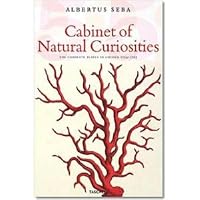
This is Albertus Seba's unrivaled catalog of animals, insects and plants. Albertus Seba's Cabinet of Natural Curiosities is one of the 18th century's greatest natural history achievements and remains one of the most prized natural history books of all time. Though scientists of his era often collected natural specimens for research purposes, Amsterdam-based pharmacist Seba (1665-1736) was unrivaled in his passion. His amazing collection of animals, plants and insects from all around the show more world gained international fame during his lifetime. In 1731, after decades of collecting, Seba commissioned careful and often scenic illustrations of every specimen. With these meticulous drawings, he arranged the publication of a four-volume catalog covering the entire collection from strange and exotic plants to snakes, frogs, crocodiles, shellfish, corals, birds. and butterflies, as well as now extinct creatures. This reproduction is taken from a rare, hand-colored original. The introduction supplies background information about the fascinating tradition of natural collections to which Seba's curiosities belonged. -- show lessTags
Recommendations




















Member Reviews
A mostly-lovely selection of coloured plates from Seba's great work. I could have done with fewer snakes, I confess (though the way they're drawn is surprisingly nice). The introductory material is of very high quality, and the images are reproduced quite well.
Last fall, Z fell in love with this book at a fabulous bookshop in Northhampton, MA. He coveted it and read much of it with his grandmere, but it was far too lush and heavy to haul across the country in luggage, checked or otherwise. Upon returning home, we found that the library did not have the volume in its collection . . . paving the way for us to purchase it for Z (and the family) as a Christmas gift. It's now been given a place of honor in the living room and has been pored over many, many times. And I am certain it will continue to serve as inspiration - artistic and scientific to us.
As a young man, Albertus Seba chose to become a pharmacist. His decision proved fortunate, both for him and for science. In familiarizing himself with medicinal plants, he took an interest in other natural phenomena, including mammals, birds, mollusks, insects and—his apparent favorite—snakes. His success as an apothecary afforded him the opportunity to amass a large and impressive collection. Peter the Great, who trusted Seba's medicinal skill, took an interest in his collection and purchased it in 1717. Seba immediately started building an even bigger second collection.
In the late 17th and early 18th centuries, the practice of pharmacy couldn't be learned through books, but only through apprenticeship, often in a variety of show more locations. After his training was complete, Seba settled in Amsterdam, a port city with a bustling international trade. Seba knew that some of the best exotic specimens were found by sailors, so he frequently scurried down to the docks, ready to bargain, when ships arrived.
Seba was not content merely to collect specimens, he wanted to publish a description of them, a Thesaurus. He engaged several artists and engravers in a massive and expensive effort. The results were 446 sizeable plates, 175 of them double-page, spread out over four separate books. The engraving process Seba used produced mirror images of the illustrations, and for the most part, this wasn't a problem, except for the mollusks, whose shells ultimately coiled in the wrong direction. The initial publication was black and white. This was troublesome for the specimens that couldn't be differentiated without color, so many of the books were hand-painted after publication.
Seba published the first volume of his Thesaurus in 1734, and the second in 1735. The next two volumes were planned for publication shortly afterwards, but Seba died in 1736, and clearing up his estate delayed publication of volumes three and four until 1758 and 1765. By the time the last two volumes were published, Seba's work drew some criticism, largely because it didn't reflect the new Linnaean system. Many critics overlooked the fact that the Linnaean system was only published in 1735, just a year before Seba's death.
Seba's Thesaurus was a beautiful publication, in a large part because the boundary between art and science was still pretty fuzzy. Animals posed artfully, and shells were arranged in decorative patterns. Some of the work was fanciful or even folly, such as the many electric-blue snakes and the seven-headed hydra, yet much of it exhibited an almost unprecedented attention to detail and accuracy.
The full name of the Thesaurus is, with a dual Latin–Dutch title, Locupletissimi rerum naturalium thesauri accurata descriptio — Naaukeurige beschryving van het schatryke kabinet der voornaamste seldzaamheden der natuur (Accurate description of the very rich thesaurus of (the most important) natural objects). Today, the original 446-plate volume is on permanent exhibit at the Koninklijke Bibliotheek in The Hague, Netherlands.
Recently, a complete example of the Thesarus sold for US$460,000 at an auction.
--Wikipedia
Easily, one of the most oddly fascinating and beautifully illustrated books ever printed. show less
In the late 17th and early 18th centuries, the practice of pharmacy couldn't be learned through books, but only through apprenticeship, often in a variety of show more locations. After his training was complete, Seba settled in Amsterdam, a port city with a bustling international trade. Seba knew that some of the best exotic specimens were found by sailors, so he frequently scurried down to the docks, ready to bargain, when ships arrived.
Seba was not content merely to collect specimens, he wanted to publish a description of them, a Thesaurus. He engaged several artists and engravers in a massive and expensive effort. The results were 446 sizeable plates, 175 of them double-page, spread out over four separate books. The engraving process Seba used produced mirror images of the illustrations, and for the most part, this wasn't a problem, except for the mollusks, whose shells ultimately coiled in the wrong direction. The initial publication was black and white. This was troublesome for the specimens that couldn't be differentiated without color, so many of the books were hand-painted after publication.
Seba published the first volume of his Thesaurus in 1734, and the second in 1735. The next two volumes were planned for publication shortly afterwards, but Seba died in 1736, and clearing up his estate delayed publication of volumes three and four until 1758 and 1765. By the time the last two volumes were published, Seba's work drew some criticism, largely because it didn't reflect the new Linnaean system. Many critics overlooked the fact that the Linnaean system was only published in 1735, just a year before Seba's death.
Seba's Thesaurus was a beautiful publication, in a large part because the boundary between art and science was still pretty fuzzy. Animals posed artfully, and shells were arranged in decorative patterns. Some of the work was fanciful or even folly, such as the many electric-blue snakes and the seven-headed hydra, yet much of it exhibited an almost unprecedented attention to detail and accuracy.
The full name of the Thesaurus is, with a dual Latin–Dutch title, Locupletissimi rerum naturalium thesauri accurata descriptio — Naaukeurige beschryving van het schatryke kabinet der voornaamste seldzaamheden der natuur (Accurate description of the very rich thesaurus of (the most important) natural objects). Today, the original 446-plate volume is on permanent exhibit at the Koninklijke Bibliotheek in The Hague, Netherlands.
Recently, a complete example of the Thesarus sold for US$460,000 at an auction.
--Wikipedia
Easily, one of the most oddly fascinating and beautifully illustrated books ever printed. show less
I just hauled this beautiful thing home with me. I love being a bookseller
In the beautiful Taschen version that I have, the introductions and the labels in all the plates are in English, French and German.
Esta reproducción pertenece a un excepcional original pintado a mano. En detalle curiosidades naturales
Dec 13, 2019Spanish
Ratings
Members
- Recently Added By
Author Information

8 Works 910 Members
All Editions
Series
Belongs to Publisher Series
Common Knowledge
- Original publication date
- 1734
Classifications
Statistics
- Members
- 811
- Popularity
- 33,983
- Reviews
- 6
- Rating
- (4.53)
- Languages
- 5 — English, French, German, Latin, Multiple languages
- Media
- Paper
- ISBNs
- 14
- ASINs
- 1