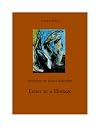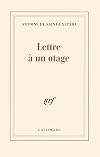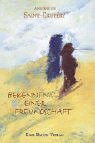
Letter to a Hostage
by Antoine de Saint-Exupéry
On This Page
Description
Letter to a Hostage is a book by the author Antoine de Saint-Exup?y. Saint-Exup?y initially wrote this piece as a preface for his best friend, L?n Werth's novel: Trente-trois jours (Thirty Three Days). Werth had been forced to take refuge in the Jura region of France during the autumn of 1940 because of his Jewish origins. His book, however, could not be published, and so the author significantly revised his preface, removing any direct references to his friend and making him anonymous show more within the text and a symbol for France as the hostage of the occupying forces. This version was published independently in June 1943. The work is comprised of six short chapters which reflect upon recent aspects of the author's life (travelling to Portugal, impressions of the Sahara, living in the USA...), and combines references to his friendship with Werth and to his love for his country. show lessTags
Recommendations














































Member Recommendations

raton-liseur Ces livres célèbrent tous deux la beauté de la vie dans sa simplicité insondable, un sourire, une tasse de thé. Ils sont tous deux comme un collier de phrases sans rugosité et d’une philosophie douce et sans complication qui décrivent si bien la vie et la vision qu’en a Saint-Exupéry.
Member Reviews
En ouvrant ce petit opuscule de Saint-Exupéry, je m’attendais à trouver le pendant de Lettres à un ami allemand d’Albert Camus, deux cris humanistes adressés de part et d’autre de la ligne de front. C’est effectivement ce que l’on trouve dans la seconde partie du texte, tandis que la première moitié m’a plutôt fait penser à Citadelle, célébrant la beauté de la vie dans sa simplicité insondable, telle une maison ou un sourire. Ce livre est dans la droite ligne des écrits de Saint-Exupéry, ces phrases sans rugosité et d’une philosophie douce et sans complication qui décrivent si bien la vie, qu’elle soit aventureuse ou banale.
Son exaltation du voyage, qui ne nie pas, bien au contraire, le lien avec ses show more racines, sa famille, m’a beaucoup touchée, probablement parce que qu’elle me rappelle ma propre situation, vivant loin des miens, mais comprenant mieux d’où je viens, qui je suis et ce qui est important depuis que j’ai mis quelques kilomètres entre la France et moi. J’aime Saint-Exupéry quand il sait mettre des mots sur mes sentiments et qu’il exprime ce que je ne sais pas dire.
Ce texte, initialement écrit pour la préface du livre 33 jours dans lequel Léon Werth (celui à qui Le Petit Prince sera dédié) raconte à chaud sa fuite de Paris après la débâcle de 1940, a ensuite été remanié pour devenir un texte indépendant, où Léon Werth n’est plus mentionné mais représente le Français, juif de surcroit, otage dans son propre pays occupé par les Nazis.
Saint-Exupéry décrit sa vision de l’humanité, ou plus exactement des relations humaines, qui sous-tend son ralliement à la France libre, il condamne au passage les rivalités entre mouvements résistants et veut croire en des lendemains qui chanteront et où le sourire de l’ami sera à nouveau là pour éclairer ses jours. Ce texte est surtout un plaidoyer pour la tolérance et, plus même, pour le respect. J’ai été surprise de voir à quel point certaines phrases font écho à la situation actuelle. « Quand [l’homme] respecte exclusivement qui lui ressemble, il ne respecte rien que soi-même (…) et fonde pour mille ans, en place d’un homme, le robot d’une termitière. » (p. 21, Chapitre 5).
Mais puisque des hommes ont pu hier se lever contre le Nazisme, j’ose croire que d’autres se lèvent aujourd’hui pour refuser la frilosité et la peur de l’autre, et je veux finir sur cette phrase, qui est à la fois toute la simplicité et tout l’espoir de la philosophie de vie de Saint-Exupéry : « Nous nous rejoignons dans le sourire au-dessus des langages, des castes, des partis. (p. 20, Chapitre 4). show less
Son exaltation du voyage, qui ne nie pas, bien au contraire, le lien avec ses show more racines, sa famille, m’a beaucoup touchée, probablement parce que qu’elle me rappelle ma propre situation, vivant loin des miens, mais comprenant mieux d’où je viens, qui je suis et ce qui est important depuis que j’ai mis quelques kilomètres entre la France et moi. J’aime Saint-Exupéry quand il sait mettre des mots sur mes sentiments et qu’il exprime ce que je ne sais pas dire.
Ce texte, initialement écrit pour la préface du livre 33 jours dans lequel Léon Werth (celui à qui Le Petit Prince sera dédié) raconte à chaud sa fuite de Paris après la débâcle de 1940, a ensuite été remanié pour devenir un texte indépendant, où Léon Werth n’est plus mentionné mais représente le Français, juif de surcroit, otage dans son propre pays occupé par les Nazis.
Saint-Exupéry décrit sa vision de l’humanité, ou plus exactement des relations humaines, qui sous-tend son ralliement à la France libre, il condamne au passage les rivalités entre mouvements résistants et veut croire en des lendemains qui chanteront et où le sourire de l’ami sera à nouveau là pour éclairer ses jours. Ce texte est surtout un plaidoyer pour la tolérance et, plus même, pour le respect. J’ai été surprise de voir à quel point certaines phrases font écho à la situation actuelle. « Quand [l’homme] respecte exclusivement qui lui ressemble, il ne respecte rien que soi-même (…) et fonde pour mille ans, en place d’un homme, le robot d’une termitière. » (p. 21, Chapitre 5).
Mais puisque des hommes ont pu hier se lever contre le Nazisme, j’ose croire que d’autres se lèvent aujourd’hui pour refuser la frilosité et la peur de l’autre, et je veux finir sur cette phrase, qui est à la fois toute la simplicité et tout l’espoir de la philosophie de vie de Saint-Exupéry : « Nous nous rejoignons dans le sourire au-dessus des langages, des castes, des partis. (p. 20, Chapitre 4). show less
Mar 16, 2012French
ÑB-2
Dec 4, 2020Catalan
RR-1
Sep 20, 2022Catalan
PB-5
Jan 13, 2021Catalan
IB-6
Nov 30, 2020Catalan
EB-0
Oct 7, 2020Catalan
Ratings
Members
- Recently Added By
Author Information

470+ Works 64,788 Members
Antoine de Saint-Exupery, 1900 - 1944 Antoine de Saint-Exupery was born in Lyon, France on June 29, 1900. Saint-Exupery was educated in Jesuit schools. He later attended a Catholic boarding school in Switzerland before entering the Ecole de Beaux-Arts as an architecture student. de Saint-Exupery began his military service in 1921 and was sent to show more Strasbourgh to be trained as a pilot. He received his pilot's license in 1922 and, after a few dead end jobs as a bookkeeper and an automobile salesman, he began flying mail for a commercial airline company. His route over North Africa was the basis for his first novel, Southern Mail, in 1929. His second novel, Night Flight, became an international bestseller and was made into a film in 1933. By that time, de Saint-Exupery was married to Consuelo Gomez Castillo and was working as a test pilot for Air France. He was also working as a foreign correspondent covering May Day events in Moscow and writing a series on the Spanish Civil War. His book, Wind, Sand and Stars won the French Academy's 1939 Grand Prix du Roman and the National Book Award in the United States. He came to the United States after France fell in World War II, but rejoined the French Air Force in North Africa in 1943. That same year he published The Little Prince, a children's story of such universal appeal that it has been translated into close to fifty languages. Antoine de Saint-Exupery took off on a flight over Southern France on July 31, 1944 and was never seen again. In 1998, a fisherman found a bracelet with his name and his wife's name engraved on it, 150 kilometers west of Marseilles. (Bowker Author Biography) After escaping death in several accidents while flying as a pilot over the most dangerous sections of the French airmail service in South America, Africa, and the South Atlantic, Saint-Exupery was reported missing over southern France in 1944. Night Flight (1931) was introduced by Andre Gide and was at once proclaimed a masterpiece. Wind, Sand and Stars (1939) is a series of tales, interspersed with philosophical reflections on earth as a planet and on the nobility of the common people. Flight to Arras (1942) is the author's own account of a hopeless reconnaissance sortie during the tragic days of May 1940. (Bowker Author Biography) show less
Some Editions
Series
Belongs to Publisher Series
Work Relationships
Is contained in
Common Knowledge
- Canonical title
- Letter to a Hostage
- Original title
- Lettre à un otage
- Alternate titles
- Brief an einen Ausgelieferten
- Original publication date
- 1943
- First words
- When in December 1940, I crossed Portugal on my way to the U.S.A., Lisbon appeared to me as a vivid and sad paradise.
Classifications
- Genres
- Fiction and Literature, General Fiction
- DDC/MDS
- 848.91209 — Literature & rhetoric French Literature French miscellaneous writings 1900- 1900-1999 1900-1945 Individual authors
- LCC
- PQ2637 .A274 .L4 — Language and Literature French, Italian, Spanish and Portuguese literatures French literature Modern literature 1900-1960
- BISAC
Statistics
- Members
- 194
- Popularity
- 168,367
- Reviews
- 6
- Rating
- (3.44)
- Languages
- 11 — Catalan, Czech, Danish, Dutch, English, French, German, Polish, Portuguese (Portugal), Spanish, Swedish
- Media
- Paper, Ebook
- ISBNs
- 26
- ASINs
- 8