
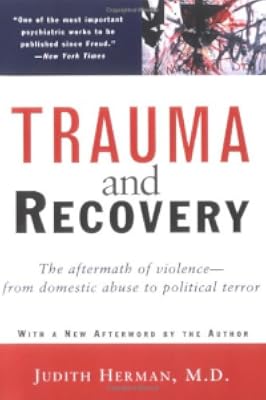
Trauma and Recovery: The Aftermath of Violence From Domestic Abuse to Political Terror
by Judith Herman
On This Page
Description
Examines how people adapt to traumatic events such as rape, domestic violence, terrorism, and combat; discusses the healing process; and provides a framework for treatment.Tags
Recommendations


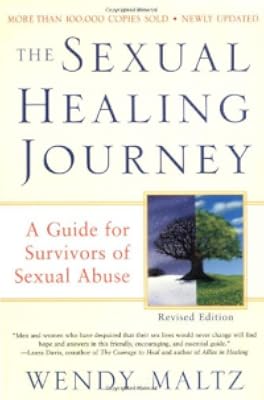
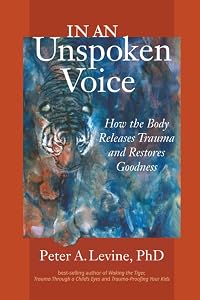
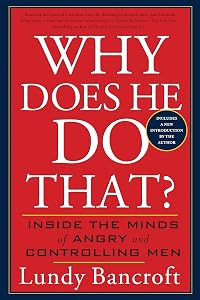
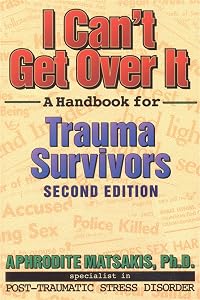



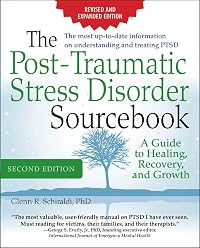
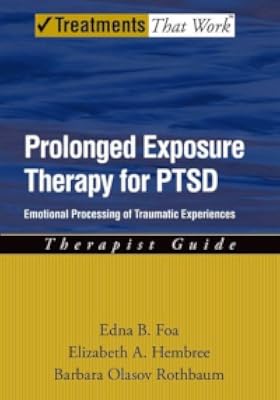
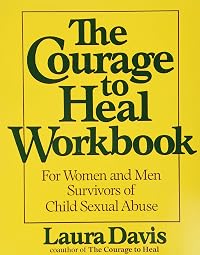

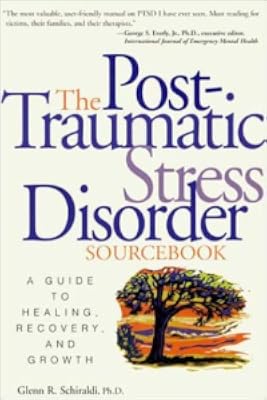



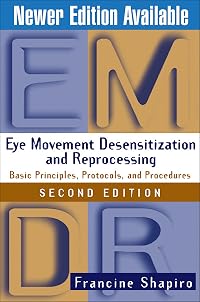
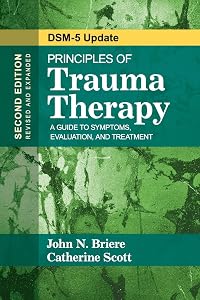
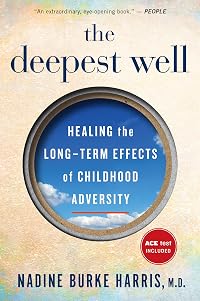
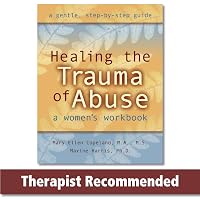



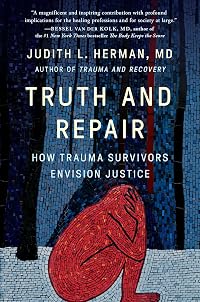
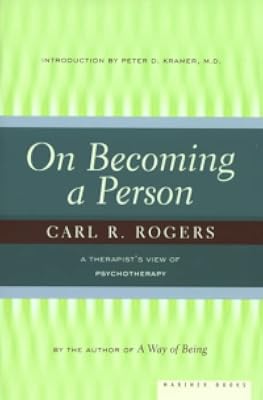

Member Reviews
My husband has been reading lots of books regarding trauma and psychology, and Hermann's 'Trauma and Recovery' was one of them. I was convinced by his second hand review and explanations to read it myself, and was surprised to find out it was the first conception of and argument for the recognition of complex PTSD.
Hermann is an excellent writer and even as an academic text, it is incredibly easy to follow along her ideas. What impressed me the most was how the structure of the book mirrored the journey of a survivor. Every chapter felt like a movement through the process of traumatization, it's recollection and recognition, and it's eventual recovery. Even the first few, which focus moreso on the background and history that led to the show more understanding of PTSD, feel part of this movement - the stage that is set, the world that the survivor is born into, and how it shapes the survivor's own trauma. Hermann draws examples and excerpts from a same few survivors throughout, their words on their own journeys reflecting whatever step of the path the chapter itself is on. Each point is illustrated with an example, though some are very hard on the heart to read.
While cPTSD has become part of the vocabulary of trauma itself, as it grows into mainstream consciousness' understanding of the world, it is sad that several of the core arguments for its recognition have not been acknowledged and integrated along with it.
For example, Hermann's arguments for cPTSD were based partially on criticizing the label of BPD, specifically how it pathologizes the survivor's perceptions and behaviors as a personality disorder instead of the products of complex trauma. BPD has persisted as a label, taken the shape of an almost legitimate identity for many, and is still used to disparage the women under its umbrella.
To give another example: A significant portion of the book is dedicated to the task of recovering identity when it is formed under trauma, functioning almost as a guideline for those who are interested. My own impression of discussions regarding cPTSD is that they are centered more so around validating the trauma and understanding the "self" that is "formed" by it, often at the expense of internalizing the trauma as an inextricable part of the survivor. Transformation of the sort the book focuses on is rarely discussed alongside these topics.
What I mean to say here is this: That there is a lot of value in reading Trauma and Recovery even if you believe you have a good understanding of PTSD and cPTSD, because many aspects of Hermann's arguments have still not found footing in the cultural mainstream.
I do have some caveats with the book of course. The only one I'll address here is what I believe to be a narrow focus. The survivor is referred to throughout the book is a "she" and the abuser is almost always male in hypotheticals. It is understandable - the pronouns stand in contrast to the neutral "he" that was used at the time, it is feminist text focusing on battered women, and the statistical majority of abusers are men. However, it might still serve to alienate male survivors of rape/CSA, and anyone who was abused by a woman instead. As literature has evolved to reflect higher than previously known rates of abuse by boys and men, and the shadowy figure of the female sex abuser, it can feel a bit anachronistic. An understanding of a world where child sex abuse is endemic should require a wider analysis of even those whose abuse is in the "minority" statistically. Though all abuse, either of or by the oppressor and oppressed hurts the same, it is still difficult in a particular way for survivors and bystanders alike to understand, swallow, and accept the survivor of a female abuser and male victims, making an understanding of it imperative.
Overall, I am glad to have read it and highly recommend it to anyone, regardless of whether or not you consider yourself a survivor or have loved ones that are, because this book is an understanding of a world built upon child sex abuse. show less
Hermann is an excellent writer and even as an academic text, it is incredibly easy to follow along her ideas. What impressed me the most was how the structure of the book mirrored the journey of a survivor. Every chapter felt like a movement through the process of traumatization, it's recollection and recognition, and it's eventual recovery. Even the first few, which focus moreso on the background and history that led to the show more understanding of PTSD, feel part of this movement - the stage that is set, the world that the survivor is born into, and how it shapes the survivor's own trauma. Hermann draws examples and excerpts from a same few survivors throughout, their words on their own journeys reflecting whatever step of the path the chapter itself is on. Each point is illustrated with an example, though some are very hard on the heart to read.
While cPTSD has become part of the vocabulary of trauma itself, as it grows into mainstream consciousness' understanding of the world, it is sad that several of the core arguments for its recognition have not been acknowledged and integrated along with it.
For example, Hermann's arguments for cPTSD were based partially on criticizing the label of BPD, specifically how it pathologizes the survivor's perceptions and behaviors as a personality disorder instead of the products of complex trauma. BPD has persisted as a label, taken the shape of an almost legitimate identity for many, and is still used to disparage the women under its umbrella.
To give another example: A significant portion of the book is dedicated to the task of recovering identity when it is formed under trauma, functioning almost as a guideline for those who are interested. My own impression of discussions regarding cPTSD is that they are centered more so around validating the trauma and understanding the "self" that is "formed" by it, often at the expense of internalizing the trauma as an inextricable part of the survivor. Transformation of the sort the book focuses on is rarely discussed alongside these topics.
What I mean to say here is this: That there is a lot of value in reading Trauma and Recovery even if you believe you have a good understanding of PTSD and cPTSD, because many aspects of Hermann's arguments have still not found footing in the cultural mainstream.
I do have some caveats with the book of course. The only one I'll address here is what I believe to be a narrow focus. The survivor is referred to throughout the book is a "she" and the abuser is almost always male in hypotheticals. It is understandable - the pronouns stand in contrast to the neutral "he" that was used at the time, it is feminist text focusing on battered women, and the statistical majority of abusers are men. However, it might still serve to alienate male survivors of rape/CSA, and anyone who was abused by a woman instead. As literature has evolved to reflect higher than previously known rates of abuse by boys and men, and the shadowy figure of the female sex abuser, it can feel a bit anachronistic. An understanding of a world where child sex abuse is endemic should require a wider analysis of even those whose abuse is in the "minority" statistically. Though all abuse, either of or by the oppressor and oppressed hurts the same, it is still difficult in a particular way for survivors and bystanders alike to understand, swallow, and accept the survivor of a female abuser and male victims, making an understanding of it imperative.
Overall, I am glad to have read it and highly recommend it to anyone, regardless of whether or not you consider yourself a survivor or have loved ones that are, because this book is an understanding of a world built upon child sex abuse. show less
As a Domestic trauma survivor, finding Trauma and Recovery was finding an Encyclopedia of my life. Herman details for the layperson and clinician both the pathology of sudden trauma, such as war; complex trauma such as childhood sexual abuse or Stockholm Syndrome such as kidnapping. My copy is heavily underlined and has been a staple in understanding my recovery process.
When I trained as a psychoanalyst, this book had already been published and yet I got next to no training on trauma. Reading it also made it clear to me that I had been a trauma victim myself and that in many respects, my view of the world wasn't so idiosyncratic as typical of trauma survivors. I only denied it its 5th star because it is now a bit dated with its ties to the medical model (though she does criticize it as well.)
some of it was definitely helpful, but parts of it felt frustrating to read. I enjoyed the first person narratives from survivors and would’ve liked more of that; the pathologizing sometimes feels redundant (??) and obfuscatory next to first person testimonies.
update on this review: 15 Sept, 12017 HE, about 2 years or so after first read: at the bottom...
So I guess I'm in Stage 3, now !!! :-)
Original review, circa. 2010:5
This book, for me, was a horrible read. Horribly accurate. Yet hopeful as well.
Horrible to see that I am not so different after all -I see myself in every comment she makes on adults who survived long-term trauma as children.
Horrible to see that my experience is not so different.
Yet hopeful to see that there are ways of solving the problem, living 'normally' -just that ignoring it is not one of those ways.
Most irritating.
Especially after burn-out has twice stopped me from working enough to distract myself from my distracting memories.
She mentions [b:The Body Keeps the show more Score: Brain, Mind, and Body in the Healing of Trauma|18693771|The Body Keeps the Score Brain, Mind, and Body in the Healing of Trauma|Bessel A. van der Kolk|https://images.gr-assets.com/books/1397425897s/18693771.jpg|26542319] in her 2015 epilogue, and that book seems to recommend both movement and writing -both of which helped me until I had to get back to sitting in a chair looking for a job all day long.
I seem to be stuck in Stage 2, and worst of all, I read over and over again that either in writing or in talking therapy, I must now stop "living in my head" and move back into my body. I have always found it easier to forget to eat then to bother about my body. Work has always been a useful form of escape, until now. Ok, not so much -once I get to about the intermediate level of just about anything, it seems no longer to hold my interest, and I find myself assaulted by unwanted memories that refuse to go back into their Blankety-Blank-Blank!!! boxes.
Irritatingly enough, this is the first place I have seen such a thing predicted.
She even has the gall to predict and counter my 'unique' perspective on my right to choose when to die, and how. Apparently this too is normal for folks like me. Huh. So much for being misunderstood. I guess she has us pegged, finally, Thank the non-existent God!! Finally someone actually documents what we go through, and tells us it is a normal response to a hideous start in life. Ok, now, on to how to fix the problem: start with saftey (years of martial arts did help some), get a good therapist, talk, write, and move your body. And remember that faking functionality will not work forever.
Peace,
Shira
27.10.12015 HE
... update, 15.9.12017 HE
I see what a difference a perceptive, attentive and flexible therapist can make: first of all, one does not have to sit and purposely relive the entire series of traumatic events, which in any case is impossible to do on a conscious level for dealing with childhood abuse, as there are just too many events.
Perceptiveness: What my newest therapist told me that made a difference was that there was no need to go back through all of those events, because I was already reliving my traumas every day, each time I am triggered: it remained, however, to follow those triggers back to the originating event(s) and deal with those.
Naturally, I tried to squirm out of it by skipping past whenever possible, and that is where the attentiveness comes in: she always redirects me where other therapists let or even encourage me to avoid sitting with that trigger, and following it back to the source event(s) to figure out what is happening to the child-me, and then
Flexibility: this therapist had to dispense with Affirmations, as I pointed out that they are very counter-productive for me. So instead, she had me develop an 'imagination' I had years ago of myself as several people, one very young (4 yr old), one about 15, another about 17, and another older, maybe 23 or so years old. She added a Parental figure, and told me to look for the frightened 4 year old, and find out where she was, and what she wanted, and then have my own Inner Parent explain to my wounded 4-year old that she/I would take care of it, and keep her/me safe.
After some time, this works. Now, I know that when fireworks/loud noises/shouting happens, it is not just me there and then, but my inner 4-yr old hiding while hearing my mom being beaten, and my adult-me can say 'I got this, you are safe.' and excuse myself to keep from being further triggered.
Finally, after months of work, and then being told that mourning the loss of childhoon, protection by parents, etc, is in fact necessary, I began a long web search (which seems to confirm), and found this website as a nice To Do List to check off (because I like to know when I'm done!):
http://outofthefog.website/toolbox-1/2015/11/17/complex-post-traumatic-stress-di...
Hope this helps others,
Shira show less
So I guess I'm in Stage 3, now !!! :-)
Original review, circa. 2010:5
This book, for me, was a horrible read. Horribly accurate. Yet hopeful as well.
Horrible to see that I am not so different after all -I see myself in every comment she makes on adults who survived long-term trauma as children.
Horrible to see that my experience is not so different.
Yet hopeful to see that there are ways of solving the problem, living 'normally' -just that ignoring it is not one of those ways.
Most irritating.
Especially after burn-out has twice stopped me from working enough to distract myself from my distracting memories.
She mentions [b:The Body Keeps the show more Score: Brain, Mind, and Body in the Healing of Trauma|18693771|The Body Keeps the Score Brain, Mind, and Body in the Healing of Trauma|Bessel A. van der Kolk|https://images.gr-assets.com/books/1397425897s/18693771.jpg|26542319] in her 2015 epilogue, and that book seems to recommend both movement and writing -both of which helped me until I had to get back to sitting in a chair looking for a job all day long.
I seem to be stuck in Stage 2, and worst of all, I read over and over again that either in writing or in talking therapy, I must now stop "living in my head" and move back into my body. I have always found it easier to forget to eat then to bother about my body. Work has always been a useful form of escape, until now. Ok, not so much -once I get to about the intermediate level of just about anything, it seems no longer to hold my interest, and I find myself assaulted by unwanted memories that refuse to go back into their Blankety-Blank-Blank!!! boxes.
Irritatingly enough, this is the first place I have seen such a thing predicted.
She even has the gall to predict and counter my 'unique' perspective on my right to choose when to die, and how. Apparently this too is normal for folks like me. Huh. So much for being misunderstood. I guess she has us pegged, finally, Thank the non-existent God!! Finally someone actually documents what we go through, and tells us it is a normal response to a hideous start in life. Ok, now, on to how to fix the problem: start with saftey (years of martial arts did help some), get a good therapist, talk, write, and move your body. And remember that faking functionality will not work forever.
Peace,
Shira
27.10.12015 HE
... update, 15.9.12017 HE
I see what a difference a perceptive, attentive and flexible therapist can make: first of all, one does not have to sit and purposely relive the entire series of traumatic events, which in any case is impossible to do on a conscious level for dealing with childhood abuse, as there are just too many events.
Perceptiveness: What my newest therapist told me that made a difference was that there was no need to go back through all of those events, because I was already reliving my traumas every day, each time I am triggered: it remained, however, to follow those triggers back to the originating event(s) and deal with those.
Naturally, I tried to squirm out of it by skipping past whenever possible, and that is where the attentiveness comes in: she always redirects me where other therapists let or even encourage me to avoid sitting with that trigger, and following it back to the source event(s) to figure out what is happening to the child-me, and then
Flexibility: this therapist had to dispense with Affirmations, as I pointed out that they are very counter-productive for me. So instead, she had me develop an 'imagination' I had years ago of myself as several people, one very young (4 yr old), one about 15, another about 17, and another older, maybe 23 or so years old. She added a Parental figure, and told me to look for the frightened 4 year old, and find out where she was, and what she wanted, and then have my own Inner Parent explain to my wounded 4-year old that she/I would take care of it, and keep her/me safe.
After some time, this works. Now, I know that when fireworks/loud noises/shouting happens, it is not just me there and then, but my inner 4-yr old hiding while hearing my mom being beaten, and my adult-me can say 'I got this, you are safe.' and excuse myself to keep from being further triggered.
Finally, after months of work, and then being told that mourning the loss of childhoon, protection by parents, etc, is in fact necessary, I began a long web search (which seems to confirm), and found this website as a nice To Do List to check off (because I like to know when I'm done!):
http://outofthefog.website/toolbox-1/2015/11/17/complex-post-traumatic-stress-di...
Hope this helps others,
Shira show less
Hailed as "groundbreaking" in 1992. A 2015 revision and epilogue attempts to bring the issues current. Too late. The mental illness she warned about among a few individuals was weaponized by privately-funded media campaigns and became a paradigm shift come to a head in the 2008 Presidential/Congressional Election. The whole nation now needs this book, as the shock and depression is now widespread.
update on this review: 15 Sept, 12017 HE, about 2 years or so after first read: at the bottom...
So I guess I'm in Stage 3, now !!! :-)
Original review, circa. 2010:5
This book, for me, was a horrible read. Horribly accurate. Yet hopeful as well.
Horrible to see that I am not so different after all -I see myself in every comment she makes on adults who survived long-term trauma as children.
Horrible to see that my experience is not so different.
Yet hopeful to see that there are ways of solving the problem, living 'normally' -just that ignoring it is not one of those ways.
Most irritating.
Especially after burn-out has twice stopped me from working enough to distract myself from my distracting memories.
She mentions [b:The Body Keeps the show more Score: Brain, Mind, and Body in the Healing of Trauma|18693771|The Body Keeps the Score Brain, Mind, and Body in the Healing of Trauma|Bessel A. van der Kolk|https://images.gr-assets.com/books/1397425897s/18693771.jpg|26542319] in her 2015 epilogue, and that book seems to recommend both movement and writing -both of which helped me until I had to get back to sitting in a chair looking for a job all day long.
I seem to be stuck in Stage 2, and worst of all, I read over and over again that either in writing or in talking therapy, I must now stop "living in my head" and move back into my body. I have always found it easier to forget to eat then to bother about my body. Work has always been a useful form of escape, until now. Ok, not so much -once I get to about the intermediate level of just about anything, it seems no longer to hold my interest, and I find myself assaulted by unwanted memories that refuse to go back into their Blankety-Blank-Blank!!! boxes.
Irritatingly enough, this is the first place I have seen such a thing predicted.
She even has the gall to predict and counter my 'unique' perspective on my right to choose when to die, and how. Apparently this too is normal for folks like me. Huh. So much for being misunderstood. I guess she has us pegged, finally, Thank the non-existent God!! Finally someone actually documents what we go through, and tells us it is a normal response to a hideous start in life. Ok, now, on to how to fix the problem: start with saftey (years of martial arts did help some), get a good therapist, talk, write, and move your body. And remember that faking functionality will not work forever.
Peace,
Shira
27.10.12015 HE
... update, 15.9.12017 HE
I see what a difference a perceptive, attentive and flexible therapist can make: first of all, one does not have to sit and purposely relive the entire series of traumatic events, which in any case is impossible to do on a conscious level for dealing with childhood abuse, as there are just too many events.
Perceptiveness: What my newest therapist told me that made a difference was that there was no need to go back through all of those events, because I was already reliving my traumas every day, each time I am triggered: it remained, however, to follow those triggers back to the originating event(s) and deal with those.
Naturally, I tried to squirm out of it by skipping past whenever possible, and that is where the attentiveness comes in: she always redirects me where other therapists let or even encourage me to avoid sitting with that trigger, and following it back to the source event(s) to figure out what is happening to the child-me, and then
Flexibility: this therapist had to dispense with Affirmations, as I pointed out that they are very counter-productive for me. So instead, she had me develop an 'imagination' I had years ago of myself as several people, one very young (4 yr old), one about 15, another about 17, and another older, maybe 23 or so years old. She added a Parental figure, and told me to look for the frightened 4 year old, and find out where she was, and what she wanted, and then have my own Inner Parent explain to my wounded 4-year old that she/I would take care of it, and keep her/me safe.
After some time, this works. Now, I know that when fireworks/loud noises/shouting happens, it is not just me there and then, but my inner 4-yr old hiding while hearing my mom being beaten, and my adult-me can say 'I got this, you are safe.' and excuse myself to keep from being further triggered.
Finally, after months of work, and then being told that mourning the loss of childhoon, protection by parents, etc, is in fact necessary, I began a long web search (which seems to confirm), and found this website as a nice To Do List to check off (because I like to know when I'm done!):
http://outofthefog.website/toolbox-1/2015/11/17/complex-post-traumatic-stress-di...
Hope this helps others,
Shira show less
So I guess I'm in Stage 3, now !!! :-)
Original review, circa. 2010:5
This book, for me, was a horrible read. Horribly accurate. Yet hopeful as well.
Horrible to see that I am not so different after all -I see myself in every comment she makes on adults who survived long-term trauma as children.
Horrible to see that my experience is not so different.
Yet hopeful to see that there are ways of solving the problem, living 'normally' -just that ignoring it is not one of those ways.
Most irritating.
Especially after burn-out has twice stopped me from working enough to distract myself from my distracting memories.
She mentions [b:The Body Keeps the show more Score: Brain, Mind, and Body in the Healing of Trauma|18693771|The Body Keeps the Score Brain, Mind, and Body in the Healing of Trauma|Bessel A. van der Kolk|https://images.gr-assets.com/books/1397425897s/18693771.jpg|26542319] in her 2015 epilogue, and that book seems to recommend both movement and writing -both of which helped me until I had to get back to sitting in a chair looking for a job all day long.
I seem to be stuck in Stage 2, and worst of all, I read over and over again that either in writing or in talking therapy, I must now stop "living in my head" and move back into my body. I have always found it easier to forget to eat then to bother about my body. Work has always been a useful form of escape, until now. Ok, not so much -once I get to about the intermediate level of just about anything, it seems no longer to hold my interest, and I find myself assaulted by unwanted memories that refuse to go back into their Blankety-Blank-Blank!!! boxes.
Irritatingly enough, this is the first place I have seen such a thing predicted.
She even has the gall to predict and counter my 'unique' perspective on my right to choose when to die, and how. Apparently this too is normal for folks like me. Huh. So much for being misunderstood. I guess she has us pegged, finally, Thank the non-existent God!! Finally someone actually documents what we go through, and tells us it is a normal response to a hideous start in life. Ok, now, on to how to fix the problem: start with saftey (years of martial arts did help some), get a good therapist, talk, write, and move your body. And remember that faking functionality will not work forever.
Peace,
Shira
27.10.12015 HE
... update, 15.9.12017 HE
I see what a difference a perceptive, attentive and flexible therapist can make: first of all, one does not have to sit and purposely relive the entire series of traumatic events, which in any case is impossible to do on a conscious level for dealing with childhood abuse, as there are just too many events.
Perceptiveness: What my newest therapist told me that made a difference was that there was no need to go back through all of those events, because I was already reliving my traumas every day, each time I am triggered: it remained, however, to follow those triggers back to the originating event(s) and deal with those.
Naturally, I tried to squirm out of it by skipping past whenever possible, and that is where the attentiveness comes in: she always redirects me where other therapists let or even encourage me to avoid sitting with that trigger, and following it back to the source event(s) to figure out what is happening to the child-me, and then
Flexibility: this therapist had to dispense with Affirmations, as I pointed out that they are very counter-productive for me. So instead, she had me develop an 'imagination' I had years ago of myself as several people, one very young (4 yr old), one about 15, another about 17, and another older, maybe 23 or so years old. She added a Parental figure, and told me to look for the frightened 4 year old, and find out where she was, and what she wanted, and then have my own Inner Parent explain to my wounded 4-year old that she/I would take care of it, and keep her/me safe.
After some time, this works. Now, I know that when fireworks/loud noises/shouting happens, it is not just me there and then, but my inner 4-yr old hiding while hearing my mom being beaten, and my adult-me can say 'I got this, you are safe.' and excuse myself to keep from being further triggered.
Finally, after months of work, and then being told that mourning the loss of childhoon, protection by parents, etc, is in fact necessary, I began a long web search (which seems to confirm), and found this website as a nice To Do List to check off (because I like to know when I'm done!):
http://outofthefog.website/toolbox-1/2015/11/17/complex-post-traumatic-stress-di...
Hope this helps others,
Shira show less
Members
- Recently Added By
Lists

Trauma and Dissociation
4 works; 1 member

Review 3
41 works; 1 member

Books Read in Library
21 works; 1 member

Tom's Bookstore
346 works; 2 members

Recovery from Psychopath
127 works; 1 member
Author Information

1 Work 1,595 Members
Work Relationships
Common Knowledge
- Canonical title
- Trauma and Recovery: The Aftermath of Violence From Domestic Abuse to Political Terror
- Original publication date
- 1992
- Blurbers
- van der Kolk, Bessel
Classifications
- Genres
- Nonfiction, General Nonfiction
- DDC/MDS
- 616.8521 — Applied science & technology Medicine & health Diseases, Allergies, Skin Conditions Nervous Disorders: Autism, Anorexia, OCD Miscellaneous Neuroses PTSD
- LCC
- RC552 .P67 .H47 — Medicine Internal medicine Internal medicine Neurosciences. Biological psychiatry. Neuropsychiatry Psychiatry Psychopathology Neuroses
- BISAC
Statistics
- Members
- 1,612
- Popularity
- 14,000
- Reviews
- 13
- Rating
- (4.41)
- Languages
- 11 — Danish, Dutch, English, German, Greek, Hungarian, Italian, Polish, Croatian, Swedish, Turkish
- Media
- Paper, Audiobook, Ebook
- ISBNs
- 33
- UPCs
- 1
- ASINs
- 10