The Terrors of Ice and Darkness
by Christoph Ransmayr
On This Page
Description
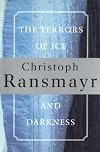
The Terrors of Ice and Darkness is the riveting account of a narrator obsessed with a certain Josef Mazzini, a young Italian "lost in the arctic winter of 1981" who is himself obsessed with the Imperial Austro-Hungarian North Pole Expedition of 1873: "At first it was nothing more than a game to try to reduce the circumstances of his disappearance to some sort of explanation, any explanation. But every clue yielded a new unanswered question. Quite involuntarily I found myself taking one step show more after the other ... Cumulus clouds mirrored in a shop window became calving glaciers, patches of old snow in city parks became great floes of ice. The Arctic Ocean lay at my window. Much the same thing must have happened to Mazzini. Painstakingly retracing Mazzini's steps, the narrator simultaneously reconstructs the dramatic and fantastic story of the nineteenth-century journey, using actual letters and diaries of the members of that harrowing expedition. These documents--sometimes surprisingly poetic and moving--combine in the narrator's imagination to evoke as never before the awful beauty of the world's farthest northern reaches. -- Publisher's descriptions show lessTags
Recommendations




































Member Recommendations
Member Reviews
This book combines two parallel stories - that of a nineteenth-century polar exploration, and of a modern-day descendant of one of the explorers, who becomes obsessed by the first journey and eventually sets off on their trail.
The story of the polar exploration is fascinating and beautifully told. Much of it is told through quotes from the journals and memoirs written by many of those on the trip - which were so vivid, and fitted the themes of the work so well, that I thought they must have been fictional - it was almost a shock to find in the endnote that they were genuine memoirs from a real expedition. The expedition was frozen in for almost two years, and spent, altogether, eight months in the polar night. Eventually they had to show more abandon ship and try and make it home across the ice. Somehow, the writing conveys the sublime beauty of the barren, icy wastes, as well as the brutal hardship the sailors lived with - hunger, malnutrition, sickness, pain. At the same time, there's an ironic edge - well aware, for example, of the class differences which divide the men on the boat.
The modern sections, however, were less gripping - partly because one of the main themes, for me, was the narrowing of human horizons, the loss of adventure and vision. The northern wastes are now commodified for package tourists, and the grand vistas become the subjects of postage stamps. The Spitzbergen authorities put out brochures for visitors warning that if they arrive without arctic equipment, they will be put back on their plane. Yet, although we are surrounded by humanity more than before, we still find it difficult to understand each other sincerely. The ice and darkness of the title exist within and between people, at least as much as around them. show less
The story of the polar exploration is fascinating and beautifully told. Much of it is told through quotes from the journals and memoirs written by many of those on the trip - which were so vivid, and fitted the themes of the work so well, that I thought they must have been fictional - it was almost a shock to find in the endnote that they were genuine memoirs from a real expedition. The expedition was frozen in for almost two years, and spent, altogether, eight months in the polar night. Eventually they had to show more abandon ship and try and make it home across the ice. Somehow, the writing conveys the sublime beauty of the barren, icy wastes, as well as the brutal hardship the sailors lived with - hunger, malnutrition, sickness, pain. At the same time, there's an ironic edge - well aware, for example, of the class differences which divide the men on the boat.
The modern sections, however, were less gripping - partly because one of the main themes, for me, was the narrowing of human horizons, the loss of adventure and vision. The northern wastes are now commodified for package tourists, and the grand vistas become the subjects of postage stamps. The Spitzbergen authorities put out brochures for visitors warning that if they arrive without arctic equipment, they will be put back on their plane. Yet, although we are surrounded by humanity more than before, we still find it difficult to understand each other sincerely. The ice and darkness of the title exist within and between people, at least as much as around them. show less
Reminds me a bit of Sebald and a bit of the Belgian author Stefan Hertmans. Much of the story is almost documentary in tone, switching between a remarkably vivid recounting of the actual Austro-Hungarian Polar Expedition of 1872-74 and its aftermath and the fictional story of Josef Mazzini who sought to retrace the explorers’ steps in 1981. The story of the very real and extraordinarily harrowing expedition is fascinating and hair-raising; the story of Mazzini is a bit less engaging but nevertheless an interesting counterpoint to the real tale. My first book by Ransmayr but it won’t be my last.
I'm an enthusiast of Antarctic fiction and non-fiction and have rarely ventured into Arctic literature. That may change now. Although there is an awkward unnamed narrator and a second story wrapped around the central narrative, the majority of the book is a superb re-telling of the Payer-Weyprecht (Austro-Hungarian North Pole) Expedition of the 1870s, when nations were still trying to find a Northeast or Northwest passage from the Atlantic to the Pacific. After two winters trapped in a ship ice-bound near the 80th parallel, the officers and crew abandon the ship and proceed to walk and row (when open water is finally reached) for several months to get to the uninhabited island of Novaya Zemlya, hoping to find a whale or seal-hunting show more boat which can return them to Europe. The narration is perhaps 35% excerpts from the journals of the expedition members, and the rest an evocative retelling (no dialogue) of the adventure. show less
I can’t recommend this book highly enough. The author combines an actual event of historical exploration with a fictional account interwoven into the story. The result is very compelling.
It tells of the terrifying North Pole expedition in the 1870s, with a parallel modern day fictional account of an Italian man who follows their path in 1981, obsessed with the story, their suffering and their demise.
Ransmayr uses journals of this 19th century expedition aboard the Admiral Tegetthoff , to tell their own story. He expands and brings together these excerpts into a cohesive, flowing description of their experiences and hard-ships. He does this in such a seamless and effective way, that I was not aware of the reality of the journals show more until the end.
The actual journal excerpts are highly descriptive and evocative such as this:
“When ebb and flood do not lift the groaning and straining drift ice, when the sighing wind is not brushing across the stony chinks, the stillness of death lies upon the ghostly pale landscape”.
Ransmayr manages to interweave the journal entries, and his own narrative to evoke the extreme hardships and terror that they face as they move northward, dealing with uncertainty, constant darkness, enveloping ice and illness. The effect is gripping, horrifying and very effective.
The contemporary story of the Italian, Mazzini, is set in parallel through-out the story,. It tells of a man who is obsessed with the story of the expedition. He follows the same route as the Tegetthoff expedition, eventually managing to join an ice-breaking scientific expedition. This story, a secondary tale, is useful as it brings the suffering and the obsessional nature of man and exploration into universal focus. It also emphasizes the intensity of the suffering and loyalty of the men of the expedition. Although I felt the urge to get back to the men of the 19th century and felt less sympathy and understanding for Mazzini, I think it was a very effective literary device.
A really great read, not to be missed. show less
It tells of the terrifying North Pole expedition in the 1870s, with a parallel modern day fictional account of an Italian man who follows their path in 1981, obsessed with the story, their suffering and their demise.
Ransmayr uses journals of this 19th century expedition aboard the Admiral Tegetthoff , to tell their own story. He expands and brings together these excerpts into a cohesive, flowing description of their experiences and hard-ships. He does this in such a seamless and effective way, that I was not aware of the reality of the journals show more until the end.
The actual journal excerpts are highly descriptive and evocative such as this:
“When ebb and flood do not lift the groaning and straining drift ice, when the sighing wind is not brushing across the stony chinks, the stillness of death lies upon the ghostly pale landscape”.
Ransmayr manages to interweave the journal entries, and his own narrative to evoke the extreme hardships and terror that they face as they move northward, dealing with uncertainty, constant darkness, enveloping ice and illness. The effect is gripping, horrifying and very effective.
The contemporary story of the Italian, Mazzini, is set in parallel through-out the story,. It tells of a man who is obsessed with the story of the expedition. He follows the same route as the Tegetthoff expedition, eventually managing to join an ice-breaking scientific expedition. This story, a secondary tale, is useful as it brings the suffering and the obsessional nature of man and exploration into universal focus. It also emphasizes the intensity of the suffering and loyalty of the men of the expedition. Although I felt the urge to get back to the men of the 19th century and felt less sympathy and understanding for Mazzini, I think it was a very effective literary device.
A really great read, not to be missed. show less
I just want to register that despite Ransmayr's reputation, his skill with narrative and temporality, and the heartbreaking real-life details of the Weyprecht Expedition (including a chilling scene in which a beloved sled dog, whose dead body had been dropped into a hole in the ice, resurfaces months later), this reads like the work of an academic historian. It is replete with well-researched detail, and its narrative is comfortable and warm, as if it were conceived and written in an archive. The book is often sublime, but it is a comfortable, late twilight sublime, the kind I also feel when I watch the midnight sun in a movie. Even when things get desperate, I am cushioned and comforted by Ransmayr's impeccable scholarship. As in show more Borges, even outlandish things are tamed by footnotes.
In the domain of arctic tragedies, this novel is outdone on every level -- narrative, fact, experience, force -- by William Vollmann's 'The Rifles.' Ransmayr's imagination is pale and bookish in comparison. show less
In the domain of arctic tragedies, this novel is outdone on every level -- narrative, fact, experience, force -- by William Vollmann's 'The Rifles.' Ransmayr's imagination is pale and bookish in comparison. show less
This book takes place in three times: the 1870s, 1981, and a 'present' shortly after that. The language throughout is that of the 19th century. The main story is fascinating, the two modern narratives detract from it. (I read this in the original German.) In the end, I am very glad that I have read it. I certainly will never do so again.
Die österreichisch-ungarische Nordpolexpedition (1873), bekannt unter Payer-Weyprecht-Expedition, wird von Ransmayr unter Verwendung einzelner Zitate aus Notizbüchern, dem Logbuch.. erzählt.
Parallel zur Geschichte der Expedition erfährt der Leser von Mazzini, einem Österreicher/Italiener, der sich auf die Spuren der Expedition gibt.
Parallel zur Geschichte der Expedition erfährt der Leser von Mazzini, einem Österreicher/Italiener, der sich auf die Spuren der Expedition gibt.
Members
- Recently Added By
Lists

Best Books About Journeys and Quests
117 works; 30 members

German Literature
514 works; 55 members

Explorers in fiction
31 works; 3 members

Arctic novels
35 works; 5 members
Author Information

Some Editions
Series
Belongs to Publisher Series
Common Knowledge
- Canonical title
- The Terrors of Ice and Darkness
- Original title
- Die Schrecken des Eises und der Finsternis
- Original publication date
- 1984
- People/Characters*
- Carl Weyprecht; Julius Payer; Josef Mazzini
- Important places
- Noordpool; North Pole
- Dedication
- Pizzo gewidmet
- First words*
- Avant tout
Que reste-t-il des aventures qui nous ont conduits à passer des cols verglacés, à franchir des dunes et si souvent à longer des highways ? On nous a vus parcourir des mangroves, des paysages de prair... (show all)ies, des steppes battues par les vents, et traverser des glaciers, des océans, puis des bancs de nuages, et nous diriger vers des objectifs toujours plus éloignés, en nous et en dehors de nous. Mais nous ne nous sommes pas contentés de vivre simplement nos aventures, nous en avons fait état dans nos lettres et nos cartes postales, et avant tout, nous les avons présentées au public dans des reportages et des récits confusément illustrés, entretenant ainsi secrètement l’illusion que l’on pouvait accéder aux lieux les plus lointains, les plus reculés, comme l’on accède à un parc d’attractions, à un luna-park scintillant de lumières ; l’illusion que, grâce au développement accéléré des moyens de communication, le monde a rapetissé, et que voyager en longeant l’équateur ou jusqu’aux pôles n’est à présent qu’une question de financement et de coordination des heures de vol, Or, c’est une erreur ! En dernière instance, les lignes aériennes n’ont fait que réduire dans une proportion tout bonnement absurde la durée des voyages, mais non pas l’éloignement qui demeure, aujourd’hui comme hier, inouï. N’oublions pas qu’une ligne aérienne n’est qu’une ligne et non un chemin : physiologiquement parlant, nous sommes des marcheurs, des piétons. - Original language*
- Duits
*Some information comes from Common Knowledge in other languages. Click "Edit" for more information.
Classifications
- Genres
- General Fiction, Fiction and Literature
- DDC/MDS
- 833.914 — Literature & rhetoric German & related literatures German fiction 1900- 1900-1990 1945-1990
- LCC
- PT2678 .A65 .S3713 — Language and Literature German, Dutch and Scandinavian literatures German literature Individual authors or works 1961-2000
- BISAC
Statistics
- Members
- 332
- Popularity
- 95,249
- Reviews
- 10
- Rating
- (3.96)
- Languages
- 14 — Danish, Dutch, English, Estonian, Finnish, French, German, Italian, Norwegian (Bokmål), Portuguese (Portugal), Russian, Slovenian, Spanish, Swedish
- Media
- Paper, Audiobook, Ebook
- ISBNs
- 29
- UPCs
- 1
- ASINs
- 4