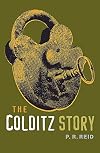
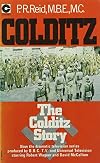
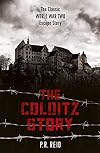
The Colditz Story
by P. R. Reid
On This Page
Description
Colditz was the last step for prisoners of war in World War II. An impregnable fortress, it was to Colditz that the Germans sent all those prisoners who persisted in escaping from other camps. However, during the four-year period when the castle was used as a prison, over 300 men escaped, 31 of whom managed to complete the hazardous journey home through Germany. This volume describes how prisoners from ten different countries formed an international escape academy. Skeleton keys were made, show more German passes and uniforms forged, maps drafted, and all manner of tools and machinery constructed out of whatever the prisoners had to hand. Pat Reid was one of the first captives to be imprisoned at Colditz in World War II. This is the tale of how he escaped. show lessTags
Recommendations
























Member Recommendations

Member Reviews
Gripping, but also immensely uplifting by virtue of the wonderful tone and spirit the writer and his fellow prisoners of war display. Just as much as the details of the escape attempts from this high-security forbidding castle in the heart of World War 2 Germany, the delightful spirit of the escapers is the story here, a combination of cheery, nonchalant, resourceful phlegmatism, and it infuses every page of this memoir. The details, and the personalities, are fascinating too, and of course cover real and remarkable events not inventions, but it's the perky, joky, playful manner with which these young men operated that draws the reader's admiration, and I think made the book such a success. Reading this now, nearly half a century on, show more one understands clearly how Major Reid's style and story inspired a whole Colditz genre, in 1970s Britain at least: a hugely popular TV show, board game, and much playground banter, as I recall. show less
I read this as part of an anthology, so not this specific edition. I've read it twice and vastly preferred it the first time, I suppose because it was more exciting. I would recommend it to anyone with an interest either in POWs in WWII or in prison escape stories.
The first part of the book details how the author and narrator, Pat Reid, escaped from his POW camp only to be recaptured and sent to Colditz, a supposedly inescapable prison, being a castle built into a mountain, where officer POWs who had escaped from other camps were all penned in together. This part of the story was enjoyable but extremely tense because you know going in that the escape is doomed to failure. Once interned at Colditz, Reid became the 'escape officer' of the show more British prisoners, which meant that all escape attempts had to be run past him and he helped work out the plans and recommend men for the job and generally orchestrate the escapes without being able to escape himself.
The middle of the novel is far more anecdotal and as such quite difficult to just sit down and read because there's no real momentum or much structure to it. Various escape attempts are described, but never in complete detail, supposedly to give future prisoners a chance to use such ideas, which often left me quite confused about what he was talking about. The prisoners were all apparently incredibly skilled craftmen and built amazing contraptions and disguises from seemingly nothing, but again the details on how are very vague. There are dozens of characters, so we never really get to know anyone, it was all just a random list of names, we don't even get to know the narrator very well. Sprinkled throughout this section are various little amusing scenes, which I'm sure were absolutely hilarious at the time and in such a difficult situation, but generally fail to be particularly funny on the page - not helped I think by the way they are just randomly dropped in and then we move on, rather than it all being woven into an actual narrative. Sometimes a character would be mentioned in an amusing anecdote and then never again, which was frustrating as I wanted to know what happened to each man at the end of the war.
The final section is about after Reid steps down from being the escape officer so that he can actually try escaping himself. The book's finale is his own escape from Colditz halfway through the war, which again has more of a narrative to it and is therefore much more compulsively readable than the main part of the book. Slightly annoying that it ends basically by just saying 'now read the sequel'.
So I definitely think this book could have been improved by being written more like a novel than a memoir, but it is intriguing nonetheless. show less
The first part of the book details how the author and narrator, Pat Reid, escaped from his POW camp only to be recaptured and sent to Colditz, a supposedly inescapable prison, being a castle built into a mountain, where officer POWs who had escaped from other camps were all penned in together. This part of the story was enjoyable but extremely tense because you know going in that the escape is doomed to failure. Once interned at Colditz, Reid became the 'escape officer' of the show more British prisoners, which meant that all escape attempts had to be run past him and he helped work out the plans and recommend men for the job and generally orchestrate the escapes without being able to escape himself.
The middle of the novel is far more anecdotal and as such quite difficult to just sit down and read because there's no real momentum or much structure to it. Various escape attempts are described, but never in complete detail, supposedly to give future prisoners a chance to use such ideas, which often left me quite confused about what he was talking about. The prisoners were all apparently incredibly skilled craftmen and built amazing contraptions and disguises from seemingly nothing, but again the details on how are very vague. There are dozens of characters, so we never really get to know anyone, it was all just a random list of names, we don't even get to know the narrator very well. Sprinkled throughout this section are various little amusing scenes, which I'm sure were absolutely hilarious at the time and in such a difficult situation, but generally fail to be particularly funny on the page - not helped I think by the way they are just randomly dropped in and then we move on, rather than it all being woven into an actual narrative. Sometimes a character would be mentioned in an amusing anecdote and then never again, which was frustrating as I wanted to know what happened to each man at the end of the war.
The final section is about after Reid steps down from being the escape officer so that he can actually try escaping himself. The book's finale is his own escape from Colditz halfway through the war, which again has more of a narrative to it and is therefore much more compulsively readable than the main part of the book. Slightly annoying that it ends basically by just saying 'now read the sequel'.
So I definitely think this book could have been improved by being written more like a novel than a memoir, but it is intriguing nonetheless. show less
I had not read much on Colditz so this was a great introduction to the camp and it's prisoners. The prisoners sent here were the ones who persisted in trying to escape other camps. Unfortunately, Colditz was not inescapable either. It was so interesting reading about all the ways these prisoners devised to escape. Their ingenuity was awe inspiring.
Remarkable stories. This is a fantastic book about amazing human beings. As page turning and seemingly far-fetched as spy fiction, but all real. Truth is stranger than fiction. Discovered this book in grade 7 at the jr high school library. Highly recommended.
A first person account of life in Colditz and the many unsuccessful and successful escape efforts. A bit disjointed, but interesting.
Colditz was the last stop for the intractable prisoners-of- war in the Second World War. It was to this impregnable fortress that the Germans sent all those prisoners who persisted in escaping from other camps, such as Stalag Luft III.
Once within the walls of Colditz, the Germans considered that escape was impossible. However, during the four-year period that the castle was used as a prison, over 300 men escaped, with 31 managing to complete the hazardous journey home through Germany. It was a truly international escape academy, with prisoners from 10 different countries. The prisoners made skeleton keys, forged German passes, drew up maps and created all manner of tools and machinery out of whatever they had to hand. The inventiveness show more of the escape artists knew no bounds: they tried everything from tunnelling, to hiding in rubbish sacks, disguising themselves as German officers, and leaping acrobatically from the castle walls. show less
Once within the walls of Colditz, the Germans considered that escape was impossible. However, during the four-year period that the castle was used as a prison, over 300 men escaped, with 31 managing to complete the hazardous journey home through Germany. It was a truly international escape academy, with prisoners from 10 different countries. The prisoners made skeleton keys, forged German passes, drew up maps and created all manner of tools and machinery out of whatever they had to hand. The inventiveness show more of the escape artists knew no bounds: they tried everything from tunnelling, to hiding in rubbish sacks, disguising themselves as German officers, and leaping acrobatically from the castle walls. show less
2.5 stars, to rate this more accurately. Good story but I personally think that P. R. Reid could have done better by hiring a good editor.
The story feels highly disjointed and it is really difficult even to remember names of most of the characters. Nevertheless, this is a good inclusion to my world war non-fiction shelf.
The story feels highly disjointed and it is really difficult even to remember names of most of the characters. Nevertheless, this is a good inclusion to my world war non-fiction shelf.
Members
- Recently Added By
Lists

Blue Pyramid 1,276 Best Books of All Time
1,248 works; 32 members

THE WAR ROOM
813 works; 24 members
Author Information

9+ Works 1,115 Members
Awards and Honors
Distinctions
Work Relationships
Is contained in
Is abridged in
Common Knowledge
- Canonical title
- The Colditz Story
- Original title
- The Colditz story; Escape From Colditz (The Colditz story) (The Colditz story)
- Original publication date
- 1952
- Important places
- Colditz, Saxony, Germany; Colditz Castle, Saxony, Germany
- Important events
- World War II (1939-1945)
- Related movies
- Colditz (2005 | IMDb); The Colditz Story (1955 | IMDb); Colditz (1972 | IMDb)
- Dedication
- To the men of Colditz who tired but did not succeed, yet generously helped those few that did; to all prisoners of tyranny, wherever in the world they may be cruelly confined; and to the young people of the world that they ma... (show all)y be vigilant in the pursuit of Freedom and guard it with tenacity and courage.
- First words
- The story of Colditz Castle in the Second World War begins on the narrow peninsula of Hel.
- Last words
- (Click to show. Warning: May contain spoilers.)Private Murphy was swamped by a milling onslaught of cheering, laughing, sobbing, shouting men.
Classifications
Statistics
- Members
- 407
- Popularity
- 75,865
- Reviews
- 7
- Rating
- (3.91)
- Languages
- Dutch, English, French, Swedish
- Media
- Paper, Audiobook, Ebook
- ISBNs
- 23
- UPCs
- 1
- ASINs
- 20