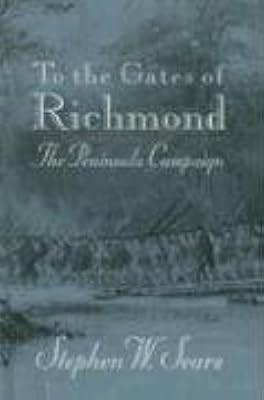
To the Gates of Richmond: The Peninsula Campaign
by Stephen W. Sears
On This Page
Description
To the Gates of Richmond charts the Peninsula Campaign of 1862, General George McClellan's grand scheme to march up the Virginia Peninsula and take the Confederate capital. For three months McClellan battled his way toward Richmond, but then Robert E. Lee took command of the Confederate forces. In seven days, Lee drove the cautious McClellan out, thereby changing the course of the war. Intelligent and well researched, To the Gates of Richmond vividly recounts one of the bloodiest battles of show more the Civil War. show lessTags
Recommendations







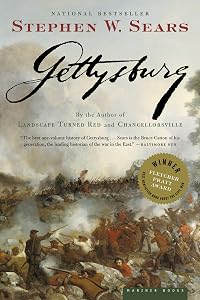


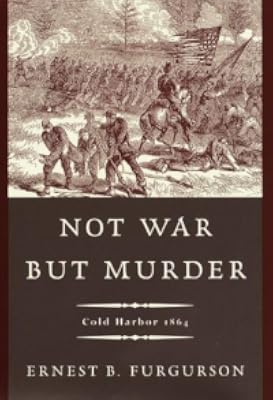


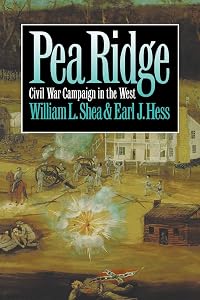
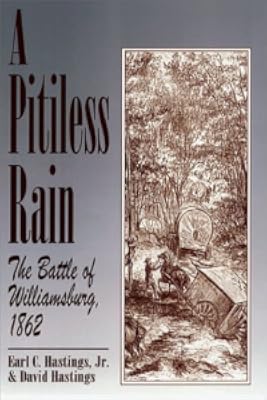



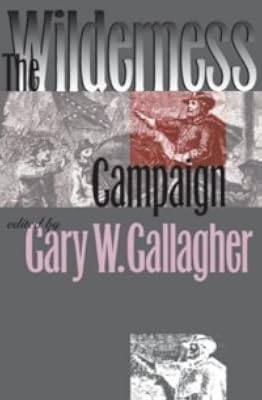


Member Recommendations
Member Reviews
Robert E. Lee's overly ambitious tactics, poorly drafted orders, and the Army of Northern Virginia's sloppy execution of his battle plans, are highlighted in Stephen W. Sears's history of the Peninsula Campaign in "To the Gates of Richmond." The problems which plagued Lee's army are compared with the arrogant bombasts and cowering timidity of "the young Napoleon," Gen. George B. McClellan. The author recounts McClellan's masterful strategy of making an amphibious landing on the lower Virginia peninsula, slowly and seemingly inexoribly advancing up that peninsula until his army was close enough to Richmond to hear the church bells and shows how Lee's ambitious and aggressive attacks caused McClellan to lose all nerve and to "snatch show more defeat from the jaws of victory. Relying on personal accounts of both common soldiers and ranking officers, Sears illustrates the hapless incompetence of both armies in this early campaign, the largest in terms of numbers of troops that would occur during the Civil War. History tells us that the Army of Northern Virginia and its legendary campaign would learn from their mistakes and improve, while McClellan would not and would be cast aside by Lincoln and history. Sears is a gifted author and this is an excellent and balanced account of an important seminal campaign of the American Civil War. show less
Yes, i like it. Yes, it is a well paced narrative of the story of McClellan's failed foray down to Richmond in 1862. Well told, generally fair. But.... and this will be a general comment because it does sort of drive me crazy in countless civil war books, but this books sort of epitomizes the bias of extolling Lee at the expense of all else. Throughout the Peninsula campaign, Lee barely triumphs- often due to McClellan's cautious bungling and misjudgments. But... it is never Lee's fault that things go wrong... it is always his people who don't write his orders down correctly or commanders practically willfully misreading his supposed intent. Never is it Lee... bungling. And yet... for McClellan and well, for everyone else (south show more included) they are simply "wrong" (or - though the author doesn't use these words: stupid, lazy, cowardly, slow, etc). As i mention this courses though these civil war histories - even supposedly objective (non south leaning, like this one) is suffused with this Lee worship. But when he isn't clear with orders and doesn't have the alignment right and the battle fails... isn't that his fault (as it would be if it were McClellan or anyone else)? show less
Ratings
Members
- Recently Added By
Author Information

41+ Works 5,761 Members
Stephen W. Sears is the author of many award-winning books on the Civil War, including Gettysburg, Landscape Turned Red, and Chancellorsville, all winners of the Fletcher Pratt Award. He lives in Connecticut.
Series
Belongs to Publisher Series
Common Knowledge
- Original publication date
- 1992
- People/Characters
- George B. McClellan; Joseph E. Johnston; Robert E. Lee; Edward Porter Alexander; Lawrence O'Bryan Branch; Darius N. Couch (show all 31); Jefferson Davis; Richard S. Ewell; William B. Franklin; Samuel P. Heintzelmann; A. P. Hill; Daniel Harvey Hill; Theophilus H. Holmes; Joseph Hooker; Benjamin Huger; Stonewall Jackson; Philip Kearny; Erasmus D. Keyes; Abraham Lincoln; James Longstreet; George A. McCall; Irvin McDowell; John B. Magruder; George W. Morell; Fitz-John Porter; Henry W. Slocum; Gustavus W. Smith; William F. "Baldy" Smith; J. E. B. Stuart; Edwin V. Sumner; W. H. C. Whiting
- Important places
- USA; Richmond, Virginia, USA; Virginia, USA; Chickahominy River, Virginia, USA; Fort Monroe, Virginia, USA; James River, Virginia, USA (show all 10); Shenandoah Valley, USA; White House Landing, Virginia, USA; White Oak Swamp, Virginia, USA; Yorktown, Virginia, USA
- Important events
- American Civil War (1861 | 1865); Peninsula Campaign (1862); Siege of Yorktown, Virginia; Battle of Fair Oaks; Battle of Seven Pines; Seven Days' Battles (show all 13); Battle of Gaines' Mill; Battle of Glendale; Battle of Malvern Hill; Battle of Mechanicsville; Battle of Hampton Roads; Shenandoah Valley Campaign; Battle of Williamsburg
- Dedication
- For My Mother and Father
- First words
- INTRODUCTION
. . . . . . . . . . . . .
"The enemy are at the gates. Who will take the lead and act, act, act?" the Richmond Dispatch pleaded on May 16, 1862, - Last words
- (Click to show. Warning: May contain spoilers.)The war was turning in a different direction, toward the battlefield at Manassas and after that to Antietam Creek in Maryland, far from the gates of Richmond.
- Blurbers
- Burns, Ken; Kernan, Michael; Mitgang, Herbert; Gallagher, Gary
- Original language
- English US
Classifications
- Genres
- History, Nonfiction, General Nonfiction
- DDC/MDS
- 973.732 — History & geography History of North America United States Civil War Era (1857-1865) Abraham Lincoln (1861-1865) Campaign of 1862
- LCC
- E473.6 .S43 — History of the United States United States Civil War period, 1861-1865 The Civil War, 1861-1865
- BISAC
Statistics
- Members
- 574
- Popularity
- 51,652
- Reviews
- 2
- Rating
- (4.22)
- Languages
- English
- Media
- Paper, Audiobook, Ebook
- ISBNs
- 7
- UPCs
- 2
- ASINs
- 14