On This Page
Description
The world ended. People survived. Per Hiero Desteen was a priest, a telepath-and a highly trained killer. Five thousand years after the apocalyptic event known only as The Death, Hiero is tasked with finding the secrets of the old world, which could protect his civilisation from massing enemies. The planet is not the same as it used to be.Tags
Recommendations



















Member Recommendations

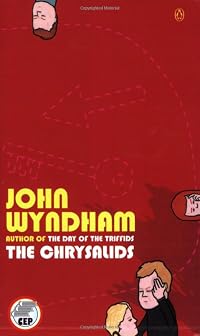
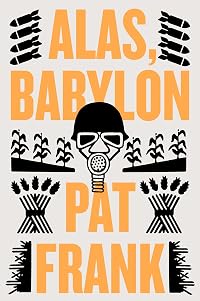
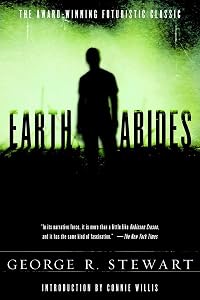
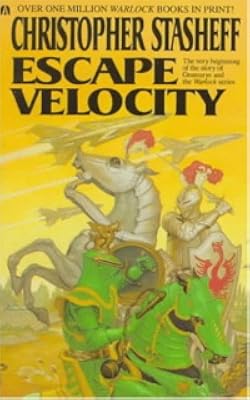
DisassemblyOfReason Norton's story also involves generations-later exploration of a post-holocaust world, but in DAYBREAK, 2250 A.D., the explorer is not one of the Star Men - the dedicated corps of explorers - himself, but only aspires to be.
Member Reviews
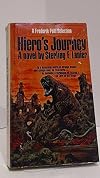
I found a battered old pocket paperback of Hiero's Journey by Sterling Lanier on the sale shelves for donated and withdrawn books at the public library. I wouldn't have given the ugly orange thing a second glance if I hadn't remembered it being listed in Appendix N of the original Dungeonmaster's Guide. So I spent my four bits and satisfied my curiosity.
The thing really is written in the episodic adventure style that is captured by pen-and-paper fantasy roleplaying, but the genre isn't sword and sorcery. Instead, it's a far-future post-apocalyptic scenario of the kind set out for play in the old Gamma World game. The foregone apocalypse is called "The Death," and evidently included nuclear and biological warfare. While there is a lot show more of physical fighting in the story, at least an equal share of attention is given to psychic powers and conflicts, with telepathy, divination, and various forms of mind-control practiced both by and against the protagonists.
There is an impressive diversity of new fauna (and suitably displaced flora) in this imagined future, many of which have their own psychic abilities. The heroes include a domesticated moose ("morse") of relatively high intelligence and what amounts to a talking bear, although the speech is all telepathy.
The Hiero of the title is a "Secondary Priest-Exorcist, Primary Rover and Senior Killman" who has been sent to find a fabled "computer" in a dead city beyond the Inland Sea (the former Great Lakes of North America). Hiero and the fellow denizens of his home abbey in the Metz Confederacy are of First Nations descent, while his eventual love interest and adventuring comrade Luchare is a black princess from Dalwah to the southeast. The only characters that are specified as white men are villains in the story, both savages and techno-magi of the Dark Brotherhood, but ideological racism is conspicuous by its absence from the story, unless you count the mutated sub-human races of the "Unclean."
The narrative voice rarely, but repeatedly, engages in a too-knowing relation of details in terms of the "ancient" knowledge of a 20th-century reader. For those who like this sort of thing, there is a lot more of it in a largely superfluous glossary appended to the novel. The pace of the book accelerates towards the end, and there is palatable narrative closure, despite the fact that the author went on to write a couple of sequels. show less
The thing really is written in the episodic adventure style that is captured by pen-and-paper fantasy roleplaying, but the genre isn't sword and sorcery. Instead, it's a far-future post-apocalyptic scenario of the kind set out for play in the old Gamma World game. The foregone apocalypse is called "The Death," and evidently included nuclear and biological warfare. While there is a lot show more of physical fighting in the story, at least an equal share of attention is given to psychic powers and conflicts, with telepathy, divination, and various forms of mind-control practiced both by and against the protagonists.
There is an impressive diversity of new fauna (and suitably displaced flora) in this imagined future, many of which have their own psychic abilities. The heroes include a domesticated moose ("morse") of relatively high intelligence and what amounts to a talking bear, although the speech is all telepathy.
The Hiero of the title is a "Secondary Priest-Exorcist, Primary Rover and Senior Killman" who has been sent to find a fabled "computer" in a dead city beyond the Inland Sea (the former Great Lakes of North America). Hiero and the fellow denizens of his home abbey in the Metz Confederacy are of First Nations descent, while his eventual love interest and adventuring comrade Luchare is a black princess from Dalwah to the southeast. The only characters that are specified as white men are villains in the story, both savages and techno-magi of the Dark Brotherhood, but ideological racism is conspicuous by its absence from the story, unless you count the mutated sub-human races of the "Unclean."
The narrative voice rarely, but repeatedly, engages in a too-knowing relation of details in terms of the "ancient" knowledge of a 20th-century reader. For those who like this sort of thing, there is a lot more of it in a largely superfluous glossary appended to the novel. The pace of the book accelerates towards the end, and there is palatable narrative closure, despite the fact that the author went on to write a couple of sequels. show less
It must have been at least 30 years since I last read this. I chiefly remember it being one of the inspirations for the Gamma World RPG; indeed some of the monsters from that RPG appear to have had the serial numbers filed off.
Over 5,000 years ago the old world was destroyed in nuclear and biological war. The North American survivors, some hideously mutated, started anew (Europe is known from legends; there has been no contact since the war). The continent is divided between two opposed groups: the Unclean Brotherhood who wish to return the world to pre-war technology, and the Church Universal in what used to be Canada. Per Hiero Desteen is sent by his abbot on a secret mission to the south to find a computer to aid in the Church's show more struggle against their enemies.
It's a bit preachy in places, and the world building is a bit on the black and white side. However, it's a reasonable read and an unusual story for the time with it's Canadian First Nations descended hero and lack of racism. Some of the science and biology is a bit shaky; I really don't believe a moth-balled base would survive intact for over 5,000 years; I would have expected the plastic sheeting to have long disintegrated. I also thought Hiero came across as a bit Mary-Sueish.
OK, recommended for the RPG influences. show less
Over 5,000 years ago the old world was destroyed in nuclear and biological war. The North American survivors, some hideously mutated, started anew (Europe is known from legends; there has been no contact since the war). The continent is divided between two opposed groups: the Unclean Brotherhood who wish to return the world to pre-war technology, and the Church Universal in what used to be Canada. Per Hiero Desteen is sent by his abbot on a secret mission to the south to find a computer to aid in the Church's show more struggle against their enemies.
It's a bit preachy in places, and the world building is a bit on the black and white side. However, it's a reasonable read and an unusual story for the time with it's Canadian First Nations descended hero and lack of racism. Some of the science and biology is a bit shaky; I really don't believe a moth-balled base would survive intact for over 5,000 years; I would have expected the plastic sheeting to have long disintegrated. I also thought Hiero came across as a bit Mary-Sueish.
OK, recommended for the RPG influences. show less
Hiero Desteen, Secondary Priest-Exorcist and Senior Killman of the Church Universal, is chosen by the Science Committee to travel from the Abbey Central in Sask to the Lost Cities of the southeast, in search of the computers that hold archives of the time before The Death. (He is one of six chosen to travel in different directions.)
It is the post-apocalypic world of the year 7476, thousands of years after human civilization destroyed itself with nuclear weapons and artificial disease. The Kandan Confederacy consists of Metz Republic in the west, the Otwah League in the east, city states of the southeast such as D’alwah on the coast of the Lantik, etc. The evil Unclean seek domination, and in recent years have been closing in, show more ambushing convoys and colonies of the abbey. The Unclean are assisted by the Leemutes, animals with lethal (non-reproducible) mutations, invariably disgusting in appearance: furhoppers, hairy howlers, man-rats, slimers, were-bears. In the background, observing and stepping in as needed, are the Eleveners, adherents of the eleventh commandment: “Thou shalt not destroy the Earth nor the Life thereon.” The Unclean and Eleveners are both alliances formed by scientists after The Death. The Unclean were psychologists, biochemists, physicists. The Eleveners were ecologists.
Hiero travels on the morse (mutated moose) Klootz, through the boreal forest and swamp to the Inland Sea (formerly the Great Lakes), to the port of Neeyana (possibly once Indiana), around a desert of lingering radiation, into the land of the Vilah-ree, onward to the site of an ancient city. Along the way he is joined by the intelligent bear Gorm, the runaway D’alwah princess Luchare, the Elevener Brother Aldo, merchant ship Captain Gimp and crew. He battles the Unclean wizards S’nerg and S’duna and S’carn, collecting technologically sophisticated devices from those he slays. He seeks guidance by casting and interpreting the 40 symbols, which warn him about the House... Communication by mind is the norm, though the relatively primitive societies of the southeast communicate vocally; Luchare has to be taught. As he encounters enemies, Hiero strengthens mental powers of shielding his own mind and penetrating others.
My reading experience was perhaps influenced by a poor electronic version, 837 pages (it’s not nearly this long, the numbers skipped) with no chapter divisions (they exist, but were not linked separately) and mental dialogue unmarked by punctuation or italics; the journey often felt like a mishmashy trudge, episodes strung together rather than an overarching story or character development. I was unaware of the glossary until I reached the end, and it would have provided coherence. There are some cool bits, especially the fungi. I’m curious enough to continue on to the second book.
(read 28 Jan 2013) show less
It is the post-apocalypic world of the year 7476, thousands of years after human civilization destroyed itself with nuclear weapons and artificial disease. The Kandan Confederacy consists of Metz Republic in the west, the Otwah League in the east, city states of the southeast such as D’alwah on the coast of the Lantik, etc. The evil Unclean seek domination, and in recent years have been closing in, show more ambushing convoys and colonies of the abbey. The Unclean are assisted by the Leemutes, animals with lethal (non-reproducible) mutations, invariably disgusting in appearance: furhoppers, hairy howlers, man-rats, slimers, were-bears. In the background, observing and stepping in as needed, are the Eleveners, adherents of the eleventh commandment: “Thou shalt not destroy the Earth nor the Life thereon.” The Unclean and Eleveners are both alliances formed by scientists after The Death. The Unclean were psychologists, biochemists, physicists. The Eleveners were ecologists.
Hiero travels on the morse (mutated moose) Klootz, through the boreal forest and swamp to the Inland Sea (formerly the Great Lakes), to the port of Neeyana (possibly once Indiana), around a desert of lingering radiation, into the land of the Vilah-ree, onward to the site of an ancient city. Along the way he is joined by the intelligent bear Gorm, the runaway D’alwah princess Luchare, the Elevener Brother Aldo, merchant ship Captain Gimp and crew. He battles the Unclean wizards S’nerg and S’duna and S’carn, collecting technologically sophisticated devices from those he slays. He seeks guidance by casting and interpreting the 40 symbols, which warn him about the House... Communication by mind is the norm, though the relatively primitive societies of the southeast communicate vocally; Luchare has to be taught. As he encounters enemies, Hiero strengthens mental powers of shielding his own mind and penetrating others.
My reading experience was perhaps influenced by a poor electronic version, 837 pages (it’s not nearly this long, the numbers skipped) with no chapter divisions (they exist, but were not linked separately) and mental dialogue unmarked by punctuation or italics; the journey often felt like a mishmashy trudge, episodes strung together rather than an overarching story or character development. I was unaware of the glossary until I reached the end, and it would have provided coherence. There are some cool bits, especially the fungi. I’m curious enough to continue on to the second book.
(read 28 Jan 2013) show less
2.5 stars
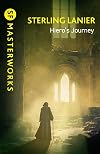
I really wanted to give this book a higher rating. There’s a lot here to love and Lanier has a very fertile imagination: Psychic Canadian warrior-priest? Check; also psychic Moose destrier? Check; psychic mutant bear pal and assorted demi-human mutant creatures? Check; travelogue through post-apocalyptic North America? Check. It's like the coolest campaign of Gamma World ever that you never got to play as a kid. I fondly recall seeing the far-out Darrell K. Sweet cover on this book during nearly every trip I took to the library as a kid. I always looked at it wistfully, wanting to dive into an adventure so obviously cool, but my own snobbishness kept me away. Well, I finally broke down and took the plunge.
Unfortunately it show more appears that some of my snobbishness may have been justified. The first part of the book carried me along with the narrative at a fairly quick pace and despite the somewhat clunky prose and more! Exclamation! Marks! than you! can shake! a stick! at!!!! (maybe William Shatner should read the audio version) I was certainly entertained. Somewhere around ¾ of the way through, though, I completely ran out of steam and aside from a few pages here and there I left the book unread for months. I really wanted to finish this book, though, and it did improve somewhat towards the end.
Lanier’s post-apocalyptic North America has some interesting locales: from the expansive pine forests of the north to the miasmic swamps and irradiated buried cities of the south, all of them populated by the mutated descendants of our modern wildlife as well as the ‘Leemutes’, or semi-intelligent human-animal hybrids, most of which are under the control of the nefarious Unclean Brotherhood. Amongst this colourful background Lanier gives us many memorable scenes, especially Hiero's psychic battle with the Dweller in the Mist, his various confrontations with the pompous leaders of the Unclean, and the final confrontation with a living hive-mind fungal-slime. I’m a bit of a sucker for stories with PSI-elements as well, so I enjoyed the psychic aspects of the book: whether it was Hiero’s scrying of the future with the aid of his trusty bag of symbols, his inner battles with other intelligences, or the possession of an animal’s eyes to see the wider landscape.
That being said, the prose really didn’t do the story any favours and despite the intriguing aspects of Lanier’s story I found myself slowed down at many points in the narrative and moving on to other things from time to time, so it took me quite awhile to finish this. Hiero is also a very simplistic hero (the pun certainly isn’t my fault) who is basically almost always right, his enemies always wrong…there’s very little room for any grey in this world. My biggest stumbling blocks, though, were the stilted prose mentioned above and the superfluous romance subplot that added nothing to the story and was cringe-inducing in its puerility and simplicity. Overall there is a lot of awesome here, buried in bad prose and simplistic plotting. show less
I really wanted to give this book a higher rating. There’s a lot here to love and Lanier has a very fertile imagination: Psychic Canadian warrior-priest? Check; also psychic Moose destrier? Check; psychic mutant bear pal and assorted demi-human mutant creatures? Check; travelogue through post-apocalyptic North America? Check. It's like the coolest campaign of Gamma World ever that you never got to play as a kid. I fondly recall seeing the far-out Darrell K. Sweet cover on this book during nearly every trip I took to the library as a kid. I always looked at it wistfully, wanting to dive into an adventure so obviously cool, but my own snobbishness kept me away. Well, I finally broke down and took the plunge.
Unfortunately it show more appears that some of my snobbishness may have been justified. The first part of the book carried me along with the narrative at a fairly quick pace and despite the somewhat clunky prose and more! Exclamation! Marks! than you! can shake! a stick! at!!!! (maybe William Shatner should read the audio version) I was certainly entertained. Somewhere around ¾ of the way through, though, I completely ran out of steam and aside from a few pages here and there I left the book unread for months. I really wanted to finish this book, though, and it did improve somewhat towards the end.
Lanier’s post-apocalyptic North America has some interesting locales: from the expansive pine forests of the north to the miasmic swamps and irradiated buried cities of the south, all of them populated by the mutated descendants of our modern wildlife as well as the ‘Leemutes’, or semi-intelligent human-animal hybrids, most of which are under the control of the nefarious Unclean Brotherhood. Amongst this colourful background Lanier gives us many memorable scenes, especially Hiero's psychic battle with the Dweller in the Mist, his various confrontations with the pompous leaders of the Unclean, and the final confrontation with a living hive-mind fungal-slime. I’m a bit of a sucker for stories with PSI-elements as well, so I enjoyed the psychic aspects of the book: whether it was Hiero’s scrying of the future with the aid of his trusty bag of symbols, his inner battles with other intelligences, or the possession of an animal’s eyes to see the wider landscape.
That being said, the prose really didn’t do the story any favours and despite the intriguing aspects of Lanier’s story I found myself slowed down at many points in the narrative and moving on to other things from time to time, so it took me quite awhile to finish this. Hiero is also a very simplistic hero (the pun certainly isn’t my fault) who is basically almost always right, his enemies always wrong…there’s very little room for any grey in this world. My biggest stumbling blocks, though, were the stilted prose mentioned above and the superfluous romance subplot that added nothing to the story and was cringe-inducing in its puerility and simplicity. Overall there is a lot of awesome here, buried in bad prose and simplistic plotting. show less
A fascinating post-apocalypse fantasy about a ranger and his moose and a friendly bear. Nothing complicated, but a good story in the style of Paul O. Williams. 5000 years from now, mostly in western 'Kanada', civilization struggles to survive, battling against the mutated 'leemutes' and their masters, the evil Unclean. The Unclean have mastered mental powers and to a lesser extent, so have the Metz, Hiero's people. Lots of adventure, a bit of romance and a good dose of post-apocalyptic fantasy. Great stuff.
Lanier’s most distinctive gift as an author is an enthusiasm for his stories. Even if you are not a fan of post-apocalyptic fiction or adventure fiction you cannot help but be caught up in the frenetic eagerness of the narrative. The sheer number of expository sentences that end in explanation points is staggering. He may not be the most gifted author out there, but he obviously had a lot of fun writing Hiero’s Journey and I found it a bit contagious.
The “Hiero” of this story is a priest in a future Catholic order (as is typical of many post-apocalyptic stories) who sets out on a quest across a drastically changed North America looking for technological relics of vanished civilization. Mutated animals and people (and iterations show more of the two) abound. Do not try to look for scientific accuracy in this tale; it is “soft” science fiction resolutely and unapologetically. There is nothing really innovative or genre-busting about Hiero, but it was not a waste of my time. One minor complaint I have is how Lanier constantly relied on metaphors about radio and other technologic trappings when describing how telepathy worked in this story. Considering the main character had never heard of radio or seen anything like it these descriptions broke the fourth wall a bit. show less
The “Hiero” of this story is a priest in a future Catholic order (as is typical of many post-apocalyptic stories) who sets out on a quest across a drastically changed North America looking for technological relics of vanished civilization. Mutated animals and people (and iterations show more of the two) abound. Do not try to look for scientific accuracy in this tale; it is “soft” science fiction resolutely and unapologetically. There is nothing really innovative or genre-busting about Hiero, but it was not a waste of my time. One minor complaint I have is how Lanier constantly relied on metaphors about radio and other technologic trappings when describing how telepathy worked in this story. Considering the main character had never heard of radio or seen anything like it these descriptions broke the fourth wall a bit. show less
A post apocalyptic adventure novel about a priest-warrior from northwest Canada sent to the south to find out about computers. Because of his ability to read minds and project thoughts, he accumulates friends and engages in enemies. A common plot of humanities people fighting technical people, who use machines to increase their psychic powers. Actually, this is a good read and suitable for front porch or beach reading times.
Members
- Recently Added By
Lists

Best Post-Apocalyptic Stories
143 works; 88 members

Books Read in 2016
4,666 works; 197 members
Author Information

24+ Works 1,340 Members

Sterling E. Lanier has a Legacy Library. Legacy libraries are the personal libraries of famous readers, entered by LibraryThing members from the Legacy Libraries group.
Some Editions
Awards and Honors
Series

Belongs to Publisher Series
Work Relationships
Common Knowledge
- Canonical title
- Hiero's Journey
- Original title
- Hiero's Journey
- Original publication date
- 1973
- People/Characters
- Hiero
- Important places
- Canada
- Dedication
- To Lester and Judy-Lynn del Ray who did all the new work.
- First words
- The computer man, thought Hiero.
- Last words
- (Click to show. Warning: May contain spoilers.)The world moves at a certain speed, Aldo answerd after a bit. We must all learn to move with it
- Original language
- English
Classifications
Statistics
- Members
- 601
- Popularity
- 48,712
- Reviews
- 9
- Rating
- (3.88)
- Languages
- English, German, Lithuanian, Russian
- Media
- Paper, Ebook
- ISBNs
- 12
- ASINs
- 12