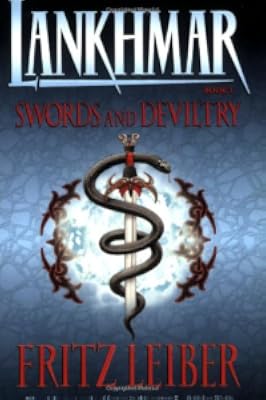
On This Page
Description
Swords and Deviltry, the first book of Leiber's landmark series, introduces us to a strange world where our two strangers find the familiar in themselves and discover the icy power of female magic. Three master-magician femme fatales and a sprightly lad illuminate the bonds between father and son, the relationship between the bravado of the imagination and the courage of fools. A hedge wizard explains the cold war between the sexes. Mouse and Fafhrd meet again and learn the truth of how show more Mouse became the Gray Mouser. Together they traverse the smoke and mirrors of Lankhmar learning more and more of the foggy world in which they live, mapping the sinister silent symptoms of the never-ending night smog. They follow the night smog's relation to the region's longing for larceny and the hazy opiate of vanity. Last but certainly not least, they experience the pleasures and pains of the City of Sevenscore Thousand Smokers that will lead them to countless more adventures and misadventures. show lessTags
Recommendations























Member Recommendations
by anonymous user
Member Reviews
Leiber is one of the fathers of sword and sorcery fiction, and it shows. Reading these stories feels a little like sitting at the feet of an old, old storyteller while he reminisces about childhood heroes. There's a feel of both age and timelessness about these stories--tall, fur-clad barbarian and short swordsman-thief who can vanish in the shadows--this is like reading the origin myth for characters we've known for decades.
The four stories (three novellas and one vignette) within describe the adventures of Fafhrd, a giant barbarian from the frozen wastes, and the Gray Mouser, a youth who has apprenticed to a hedge-wizard. 'Induction,' covers a meeting between the two in a famous city. 'The Snow Women' is Fafhrd's origin story, and show more how he came to leave his tribe. 'The Unholy Grail' covers the Grey Mouse's origin, and 'Ill Met in Lankhmar' is when they meet again and become true companions. 'Lankhmar' won a Hugo and Nebula for best novella, and it is plain why.
These are the tales that influenced the greats of fantasy. There's a tone of wry humor, perhaps a little mocking at youth and noble intentions, and early in the stories I wondered if the narrative would remain tongue-in-cheek. Then Leiber would suddenly twist it, and the frustration, the rage, and the fear in his characters would come into play. It's well done.
Leiber does, perhaps, show his age in these stories, both personally and culturally. Woman have no likeable roles, playing controlling mother-witch, junior controlling fiance-witch, Lady Macbeth, and Ophelia. Still, there is something of sophistication in their character as Leiber gets inside their emotional landscape to explain their actions, or lack of. As the stories of Fafhrd and Gray span 50 years, I'm interested to see where they end up.
Learning Leiber was one of the fathers of S&S sent me on an internet hunt, and I find my appreciation for his stories growing. His parents were both Shakespearean actors, and a reoccurring theme through his writing was acting and the life of actors. Late in life, he received royalties from D&D, who used Fafhrd and Gray as characters.
A note for Pratchett fans out there: Lankhmar was apparently an indirect inspiration for Ankh-Morpork and Pratchett has two characters in the first Discworld based on Fafhrd and the Gray Mouser.
A solid three and a half stars.
Cross posted at http://clsiewert.wordpress.com/2013/01/01/swords-and-deviltry-fafhrd-and-the-gra... show less
The four stories (three novellas and one vignette) within describe the adventures of Fafhrd, a giant barbarian from the frozen wastes, and the Gray Mouser, a youth who has apprenticed to a hedge-wizard. 'Induction,' covers a meeting between the two in a famous city. 'The Snow Women' is Fafhrd's origin story, and show more how he came to leave his tribe. 'The Unholy Grail' covers the Grey Mouse's origin, and 'Ill Met in Lankhmar' is when they meet again and become true companions. 'Lankhmar' won a Hugo and Nebula for best novella, and it is plain why.
These are the tales that influenced the greats of fantasy. There's a tone of wry humor, perhaps a little mocking at youth and noble intentions, and early in the stories I wondered if the narrative would remain tongue-in-cheek. Then Leiber would suddenly twist it, and the frustration, the rage, and the fear in his characters would come into play. It's well done.
Leiber does, perhaps, show his age in these stories, both personally and culturally. Woman have no likeable roles, playing controlling mother-witch, junior controlling fiance-witch, Lady Macbeth, and Ophelia. Still, there is something of sophistication in their character as Leiber gets inside their emotional landscape to explain their actions, or lack of. As the stories of Fafhrd and Gray span 50 years, I'm interested to see where they end up.
Learning Leiber was one of the fathers of S&S sent me on an internet hunt, and I find my appreciation for his stories growing. His parents were both Shakespearean actors, and a reoccurring theme through his writing was acting and the life of actors. Late in life, he received royalties from D&D, who used Fafhrd and Gray as characters.
A note for Pratchett fans out there: Lankhmar was apparently an indirect inspiration for Ankh-Morpork and Pratchett has two characters in the first Discworld based on Fafhrd and the Gray Mouser.
A solid three and a half stars.
Cross posted at http://clsiewert.wordpress.com/2013/01/01/swords-and-deviltry-fafhrd-and-the-gra... show less
Between 1939 and 1988, Leiber wrote about three dozen stories and a novel featuring Fafhrd and the Gray Mouser, a barbarian and a thief who travel together through the sword-and-sorcery world of Newhon. Those stories were eventually collected in the 7-volume "Swords" series, of which this is the first.
It opens with a brief introductory vignette, and this is how Leiber first presents his characters:
"In Lankhmar on one murky night, if we can believe the runic books of Sheelba of the Eyeless Face, there met for the first time those two dubious heroes and whimsical scoundrels, Fafhrd and the Gray Mouser. Fafhrd's origins were easy to perceive in his near seven-foot height and limber-looking ranginess, his hammered ornaments and huge show more longsword: he was clearly a barbarian from the Cold Waste north even of the Eight Cities and the Trollstep Mountains. The Mouser's antecedents were more cryptic and hardly to be deduced from his childlike stature, gray garb, mouseskin hood shadowing flat swart face, and deceptively dainty rapier; but somewhere about him was the suggestion of cities and the south, the dark streets and also the sun-drenched spaces. As the twain eyed each other challengingly through the murky fog lit indirectly by distant torches, they were already dimly aware that they were two long-sundered, matching fragments of a greater hero and that each had found a comrade who would outlast a thousand quests and a lifetime -- or a hundred lifetimes -- of adventuring."
Clearly, we are not in the Asimovian world of invisible narrators and transparent prose; that is a lot of style. I think of this kind of writing as "cheesecake language;" a small slice of it can be absolutely delightful, but if you take in too much in a single sitting, you're going to get a little queasy.
Beyond that brief vignette, this book contains three stories, one to introduce us to each character and one to tell the story of their first meeting. "The Snow Women" is set in Fafhrd's northern village; he is a 17-year-old caught up in a passionate romance with a visiting actress, and longing desperately to see the "civilized" world to the south. "The Unholy Grail" (1963 Hugo short story nominee) introduces the Mouser as he rescues a fair damsel from her cruel father, the Duke. And they meet in "Ill Met in Lankhmar" (1970 Hugo/Nebula novella winner) when they independently attempt to re-steal the same newly stolen goods from members of the Thieves' Guild.
"Lankhmar" is by far the best of the three, a lively comic heist caper. While it's written relatively late in the series, it makes a fine introduction to the characters. They come vividly to life as individuals, and the relationship between them is instantly understood.
There is a plot turn that I feel obliged to mention, even though it's a bit of a spoiler. The women the two men meet in their opening solo tales both die in "Lankhmar." It's impossible, of course, to know what Leiber was thinking when he made this choice, but coming to the story a half-century later, it feels a bit defensive. If you're going to spend fifty years writing a series about two male best friends who travel the world together, then by god you'd better give each of them a tragic love story to explain why neither of them ever shows much interest in settling down to romance and family, or people might think they're (gasp!) homosexual!
This sort of fantasy isn't generally my cup of tea, and I wouldn't want to read another full book of this prose all at once, but as an occasional story or two, I can imagine enjoying more of this quite a lot. show less
It opens with a brief introductory vignette, and this is how Leiber first presents his characters:
"In Lankhmar on one murky night, if we can believe the runic books of Sheelba of the Eyeless Face, there met for the first time those two dubious heroes and whimsical scoundrels, Fafhrd and the Gray Mouser. Fafhrd's origins were easy to perceive in his near seven-foot height and limber-looking ranginess, his hammered ornaments and huge show more longsword: he was clearly a barbarian from the Cold Waste north even of the Eight Cities and the Trollstep Mountains. The Mouser's antecedents were more cryptic and hardly to be deduced from his childlike stature, gray garb, mouseskin hood shadowing flat swart face, and deceptively dainty rapier; but somewhere about him was the suggestion of cities and the south, the dark streets and also the sun-drenched spaces. As the twain eyed each other challengingly through the murky fog lit indirectly by distant torches, they were already dimly aware that they were two long-sundered, matching fragments of a greater hero and that each had found a comrade who would outlast a thousand quests and a lifetime -- or a hundred lifetimes -- of adventuring."
Clearly, we are not in the Asimovian world of invisible narrators and transparent prose; that is a lot of style. I think of this kind of writing as "cheesecake language;" a small slice of it can be absolutely delightful, but if you take in too much in a single sitting, you're going to get a little queasy.
Beyond that brief vignette, this book contains three stories, one to introduce us to each character and one to tell the story of their first meeting. "The Snow Women" is set in Fafhrd's northern village; he is a 17-year-old caught up in a passionate romance with a visiting actress, and longing desperately to see the "civilized" world to the south. "The Unholy Grail" (1963 Hugo short story nominee) introduces the Mouser as he rescues a fair damsel from her cruel father, the Duke. And they meet in "Ill Met in Lankhmar" (1970 Hugo/Nebula novella winner) when they independently attempt to re-steal the same newly stolen goods from members of the Thieves' Guild.
"Lankhmar" is by far the best of the three, a lively comic heist caper. While it's written relatively late in the series, it makes a fine introduction to the characters. They come vividly to life as individuals, and the relationship between them is instantly understood.
There is a plot turn that I feel obliged to mention, even though it's a bit of a spoiler. The women the two men meet in their opening solo tales both die in "Lankhmar." It's impossible, of course, to know what Leiber was thinking when he made this choice, but coming to the story a half-century later, it feels a bit defensive. If you're going to spend fifty years writing a series about two male best friends who travel the world together, then by god you'd better give each of them a tragic love story to explain why neither of them ever shows much interest in settling down to romance and family, or people might think they're (gasp!) homosexual!
This sort of fantasy isn't generally my cup of tea, and I wouldn't want to read another full book of this prose all at once, but as an occasional story or two, I can imagine enjoying more of this quite a lot. show less
This book contains the origin stories for Fafhrd and the Grey Mouser, the popular pair of adventurers from the mind of Fritz Leiber.
"The Snow Women" is Fafhrd's story. He's all of 18 and it shows. Leiber captures all the raging hormones and misguided idealism of guys that age. Think of this as the barbarian equivalent of Alice Cooper's song "I'm Eighteen" (both were published in 1970 by the way). He has a hot girlfriend, Mara, who loves him dearly, but he's smitten by Vlana, a sultry actress who rides into town with a caravan of entertainers. He's confused. Tired of life in the snow-covered forest, he longs to see the civilized world. So far, his view of the world is as pillager as his tribe of "ice men" ransack towns along the coast show more as a way of life. Vlana represents his idea of civilization, and his attraction is dual. He wants to bang her, but his mind wants to learn more about the "civilized world" and what it has to offer.
Vlana struck me as being a few years older, if not in age then surely in mind. She knows how the world works and uses her beauty to her advantage. Fafhrd is an open book to her. His naivete about civilization is cute. While she isn't cruel to him, she does play him to her advantage.
Mara knows that Fafhrd lusts for Vlana. She doesn't buy the whole civilization line he tries to sell her. It pisses her off (rightly so!), and she's torn between kicking Fafhrd's ass and forgiving him.
The arrival of the caravan is an annual event organized by the men of the tribe. There are acting performances with musical accompaniment, but it's primarily striptease. The men are dogs and are dumb about barring the women from watching. The women of the tribe resent it. They've resorted to witchcraft and ice-laden snowballs to interfere with the show and wrest their husbands and sons away. It's gone on for so long that the grudge has festered. Fafhrd's mother, bitter from her husband's death while mountain climbing, is their leader. She's strong with the dark arts and continues to escalate the conflict. Fafhrd feels smothered by her. In turn, he feels like Mara is turning into his mother.
"The Unholy Grail" is the Grey Mouser's origin story. While serving as an apprentice to a wizard, he came to meet the local duke's daughter Ivrian. Love blossomed for a time, but Mouser knew of the duke's disdain for him and the wizard. He returned one day from an errand to find the wizard dead and his home burned. From here, the Mouser's tale becomes all about vengeance.
As for Ivrian, she's torn between helping Mouser and obeying her cruel father. He verbally abused her often, comparing Ivrian to her deceased mother and how drastically she fell short. It isn't pretty; and the emotional abuse has left Ivrian scarred and fearful of her father's wrath. There are few things worse for a child than to grow up with abusive parents, so criticism of Ivrian's alleged weakness should be tempered accordingly.
"Ill Met in Lankhmar" is where our two heroes' stories come together. Each is eyeing a group of thieves on their way back to the guild with a successful haul, but they're unaware of each other. As fate would have it, they simultaneously attack the thieves. But rather than fight over the spoils, they see something in the other that draws them together. They decide to celebrate their success and new found friendship by getting drunk and introducing the other to their girlfriends. But the Thieves' Guild isn't about to take this affront lying down.
I enjoyed Leiber's writing style. I think Carol said it best: "Reading these stories feels a little like sitting at the feet of an old, old storyteller while he reminisces about childhood heroes." I couldn't agree more.
3.5 stars show less
"The Snow Women" is Fafhrd's story. He's all of 18 and it shows. Leiber captures all the raging hormones and misguided idealism of guys that age. Think of this as the barbarian equivalent of Alice Cooper's song "I'm Eighteen" (both were published in 1970 by the way). He has a hot girlfriend, Mara, who loves him dearly, but he's smitten by Vlana, a sultry actress who rides into town with a caravan of entertainers. He's confused. Tired of life in the snow-covered forest, he longs to see the civilized world. So far, his view of the world is as pillager as his tribe of "ice men" ransack towns along the coast show more as a way of life. Vlana represents his idea of civilization, and his attraction is dual. He wants to bang her, but his mind wants to learn more about the "civilized world" and what it has to offer.
Vlana struck me as being a few years older, if not in age then surely in mind. She knows how the world works and uses her beauty to her advantage. Fafhrd is an open book to her. His naivete about civilization is cute. While she isn't cruel to him, she does play him to her advantage.
Mara knows that Fafhrd lusts for Vlana. She doesn't buy the whole civilization line he tries to sell her. It pisses her off (rightly so!), and she's torn between kicking Fafhrd's ass and forgiving him.
The arrival of the caravan is an annual event organized by the men of the tribe. There are acting performances with musical accompaniment, but it's primarily striptease. The men are dogs and are dumb about barring the women from watching. The women of the tribe resent it. They've resorted to witchcraft and ice-laden snowballs to interfere with the show and wrest their husbands and sons away. It's gone on for so long that the grudge has festered. Fafhrd's mother, bitter from her husband's death while mountain climbing, is their leader. She's strong with the dark arts and continues to escalate the conflict. Fafhrd feels smothered by her. In turn, he feels like Mara is turning into his mother.
"The Unholy Grail" is the Grey Mouser's origin story. While serving as an apprentice to a wizard, he came to meet the local duke's daughter Ivrian. Love blossomed for a time, but Mouser knew of the duke's disdain for him and the wizard. He returned one day from an errand to find the wizard dead and his home burned. From here, the Mouser's tale becomes all about vengeance.
As for Ivrian, she's torn between helping Mouser and obeying her cruel father. He verbally abused her often, comparing Ivrian to her deceased mother and how drastically she fell short. It isn't pretty; and the emotional abuse has left Ivrian scarred and fearful of her father's wrath. There are few things worse for a child than to grow up with abusive parents, so criticism of Ivrian's alleged weakness should be tempered accordingly.
"Ill Met in Lankhmar" is where our two heroes' stories come together. Each is eyeing a group of thieves on their way back to the guild with a successful haul, but they're unaware of each other. As fate would have it, they simultaneously attack the thieves. But rather than fight over the spoils, they see something in the other that draws them together. They decide to celebrate their success and new found friendship by getting drunk and introducing the other to their girlfriends. But the Thieves' Guild isn't about to take this affront lying down.
I enjoyed Leiber's writing style. I think Carol said it best: "Reading these stories feels a little like sitting at the feet of an old, old storyteller while he reminisces about childhood heroes." I couldn't agree more.
3.5 stars show less
At times the Fafhrd and Grey Mouser stories are so awash with common tropes and ideas that they almost feel like a pastiche of the genre. If there is one criticism to be made of these stories, it's that in creating basically everything about modern fantasy, they end up feeling, at times, hyperderivative.
At other times, though, Fafhrd and Grey Mouser's adventures across Nehwon still feel fresh, radical, and wildly inventive in a way that decades of stories since have struggled to live up to. Even when it's good, so much modern fantasy is just retreading these century old steps, but without Lieber's wit, inventiveness, and sharp literary style.
It's really is wild to imagine reading Fafhrd and Grey Mouser alongside Conan in the show more 1930s—decades before the publishing of The Lord of the Rings. I can't imagine what it must have felt like to witness the birth of a brand new style of Fantasy—a genre which, up to that point, consisted solely of William Morris style legendary romances and Thackeray style fairy tales. There was no template for what Fritz Lieber and Robert E. Howard did, nothing to emulate. They were true radicals.
The difference is: while Howard died young, and Conan with him, Leiber lived to the ripe old age of 81, and continued writing his two adventurers almost right up until his death. They were his constant companions and grew and changed alongside him. While the earlier 1930s and 40s tales are weird, occasionally surreal, and at times obviously indebted to Lovecraft, the stories from the 1970s have a gritty, almost grimdark nastiness. And yet everything hangs together beautifully.
My one complaint, and the only reason this book isn't rated higher, is the opening novella was kid of a slog. Maybe I just don't find the icy wastes a particularly compelling location, or maybe Fafhrd just isn't as interesting without his wily sidekick, but the story dragged. Thankfully, after the first 70 or so pages, everything picks up and the stories really do live up to their hype.
I struggle to enjoy a lot of fantasy, it's just not my genre, but this book is an exception. Beautiful prose, engaging characters, an interesting world, and lashings of bizarre horror imagery. It's everything I want out of fantasy storytelling. show less
At other times, though, Fafhrd and Grey Mouser's adventures across Nehwon still feel fresh, radical, and wildly inventive in a way that decades of stories since have struggled to live up to. Even when it's good, so much modern fantasy is just retreading these century old steps, but without Lieber's wit, inventiveness, and sharp literary style.
It's really is wild to imagine reading Fafhrd and Grey Mouser alongside Conan in the show more 1930s—decades before the publishing of The Lord of the Rings. I can't imagine what it must have felt like to witness the birth of a brand new style of Fantasy—a genre which, up to that point, consisted solely of William Morris style legendary romances and Thackeray style fairy tales. There was no template for what Fritz Lieber and Robert E. Howard did, nothing to emulate. They were true radicals.
The difference is: while Howard died young, and Conan with him, Leiber lived to the ripe old age of 81, and continued writing his two adventurers almost right up until his death. They were his constant companions and grew and changed alongside him. While the earlier 1930s and 40s tales are weird, occasionally surreal, and at times obviously indebted to Lovecraft, the stories from the 1970s have a gritty, almost grimdark nastiness. And yet everything hangs together beautifully.
My one complaint, and the only reason this book isn't rated higher, is the opening novella was kid of a slog. Maybe I just don't find the icy wastes a particularly compelling location, or maybe Fafhrd just isn't as interesting without his wily sidekick, but the story dragged. Thankfully, after the first 70 or so pages, everything picks up and the stories really do live up to their hype.
I struggle to enjoy a lot of fantasy, it's just not my genre, but this book is an exception. Beautiful prose, engaging characters, an interesting world, and lashings of bizarre horror imagery. It's everything I want out of fantasy storytelling. show less
" ... they were already dimly aware that they were two long-sundered, matching fragments of a greater hero ..."
Leiber's tales of Fafhrd & the Gray Mouser hold up, unlike much of the other reading I was doing at the time I first encountered them. To be sure, there were books even then which felt distinctive, though I could not put a finger to why: it wasn't subject matter or genre, certainly. Now I think some of the qualities contributing to that sense are Leiber's stylised prose, which scans smoothly despite its being an affectation, rather like Dunsany or Cabell; his lightly mocking tone, wielded to good effect as subtextual commentary; elliptical storytelling; an abiding sense of humour, at times to point of hilarity but never to show more farce, or leastwise never becoming farcical; and perhaps most specific, a deep vein of the Weird.
LT's Deep Ones persuade me Swords & Sorcery owes its status as a legitimate subgenre to its grounding in the Weird Tradition. I love it here but see no need to pursue S&S further. Fafhrd & the Mouser will serve as exemplars for me, much as Banks's Culture does for space opera or Furst's Night Soldiers for wartime espionage.
No map appears in the first 3 volumes, though clearly Leiber prepared a fairly developed geography as part of his world building. Most of the stories first appeared in periodicals, and space for a map was probably unavailable if the thought was even attractive to Leiber. There was an opportunity to add a map to the editions first compiling the Fafhrd & Mouser cycle, evidently Leiber declined. However, two maps, neither drawn by Leiber, appear in volume 4 (Swords Against Wizardry), one of them an overview of Nehwon; each apparently was included in the original periodical publication, and was not prepared specially. The Nehwon map is interesting, though the reproduction quality is middling at best and the map itself stylised such that lettering and detail are often obscured even were it a perfectly clear copy. All of that is incidental, because in the end, Leiber's exotic locales are better without the clear delineations of a map, and I think that's part of the reason the map fails to impress: it dilutes the effect wrought in description of travels in Nehwon and Leiber's evocation of locale and storied lands. These are evoked deliberately in a way that it's clear they are familiar to his characters, while remaining provocatively unfamilar to his reader.
Other reviews point out Leiber penned several "bridge" pieces, allegedly to make the compiled short stories read more as a continuous narrative, and to align the various adventures with one another. I would not have noticed on my own they were added, nor do I find them jarring or hard-pressed to make square pegs fit round holes. If they were written expressly for the compiled books, I wonder if they didn't put to paper Leiber's long-held but never thoroughly committed ideas. I think they work very well, and several stand well alone, even though little more than a vignette.
Jeff Jones's cover art for the ACE paperbacks are the best of the various editions: inchoate, almost threatening, not as literally heroic as typical S&S art. But the overall cover design contributes to the effect, as does my nostalgia.
//
"Induction" (1957 / Two Sought Adventure)
This brief intro was originally written for the then-near-complete omnibus of F&GM tales issued in 1957. When the updated set was issued, the 1957 book was renamed and became Book 2; the intro was moved here, the new Book 1.
"The Snow Women" (1970 / Fantastic)
"The Unholy Grail" (1962 / Fantastic)
Origin stories for Fafhrd, and then the Mouser. It's revealed they first encounter one another in "Snow Women", though they don't meet until ...
"Ill Met In Lankhmar" (1970 / Fantasy & Science Fiction)
A classic tale, well told, and with details crucial to understanding later developments: the link to the Thieves' Guild, the tragic undertone to adventuring, and of course Vlana and Ivrian, and rats. show less
Leiber's tales of Fafhrd & the Gray Mouser hold up, unlike much of the other reading I was doing at the time I first encountered them. To be sure, there were books even then which felt distinctive, though I could not put a finger to why: it wasn't subject matter or genre, certainly. Now I think some of the qualities contributing to that sense are Leiber's stylised prose, which scans smoothly despite its being an affectation, rather like Dunsany or Cabell; his lightly mocking tone, wielded to good effect as subtextual commentary; elliptical storytelling; an abiding sense of humour, at times to point of hilarity but never to show more farce, or leastwise never becoming farcical; and perhaps most specific, a deep vein of the Weird.
LT's Deep Ones persuade me Swords & Sorcery owes its status as a legitimate subgenre to its grounding in the Weird Tradition. I love it here but see no need to pursue S&S further. Fafhrd & the Mouser will serve as exemplars for me, much as Banks's Culture does for space opera or Furst's Night Soldiers for wartime espionage.
No map appears in the first 3 volumes, though clearly Leiber prepared a fairly developed geography as part of his world building. Most of the stories first appeared in periodicals, and space for a map was probably unavailable if the thought was even attractive to Leiber. There was an opportunity to add a map to the editions first compiling the Fafhrd & Mouser cycle, evidently Leiber declined. However, two maps, neither drawn by Leiber, appear in volume 4 (Swords Against Wizardry), one of them an overview of Nehwon; each apparently was included in the original periodical publication, and was not prepared specially. The Nehwon map is interesting, though the reproduction quality is middling at best and the map itself stylised such that lettering and detail are often obscured even were it a perfectly clear copy. All of that is incidental, because in the end, Leiber's exotic locales are better without the clear delineations of a map, and I think that's part of the reason the map fails to impress: it dilutes the effect wrought in description of travels in Nehwon and Leiber's evocation of locale and storied lands. These are evoked deliberately in a way that it's clear they are familiar to his characters, while remaining provocatively unfamilar to his reader.
Other reviews point out Leiber penned several "bridge" pieces, allegedly to make the compiled short stories read more as a continuous narrative, and to align the various adventures with one another. I would not have noticed on my own they were added, nor do I find them jarring or hard-pressed to make square pegs fit round holes. If they were written expressly for the compiled books, I wonder if they didn't put to paper Leiber's long-held but never thoroughly committed ideas. I think they work very well, and several stand well alone, even though little more than a vignette.
Jeff Jones's cover art for the ACE paperbacks are the best of the various editions: inchoate, almost threatening, not as literally heroic as typical S&S art. But the overall cover design contributes to the effect, as does my nostalgia.
//
"Induction" (1957 / Two Sought Adventure)
This brief intro was originally written for the then-near-complete omnibus of F&GM tales issued in 1957. When the updated set was issued, the 1957 book was renamed and became Book 2; the intro was moved here, the new Book 1.
"The Snow Women" (1970 / Fantastic)
"The Unholy Grail" (1962 / Fantastic)
Origin stories for Fafhrd, and then the Mouser. It's revealed they first encounter one another in "Snow Women", though they don't meet until ...
"Ill Met In Lankhmar" (1970 / Fantasy & Science Fiction)
A classic tale, well told, and with details crucial to understanding later developments: the link to the Thieves' Guild, the tragic undertone to adventuring, and of course Vlana and Ivrian, and rats. show less
Swords and Deviltry is the first volume of Fritz Leiber’s Fafhrd and Gray Mouser stories, a series that in its own way has probably been every bit as influential as The Lord of the Rings. With the difference, though, that this influence was not primarily literary – while Tolkien’s magnum opus spawned countless High Fantasy novels that imitated or emulated it, reworked it or pitted themselves against it, Low Fantasy authors looking for literary inspiration for the most part turned towards Robert E. Howard’s Conan stories as their model. But what Fafhrd and the Gray Mouser, their world of Nehwon and particularly its largest city Lankhmar were a huge influence on, is fantasy roleplay gaming, in particular Dungeons & Dragons (and show more everything in turn influenced by D&D, like a large part of Fantasy movies – leading to the slightly bizarre situation that the Conan movies owe at least as much, if not more, to Leiber as to Howard).
It is not so much the setting where that influence is noticeable (there are neither elves nor dwarves in Leiber’s world), but it is the adventuring mindset – everyone who ever got together with friends for a round of D&D will immediately be familar with the banter between the two protagonists here, recognise their unabashed mercenary proclivities and feel right at home in the way many of these stories resemble a traditional dungeon crawl.
This volume is the first one in the series and contains a brief “Induction”, followed by three novellas, an origin story for each of our heroes plus the tale of how they first met. As such, it is undoubtedly the place to start reading the series, even though it is one of the weaker offerings – neither Fafhrd nor the Gray Mouser are as fun on their own as they are together, and while I would not say that “The Snow Women” and “The Unholy Grail” are bad stories (quite far from it, actually) they are missing that incomparable magic that springs to life and invigorates the narrative the moment they join forces during a robbery in Lankhmar (a robbery, almost needless to say, that they perform, not one that they are a victim of). What was slightly-above-standard Sword & Sorcery fare before from then onwards is transformed into something unique and uniquely spirited by the (not always harmonious) friendship between the hulking Northern barbarian and the slight Southern apprentice mage.
That joy in and elation through Fafhrd’s and the Gray Mouser’s friendship is also noticeable in Leiber’s writing – while the first two stories, “The Snow Women” in particular, are mostly remarkable for Leiber’s habit (almost something of a tick) to adverbize and adjectivize every word he can lay his hands on, leading to some epically awkward formulations like “He slitheringly walked toward it across the bediamonded snow crust” (I am still uncertain whether he meant that sentence to be taken seriously or not), in “Ill Met in Lankhmar” there is a new quality to the language, in particular the dialogues that Leiber pushes way over the top with obvious relish, making his youthful protagonists talk in an overdone archaic idiom that would fit Ye Olde High Fantasy Knight but is totally and comically out of place for aspiring teenage rogues and is played out by Leiber to considerable effect.
It is not all fun and laughter, though - as it turns out, there is a strong horror element to these stories as well (like in most, if not all, early Sword & Sorcery – Lovecraft, even though I am not sure whether there is even a single sword in any of this stories, should be considered as one of the founding fathers of the genre), and Leiber does not flinch back from tragedy, either, ending the collection on a rather melancholy note. But as good as “Ill Met in Lankhmar” is (and it is good indeed), overall this collection is mostly a promise of things to come, things that get a lot better than this. show less
It is not so much the setting where that influence is noticeable (there are neither elves nor dwarves in Leiber’s world), but it is the adventuring mindset – everyone who ever got together with friends for a round of D&D will immediately be familar with the banter between the two protagonists here, recognise their unabashed mercenary proclivities and feel right at home in the way many of these stories resemble a traditional dungeon crawl.
This volume is the first one in the series and contains a brief “Induction”, followed by three novellas, an origin story for each of our heroes plus the tale of how they first met. As such, it is undoubtedly the place to start reading the series, even though it is one of the weaker offerings – neither Fafhrd nor the Gray Mouser are as fun on their own as they are together, and while I would not say that “The Snow Women” and “The Unholy Grail” are bad stories (quite far from it, actually) they are missing that incomparable magic that springs to life and invigorates the narrative the moment they join forces during a robbery in Lankhmar (a robbery, almost needless to say, that they perform, not one that they are a victim of). What was slightly-above-standard Sword & Sorcery fare before from then onwards is transformed into something unique and uniquely spirited by the (not always harmonious) friendship between the hulking Northern barbarian and the slight Southern apprentice mage.
That joy in and elation through Fafhrd’s and the Gray Mouser’s friendship is also noticeable in Leiber’s writing – while the first two stories, “The Snow Women” in particular, are mostly remarkable for Leiber’s habit (almost something of a tick) to adverbize and adjectivize every word he can lay his hands on, leading to some epically awkward formulations like “He slitheringly walked toward it across the bediamonded snow crust” (I am still uncertain whether he meant that sentence to be taken seriously or not), in “Ill Met in Lankhmar” there is a new quality to the language, in particular the dialogues that Leiber pushes way over the top with obvious relish, making his youthful protagonists talk in an overdone archaic idiom that would fit Ye Olde High Fantasy Knight but is totally and comically out of place for aspiring teenage rogues and is played out by Leiber to considerable effect.
It is not all fun and laughter, though - as it turns out, there is a strong horror element to these stories as well (like in most, if not all, early Sword & Sorcery – Lovecraft, even though I am not sure whether there is even a single sword in any of this stories, should be considered as one of the founding fathers of the genre), and Leiber does not flinch back from tragedy, either, ending the collection on a rather melancholy note. But as good as “Ill Met in Lankhmar” is (and it is good indeed), overall this collection is mostly a promise of things to come, things that get a lot better than this. show less
I'm getting old, and can no longer save early books from the canon for some later date. I'm now trying to read through David Pringle's list of the 100 Best Fantasy Novels, and it's time for Leiber's fantasy series (which I'll read in order, of course, though I understand the individual elements were written and published more higgledy-piggledy than that).
I was just recently tremendously disappointed with Glory Road (a Heinlein), which seemed so old, so sexist, so frustrating. Swords and Deviltry, in contrast, felt so fresh, so modern, so engaging. I knew it was an old book (or, rightly, a collection of one two old novellas and one old story) but it wasn't as old as I'd pegged it before reading (in my head it was a 1930s sort-of-thing, show more not 1960s, which is a considerable difference), but regardless it read (especially "Ill-Met in Lankhmar") as if it had been published yesterday. Apparently the first Fafhrd/Mouser story was written in 1939, so I'm not far off conceptually, but those collected here are later).
What Lord the Rings did for "traipsing across the vastness" quest fantasy, Fritz Leiber has done for "rollicking urban buddy" fantasy. It's all there. Am I reading Swords and Deviltry or am I reading Lies of Locke Lamora, or The Crown Conspiracy, or The Name of the Wind? I've been thinking of those sorts of books as particularly 21st century, not having a clue (because I hadn't read the Fafhrd/Mouser series) of their tonal antecedents. I think Leiber may have invented the Thieves Guild, influenced Dungeons and Dragons, RPGs, video games ... he apparently coined the terms Heroic Fantasy and Swords & Sorcery.
I'm ecstatic that something that used to be so difficult to obtain (track down old editions of magazines, or obscure novels in used books stores) is now a few mouse clicks away, whether getting new printings from Amazon, ebooks for a Kobo or Kindle, or sourcing original texts from Abe.com ... sure, sometimes you're stuck with a dreadful Glory Road (which you can abandon midway, oh, the bliss!), and sometimes you're rewarded with a wonderful Fritz Leiber collection.
P.S. Had already read his Conjure Wife, three times, so I knew I liked him. I recommend it, the central premise is terrific. It's urban fantasy.
P.P.S. His writing (actual words, not plotting/characterization) is terrific. I kept smiling at the aptness of individual sentences.
(Note: 5 stars = amazing, wonderful, 4 = very good book, 3 = decent read, 2 = disappointing, 1 = awful, just awful. I'm fairly good at picking for myself so end up with a lot of 4s). I feel a lot of readers automatically render any book they enjoy 5, but I grade on a curve! show less
I was just recently tremendously disappointed with Glory Road (a Heinlein), which seemed so old, so sexist, so frustrating. Swords and Deviltry, in contrast, felt so fresh, so modern, so engaging. I knew it was an old book (or, rightly, a collection of one two old novellas and one old story) but it wasn't as old as I'd pegged it before reading (in my head it was a 1930s sort-of-thing, show more not 1960s, which is a considerable difference), but regardless it read (especially "Ill-Met in Lankhmar") as if it had been published yesterday. Apparently the first Fafhrd/Mouser story was written in 1939, so I'm not far off conceptually, but those collected here are later).
What Lord the Rings did for "traipsing across the vastness" quest fantasy, Fritz Leiber has done for "rollicking urban buddy" fantasy. It's all there. Am I reading Swords and Deviltry or am I reading Lies of Locke Lamora, or The Crown Conspiracy, or The Name of the Wind? I've been thinking of those sorts of books as particularly 21st century, not having a clue (because I hadn't read the Fafhrd/Mouser series) of their tonal antecedents. I think Leiber may have invented the Thieves Guild, influenced Dungeons and Dragons, RPGs, video games ... he apparently coined the terms Heroic Fantasy and Swords & Sorcery.
I'm ecstatic that something that used to be so difficult to obtain (track down old editions of magazines, or obscure novels in used books stores) is now a few mouse clicks away, whether getting new printings from Amazon, ebooks for a Kobo or Kindle, or sourcing original texts from Abe.com ... sure, sometimes you're stuck with a dreadful Glory Road (which you can abandon midway, oh, the bliss!), and sometimes you're rewarded with a wonderful Fritz Leiber collection.
P.S. Had already read his Conjure Wife, three times, so I knew I liked him. I recommend it, the central premise is terrific. It's urban fantasy.
P.P.S. His writing (actual words, not plotting/characterization) is terrific. I kept smiling at the aptness of individual sentences.
(Note: 5 stars = amazing, wonderful, 4 = very good book, 3 = decent read, 2 = disappointing, 1 = awful, just awful. I'm fairly good at picking for myself so end up with a lot of 4s). I feel a lot of readers automatically render any book they enjoy 5, but I grade on a curve! show less
Members
- Recently Added By
Lists

Survey of Fantasy Classics
111 works; 23 members

The Seven-League Shelf
57 works; 3 members

Sarah's Wish List
48 works; 1 member

Unshelved Book Clubs
579 works; 5 members

Books Read in 2019
4,052 works; 110 members

al.vick-series
381 works; 2 members

Books Read in 2026
2,041 works; 68 members
Author Information

Some Editions
Awards and Honors
Awards
Distinctions
Series

Belongs to Publisher Series
Work Relationships
Is contained in
Common Knowledge
- Canonical title
- Swords and Deviltry
- Original title
- Swords and Deviltry
- Original publication date
- 1970 (Induction, The Snow Women, Ill Met in Lankhmar) (Induction, The Snow Women, Ill Met in Lankhmar); 1962 (The Unholy Grail) (The Unholy Grail)
- People/Characters
- Fafhrd; Gray Mouser; Ivrian; Vlana; Mor; Nalgron (show all 24); Mara; Krovas; Flim (Night Beggarmaster); Slivikin; Histromilo; Hringorl; Harrax; Hrey; Vellix the Venturer; Essedinex; Glavas Rho; Duke Jamarrl; Giscorl; Slevyas; Fissif; Krivas; Hristomilo; Mokker
- Important places
- Lankhmar, Nehwon; Cold Waste; Cold Corner; Nehwon
- First words
- Sundered from us by gulfs of time and stranger dimensions dreams the ancient world of Nehwon with its towers and skulls and jewels, its swords and sorceries.
- Last words*
- (Click to show. Warning: May contain spoilers.)La Porte du Marais était le chemin le plus court pour sortir de cette grande cité prestigieuse qui leur faisait désormais horreur et qu'un cœur lourd et blessé ne pouvait pas supporter plus longtemps qu'il n'était strictement nécessaire, une ville peuplée de fantômes adorés, mais impossible à regarder en face.
- Original language
- English
- Canonical DDC/MDS
- 813.087662
*Some information comes from Common Knowledge in other languages. Click "Edit" for more information.
Classifications
- Genres
- Fantasy, Fiction and Literature
- DDC/MDS
- 813.087662 — Literature & rhetoric American literature in English American fiction in English By type Genre fiction Adventure fiction Speculative fiction Fantasy Sword and Sorcery
- LCC
- PS3523 .E4583 .S96 — Language and Literature American literature American literature Individual authors 1900-1960
- BISAC
Statistics
- Members
- 2,323
- Popularity
- 8,534
- Reviews
- 60
- Rating
- (3.71)
- Languages
- 10 — Czech, Dutch, English, Finnish, French, German, Hungarian, Portuguese, Spanish, Swedish
- Media
- Paper, Audiobook, Ebook
- ISBNs
- 40
- ASINs
- 25