On This Page
Description
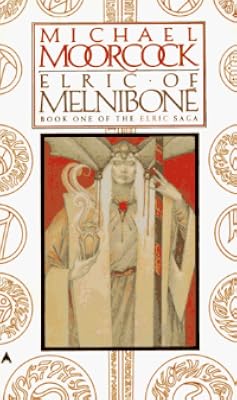
When Michael Moorcock began chronicling the adventures of the albino sorcerer Elric, last king of decadent Melniboné, and his sentient vampiric sword, Stormbringer, he set out to create a new kind of fantasy adventure, one that broke with tradition and reflected a more up-to-date sophistication of theme and style. The result was a bold and unique hero-weak in body, subtle in mind, dependent on drugs for the vitality to sustain himself-with great crimes behind him and a greater destiny show more ahead: a rock-and-roll antihero who would channel all the violent excesses of the sixties into one enduring archetype. Now, presented in the author's preferred story order, the classic Elric saga. show lessTags
Recommendations


















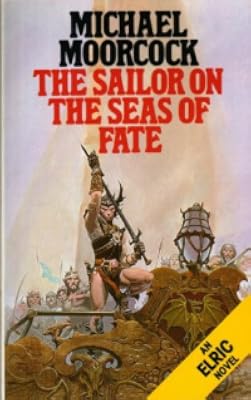
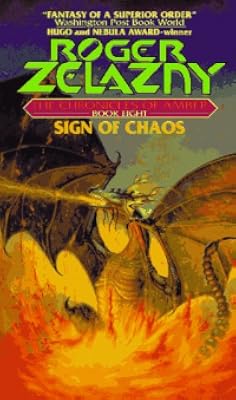


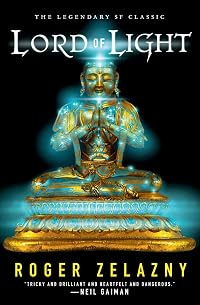
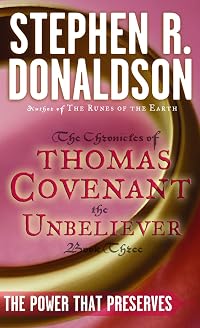

Member Recommendations

thesmellofbooks Two unusual heroes. Elric, an albino, Jirel, a woman. Lively and exciting tales of sword and sorcery.


artturnerjr Spinrad takes the deliberately exaggerated phallic symbolism of the Elric stories to extremes that Moorcock never dreamed of.
andomck Brooding,introspective sci fi/fantasy

andomck Sword and sorcery meets sword and planet.

Member Reviews
Having avoided these books in my teens when they were fresh and new, and when I really didn't care about fantasy apart from Tolkein, I've allowed a friend to put me up to reading the series. My initial impression is positive, as the intellectual and restrained (at least by the standards of Melnibone) Elric finds himself forced to be a man of action, when he'd mostly rather be a philosopher king. Seeing as anyone with even a brief impression of the series knows that this is all going to turn out badly, this tale is also drenched in irony; the point of it all will be the journey, not the destination.
This is some epic awesomeness.
I'm an absolute sucker for the grand sweeping personal quests to gain more and yet more magical power in the service of rescuing your one true love, casting aside morals, the greater good, your own health, and possibly your own sanity.
This tale holds up perfectly after all this time. All the best aspects of modern fantasy are encapsulated and written with such spartan clarity and diamond sharpness within Moorcock's classic. I only needed this one taste and I'm now a lifelong fan. It's that easy.
This is easily one of the classics of all Sword and Sorcery and I knew that people swore by it before I read it, but I was hesitant. Why? Hell if I know. It was such a brilliant, fantastic, imaginative world, but show more even better than that were the characters. Elric, of course, is the ultimate Nietzsche Super-Man, fully beyond good and evil, but he, like all super-villains, considers himself the ultimate hero of his story, and I have to agree with him. I love the story.
It's really cool that I've finally read something, after all this time, that evokes the same feeling as I get from the classic Star Wars films. When they faced each other with the two uber-powerful runic swords, I got chills. Seriously. I usually don't get suckered in this easy. I've read a LOT of fantasy and a LOT of really great fantasy, but this one was so diamond-hard that it left me speechless. :)
I was even more impressed by the author's command of sheer storytelling. The whole thing actually evoked awe and wonder. Each new mastery of magic came at a cost, and there was so much magic. Like the Ouroboros, Elric kept feeding on himself to gain more and more power, and the cycle repeated and repeated, with future sacrifice for power, now. Is it the ultimate faustian tale? I don't know, yet, but I'll be reading more. As it is here, we've got a meteoric rise from the simple mastery of the kingdom of Melniboné to the mastery of chaos magic, the elementals, and the godlike black sword.
Do you want a character so awfully OP that nothing, absolutely nothing, can stand in his way? Hell yeah. I'm a gamer. Do you want to have a story that manages to take him and never make him boring? Hell yeah! Here you go!
I'm seriously ashamed that I never got into this earlier. I knew it was out there. I know the author is recognized as one of the greats of fantasy. And now I know why, and I'm hooked. :) show less
I'm an absolute sucker for the grand sweeping personal quests to gain more and yet more magical power in the service of rescuing your one true love, casting aside morals, the greater good, your own health, and possibly your own sanity.
This tale holds up perfectly after all this time. All the best aspects of modern fantasy are encapsulated and written with such spartan clarity and diamond sharpness within Moorcock's classic. I only needed this one taste and I'm now a lifelong fan. It's that easy.
This is easily one of the classics of all Sword and Sorcery and I knew that people swore by it before I read it, but I was hesitant. Why? Hell if I know. It was such a brilliant, fantastic, imaginative world, but show more even better than that were the characters. Elric, of course, is the ultimate Nietzsche Super-Man, fully beyond good and evil, but he, like all super-villains, considers himself the ultimate hero of his story, and I have to agree with him. I love the story.
It's really cool that I've finally read something, after all this time, that evokes the same feeling as I get from the classic Star Wars films. When they faced each other with the two uber-powerful runic swords, I got chills. Seriously. I usually don't get suckered in this easy. I've read a LOT of fantasy and a LOT of really great fantasy, but this one was so diamond-hard that it left me speechless. :)
I was even more impressed by the author's command of sheer storytelling. The whole thing actually evoked awe and wonder. Each new mastery of magic came at a cost, and there was so much magic. Like the Ouroboros, Elric kept feeding on himself to gain more and more power, and the cycle repeated and repeated, with future sacrifice for power, now. Is it the ultimate faustian tale? I don't know, yet, but I'll be reading more. As it is here, we've got a meteoric rise from the simple mastery of the kingdom of Melniboné to the mastery of chaos magic, the elementals, and the godlike black sword.
Do you want a character so awfully OP that nothing, absolutely nothing, can stand in his way? Hell yeah. I'm a gamer. Do you want to have a story that manages to take him and never make him boring? Hell yeah! Here you go!
I'm seriously ashamed that I never got into this earlier. I knew it was out there. I know the author is recognized as one of the greats of fantasy. And now I know why, and I'm hooked. :) show less
That was a helluva lot of fun. "Elric" is considered Moorcock's most famous avatar of his "Eternal Champion" theme. I can't really explain it without sounding insane - just read the Wikipedia article if you're curious (https://en.m.wikipedia.org/wiki/Eternal_Champion). To say Moorcock was prolific is putting it mildly. I was in a massive used bookstore today and he took up almost two rows himself in the fantasy paperbacks. Apparently the universes he spins in different novels and trilogies layer in on themselves and...yeah I've been nerding out today.
All that to say, "Elric" is damn fun - Moorcock's prose is lyrical, imaginative and it moves fast. The narrative is strong and it takes you to weird places but you're cool with it. Groom, show more the Earth King? Sure. The Ship That Moves Over Land And Water? I can dig it. The black rune-swords Stormbringer and Mournblade? Hell yeah. It hits the right spots to satisfy without overdoing it. I'll read the rest. show less
All that to say, "Elric" is damn fun - Moorcock's prose is lyrical, imaginative and it moves fast. The narrative is strong and it takes you to weird places but you're cool with it. Groom, show more the Earth King? Sure. The Ship That Moves Over Land And Water? I can dig it. The black rune-swords Stormbringer and Mournblade? Hell yeah. It hits the right spots to satisfy without overdoing it. I'll read the rest. show less
I read this ages ago, and remembered loving it. But I decided I could give it (and the sequels) away to a friend who has recently discovered classic SF, and then decided I should read them again before doing so. And wow—at least as great as I remember! Complex and interesting characters, weird ancient sorcery, evocative and lyrical writing... this book has it all. And while I can appreciate an exciting tome of 1000+ pages (Stormlight, Malazan, etc), its nice to be reminded of just how much an author can accomplish with less than 200 pages.
It's probably been close to forty years since I read the Elric novels and, though I have a vague memory of kinda sorta digging them, I could remember very little of them.
But lately, I've picked up a couple of Elric graphic novels that I enjoyed, and I've been listening to a lot of Blue Öyster Cult, who has several songs inspired by Elric. So, I went searching for my paperbacks to reread them...and I obviously lent them to some asshole who never got around to returning them. Likely the reason I run a strict policy of never lending any books anymore.
Anyway, by good fortune, while on vacation, I indulged in one of my favourite pastimes, visiting little hole-in-the-wall bookshops in small towns. And there, on the top shelf of the fantasy show more section, were the first six novels (handy, since I still have the seventh and last one, which I'm loathe to read because I distinctly remember hating it).
I snagged them all, and I'm going through the books again.
And while the plot of the first one seemed to meander a fair amount, I have to say, I enjoyed the hell out of it.
I mean, there's a certain amount of brain-checking at the door required, and you have to accept the 1970s standards of comic book typecasting: The brooding hero, the hero's hot girlfriend who's willing to wait however long it takes to be with him, and also conveniently acts as the standard woman-who-needs-saving occasionally, and finally, the villain who's a villain just because.
So, wrap your head around that, and the rest of the stuff is gravy.
Gotta say, while almost fifty years later, the fantasy genre has a much more seen-it-all done-it-all feel, back then, I have a feeling that Elric was truly something different. Yes, there was magic and gods, sword and sorcery, but it had never been stuffed together quite this way before. It wasn't Tolkien, and it was Robert E. Howard, but it was a pretty solid mash up of the two, with some bonus stuff thrown in for good measure.
Really looking forward to book two. show less
But lately, I've picked up a couple of Elric graphic novels that I enjoyed, and I've been listening to a lot of Blue Öyster Cult, who has several songs inspired by Elric. So, I went searching for my paperbacks to reread them...and I obviously lent them to some asshole who never got around to returning them. Likely the reason I run a strict policy of never lending any books anymore.
Anyway, by good fortune, while on vacation, I indulged in one of my favourite pastimes, visiting little hole-in-the-wall bookshops in small towns. And there, on the top shelf of the fantasy show more section, were the first six novels (handy, since I still have the seventh and last one, which I'm loathe to read because I distinctly remember hating it).
I snagged them all, and I'm going through the books again.
And while the plot of the first one seemed to meander a fair amount, I have to say, I enjoyed the hell out of it.
I mean, there's a certain amount of brain-checking at the door required, and you have to accept the 1970s standards of comic book typecasting: The brooding hero, the hero's hot girlfriend who's willing to wait however long it takes to be with him, and also conveniently acts as the standard woman-who-needs-saving occasionally, and finally, the villain who's a villain just because.
So, wrap your head around that, and the rest of the stuff is gravy.
Gotta say, while almost fifty years later, the fantasy genre has a much more seen-it-all done-it-all feel, back then, I have a feeling that Elric was truly something different. Yes, there was magic and gods, sword and sorcery, but it had never been stuffed together quite this way before. It wasn't Tolkien, and it was Robert E. Howard, but it was a pretty solid mash up of the two, with some bonus stuff thrown in for good measure.
Really looking forward to book two. show less
I have this feeling that my luck is none too good. This sword here at my side don’t act the way it should. Keeps calling me it’s master, but I feel like it’s slave.
Hauling me faster and faster to an early, early grave.
And it howls! It howls like hell!
"Black Blade" by Blue Öyster Cult, lyrics by Michael Moorcock
How many authors do you know who gets to write lyrics for a song based on his book to be record by a legendary metal band? Elric has to be just about the coolest most bad ass mofo in the history of fantasy fiction. He is clearly not a graduate from the Cimmerian School Barbaric Fantasy Heroism though, he is more the regal melancholy type, a tall red eyed albino with a penchant for navel-gazing between slicing & dicing show more sessions. Elric is armed with an accursed soul sucking black sword called Stormbringer, a weapon so fearsome Excalibur would want to put a restraining order on it.
Considering the gargantuan length of your average fantasy epic these days it is amazing how much plot, characterization and action Moorcock managed to squeeze into less than 200 pages. Elric's character its developed quickly and vividly. The plot of this book is like Games of Thrones on speed and the end is a beginning for many more adventures to come.
Elric is one of Michael Moorcock's Eternal Champions, essentially one hero in different versions protecting parallel universes. Most Eternal Champions books do not have to be read in order but as far as Elric is concerned this one is the best starting point. I am looking forward to reading them all. show less
This is a classic 'I really wanted to like it' review. I mean, this book is the start of an entire genre of morally ambiguous characters!
It turns out I appreciate that in theory, but the book itself was just... dear lord. In this case 'morally ambiguous' mostly comes down to a moping emo drama king, a very stupid arch nemesis, and a completely passive True Love.
Some of the descriptions were nice, and the world building was a bit shallow, but potentially interesting. That's the best I can do. It pains me to say, but won't read again, won't read the sequels, would not recommend.
It turns out I appreciate that in theory, but the book itself was just... dear lord. In this case 'morally ambiguous' mostly comes down to a moping emo drama king, a very stupid arch nemesis, and a completely passive True Love.
Some of the descriptions were nice, and the world building was a bit shallow, but potentially interesting. That's the best I can do. It pains me to say, but won't read again, won't read the sequels, would not recommend.
Members
- Recently Added By
Lists

Best Fantasy Novels
821 works; 361 members

NPRs your picks: top 100 Sci-Fi/Fantasy books
297 works; 80 members

Survey of Fantasy Classics
111 works; 23 members

Recommend the 20 best books you've read in the last five years
2,168 works; 606 members

The Seven-League Shelf
57 works; 3 members
Favourite High Fantasy Books
113 works; 23 members

Works Referenced in The League of Extraordinary Gentlemen
122 works; 6 members

Books Read in 2015
3,299 works; 129 members

infjsarah's wishlist
408 works; 2 members

Troublesome bodies
110 works; 7 members

Books Read in 2020
4,379 works; 124 members

al.vick-series
381 works; 2 members

Books Read in 2022
5,168 works; 114 members

Favourite Books
1,819 works; 316 members
Author Information

659+ Works 65,134 Members
Michael Moorcock, 1939 - Writer Michael Moorcock was born December 18, 1939 in Mitcham, Surrey, England. Moorcock was the editor of the juvenile magazine Tarzan Adventures from 1956-58, an editor and writer for the Sexton Blake Library and for comic strips and children's annuals from 1959-61, an editor and pamphleteer for Liberal Party in 1962, show more and became editor and publisher for the science fiction magazine New Worlds in 1964. He has worked as a singer-guitarist, has worked with the rock bands Hawkwind and Blue Oyster Cult and is a member of the rock band Michael Moorcock and the Deep Fix. Moorcock's writing covers a wide range of science fiction and fantasy genres. "The Chronicles of Castle Brass" was a sword and sorcery novel, and "Breakfast in the Ruins: A Novel of Inhumanity" uses the character Karl Glogauer as a different person in different times. Karl participates in the political violence of the French Revolution, the Paris Commune, and a Nazi concentration camp. Moorcock also wrote books and stories that featured the character Jerry Cornelius, who had no consistent character or appearance. "The Condition of Muzak" completed the initial Jerry Cornelius tetralogy and won Guardian Literary Prize in 1977. "Byzantium Endures" and "The Laughter of Carthage" are two autobiographical novels of the Russian emigre Colonel Pyat and were the closest Moorcock came to conventional literary fiction. "Byzantium Endures" focuses on the first twenty years of Pyat's life and tells of his role in the Russian revolution. Pyat survives the revolution and the subsequent civil war by working first for one side and then another. "The Laughter of Carthage" covers Pyat's life from 1920-1924 telling of his escape from Communist Russia and his travels in Europe and America. It's a sweeping picture of the world during the 1920's because it takes the character from living in Constantinople to Hollywood. Moorcock returned to the New Wave style in "Blood: A Southern Fantasy" (1994) and combined mainstream fiction with fantasy in "The Brothel of Rosenstrasse," which is set in the imaginary city of Mirenburg. MoorCock won the 1967 Nebula Award for Behold the Man and the 1979 World Fantasy Award for his novel, Gloriana. (Bowker Author Biography) show less
Some Editions
Awards and Honors
Distinctions
Series


Belongs to Publisher Series
Work Relationships
Common Knowledge
- Canonical title
- Elric of Melniboné
- Original title
- Elric of Melniboné
- Alternate titles
- The Dreaming City
- Original publication date
- 1972
- People/Characters
- Elric; Cymoril; Yyrkoon; Dyvim Tvar; Rackhir; Tanglebones (show all 12); Doctor Jest; Magum Colim; Straasha; Arioch; Grome; Niun
- Important places
- Melniboné; Ameeron; Argimiliar; Imrryr
- Dedication
- To Poul Anderson for "The Broken Sword" and "Three Hearts and Three Lions". To the late Fletcher Pratt for "The Well of the Unicorn". To the late Bertolt Brecht for "The Threepenny Opera" which, for obscure reasons, I link wi... (show all)th the other books as being one of the chief influences on the first Elric series.
- First words
- It is the colour of a bleached skull, his flesh; and the long hair which flows below his shoulders is milk-white.
- Last words
- (Click to show. Warning: May contain spoilers.)'I shall be a new man when I return to Melnibone'
- Original language
- English
- Canonical DDC/MDS
- 823.087662
- Disambiguation notice
- This "Elric of Melniboné" contains one novel (of that title), do NOT combine with the omnibus titled "Elric of Melniboné" which has been published under the ISBNs 1857980379, 1565041801, 156504195X and 1857983343, as those... (show all) also includes other novels ("The Fortress of the Pearl" and "The Sailor on the Seas of Fate").
Classifications
- Genres
- Fantasy, Fiction and Literature, Graphic Novels & Comics
- DDC/MDS
- 823.087662 — Literature & rhetoric English & Old English literatures English fiction By type Genre fiction Adventure fiction Speculative fiction Fantasy fiction Sword and Sorcery
- LCC
- PR6063 .O59 — Language and Literature English English Literature 1961-2000
- BISAC
Statistics
- Members
- 2,904
- Popularity
- 6,197
- Reviews
- 68
- Rating
- (3.69)
- Languages
- 15 — Dutch, English, Estonian, Finnish, French, German, Greek, Hebrew, Hungarian, Italian, Portuguese, Serbian, Spanish, Swedish, Turkish
- Media
- Paper, Audiobook, Ebook
- ISBNs
- 45
- ASINs
- 20