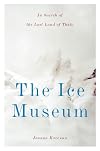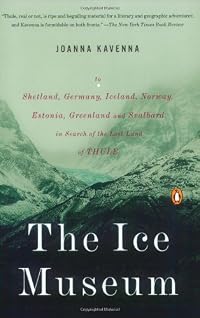
The Ice Museum: In Search of the Lost Land of Thule
by Joanna Kavenna
On This Page
Description
Author Joanna Kavenna recounts her search for the mythical land of Thule in the far North, describing the land she encounters along the way, and describing her obsession with finding Thule and its fabled history.Tags
Recommendations




























Member Recommendations
Member Reviews
“Some said ‘Toolay’, some said ‘Thoolay’, a very few said ‘Thool’. Poets rhymed Thule with newly, truly and unruly, but never, it seemed with drool.”
The Ice Museum: In Search of the Lost Land of Thule was far better in theory than in execution. Former journalist Joanna Kavenna (yes the same one whose book, The Birth of Love, is on this year’s Orange Prize longlist) has a fascination with Thule, which was first described by Greek explorer Pytheas, who claimed to have reached it in 4th century BC. Thule is supposed to be a “land near a frozen ocean, draped in the mist. Thule was seen once, described in opaque prose, and never identified with any certainty again. It became a mystery land, standing by a cold sea. A land show more at the edge of the maps.”
And somehow, ‘Thule’ became a word used to stand in for anything. e.e.cummings writes of the ‘Ultima Thule of plumbing’. A Thule society was set up in Munich, members included Hitler and Rudolf Hess. A US airbase in Greenland still retains the name of Thule.
Kavenna gives up her cushy job in London and travels through Shetland, Iceland, Norway, Estonia, Greenland and Spitsbergen. What a journey, eh? But the book is a bit of a letdown. Perhaps not entirely her fault, for how many ways can one describe lands of ice, snow and fjords?
I wasn’t expecting to read about Nazis and the World War when I came across this book. But Kavenna is quite determined to explore more about the Thule Society, interviewing Krigsbarn (children born to Norwegian mother, Nazi father) who were thought to be mentally ill, or who were simply shunned and hidden away in children’s homes or mental institutions after the war. She travels to Greenland, desperate to step foot on the US airbase of Thule, and is finally given a few hours to wander around. But it doesn’t make for anything interesting or insightful really. In the end, I had more interest in her shipmates onboard the Aurora Borealis, travelling around Greenland in this former icebreaker, stopping at settlements along the way, like the six German scientists who shared her table:
“Soon they just wanted everyone else to vanish; they said they disliked queuing behind the for food, and passing them life-jackets and waiting while they fumbled for change at the bar. But they kept it up, toasting each other, greeting each other in the mornings like long-lost friends, treading on each other’s toes in the queues and then pretending it was all an accident.”
Or the two employees at the deserted, opulent Villa Ammende in Estonia, where Kavenna is the only guest. And as she leaves, she wonders if the guy who runs the reception and the waitress live it up during this low season:
“The bacchanalia only stopped when the bell tolled through the corridors; then they put on their uniforms and became solemn and monosyllabic. As I drove off I imagined the man on the desk whipping off his grey suit and donning a red velvet smoking jacket, slinking into the billiard room to pot a few balls, before his first whisky of the day.”
Something tells me that Kavenna’s works of fiction might be a better read.
So The Ice Museum summed up: An intriguing endeavour, but in the end, not really a journey that interested me very much, although it did inspire a little bit of wanderlust (I do have a soft spot for tales of arctic exploration). show less
The Ice Museum: In Search of the Lost Land of Thule was far better in theory than in execution. Former journalist Joanna Kavenna (yes the same one whose book, The Birth of Love, is on this year’s Orange Prize longlist) has a fascination with Thule, which was first described by Greek explorer Pytheas, who claimed to have reached it in 4th century BC. Thule is supposed to be a “land near a frozen ocean, draped in the mist. Thule was seen once, described in opaque prose, and never identified with any certainty again. It became a mystery land, standing by a cold sea. A land show more at the edge of the maps.”
And somehow, ‘Thule’ became a word used to stand in for anything. e.e.cummings writes of the ‘Ultima Thule of plumbing’. A Thule society was set up in Munich, members included Hitler and Rudolf Hess. A US airbase in Greenland still retains the name of Thule.
Kavenna gives up her cushy job in London and travels through Shetland, Iceland, Norway, Estonia, Greenland and Spitsbergen. What a journey, eh? But the book is a bit of a letdown. Perhaps not entirely her fault, for how many ways can one describe lands of ice, snow and fjords?
I wasn’t expecting to read about Nazis and the World War when I came across this book. But Kavenna is quite determined to explore more about the Thule Society, interviewing Krigsbarn (children born to Norwegian mother, Nazi father) who were thought to be mentally ill, or who were simply shunned and hidden away in children’s homes or mental institutions after the war. She travels to Greenland, desperate to step foot on the US airbase of Thule, and is finally given a few hours to wander around. But it doesn’t make for anything interesting or insightful really. In the end, I had more interest in her shipmates onboard the Aurora Borealis, travelling around Greenland in this former icebreaker, stopping at settlements along the way, like the six German scientists who shared her table:
“Soon they just wanted everyone else to vanish; they said they disliked queuing behind the for food, and passing them life-jackets and waiting while they fumbled for change at the bar. But they kept it up, toasting each other, greeting each other in the mornings like long-lost friends, treading on each other’s toes in the queues and then pretending it was all an accident.”
Or the two employees at the deserted, opulent Villa Ammende in Estonia, where Kavenna is the only guest. And as she leaves, she wonders if the guy who runs the reception and the waitress live it up during this low season:
“The bacchanalia only stopped when the bell tolled through the corridors; then they put on their uniforms and became solemn and monosyllabic. As I drove off I imagined the man on the desk whipping off his grey suit and donning a red velvet smoking jacket, slinking into the billiard room to pot a few balls, before his first whisky of the day.”
Something tells me that Kavenna’s works of fiction might be a better read.
So The Ice Museum summed up: An intriguing endeavour, but in the end, not really a journey that interested me very much, although it did inspire a little bit of wanderlust (I do have a soft spot for tales of arctic exploration). show less
Kavenna blames her obsession with Thule on Pytheas, stating he began the story when he claimed he had been to the mythical land of Thule by way of Marseilles. But what or where exactly is Thule? Is it a place of barren rocks, howling winds, and flinty skies? Is it a Nazi organization, a secret society borne out of prejudices and hate? Is it an ancient calling to barbaric Vikings and long-forgotten mythologies? Kavenna travels the globe looking for answers. She meets with the former president of Estonia, Lennart Meri, searching for the true Thule. She travels to a former Thule settlement in Greenland and talks with scientists about global warming and the threat to the region's polar bears.
Throughout Kavenna's journey her descriptions of show more the landscape and people are stunning. Her words crackle with the cold and demonstrate the warmth of the people. show less
Throughout Kavenna's journey her descriptions of show more the landscape and people are stunning. Her words crackle with the cold and demonstrate the warmth of the people. show less
Like many other people, I love the niche of polar exploration-themed books, so when I saw this, subtitled "In search of the lost land of Thule", I knew I had to have it. Well, it's not the first frozen-north-themed book I have disliked - that was Cold Earth - but this is certainly the first one I have found boring.
I think the biggest problem here was that Kavenna has decided to adopt the ironic/funny approach to travel writing. I am never particularly fond of this - I find it distancing and belittling, and I would much rather my travel writers engage with the place that they are and explain things to me that I wouldn't figure out otherwise, rather than pointing at things and saying 'Look - isn't it funny'. What makes it worse is that show more Kavenna is not particularly good at the funny, either.
This book was a string of missed opportunities - best exemplified by the Iceland chapter. Kavenna starts off by mentioning that Iceland was a frequent stop for (British) Victorian tourists - I'd never heard that, and was fascinated to know more, but Kavenna swept past it with a quick summary. Shortly afterwards she spends exactly the same amount of wordage giving us a verbatim report of a tiresome bit of patter by a man trying to drum up tourist interest in his attraction. Aaargh! Yes, in this modern world, you can go anywhere you want and ironically highlight the disparity between the tourist dream and the tourist nightmare. But what does it add?
To be fair, Kavenna returns to the Victorian tourist experience during the chapter, but still with the arch summary. After the Geysir, she says, "Tweedie and Burton and Morris trotted off, in search of something still stranger, the women teetering side-saddle on their horses, in line with social decorum, the men shouting orders at their guides. Not bad, they all agreed, exploding water, rather interesting, rather strange." WHY NOT QUOTE THEM? It's almost as if she's afraid to take her subject seriously.
Anyway, I think that people who like the ironic approach to travel writing would enjoy this book, because there are some interesting adventures in it. But it was a bad fit with this particular reader. show less
I think the biggest problem here was that Kavenna has decided to adopt the ironic/funny approach to travel writing. I am never particularly fond of this - I find it distancing and belittling, and I would much rather my travel writers engage with the place that they are and explain things to me that I wouldn't figure out otherwise, rather than pointing at things and saying 'Look - isn't it funny'. What makes it worse is that show more Kavenna is not particularly good at the funny, either.
This book was a string of missed opportunities - best exemplified by the Iceland chapter. Kavenna starts off by mentioning that Iceland was a frequent stop for (British) Victorian tourists - I'd never heard that, and was fascinated to know more, but Kavenna swept past it with a quick summary. Shortly afterwards she spends exactly the same amount of wordage giving us a verbatim report of a tiresome bit of patter by a man trying to drum up tourist interest in his attraction. Aaargh! Yes, in this modern world, you can go anywhere you want and ironically highlight the disparity between the tourist dream and the tourist nightmare. But what does it add?
To be fair, Kavenna returns to the Victorian tourist experience during the chapter, but still with the arch summary. After the Geysir, she says, "Tweedie and Burton and Morris trotted off, in search of something still stranger, the women teetering side-saddle on their horses, in line with social decorum, the men shouting orders at their guides. Not bad, they all agreed, exploding water, rather interesting, rather strange." WHY NOT QUOTE THEM? It's almost as if she's afraid to take her subject seriously.
Anyway, I think that people who like the ironic approach to travel writing would enjoy this book, because there are some interesting adventures in it. But it was a bad fit with this particular reader. show less
(22 Jan 2012 – birthday present from Gill)
The kind of travel / quest book I like best, where the author sets of in search of, in this case, the fabled land of Thule. Was it the north of England, Scotland, the Shetlands, Iceland, Greenland, even? Or back round to Estonia or Norway? In her travels she comes across writers of antiquity and all points up to the modern day, taking a roughly chronological approach based on the theories, and looks at the people behind the theories, whether Norse scholars, presidents of countries or pro-Nazi movements. Of course, my favourite chapters were the section on Iceland, where she not only looks at William Morris and his theories, but good old W.H. Auden and the earlier women travellers I have read show more about in the last few years. But it’s all beautifully written, lyrical, fair, human and honest. Good scholarship, good writing and fascinating people and places to write about, all within a classic travel narrative in which, wandering the wastes of the northernmost US Airforce base, the author wonders how she will settle back into her London life. show less
The kind of travel / quest book I like best, where the author sets of in search of, in this case, the fabled land of Thule. Was it the north of England, Scotland, the Shetlands, Iceland, Greenland, even? Or back round to Estonia or Norway? In her travels she comes across writers of antiquity and all points up to the modern day, taking a roughly chronological approach based on the theories, and looks at the people behind the theories, whether Norse scholars, presidents of countries or pro-Nazi movements. Of course, my favourite chapters were the section on Iceland, where she not only looks at William Morris and his theories, but good old W.H. Auden and the earlier women travellers I have read show more about in the last few years. But it’s all beautifully written, lyrical, fair, human and honest. Good scholarship, good writing and fascinating people and places to write about, all within a classic travel narrative in which, wandering the wastes of the northernmost US Airforce base, the author wonders how she will settle back into her London life. show less
A travelogue visiting the possible locations of the stuff of legends had great promise but The Ice Museum doesn't quite deliver on that promise.
Where was the legendary Thule? The Shetlands, Iceland, Norway, Svalbard, Greenland? Kavenna visits them all, meeting the locals, weaving in mentions of Nansen, Burton and other explorers, and talking a lot about ice. There are some sections of great interest but too often I thought to myself "why has this bit been included, if not to pad the book out?" Case in point, the interview with a woman who was the wartime daughter of a Norwegian woman and German father; a tangential connection to Thule at best. I see a company named Thule manufactures baby strollers; I'm surprised Kavenna didn't pay the show more factory a visit.
The book was written too early to comment on the discovery of the solar system's most distant object, temporarily named Ultima Thule. We've missed out on a chapter of Kavenna attempting to hitch a ride on a spaceship on a mission to the cold classical Kuiper belt object. show less
Where was the legendary Thule? The Shetlands, Iceland, Norway, Svalbard, Greenland? Kavenna visits them all, meeting the locals, weaving in mentions of Nansen, Burton and other explorers, and talking a lot about ice. There are some sections of great interest but too often I thought to myself "why has this bit been included, if not to pad the book out?" Case in point, the interview with a woman who was the wartime daughter of a Norwegian woman and German father; a tangential connection to Thule at best. I see a company named Thule manufactures baby strollers; I'm surprised Kavenna didn't pay the show more factory a visit.
The book was written too early to comment on the discovery of the solar system's most distant object, temporarily named Ultima Thule. We've missed out on a chapter of Kavenna attempting to hitch a ride on a spaceship on a mission to the cold classical Kuiper belt object. show less
Having read all of Joanna Kavenna's novels, which show that she is a very versatile writer, I was keen to read her first published book. This is a very personal and idiosyncratic mixture of memoir, travelogue and history, in which she explores the idea of Thule and what it meant to various people through history, ever since Pytheas first described it to his ancient Greek audience.
Her travels take her from the Shetlands to Iceland, northern Norway, Estonia, Greenland and eventually Svalbard (a.k.a. Spitsbergen). On her journey she is accompanied by reflections on those who have preceded her - Pytheas, Columbus, Nansen and Burton among them, but some of her most interesting encounters are less obvious, for example an meeting with the show more former Estonian President Lennart Meri, whose theory was that some of what Pytheas described may have been folk memories of an major meteorite strike in Estonia a few hundred years earlier, tuli being the local word for fire.
I found it quite an interesting read, but a little frustrating in that she covers so much ground that at times it becomes a little difficult to see the thematic unity. show less
Her travels take her from the Shetlands to Iceland, northern Norway, Estonia, Greenland and eventually Svalbard (a.k.a. Spitsbergen). On her journey she is accompanied by reflections on those who have preceded her - Pytheas, Columbus, Nansen and Burton among them, but some of her most interesting encounters are less obvious, for example an meeting with the show more former Estonian President Lennart Meri, whose theory was that some of what Pytheas described may have been folk memories of an major meteorite strike in Estonia a few hundred years earlier, tuli being the local word for fire.
I found it quite an interesting read, but a little frustrating in that she covers so much ground that at times it becomes a little difficult to see the thematic unity. show less
Thule was the name given to a semi-mythical northern land once reached by Pytheas, the ancient traveler. Joanna Kavenna seeks out all the places in the Northern Hemisphere that have been known as or theorized to be Thule. Her journey takes her from Scotland to Shetland to Iceland to Finland to Estonia (of all places) and then to Greenland and Svalbard. She dutifully catalogs the majestic awe and ennui of each place and gives the reader a decent sense of the emptiness embodied by the Arctic realm. Unfortunately, far too much of the book is taken up with digressions and asides, including two chapters on the Nazis and the Thule Society and a weird, almost meaningless jaunt to Thule Air Base. All in all, it was interesting and sad at the show more same time. show less
Members
- Recently Added By
Lists

Books Read in 2015
3,299 works; 129 members
Author Information

9+ Works 769 Members
Joanna Kavenna has recently been the Alistair Horne Fellow at St. Anthony's College, Oxford.
Awards and Honors
Awards
Common Knowledge
- Canonical title
- The Ice Museum: In Search of the Lost Land of Thule
- Original publication date
- 2005
- Important places
- Shetland, Scotland, UK; Iceland; Norway; Estonia; Greenland; Svalbard, Norway (show all 7); Thule
- Dedication
- For my parents and B. H. D. M. with love
- First words
- Seen from above, the ice sounds a ceaseless warning.
- Last words
- (Click to show. Warning: May contain spoilers.)There was the sound of propellers beating across the settlement, and then the noise died away, leaving just the silence of the ice and the moon glinting through the clouds.
- Original language
- English
Classifications
Statistics
- Members
- 214
- Popularity
- 152,090
- Reviews
- 8
- Rating
- (3.58)
- Languages
- English
- Media
- Paper, Ebook
- ISBNs
- 5
- ASINs
- 3