The Missing of the Somme
by Geoff Dyer
On This Page
Description
Geoff Dyer has won fans writing about everything from jazz to D. H. Lawrence, from photography to neurotic enlightenment, from Cambodia to Rome. The Missing of the Somme, his remarkable book on the significance of the First World War, is a gem for Dyer fans and history buffs alike. With his characteristic wit and insight, here Dyer weaves a network of myth and memory, photos and film, poetry and sculptures, graveyards, and ceremonies that illuminate our understanding of, and relationship to, show more the Great War. From one of our most beloved authors, this is a personal meditation on war and remembrance. show lessTags
Recommendations
















Member Reviews
Let's just acknowledge a few things: 1. Dyer is not an in-depth critic with the ability to thoroughly plumb a concept. 2. Dyer is not a historian. 3. Dyer is always, no matter what, present in his texts, either as an explicit "I" narration forming it all or as an anecdotal presence.
None of these things are problems for me. Geoff Dyer's ADD approach to writing--wherein an idea will be tossed out and written about for a sentence or a paragraph--excites me: the quality of those ideas often catch hold of my mind and encourage ongoing rumination even after I've finished the book. In this one, for example, there's an off-hand reference to Britain's failure to attain glory in polar exploration as a society-large preparation for how it viewed show more the Great War in memorialization: an exaltation of glorious failure. His tactic of using art and literature to explore history worked very well for me in this slim book. Though it is definitely not the read for anyone looking for a blow-by-blow account of WWI, it does not intend to be: this is a consideration of memory, of how British society consciously--even as early as the war's beginning--shaped how it would remember the war. Dyer's use of Wilfred Owens and his interrogation of various war memorials are brilliant. And his personal presence, his family's history in the war and his own travels through the Somme in research for this book, give the study a rich emotional grounding (and also provide some levity in what is, by nature, a devastating subject). This is an excellent companion volume to more traditional histories and I would recommend it to anyone interested in WWI; also, any readers intrigued by concepts of historical memory and how it is formed should definitely seek this out regardless of whether they have an extant interest in the Great War. show less
None of these things are problems for me. Geoff Dyer's ADD approach to writing--wherein an idea will be tossed out and written about for a sentence or a paragraph--excites me: the quality of those ideas often catch hold of my mind and encourage ongoing rumination even after I've finished the book. In this one, for example, there's an off-hand reference to Britain's failure to attain glory in polar exploration as a society-large preparation for how it viewed show more the Great War in memorialization: an exaltation of glorious failure. His tactic of using art and literature to explore history worked very well for me in this slim book. Though it is definitely not the read for anyone looking for a blow-by-blow account of WWI, it does not intend to be: this is a consideration of memory, of how British society consciously--even as early as the war's beginning--shaped how it would remember the war. Dyer's use of Wilfred Owens and his interrogation of various war memorials are brilliant. And his personal presence, his family's history in the war and his own travels through the Somme in research for this book, give the study a rich emotional grounding (and also provide some levity in what is, by nature, a devastating subject). This is an excellent companion volume to more traditional histories and I would recommend it to anyone interested in WWI; also, any readers intrigued by concepts of historical memory and how it is formed should definitely seek this out regardless of whether they have an extant interest in the Great War. show less
This book is not so much about the war and its battles as about the way of memorializing it, and the role of memory as time moves on. Before the fact, there is anticipated memory, how WILL one be remembered (cf. Rupert Brooke's, "If I should die, think only this of me..."). The books discusses the currency of memorialization when loss is fresh, and the inevitable movement of memory into the past until the links are broken. The two-minute silence was very meaningful to those who had lost men in the war; now hardly anyone is alive who was not a small child at that time.
The same thing is happening now with WWII; the veterans of that war are fading away fast. Clear memories for my father are "Dad's stories" to me, and for the next show more generation will be more remote still. show less
The same thing is happening now with WWII; the veterans of that war are fading away fast. Clear memories for my father are "Dad's stories" to me, and for the next show more generation will be more remote still. show less
The War to End All Wars didn't. At least in the United States, the vast majority of those alive today probably view World War I as the chapter in their history textbook before the Depression and World War II. And the death earlier this year of the last surviving combat veteran of the Great War reinforces that people with firsthand memories of the conflict recollection of it grow fewer each day. Yet British author Geoff Dyer suggests that even while it was being fought, "the characteristic attitude of the war was to look forward to the time when it would be remembered."
First published in Britain in 1994, Dyer's The Missing of the Somme is making its first appearance in a U.S. edition. A slim (176 pages), somewhat quirky work, Dyer show more considers World War I through the poetry, literature, biographies, and photography of the time, along with a bit of travelogue of monuments and cemeteries. It is as far from a history of the war as one might get. To the contrary, Dyer says his goal was not even to write about the war itself but, rather, its impact on his generation. (He was born in 1958.) Nor was this to be a novel. Instead, he viewed the project as "an essay in mediation: research notes for a Great War novel I had no intention of writing, the themes of a novel without its substance…"
A meditation on remembrance is the best way to describe the work. The various literary and artistic works Dyer discusses deal with how the war would be and is remembered. In fact, remembrance started early, according to Dyer. He points to perhaps the best known poem by Laurence Binyon, "For the Fallen," which would come to adorn many war memorials. It was published in September 1914, about a month after the first British troops went to France and three weeks after the first British soldier died in the conflict. That means, Dyer says with just a hint of exaggeration, perhaps the leading remembrance of those killed in the war was written "before the fallen actually fell. 'For the Fallen', in other words, is a work not of remembrance but of anticipation, or more accurately, the anticipation of remembrance: a foreseeing that is also a determining."
Remembrance arose to the point that 30,000 war memorials were erected in France between 1920 and 1925. Yet even memorials feel the toll of time. And the fact time also affects remembrance itself is seen in another example. For decades, November 11 was Remembrance Day in the U.K. (Armistice Day in the U.S.). People would cease activity for two minutes of silence at 11 a.m., the time the Armistice was signed. Although that may still occur, Britain now has Remembrance Sunday, held the second Sunday of November to commemorate those who served in both World Wars. (Here in the U.S., Armistice Day became Veterans Day in 1958 and 10 years later it became a movable Monday holiday.)
Dyer's interest in the memory of World War I stems in part from the fact his grandfather fought in the Battle of the Somme, which still holds the calamitous distinction of seeing the most British casualties ever in one day. Undoubtedly, ensuing generations were impacted by World War I. The numbers are almost stunning. According to Dyer, there were 918 cemeteries built on the Western Front with more than 750,000 graves, approximately a quarter of which contain unidentified remains. He also notes that it would take three and a half days if the dead of the British Empire marched past the war memorial where the Remembrance Sunday service is held.
It is difficult perhaps for Americans to grasp the extent of the generational impact for Britain, France and other European countries. After all, the U.S. suffered 10 percent of the military deaths the British Empire did and even fewer compared to France and Germany. This alone means it is unlikely The Missing of the Somme will attract much attention in the U.S. That does not, however, change the fact it is a unique, albeit idiosyncratic, reflection on war.
(Originally posted at A Progressive on the Prairie.) show less
First published in Britain in 1994, Dyer's The Missing of the Somme is making its first appearance in a U.S. edition. A slim (176 pages), somewhat quirky work, Dyer show more considers World War I through the poetry, literature, biographies, and photography of the time, along with a bit of travelogue of monuments and cemeteries. It is as far from a history of the war as one might get. To the contrary, Dyer says his goal was not even to write about the war itself but, rather, its impact on his generation. (He was born in 1958.) Nor was this to be a novel. Instead, he viewed the project as "an essay in mediation: research notes for a Great War novel I had no intention of writing, the themes of a novel without its substance…"
A meditation on remembrance is the best way to describe the work. The various literary and artistic works Dyer discusses deal with how the war would be and is remembered. In fact, remembrance started early, according to Dyer. He points to perhaps the best known poem by Laurence Binyon, "For the Fallen," which would come to adorn many war memorials. It was published in September 1914, about a month after the first British troops went to France and three weeks after the first British soldier died in the conflict. That means, Dyer says with just a hint of exaggeration, perhaps the leading remembrance of those killed in the war was written "before the fallen actually fell. 'For the Fallen', in other words, is a work not of remembrance but of anticipation, or more accurately, the anticipation of remembrance: a foreseeing that is also a determining."
Remembrance arose to the point that 30,000 war memorials were erected in France between 1920 and 1925. Yet even memorials feel the toll of time. And the fact time also affects remembrance itself is seen in another example. For decades, November 11 was Remembrance Day in the U.K. (Armistice Day in the U.S.). People would cease activity for two minutes of silence at 11 a.m., the time the Armistice was signed. Although that may still occur, Britain now has Remembrance Sunday, held the second Sunday of November to commemorate those who served in both World Wars. (Here in the U.S., Armistice Day became Veterans Day in 1958 and 10 years later it became a movable Monday holiday.)
Dyer's interest in the memory of World War I stems in part from the fact his grandfather fought in the Battle of the Somme, which still holds the calamitous distinction of seeing the most British casualties ever in one day. Undoubtedly, ensuing generations were impacted by World War I. The numbers are almost stunning. According to Dyer, there were 918 cemeteries built on the Western Front with more than 750,000 graves, approximately a quarter of which contain unidentified remains. He also notes that it would take three and a half days if the dead of the British Empire marched past the war memorial where the Remembrance Sunday service is held.
It is difficult perhaps for Americans to grasp the extent of the generational impact for Britain, France and other European countries. After all, the U.S. suffered 10 percent of the military deaths the British Empire did and even fewer compared to France and Germany. This alone means it is unlikely The Missing of the Somme will attract much attention in the U.S. That does not, however, change the fact it is a unique, albeit idiosyncratic, reflection on war.
(Originally posted at A Progressive on the Prairie.) show less
Geoff Dyer is amongst the most erudite writers in Britain today. This exploration of the tragedy of World War One is extremely moving, and certainly made me reappraise my feelings involving a conflict which seemed so long ago as to be almost irrelevant to my life.
Not bad. at first, he explains why the monuments and the silence and the poppies -the great w.ar solved nothing
and was set for remembrance early on.he later goes on a three buddy jaunt into the trenches of Northern France
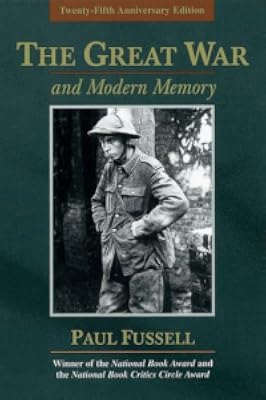
and goes over a whole bunch of fiction and Paul Fussels The great war and Modern Memory, which is a great book
He writes up a handful of the fiction books, and leaves it there.
At the end of the book, he visits the Thiepval monument to the Missing of the Somme, which he loves.
More of an essay rather than a real book.
and was set for remembrance early on.he later goes on a three buddy jaunt into the trenches of Northern France
and goes over a whole bunch of fiction and Paul Fussels The great war and Modern Memory, which is a great book
He writes up a handful of the fiction books, and leaves it there.
At the end of the book, he visits the Thiepval monument to the Missing of the Somme, which he loves.
More of an essay rather than a real book.
I’m a casual WW1 buff. There just wasn’t much here to get me excited. If it is a memory study focusing on monuments, the production value needs boosted by a factor of five; namely, proper paper with proper photos. Not sure who he was writing this for, or who the publisher is marketing it to.
Planning to read this over Christmas. Read it. Tremendous. Thought-full
Members
- Recently Added By
Lists

Read This Next
120 works; 3 members

THE WAR ROOM
813 works; 24 members
Author Information

32+ Works 6,069 Members
Geoff Dyer was born in Cheltenham in 1958. He currently lives in London.
Some Editions
Common Knowledge
- Canonical title
- The Missing of the Somme
- Original publication date
- 1994
- Important events
- World War I (1914 | 1918); Battle of the Somme (1916-07-01 | 1916-11-18)
- Dedication
- For my mother and father
- First words
- When I was a boy my grandfather took me to the Museum of Natural History.
- Last words
- (Click to show. Warning: May contain spoilers.)Tomorrow, a year from now, it will be the same: birds lunging and darting toward the horizon; three crosses silhouetted against the blood-red sky; a man walking along the curvig road; lights coming on in distant farmhouses - and each slow dusk a drawing-down of blinds.
Classifications
Statistics
- Members
- 337
- Popularity
- 94,335
- Reviews
- 8
- Rating
- (3.84)
- Languages
- English
- Media
- Paper, Audiobook, Ebook
- ISBNs
- 17
- ASINs
- 4