
About the Author
Wade Davis is Explorer-in-Residence at the National Geographic Society. An ethnographer, photographer, filmmaker, and writer, he is the author of Light at the Edge of the World, One River, the international bestseller The Serpent and the Rainbow, and other books. His articles have appeared in show more Outside, Cond Nast Traveler, National Geographic, Scientific American, and many other publications. show less
Works by Wade Davis
The Serpent and the Rainbow: A Harvard Scientist's Astonishing Journey into the Secret Societies of Haitian Voodoo, Zombis, and Magic (1985) 1,369 copies, 16 reviews
Light at the Edge of the World: A Journey Through the Realm of Vanishing Cultures (2001) 230 copies, 2 reviews
The Confederate War 1 copy
The Art of Shamanic Healing 1 copy
Associated Works
Nevertheless, We Persisted: 48 Voices of Defiance, Strength, and Courage (2018) — Contributor — 112 copies, 4 reviews
The Weeping Goldsmith: Discoveries in the Secret Land of Myanmar (2009) — Foreword, some editions — 19 copies, 1 review
The Wes Craven Horror Collection (The Serpent and the Rainbow / Shocker / The People Under the Stairs) (2009) — Author — 5 copies
Tagged
Common Knowledge
- Canonical name
- Davis, Wade
- Legal name
- Davis, Edmund Wade
- Other names
- DAVIS, Edmund Wade
DAVIS, Wade - Birthdate
- 1953-12-14
- Gender
- male
- Education
- Harvard University (BA|Biology)
Harvard University (MA|Anthropology)
Harvard University (PhD|Ethnobotany) - Occupations
- ethnobotanist
writer
conservationist
anthropologist
filmmaker
photographer - Organizations
- University of British Columbia
National Geographic Society
Future Generations
Cultural Survival
David Suzuki Foundation
Ecotrust - Awards and honors
- Member, Order of Canada (2015)
Fellow, Linnean Society
Fellow, Explorers' Club (1987)
Fellow, Royal Geographical Society
Fellow, Royal Canadian Geographical Society
Mungo Park Medal (2018) (show all 16)
Roy Chapman Andrews Society Distinguished Explorer Award (2017)
Sir Christopher Ondaatje Medal for Exploration (2017)
Ness Medal (2013)
Samuel Johnson Prize (2012)
David Fairchild Medal for Plant Exploration (2012)
Baillie Gifford Prize (2012)
The Explorers Medal (2011)
The Royal Canadian Geographical Society Gold Medal (2009)
Lannan Literary Award (Nonfiction, 2002)
Lowell Thomas Medal (2002) - Relationships
- Schultes, Richard Evans (mentor)
- Nationality
- Canada
Colombia (2018) - Birthplace
- West Vancouver, British Columbia, Canada
- Places of residence
- West Vancouver, British Columbia, Canada
Pointe Claire, Québec, Canada - Associated Place (for map)
- Canada
Members
Reviews

A magnificent, exhaustive and well-researched chronicle of the three British Everest expeditions of the 1920s. Davis sets the era and tone of post-war sensibilities by devoting a sizeable portion - about the first third of the book - to the Great War and how the climbers came through it. Mallory and the other personages don't even enter the picture until after that, and actual climbing is still a long way off. The person I most admired was Australian George Finch who, against great show more opposition for his science as well as his colonial origins, introduced the use of oxygen in the second and third climbs. Tibet is not regarded kindly by the climbers, but then snobbery, racism, and the class system was rife, even among the members of the buttoned-down Royal Geographical Society and Alpine Club.
The 1924 attempt ended disastrously when George Mallory and Andrew Irvine disappeared on the final climb to, or from, the summit. Mallory's badly injured body was found in 1999 still roped to Irvine until the fall broke the rope. After all their effort, I like to think they made it to the summit but that will never be known.
This is an excellent book if the reader is prepared for an major undertaking and wants all the nitty gritty details of each climb, climber, the politics of the times and of the associations involved. (For example, now I know the difference between Mummery and Whymper tents.) If you just want to read about the life of Mallory and his experience on Everest, then Jeffrey Archer's Paths of Glory, a fictional work that is nevertheless accurate, would be a better choice. show less
The 1924 attempt ended disastrously when George Mallory and Andrew Irvine disappeared on the final climb to, or from, the summit. Mallory's badly injured body was found in 1999 still roped to Irvine until the fall broke the rope. After all their effort, I like to think they made it to the summit but that will never be known.
This is an excellent book if the reader is prepared for an major undertaking and wants all the nitty gritty details of each climb, climber, the politics of the times and of the associations involved. (For example, now I know the difference between Mummery and Whymper tents.) If you just want to read about the life of Mallory and his experience on Everest, then Jeffrey Archer's Paths of Glory, a fictional work that is nevertheless accurate, would be a better choice. show less

If this book were fiction, I’d call it a sprawling epic. Since it is non-fiction, I’ll call it a comprehensive account of the three earliest expeditions to Mount Everest, 1921, 1922, and 1924, all involving George Mallory, and culminating in his and Sandy Irvine’s death. Not only does it cover these expeditions, but it also provides a minibiography of almost everyone involved on the British side. The people from the Tibetan region are covered too, but to a lesser extent, as there is show more much less documentation available. The author’s theme is that the Great War and beliefs about Empire were critical factors that influenced early mountaineering, particularly with respect to the approach, terminology, and methods of “assault.” Thus, the concept of “conquering” the mountain caught the public’s imagination and represented a victory for Great Britain.
There is a great deal of history covered in this book, and those who enjoy the interrelationships among historic events will appreciate it. It is intentionally long (700 pages) and detailed and is not for anyone who wants to “cut to the chase.” The author does a great job at helping the reader understand the motivations of the people involved and why they were selected to participate. There are many charismatic individuals, and by the end, I felt I knew them. Davis captures their accomplishments but does not ignore their faults. We also learn about their families and their experiences in World War I.
Davis excels at weaving together a colorful and compelling narrative with personal letters, reports, quotes, and telegrams to tell an intensely interesting story. I especially enjoyed the account of the 1924 expedition. The author analyzes several mistakes that contributed to the tragedy. I have read other books about this expedition, and this one is the best by far in analyzing what happened and assembling the pieces of information into the most likely sequence of events that led to the two climbers’ deaths.
It also contains information about the cultural differences between the Asian and European approaches. The Tibetans had no desire to climb Everest, even though they lived next to it and had capable climbers. The author provides insight into Tibetan spirituality and points out the difficulties experienced by the British in understanding the porters they worked with (and relied heavily upon) during the expedition. Basically, the Tibetans wondered why the British would want to climb Everest, and the British wondered why the Tibetans wouldn’t want to climb it. Several notable persons from the region make an appearance, including the Dalai Lama and Mahatma Gandhi.
I found it an immersive reading experience. I particularly liked the way the author linked the various segments of history into an evaluation of cause and effect. It will appeal to those who enjoy learning about the history of mountaineering, as well as readers who appreciate a window to a prior era, complete with insight and analysis. show less
There is a great deal of history covered in this book, and those who enjoy the interrelationships among historic events will appreciate it. It is intentionally long (700 pages) and detailed and is not for anyone who wants to “cut to the chase.” The author does a great job at helping the reader understand the motivations of the people involved and why they were selected to participate. There are many charismatic individuals, and by the end, I felt I knew them. Davis captures their accomplishments but does not ignore their faults. We also learn about their families and their experiences in World War I.
Davis excels at weaving together a colorful and compelling narrative with personal letters, reports, quotes, and telegrams to tell an intensely interesting story. I especially enjoyed the account of the 1924 expedition. The author analyzes several mistakes that contributed to the tragedy. I have read other books about this expedition, and this one is the best by far in analyzing what happened and assembling the pieces of information into the most likely sequence of events that led to the two climbers’ deaths.
It also contains information about the cultural differences between the Asian and European approaches. The Tibetans had no desire to climb Everest, even though they lived next to it and had capable climbers. The author provides insight into Tibetan spirituality and points out the difficulties experienced by the British in understanding the porters they worked with (and relied heavily upon) during the expedition. Basically, the Tibetans wondered why the British would want to climb Everest, and the British wondered why the Tibetans wouldn’t want to climb it. Several notable persons from the region make an appearance, including the Dalai Lama and Mahatma Gandhi.
I found it an immersive reading experience. I particularly liked the way the author linked the various segments of history into an evaluation of cause and effect. It will appeal to those who enjoy learning about the history of mountaineering, as well as readers who appreciate a window to a prior era, complete with insight and analysis. show less

From beginning to end, Wade Davis unfolds a staggering tale with superb skill and sensitivity. To show us who these first men attempting to climb Everest were, he begins by describing the shared experience of the majority: trench warfare in France in WW1. By giving us a pocket biography of each expedition member, we come to understand that these were all men of exceptional toughness, intelligence, and courage. The majority had seen, not scores, but thousands of men dying or dead, had done show more extraordinary things, hardly believable in a "normal life" context, making them, in the way of those things, not perhaps very suited to living ordinary everyday lives. (Because really, the "why do this at all?" question looms as hugely as Everest herself.) Davis's descriptions of combat are the most literal and gruesome of any I have encountered. Davis also makes the point that most of the expedition members were members of a pivotal generation, not the commanding officers, but lesser officers and medical men, younger men who had, miraculously, survived. The generals who had commanded them, for the most part, were men of the 19th century, gentlemen one and all, Victorians, with no concept of how modern warfare was being transformed by technology. These younger men while having been born into that llife, (most, though not all, were "gentlemen") had suffered the consequences of the abysmally out of touch leadership that sent thousands upon thousands of their own generation to pointless and painful deaths. As a result, these men, this generation, had feet in both worlds, the past and the future. They were at once fearless and tougher than we can fathom, but also deeply ambivalent, giving rise to an inconsistency, both in their emotional and practical approaches to technology and to men of other classes and cultures. Truly you can hardly believe what these men considered adequate clothing and equipment: the frail tents, the cotton rope, the rudimentary gear, not to mention the often ridiculous food, and worst of all their scorn, at least initially, of using oxygen or adopting the down coat invented by the non-gentleman of the second climb. Davis carefully sets this background in relief to make the context clear for the kinds of errors in judgement that were made comprehensible as he describes the three attempts made on Everest in 1921, 1922 which culminate in the last disastrous attempt of 1924 when George Mallory, the rock star of the group, and the youngest member of that expedition, Andrew Irvine (the first climber too young to have participated in the war) disappeared on the mountain and brought an era to a close. It's a tremendously gripping and moving read. ***** show less
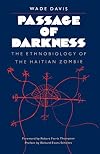
Wade Davis is an ethnobotanist. What is an ethnobotanist? Ethnobotanists study the relationships among cultures, cultural practices, and the botanical environments in which cultures live.
Ethnobotany is the perfect field to study and understand the zombie phenomenon, stripped of its Hollywood hype. Davis, in this book, undertakes a scientific investigation of zombification — the roles of the powders administered to victims, the spiritual beliefs in which zombification has a place, and the show more rites and practices that enact zombification in modern day Haiti.
Davis really takes up a series of questions:
Are there actual cases of zombies? If so, exactly, what is a real zombie?
What is the pharmacological basis for making someone a zombie?
What is the spiritual basis? How does the zombie fit into Haitian spiritual life?
What are the rites and practices that produce a zombie?
What role does zombification play in Haitian culture and politics?
He begins with some historical and cultural background on Haiti itself. That’s going to be important because, as an ethnobotanist/anthropologist, he believes that zombies and zombification really only are what they are within the culture in which they happen. Ultimately, he will claim that the very possibility of zombification depends on the spiritual beliefs of the victim and the cultural rites and structures in which it lives.
As to whether there are actual cases of zombies, Davis focuses on two relatively well-documented cases — Clairvius Narcisse and Francina Illeus. Narcisse in particular becomes a kind of model case. He was treated at an emergency room in a Haitian hospital, with a fever, body aches, and other more or less minor symptoms. But his condition deteriorated quickly, and he was pronounced dead by two doctors. He was buried in a cemetery under a concrete slab. Then, 18 years later, he re-appeared at a marketplace, recognized his sister, and re-introduced himself.
According to Narcisse, he had been in a dispute with his brother over a land inheritance, and it was his brother who had arranged for his zombification. He was buried, removed from his grave, beaten, and taken to work as a slave. When his master died, he wandered for 16 years before finally returning to his village after his brother’s death.
Narcisse’s story seems, at least in Davis’s telling, to stand up. The death certificate is real, and the identity of the man who showed up in the marketplace 18 years later was verified.
And Narcisse himself could tell his own story. He had been conscious throughout his ordeal, but unable to move or speak. He experienced his own death, burial, and resurrection, as well as his life afterwards.
As to what it actually is to be a zombie in Haitian culture, it’s a little different from the Hollywood version. At its core, what has happened to a zombie is that what makes him or her a person — a will, a character, an identity — has been separated from his or her body. The body, the “zombie cadavre,” goes on, is given a new name, and can be, as Narcisse was, made to work as a slave. It has no will or character of its own.
The other part, what makes the person a true person, called the “ti bon ange” (literally, the “small good angel”), is captured separately. It can be kept by the person, a “bokor” or “sorcerer”, who performs the zombification.
Taking it to be true that there are convincing cases, Davis then discusses how such a thing could be possible. His answer really has two parts.
One is pharmacological. He collects samples of poisons prepared by practitioners and submits them for chemical analysis. There are numerous ingredients or types of ingredients common across the samples he collects, including skin irritants, psychoactive substances, and, most importantly, puffer fish, a source for tetrodotoxin. Tetrodotoxin is a poison that induces a kind of paralysis, the kind that Narcisse reported, that permits the victim to retain consciousness.
Tetrodotoxin poisoning can be fatal, as sometimes happens with poorly prepared puffer fish as a Japanese delicacy. But it seems, by Davis’s account, that it is possible to administer the drug in a dose that is paralyzing but not fatal. The victim can fully recover, as sometimes happens also in the Japanese context.
The other part of zombification is spiritual and cultural. If tetrodotoxin could simply turn a person into a zombie, why wouldn’t it happen to some of those victims of poorly prepared puffer fish in the Japanese context?
The answer has to do with “set and setting”, the psychological and the social/physical contexts of a person undergoing a drug experience. In this case, the psychological context includes strong spiritual beliefs based in a Vodoun (Davis’s preferred term over the hype-laden term “Voodoo”) religion, in which zombification, the ti bon ange, and magical events have central roles. And the social/physical context includes rituals and practices — including the bokor’s performance, the victim’s burial and resurrection, etc.
The possibility of a zombie then depends on all of these factors working together. Davis opposes any idea that a drug can simply turn someone into a zombie. The spiritual and cultural factors are essential.
This may sound a bit magical — the mind playing tricks on the body. But certainly it is true that psychological (and cultural) factors can produce biological effects. Fear raises your heart rate. Depression suppresses your immune system. What is different here is that it is more than a psychological phenomenon (something that we could try to pass off as really biological in nature), it is a spiritual belief that works with psychological factors to produce the zombie experience. Narcisse’s belief in zombies and the ability of a bokor to make a man into a zombie, helped to turn his experience into his becoming a zombie himself.
Not to mention the terrifying experience that Narcisse went through, conscious while buried alive, removed from his grave, and helplessly beaten.
Davis goes on to elaborate on the place of zombification in Haitian culture, and in Haitian politics. Zombification appears to be a kind of punishment, either for violation of community mores or for betrayal of a “secret society.” In Narcisse’s case, he had violated a spate of community mores, involving land inheritance, selfishness, and failure to take responsibility for children he fathered.
The “secret societies” become a theme for much of the last third of the book. The Vodoun religious structures and hierarchies seem to make up a core of Haitian society. They aren’t “secret” in the sense of no one knowing they exist, but they do depend on secret rites, passwords, etc. known to their members, or some of their members.
In fact, their effectiveness depends on their public role. The urban government cannot reach into the mountains and villages without coordination with the Vodoun structures and roles. And it is a coordination, not a straight-forward expression of government authority. Davis discusses how this coordination played out during the Papa Doc Duvalier years (Papa Doc was thought by some to occupy a role within the Vodoun hierarchy himself), and hints at how it may have contributed to the downfall of his son, Baby Doc. In fact, in Davis’s recounting of Haitian history, Vodoun has always played a formidable role in both rebellion (including the Toussaint rebellion in the late 1700s) and in stable authority.
In the Haitian context then Vodoun religious beliefs and practices aren’t so strange. And zombification plays within those beliefs and practices, producing the context in which, with the bokor’s knowledge of plants and preparations, he can make a person a zombie.
Where does all of this leave us? The strength of Davis’s account, I think, is the ethnographic part — his accounts of Vodoun spirituality, practices, and its role in Haitian society and politics. I came away convinced that beliefs about zombies play an important role, certainly in village spiritual and cultural life. It seems natural, not bizarrely superstitious or even irrational, for Haitian villagers to believe in zombies, and even to fear that, if they violated their communities’ mores, they could be made zombies as punishment.
In order to take zombification as a confirmed, scientific reality, it would be great to have more well-documented cases to rely on. In fact, it may be that “successful” zombification is rare. The bokor has to really hit a small bulls-eye to turn someone into a zombie. The victim may simply die, or nothing may happen to them. It depends greatly on the bokor’s skill in preparing the poison and on the quality of the poison itself (the puffer fish seems to have varying levels of toxicity, across varieties, lifetimes, and seasons). The bokor's failures are explained away, and the successful cases, even if rare, establish the basis for belief.
That’s not the kind of scientific, strictly repeatable phenomenon that western science likes. Maybe so much the worse for western science.
The book is fascinating — as I read it, the zombie became more and more a natural, believable thing. Hollywood faded away, and what was left was something that seemed real and understandable. show less
Ethnobotany is the perfect field to study and understand the zombie phenomenon, stripped of its Hollywood hype. Davis, in this book, undertakes a scientific investigation of zombification — the roles of the powders administered to victims, the spiritual beliefs in which zombification has a place, and the show more rites and practices that enact zombification in modern day Haiti.
Davis really takes up a series of questions:
Are there actual cases of zombies? If so, exactly, what is a real zombie?
What is the pharmacological basis for making someone a zombie?
What is the spiritual basis? How does the zombie fit into Haitian spiritual life?
What are the rites and practices that produce a zombie?
What role does zombification play in Haitian culture and politics?
He begins with some historical and cultural background on Haiti itself. That’s going to be important because, as an ethnobotanist/anthropologist, he believes that zombies and zombification really only are what they are within the culture in which they happen. Ultimately, he will claim that the very possibility of zombification depends on the spiritual beliefs of the victim and the cultural rites and structures in which it lives.
As to whether there are actual cases of zombies, Davis focuses on two relatively well-documented cases — Clairvius Narcisse and Francina Illeus. Narcisse in particular becomes a kind of model case. He was treated at an emergency room in a Haitian hospital, with a fever, body aches, and other more or less minor symptoms. But his condition deteriorated quickly, and he was pronounced dead by two doctors. He was buried in a cemetery under a concrete slab. Then, 18 years later, he re-appeared at a marketplace, recognized his sister, and re-introduced himself.
According to Narcisse, he had been in a dispute with his brother over a land inheritance, and it was his brother who had arranged for his zombification. He was buried, removed from his grave, beaten, and taken to work as a slave. When his master died, he wandered for 16 years before finally returning to his village after his brother’s death.
Narcisse’s story seems, at least in Davis’s telling, to stand up. The death certificate is real, and the identity of the man who showed up in the marketplace 18 years later was verified.
And Narcisse himself could tell his own story. He had been conscious throughout his ordeal, but unable to move or speak. He experienced his own death, burial, and resurrection, as well as his life afterwards.
As to what it actually is to be a zombie in Haitian culture, it’s a little different from the Hollywood version. At its core, what has happened to a zombie is that what makes him or her a person — a will, a character, an identity — has been separated from his or her body. The body, the “zombie cadavre,” goes on, is given a new name, and can be, as Narcisse was, made to work as a slave. It has no will or character of its own.
The other part, what makes the person a true person, called the “ti bon ange” (literally, the “small good angel”), is captured separately. It can be kept by the person, a “bokor” or “sorcerer”, who performs the zombification.
Taking it to be true that there are convincing cases, Davis then discusses how such a thing could be possible. His answer really has two parts.
One is pharmacological. He collects samples of poisons prepared by practitioners and submits them for chemical analysis. There are numerous ingredients or types of ingredients common across the samples he collects, including skin irritants, psychoactive substances, and, most importantly, puffer fish, a source for tetrodotoxin. Tetrodotoxin is a poison that induces a kind of paralysis, the kind that Narcisse reported, that permits the victim to retain consciousness.
Tetrodotoxin poisoning can be fatal, as sometimes happens with poorly prepared puffer fish as a Japanese delicacy. But it seems, by Davis’s account, that it is possible to administer the drug in a dose that is paralyzing but not fatal. The victim can fully recover, as sometimes happens also in the Japanese context.
The other part of zombification is spiritual and cultural. If tetrodotoxin could simply turn a person into a zombie, why wouldn’t it happen to some of those victims of poorly prepared puffer fish in the Japanese context?
The answer has to do with “set and setting”, the psychological and the social/physical contexts of a person undergoing a drug experience. In this case, the psychological context includes strong spiritual beliefs based in a Vodoun (Davis’s preferred term over the hype-laden term “Voodoo”) religion, in which zombification, the ti bon ange, and magical events have central roles. And the social/physical context includes rituals and practices — including the bokor’s performance, the victim’s burial and resurrection, etc.
The possibility of a zombie then depends on all of these factors working together. Davis opposes any idea that a drug can simply turn someone into a zombie. The spiritual and cultural factors are essential.
This may sound a bit magical — the mind playing tricks on the body. But certainly it is true that psychological (and cultural) factors can produce biological effects. Fear raises your heart rate. Depression suppresses your immune system. What is different here is that it is more than a psychological phenomenon (something that we could try to pass off as really biological in nature), it is a spiritual belief that works with psychological factors to produce the zombie experience. Narcisse’s belief in zombies and the ability of a bokor to make a man into a zombie, helped to turn his experience into his becoming a zombie himself.
Not to mention the terrifying experience that Narcisse went through, conscious while buried alive, removed from his grave, and helplessly beaten.
Davis goes on to elaborate on the place of zombification in Haitian culture, and in Haitian politics. Zombification appears to be a kind of punishment, either for violation of community mores or for betrayal of a “secret society.” In Narcisse’s case, he had violated a spate of community mores, involving land inheritance, selfishness, and failure to take responsibility for children he fathered.
The “secret societies” become a theme for much of the last third of the book. The Vodoun religious structures and hierarchies seem to make up a core of Haitian society. They aren’t “secret” in the sense of no one knowing they exist, but they do depend on secret rites, passwords, etc. known to their members, or some of their members.
In fact, their effectiveness depends on their public role. The urban government cannot reach into the mountains and villages without coordination with the Vodoun structures and roles. And it is a coordination, not a straight-forward expression of government authority. Davis discusses how this coordination played out during the Papa Doc Duvalier years (Papa Doc was thought by some to occupy a role within the Vodoun hierarchy himself), and hints at how it may have contributed to the downfall of his son, Baby Doc. In fact, in Davis’s recounting of Haitian history, Vodoun has always played a formidable role in both rebellion (including the Toussaint rebellion in the late 1700s) and in stable authority.
In the Haitian context then Vodoun religious beliefs and practices aren’t so strange. And zombification plays within those beliefs and practices, producing the context in which, with the bokor’s knowledge of plants and preparations, he can make a person a zombie.
Where does all of this leave us? The strength of Davis’s account, I think, is the ethnographic part — his accounts of Vodoun spirituality, practices, and its role in Haitian society and politics. I came away convinced that beliefs about zombies play an important role, certainly in village spiritual and cultural life. It seems natural, not bizarrely superstitious or even irrational, for Haitian villagers to believe in zombies, and even to fear that, if they violated their communities’ mores, they could be made zombies as punishment.
In order to take zombification as a confirmed, scientific reality, it would be great to have more well-documented cases to rely on. In fact, it may be that “successful” zombification is rare. The bokor has to really hit a small bulls-eye to turn someone into a zombie. The victim may simply die, or nothing may happen to them. It depends greatly on the bokor’s skill in preparing the poison and on the quality of the poison itself (the puffer fish seems to have varying levels of toxicity, across varieties, lifetimes, and seasons). The bokor's failures are explained away, and the successful cases, even if rare, establish the basis for belief.
That’s not the kind of scientific, strictly repeatable phenomenon that western science likes. Maybe so much the worse for western science.
The book is fascinating — as I read it, the zombie became more and more a natural, believable thing. Hollywood faded away, and what was left was something that seemed real and understandable. show less
Lists
Awards


You May Also Like


Associated Authors
Statistics
- Works
- 31
- Also by
- 5
- Members
- 4,649
- Popularity
- #5,427
- Rating
- 4.0
- Reviews
- 97
- ISBNs
- 154
- Languages
- 10
- Favorited
- 6
