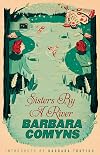
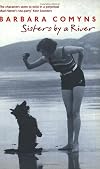
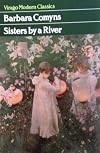
Sisters by a River
by Barbara Comyns
On This Page
Description
On the banks of the River Avon, five sisters are born. The seasons come and go, the girls take their lessons under the ash tree, and always there is the sound of water swirling through the weir. Then, unexpectedly, an air of decay descends upon the house: ivy grows unchecked over the windows, angry shouts split the summer air, the milk sours in the larder and their father takes out his gun. Tragedy strikes the family, and before long the furniture is being auctioned off and the sisters show more dispersed among relatives. In her daring first novel, originally published in 1947, Barbara Comyns' unique young heroine relates the vivid, funny and bittersweet story of a childhood. show lessTags
Recommendations

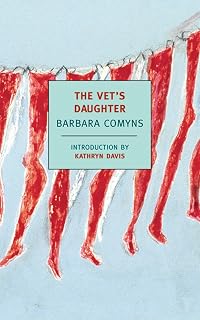







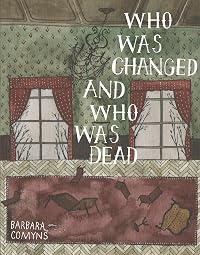
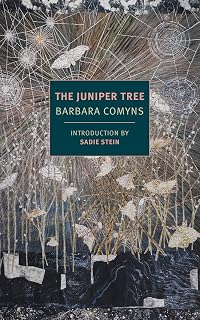










Member Recommendations
Member Reviews
Sisters by a River is a semi-autobiographical novel told from the perspective of a young girl who is one of 5 sisters. Barbara Comyns wrote this in the style of a young child, complete with spelling errors and run-on sentences! And it really does resemble the way a child takes in and processes memories, with a dream-like and disjointed quality to the storytelling.
Comyns blends dark humor with moments of quiet tragedy, portraying a decaying aristocratic household filled with eccentric characters and sudden violence waiting around each corner. It’s dark and grotesque, and also at times, oddly enchanting.
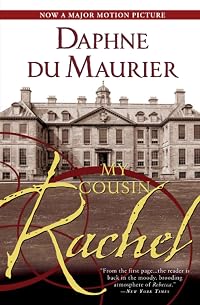
While Sisters by a River is so unusual and difficult to compare to other novels, I think fans of Shirley Jackson’s writing, as well show more as Caroline Blackwood’s Great Granny Webster, would be likely to appreciate this one! show less
Comyns blends dark humor with moments of quiet tragedy, portraying a decaying aristocratic household filled with eccentric characters and sudden violence waiting around each corner. It’s dark and grotesque, and also at times, oddly enchanting.
While Sisters by a River is so unusual and difficult to compare to other novels, I think fans of Shirley Jackson’s writing, as well show more as Caroline Blackwood’s Great Granny Webster, would be likely to appreciate this one! show less
Barbary Comyns is a very unusual writer, both regarding her life and her writings. She married early and unhappily, worked in a variety of jobs, some of them rather… unusual, not to say bizarre (breeding poodles!) and kind of slipped into a writing career when she was persuaded to try to publish the stories about her early life she had been writing down for her children. She had a hard time finding a publisher for that novel, but finally succeeded and it was released as Sisters by a River in 1947.
As far as her writings are concerned, the only author I can think of who is somewhat comparable would be Robert Walser – they both share the unflinchingly affirmative attitude of their protagonists, who not only endure, but embrace and show more welcome all the misery that life throws their way. The writing of both appears odd, even quaint at first (and might remain that way to a superficial reading) but on closer inspection reveals that it has a darker undertone and a very sharp edge to it. The constant enthusiastic affirmation of even the most cruel and mean-spirited behaviour produces a subversion which denounces such behaviour and the society that produces it much more effectively than any open criticism could, and makes for a very uncomfortable, even unsettling reading experience – which, I think, is to a large part responsible for neither Walser nor Comyns getting quite the appreciation they deserve; if they are read at all, both tend to be classified as “quirky humour”, and this is a label that does not do justice to either.
However, there are at least as many differences between the two writers as there are similarities; in fact the actual reading experience of their respective works is very different indeed. What struck me most, at least with Sisters by a River, – the only novel of Barbara Comyns that I have read so far, but unlikely to remain the only one – was that while the world Walser’s protagonists live in is both mind-numbing and soul-smothering, Comyns’ protagonists find themselves just as often victims to or at least threatened by physical violence. That might be due to Comyns living in Britain rather than Switzerland, or to her writing several decades later – but for my part, I’m inclined to ascribe it to the gender of her protagonists, who appear to be all female.
As accepting, affirmative and even occasionally merry as the first-person narrator of Sisters by a River is, her life is filled with violence, a lot of it directed at herself either from her parents or her eldest sister. Taking a step back, detaching oneself from the narrative and taking considered look at everything she tells us about, this is a fairly bleak book – while the sisters of the title did live in an upper class home for most of their childhood, they were exposed to the constant fierce quarrelling between her parents and oppressed by the eldest sister who erected something like a rule of terror over her siblings, down to the colour of clothes they were allowed to wear (only brown and other drab colours, so that they would not outshine the eldest). That might sit strangely with the quirky and essentially harmless humour that is often ascribed to Comyns, but in fact it is precisely a mark of her greatness as a writer that she spins such a breezy and occasionally bubbly tale out of her misery (her own misery, too, given that Sisters by a River is presumably to a large degree autobiographical) – not, however, to gloss over them, but quite to the contrary: once the reader notices the dissociation between tone and subject matter, the bleakness of the latter is driven home as a shock, and once noticed, it cannot be un-perceived, but stays with the reader until the end of the novel and what appeared at first as quirkiness takes on an increasingly sad tone as the novel progresses.
And Barbara Comyns does make the reader notice – chiefly by way of the language which is very distinct (and marks another major difference to Robert Walser, whose prose is more conventionally beautiful) thanks to her idiosyncratic orthography. This is often taken as the narrative being written from the perspective of a child, but I for my part do not that this is a viable explanation – it is quite clear from several remarks the narrator lets drop that she is telling of events at a time well afterwards, which would put her at an age where one would expect people to get their spelling right. I think the spelling mistakes and linguistic distortions in the narrator’s writing show the wounds that the events she is writing about have dealt her, that her life has left her scarred even down to the way she is using language. It comes as no great surprise, then, that while some of the novel’s orthographic idiosyncrasies appear to be simple spelling mistakes, instances abound where an apparent error brings some hidden strata of meaning to light, placing Barbara Comyns’ writing in proximity to authors like James Joyce or Arno Schmidt, staunch modernists all.
I do not think I ever read a novel that was so extreme – moving from amusingly quirky to depressingly bleak, its language simultaneously child-like and avant-garde, the reading experience both delightful and harrowing – and yet was so very unobtrusive about it. Sisters by the River is truly a hidden gem, placed in a dark corner where it attempts to avoid drawing attention on itself, but once discovered and exposed to the light, it shines all the brighter. And I can’t help it, but I find it very exhilarating that even after reading several thousands of books one can still make discoveries like this one. show less
As far as her writings are concerned, the only author I can think of who is somewhat comparable would be Robert Walser – they both share the unflinchingly affirmative attitude of their protagonists, who not only endure, but embrace and show more welcome all the misery that life throws their way. The writing of both appears odd, even quaint at first (and might remain that way to a superficial reading) but on closer inspection reveals that it has a darker undertone and a very sharp edge to it. The constant enthusiastic affirmation of even the most cruel and mean-spirited behaviour produces a subversion which denounces such behaviour and the society that produces it much more effectively than any open criticism could, and makes for a very uncomfortable, even unsettling reading experience – which, I think, is to a large part responsible for neither Walser nor Comyns getting quite the appreciation they deserve; if they are read at all, both tend to be classified as “quirky humour”, and this is a label that does not do justice to either.
However, there are at least as many differences between the two writers as there are similarities; in fact the actual reading experience of their respective works is very different indeed. What struck me most, at least with Sisters by a River, – the only novel of Barbara Comyns that I have read so far, but unlikely to remain the only one – was that while the world Walser’s protagonists live in is both mind-numbing and soul-smothering, Comyns’ protagonists find themselves just as often victims to or at least threatened by physical violence. That might be due to Comyns living in Britain rather than Switzerland, or to her writing several decades later – but for my part, I’m inclined to ascribe it to the gender of her protagonists, who appear to be all female.
As accepting, affirmative and even occasionally merry as the first-person narrator of Sisters by a River is, her life is filled with violence, a lot of it directed at herself either from her parents or her eldest sister. Taking a step back, detaching oneself from the narrative and taking considered look at everything she tells us about, this is a fairly bleak book – while the sisters of the title did live in an upper class home for most of their childhood, they were exposed to the constant fierce quarrelling between her parents and oppressed by the eldest sister who erected something like a rule of terror over her siblings, down to the colour of clothes they were allowed to wear (only brown and other drab colours, so that they would not outshine the eldest). That might sit strangely with the quirky and essentially harmless humour that is often ascribed to Comyns, but in fact it is precisely a mark of her greatness as a writer that she spins such a breezy and occasionally bubbly tale out of her misery (her own misery, too, given that Sisters by a River is presumably to a large degree autobiographical) – not, however, to gloss over them, but quite to the contrary: once the reader notices the dissociation between tone and subject matter, the bleakness of the latter is driven home as a shock, and once noticed, it cannot be un-perceived, but stays with the reader until the end of the novel and what appeared at first as quirkiness takes on an increasingly sad tone as the novel progresses.
And Barbara Comyns does make the reader notice – chiefly by way of the language which is very distinct (and marks another major difference to Robert Walser, whose prose is more conventionally beautiful) thanks to her idiosyncratic orthography. This is often taken as the narrative being written from the perspective of a child, but I for my part do not that this is a viable explanation – it is quite clear from several remarks the narrator lets drop that she is telling of events at a time well afterwards, which would put her at an age where one would expect people to get their spelling right. I think the spelling mistakes and linguistic distortions in the narrator’s writing show the wounds that the events she is writing about have dealt her, that her life has left her scarred even down to the way she is using language. It comes as no great surprise, then, that while some of the novel’s orthographic idiosyncrasies appear to be simple spelling mistakes, instances abound where an apparent error brings some hidden strata of meaning to light, placing Barbara Comyns’ writing in proximity to authors like James Joyce or Arno Schmidt, staunch modernists all.
I do not think I ever read a novel that was so extreme – moving from amusingly quirky to depressingly bleak, its language simultaneously child-like and avant-garde, the reading experience both delightful and harrowing – and yet was so very unobtrusive about it. Sisters by the River is truly a hidden gem, placed in a dark corner where it attempts to avoid drawing attention on itself, but once discovered and exposed to the light, it shines all the brighter. And I can’t help it, but I find it very exhilarating that even after reading several thousands of books one can still make discoveries like this one. show less
An anecdotal collection of childhood memories written in a childlike conversational tone that simultaneously captures the fragmentary nature of a childhood in recollection, as well as casually and straightforwardly - without sympathy or even acknowledgement - reveals the darker abusive environment in which the narrator and her sisters grew up.
In fact, Comyns' deliberate choice of run-on prose and occasional misspellings was very effective in distracting me from the horrific anecdotes until I was about midway through. In this way, I felt I was sucker-punched similar to that time I read Karen Russell's Swamplandia! Or perhaps I'm only reminded of it because the river played a significant part in both stories.
As with my first Comyns, I show more loved how she captures the way that childhood days seem to all blend together into one long long long day, or season, or event. There's no real structure to the overall story, with the barest of story progression happening in the final pages.
Aside: Apparently this book was very autobiographical and Comyns wrote it as a record for herself. After The Skin Chairs, I felt certain that Comyns will be a favourite. I'm still certain, but feel that this book would be perhaps better read last in my pursuit of Comyns. show less
In fact, Comyns' deliberate choice of run-on prose and occasional misspellings was very effective in distracting me from the horrific anecdotes until I was about midway through. In this way, I felt I was sucker-punched similar to that time I read Karen Russell's Swamplandia! Or perhaps I'm only reminded of it because the river played a significant part in both stories.
As with my first Comyns, I show more loved how she captures the way that childhood days seem to all blend together into one long long long day, or season, or event. There's no real structure to the overall story, with the barest of story progression happening in the final pages.
Aside: Apparently this book was very autobiographical and Comyns wrote it as a record for herself. After The Skin Chairs, I felt certain that Comyns will be a favourite. I'm still certain, but feel that this book would be perhaps better read last in my pursuit of Comyns. show less
This is a strange little book. I kept thinking of this as Little Women turned on its head. This is the story of five sisters told by the one in the middle. The river in reference here is the Avon, and the family is an upper class family that is apparently barely hanging on to its status and properties. It is told in an episodic fashion, non-linear, vignette-style. While the forward said it was semi-autobiographical, I kept hoping some of these events never occurred, particularly those in which animals and children were subjected to cruelty. Instances of both occurred a bit too often for my taste, but I tried to read it with a sense of humor, because otherwise it was a wee bit dark. I mean, any way you stack it, these are at worst show more abusive parents and at best apathetic ones.
then she (Granny) would say we were no better than Street Arabs or Charity Winks and should be horsewhipped, once Daddy took her at her word and did horsewhip me, it was so dreadful I couldn’t even cry out, then Granny got frit (frightened) and kept shouting, “No more, you will kill the child, stop, stop...”
The same father who beats Barbara for accidentally breaking an egg on a wall, throws a baby down the stairs because she will not stop crying and only the quick catch of a nursery nanny prevents a tragedy. His gardener disposes of unwanted kittens by cutting off their heads, which is over the top for me.
These kinds of passages made this a bit hard, but there were also funny episodes since the children were mischievous and less than angels and some of their hijinks were humorous. There is no Marmie handing out sage advice, no Meg loaning gloves so that her sister will be presentable, and certainly no Beth spreading sweetness and light in this novel. The oldest girl, Mary, refuses to allow the other girls to wear any colored dresses, they are forced to wear drab brown, so that she alone will shine and strictly forbids them to read any book that she loves, so Wind in the Willows is off limits. I will admit, however, that the girls’ relationships with one another seemed quite realistic and genuine to me. I grew up in a family of girls, and there are surely those moments between the older and younger that are neither kind nor fair.
In the end, I am leaving it with mixed feelings. I actually liked parts of it very much and, despite the passages that I objected to, I never considered putting it aside. So, I’m plotting it right in the middle...didn’t hate it, didn’t love it. show less
then she (Granny) would say we were no better than Street Arabs or Charity Winks and should be horsewhipped, once Daddy took her at her word and did horsewhip me, it was so dreadful I couldn’t even cry out, then Granny got frit (frightened) and kept shouting, “No more, you will kill the child, stop, stop...”
The same father who beats Barbara for accidentally breaking an egg on a wall, throws a baby down the stairs because she will not stop crying and only the quick catch of a nursery nanny prevents a tragedy. His gardener disposes of unwanted kittens by cutting off their heads, which is over the top for me.
These kinds of passages made this a bit hard, but there were also funny episodes since the children were mischievous and less than angels and some of their hijinks were humorous. There is no Marmie handing out sage advice, no Meg loaning gloves so that her sister will be presentable, and certainly no Beth spreading sweetness and light in this novel. The oldest girl, Mary, refuses to allow the other girls to wear any colored dresses, they are forced to wear drab brown, so that she alone will shine and strictly forbids them to read any book that she loves, so Wind in the Willows is off limits. I will admit, however, that the girls’ relationships with one another seemed quite realistic and genuine to me. I grew up in a family of girls, and there are surely those moments between the older and younger that are neither kind nor fair.
In the end, I am leaving it with mixed feelings. I actually liked parts of it very much and, despite the passages that I objected to, I never considered putting it aside. So, I’m plotting it right in the middle...didn’t hate it, didn’t love it. show less
Humour and horror juxtapose'
By sally tarbox on 18 Dec. 2011
Format: Paperback
Lovely book, that can only be described as the literary form of naive art! Comyns recounts episodes from her childhood, brought up in a genteel if debt-laden family. It put me in mind of Nancy Mitford's account of her own family. Irascible Daddy, vague, deaf Mammy, and six children who for want of outside company spend much time together.
Comyns writes in a unique child-like style, with eccentric spelling and an antipathy to semi-colons, so that phrases run into each other:
'Mammy had always looked and been rather vague, she had a kind of gypsoflia mind, all little bits and pieces held together by whisps' (sic)
Far from being a sentimental account, Comyns recalls show more the horrific alongside the magical- villagers drowning in the floods; her father's violence; ill-treatment of animals.
I LOVE Comyns' work ! show less
By sally tarbox on 18 Dec. 2011
Format: Paperback
Lovely book, that can only be described as the literary form of naive art! Comyns recounts episodes from her childhood, brought up in a genteel if debt-laden family. It put me in mind of Nancy Mitford's account of her own family. Irascible Daddy, vague, deaf Mammy, and six children who for want of outside company spend much time together.
Comyns writes in a unique child-like style, with eccentric spelling and an antipathy to semi-colons, so that phrases run into each other:
'Mammy had always looked and been rather vague, she had a kind of gypsoflia mind, all little bits and pieces held together by whisps' (sic)
Far from being a sentimental account, Comyns recalls show more the horrific alongside the magical- villagers drowning in the floods; her father's violence; ill-treatment of animals.
I LOVE Comyns' work ! show less
[b:Sisters by a River|2702242|Sisters by a River|Barbara Comyns|https://i.gr-assets.com/images/S/compressed.photo.goodreads.com/books/1360259590l/2702242._SY75_.jpg|2727606] is good escape fare. Such an odd book narrated in short pieces in first person by a young girl growing up amidst a large family of five sisters, a mad mother who is deaf, a nutty grandmother and an alcoholic father plus various staff, governesses and helpers and dogs in a rambling mansion along the River Avon in England. "Mammy had her excape in her imaginary lovers, we children did not have much excape in the winter, but when the summer came there was the sun and river, some mornings I would get up at five and row up the river before anyone else had been on it, and show more the larks would be singing and the cows standing together in the little bays where the water was shallow, and everything would seem so good and clean, I felt I wanted to cry with so much hapiness, this feeling would sometimes stay with me all day."
I can't really figure why it is so compelling. I want to keep reading but there's an anxiety as to how it will end? Violence? Bankruptcy? Abandonment? Is it to see if she grows up in the face of so much antagonism from parents and older sister Mary who's twenty by the end of the book to the author's sixteen? Is it to see what is next in the escapades of the six sisters? Or in their tales and animals? Is it to see if she learns to spell? The quirky misspellings are intact in the book and they scream out at me as I read along, "horrorible" or frit for fright or tiered for tired, imaginative and not impossible, but they jerk the reader out of the story, especially a grammatical reader. But like all [a:Barbara Comyns|280994|Barbara Comyns|https://images.gr-assets.com/authors/1299885897p2/280994.jpg]'s novels thus far, I am completely in her thrall and cannot wait to pick up another story plus the new biography. show less
I can't really figure why it is so compelling. I want to keep reading but there's an anxiety as to how it will end? Violence? Bankruptcy? Abandonment? Is it to see if she grows up in the face of so much antagonism from parents and older sister Mary who's twenty by the end of the book to the author's sixteen? Is it to see what is next in the escapades of the six sisters? Or in their tales and animals? Is it to see if she learns to spell? The quirky misspellings are intact in the book and they scream out at me as I read along, "horrorible" or frit for fright or tiered for tired, imaginative and not impossible, but they jerk the reader out of the story, especially a grammatical reader. But like all [a:Barbara Comyns|280994|Barbara Comyns|https://images.gr-assets.com/authors/1299885897p2/280994.jpg]'s novels thus far, I am completely in her thrall and cannot wait to pick up another story plus the new biography. show less
If you put Beatrix Potter, the Garbage Pail Kids, and a six year old Robin Williams, wearing a jumper, into a blender, and pressed the "Puree" button...well then, you would still need to read this book - because that's just the kind of funny, yummy, scary-horrible book it is.
The chief thing is, if one could get a dose of Alice's psychedelic Pill That Makes You Smaller...small enough to be terrified by cows but just large enough to ride rabbits until you crush them...who, but a child, would have the nerve to swallow it? Fortunately, there's no need for such heroics. Barbara Comyns has writ the frit all down, more or les propper, and all you need to do is turn the pages. It's OK to "sound out" the words with your lips, if you want. Mammy show more doesn't bother about that. show less
The chief thing is, if one could get a dose of Alice's psychedelic Pill That Makes You Smaller...small enough to be terrified by cows but just large enough to ride rabbits until you crush them...who, but a child, would have the nerve to swallow it? Fortunately, there's no need for such heroics. Barbara Comyns has writ the frit all down, more or les propper, and all you need to do is turn the pages. It's OK to "sound out" the words with your lips, if you want. Mammy show more doesn't bother about that. show less
Members
- Recently Added By
Lists

Recommend the 20 best books you've read in the last five years
2,168 works; 606 members

Best Books With Sisters
130 works; 30 members

1940s
221 works; 25 members

My Virago Modern Classics wish list
23 works; 3 members

Books Read in 2021
5,361 works; 113 members

Books With Water Words in the Title
186 works; 12 members
Author Information

11 Works 3,466 Members
Some Editions
Series
Belongs to Publisher Series
Virago Modern Classics (164)
Common Knowledge
- Canonical title
- Sisters by a River
- Original publication date
- 1947
- First words
- It was in the middle of a snowstorm I was born, Palmer's brother's wedding night, Palmer went to the wedding and got snowbound, and when he arrived very late in the morning he had to bury my packing under the wallnut tree, he... (show all) always had to do this when we were born - six times in all, and none of us died, Mary said Granny used to give us manna to eat and that's why we didn't but manna is stuff in the bible, perhaps they have it in places like Fortnham & Mason, but I've never seen it, or maybe Jews shops.
Anyone with a gothic streak will be gripped by this vivid autobiographical novel about five sisters struggling to bring themselves up - with a high degree of ingenuity - as they dodge the fall-out created by their ill-matched... (show all) and violent parents. (Introduction) - Last words
- (Click to show. Warning: May contain spoilers.)I must finish this long letter now, my love to you and the children
BEATRIX
(Click to show. Warning: May contain spoilers.)Yet it's all here, on the page, thanks to the flair and recall of its talented chronicler; something for which every reader will be grateful. (Introduction) - Original language
- English
Classifications
Statistics
- Members
- 279
- Popularity
- 115,468
- Reviews
- 13
- Rating
- (3.96)
- Languages
- English
- Media
- Paper, Ebook
- ISBNs
- 4
- ASINs
- 4