
Barbara Trapido
Author of Brother of the More Famous Jack
About the Author
Image credit: Courtesy of Allen and Unwin
Series
Works by Barbara Trapido
Associated Works
Tagged
Common Knowledge
- Other names
- Schuddeboom, Barbara
- Birthdate
- 1941-5-11
- Gender
- female
- Education
- University of Natal, Durban
University of London - Occupations
- novelist
teacher - Awards and honors
- Whitbread Special prize for fiction, 1982, for Brother of the More Famous Jack.
- Relationships
- Trapido, Stanley (husband)
Trapido, Anna (daughter) - Nationality
- South Africa (birth)
UK - Birthplace
- Durban, South Africa
- Places of residence
- Cape Town, South Africa
Oxford, Oxfordshire, England, UK
Durban, South Africa - Map Location
- South Africa
England
Members
Reviews

Halfway through the book I realized that I was misled when another author I love said Barbara Trapido was a must-read. "A product of its time" isn't appropriate to say anymore, she should have known better. Anyhow, I finished it to see what happens to this dreadful family, who really is an embodiment of the transatlantic accent. Unfortunately, they continued about their way and Barbara decided a miracle baby was a great ending. She's quoted as saying " “Anyone who reads Brother Of The More show more Famous Jack will know it’s anti-racist, even if the some of the characters run the risk of being bigoted, so I’m comfortable with that." but I certainly did not see that this book as anti-racist, just the opposite, racism was causal and un-confronted and perhaps normalized. Along with all of that I didn't find it compelling or funny or witty, it was just kind of like watching people you don't like making mistakes and facing little consequences, which is quite unfulfilling. show less
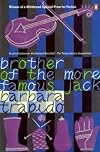
It all starts when John Millet takes Katherine to meet friends of his, the Goldman family. Only Katherine knows the mister of the family, Jake Goldman. He is her philosophy professor, but Katherine is meeting his family for the first time. If you can get over the misogynistic overtones of Brother of the More Famous Jack you will fall in love with some of Trapido's characters. I loved Jane. Here is what I mean about the subtle disparagement of women: when Jacob complained that his wife, Jane, show more does not do enough around the house it set my teeth to grinding after Jane felt she needed to point out that she has brought the group tea, and has made them lunch, in addition to gardening and making music. Trapido says this of Jake, "He gains strength from the myth of his wife's incompetence" (p 25). Katherine dates a man who didn't like women when they turned into mothers. Mostly, I tried not to be too offended by the light banter about rape and abortion.
All in all, I wasn't sure I liked Katherine. She is very unlucky in love and has this air of helplessness that bothered me throughout the entire book. She pines for a Goldman son even though it is apparent he never feels the same way. For six years she dates a married man who is ugly to her. This man left his previous wife because he lost respect for her when she became pregnant with his child. When Katherine finally escapes this relationship she runs straight back to the Goldman family. Why does she keep returning to these people? Because she has fallen in love with the entire family. Even after ten years away from them she finds herself ensconced in their lives. show less
All in all, I wasn't sure I liked Katherine. She is very unlucky in love and has this air of helplessness that bothered me throughout the entire book. She pines for a Goldman son even though it is apparent he never feels the same way. For six years she dates a married man who is ugly to her. This man left his previous wife because he lost respect for her when she became pregnant with his child. When Katherine finally escapes this relationship she runs straight back to the Goldman family. Why does she keep returning to these people? Because she has fallen in love with the entire family. Even after ten years away from them she finds herself ensconced in their lives. show less
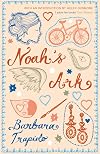
This is the story of a marriage but it is also a clever study of power.
Ali Bobrow, artistic, beautiful and unworldly, is easy prey to controlling men. Her third husband, Noah, is at least a benign dictator. Before him she was mistreated, her daughter was unhappy and she was unable to resist the demands of any manipulative neighbour or acquaintance. Noah, a doctor, the ultimate protector, replaces the chaos with love, calm and security – so long as she follows his rules.
Then one day Ali show more decides to rebel – and this disrupts the delicate balance of her life with Noah, and leads her to look back at her past in South Africa.
Trapido’s characters are funny and vivid and clever. You feel like you want to climb into her world (though probably not for too long – who could keep up?). She creates atmosphere with economy and style. The opening scene shows Ali sewing in her kitchen, an icon of domesticity. The apparently ordinary items – the fruit bowl, the pinboard – and her thoughts about them immediately evoke the family and her place within it.
There are other types of power here. Ali grew up under apartheid, the descendant of German refugees from World War Two. Her best friend at school was Jewish, and she is attracted to Jewish men. Her unconsummated first love was dark-skinned and was rumoured to have lied about his background to attend the all-white university.
There are also the dynamics between parents and children. Noah’s step-daughter, once so timid, is able to be rebellious and demanding precisely because he has made her feel safe – for now. He is also confronted by the stubbornness of his own daughter.
How do we respond to a world where every day people are harming others? Trapido asks subtle questions about the limits of power, resistance and compassion. show less
Ali Bobrow, artistic, beautiful and unworldly, is easy prey to controlling men. Her third husband, Noah, is at least a benign dictator. Before him she was mistreated, her daughter was unhappy and she was unable to resist the demands of any manipulative neighbour or acquaintance. Noah, a doctor, the ultimate protector, replaces the chaos with love, calm and security – so long as she follows his rules.
Then one day Ali show more decides to rebel – and this disrupts the delicate balance of her life with Noah, and leads her to look back at her past in South Africa.
Trapido’s characters are funny and vivid and clever. You feel like you want to climb into her world (though probably not for too long – who could keep up?). She creates atmosphere with economy and style. The opening scene shows Ali sewing in her kitchen, an icon of domesticity. The apparently ordinary items – the fruit bowl, the pinboard – and her thoughts about them immediately evoke the family and her place within it.
There are other types of power here. Ali grew up under apartheid, the descendant of German refugees from World War Two. Her best friend at school was Jewish, and she is attracted to Jewish men. Her unconsummated first love was dark-skinned and was rumoured to have lied about his background to attend the all-white university.
There are also the dynamics between parents and children. Noah’s step-daughter, once so timid, is able to be rebellious and demanding precisely because he has made her feel safe – for now. He is also confronted by the stubbornness of his own daughter.
How do we respond to a world where every day people are harming others? Trapido asks subtle questions about the limits of power, resistance and compassion. show less
This is a charming coming-of-age story, about Catherine, an aspiring university philosophy student when we first meet her. Through an improbable coincidence she is invited to spend a weekend with her professor's family. Jacob and Jane Goldman and their children are quirky, eccentric, and occasionally maddening, and take our Catherine in as if she is their own. Catherine's association with the Goldmans is the engine that drives this novel, which has a lot to say about class, women, academia, show more child-rearing and more. Funny, witty, occasionally heartbreaking; I loved it. show less
Lists
Awards


You May Also Like


Associated Authors
Statistics
- Works
- 8
- Also by
- 2
- Members
- 2,502
- Popularity
- #10,262
- Rating
- 3.7
- Reviews
- 43
- ISBNs
- 129
- Languages
- 7
- Favorited
- 15