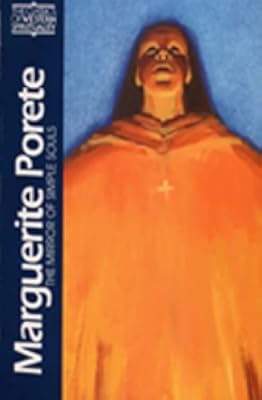
Marguerite Porete: The Mirror of Simple Souls
by Marguerite Porete
On This Page
Description
"When Dr. Romana Guarnieri, in a letter to Osservatore Romano (16 June 1946), announced her discovery that Margaret Porette (d. 1 June 1310) was the author of The Mirror of Simple Souls, certainly a major French document of pre-Reformation spirituality, a sensation was created in the academic world Although The Mirror is one of the few heretical documents to have survived the Middle Ages in its entirety, both its title and its authorship were among the most persistent and troublesome show more problems of scholarly research in the field of medieval vernacular languages. The Mirror, in its original French, survives only in the fifteenth-century manuscript which the great Conde (Louis II de Bourbon) had acquired for his palace at Chantilly." "This edition of The Mirror of Simple Souls is a translation from the French original with an interpretive essay by Edmund Colledge, O.S.A., J.C. Marler, and Judith Grant, and a foreword by Kent Emery, Jr. The translators of this Modern English version rely primarily on the French, yet take other medieval translations into account. As a result, this edition offers a reading of The Mirror which solves a number of difficulties found in the French, and the introduction contributed by the translators narrates the archival history of the book for which Margaret Porette was burned alive in Paris in 1310"--Jacket show lessTags
Recommendations












Member Reviews
This masterpiece of Christian apophatic mysticism is notable for also containing a high degree of affective content. It includes elements of Boethian allegory and draws on the literary tradition of courtly love, while describing the annihilation and apotheosis of the Soul in a set of visionary conversations. Church authorities considered its contents to be dangerously heretical because of the antinomian idea (sometimes connected with the heresy of the Free Spirit) that the mystic who attains to annihilation has desire free from sin, and thus may exercise his or her will without constraint.
"And therefore I say to all that no-one who understands as I do will understand this book unless he understands it by the strength of Faith and the show more Power of Love, who are my mistresses, for I obey them in all things. And then too, says Reason, I want to say this: that whoever has these two strings to his bow, that is the light of Faith and the power of Love, he has permission to do whatever pleases him, and the witness of this is Love herself, who says to the Soul: Beloved, love, and do what you will." (30) This text thus manifests a link in the germination of Thelema between Augustine's Dilige et quod vis fac ("Love, and do what you will") and Colonna's Trahit sua quemque voluptas ("Let each follow his own pleasure").
Marguerite was burnt at the stake for heresy in 1310, less than a month after the similar execution of fifty-four Knights Templar. Her book had been incinerated earlier, but she persisted in authorizing its distribution. After her death, it was sufficiently prized by its readers that they continued to circulate it sub rosa, and it was not reconnected to her authorship until the middle of the twentieth century. In the meanwhile it was influential on other mystics including Eckhart and Ruysbroek.
Porete's idea of annihilation bears fruitful comparison with the Sufi doctrine of fana. Thelemites will be well-advised to study The Mirror of Simple Souls in connection with Liber CLXVI and its related rituals and attainments. show less
"And therefore I say to all that no-one who understands as I do will understand this book unless he understands it by the strength of Faith and the show more Power of Love, who are my mistresses, for I obey them in all things. And then too, says Reason, I want to say this: that whoever has these two strings to his bow, that is the light of Faith and the power of Love, he has permission to do whatever pleases him, and the witness of this is Love herself, who says to the Soul: Beloved, love, and do what you will." (30) This text thus manifests a link in the germination of Thelema between Augustine's Dilige et quod vis fac ("Love, and do what you will") and Colonna's Trahit sua quemque voluptas ("Let each follow his own pleasure").
Marguerite was burnt at the stake for heresy in 1310, less than a month after the similar execution of fifty-four Knights Templar. Her book had been incinerated earlier, but she persisted in authorizing its distribution. After her death, it was sufficiently prized by its readers that they continued to circulate it sub rosa, and it was not reconnected to her authorship until the middle of the twentieth century. In the meanwhile it was influential on other mystics including Eckhart and Ruysbroek.
Porete's idea of annihilation bears fruitful comparison with the Sufi doctrine of fana. Thelemites will be well-advised to study The Mirror of Simple Souls in connection with Liber CLXVI and its related rituals and attainments. show less
Not So Simple
Review of the Echo Point Books & Media, LLC Kindle eBook (December 19, 2022) of the original English language hardcover (1927) of a 15th Century English language manuscript as translated by the anonymous N.M. from the French language original "Le miroir des âmes simples et anéanties : Et qui seulement demeurent en vouloir et désir d'Amour" (The Mirror of the Simple Souls Who Are Annihilated and Remain Only in Will and Desire of Love) (c. 1306).
Let me say right at the start here that the 2-star rating applies only to the original 1927 edition and any of its later reprints/reissues. That edition was prepared show more on the basis of the discovery of one of the 15th century English translation manuscripts found in the British Library in 1911. At that time, it was thought that the 14th Century French language original was lost and also that it was written by a man. It was not until 1946 that the writer was identified as Marguerite Porete (c. 13th Century - 1310). Porete had been condemned as a heretic by the Church and was burned at the stake in Paris in 1310 and her book was banned.
See print at https://upload.wikimedia.org/wikipedia/commons/f/f4/De_baghine_Des_dodes_dantz_L...
A print of a Beguine mystic as Marguerite Porete is assumed to have been. Image sourced from the Wikipedia article on Porete (as linked above).
The 1927 edition provides some minimal notes although much of it will be confusing to a non-informed in Christian mysticism reader such as myself. The archaic English is confusing and often repetitive. The commentary by the 15th Century translator known only by the initials N.M. does not help at all, it is a sort of Ignotum per ignotius, where the explanation is even more confusing than the thing it is meant to explain.
I recommend getting any of the later translations which were made after the discovery of a copy of the original French language manuscript. For example, the description synopsis of the University of Notre Dame edition The Mirror of Simple Souls (1999) makes it sound quite authoritative.
Soundtrack, Trivia and Links
I read this edition of The Mirror of Simple Souls due to its being cheaply and easily available. I should have done more research before choosing it. I sought it out after coming home from a performance by Canadian modern dance icon Louise Lecavalier of her recent work Stations. Lecavalier discussed in the post-show Q&A how part of her dance work had been inspired by her reading of Marguerite Porete.
See photograph at https://scontent-ord5-2.xx.fbcdn.net/v/t39.30808-6/405647168_25190288100569971_7...
Louise Lecavalier at a post-show Q&A at the Toronto Harbourfront Fleck Dance Theatre in November 2023.
See photograph at https://th.bing.com/th/id/OIP.LZigHE2ossZYjX-JASxKSwHaE8?w=272&h=181&c=7...
Louise Lecavalier in rehearsal with David Bowie in the late 1980s. Screengrab from YouTube.
I don't know how well known Lecavalier is internationally, but in the late 1980s she did several videos and live performances with David Bowie, some of which are collaged in this Heroes 3-Language Megamix. It includes her trademark 360° full-body barrel-roll jump which is seen repeated several times. show less
Review of the Echo Point Books & Media, LLC Kindle eBook (December 19, 2022) of the original English language hardcover (1927) of a 15th Century English language manuscript as translated by the anonymous N.M. from the French language original "Le miroir des âmes simples et anéanties : Et qui seulement demeurent en vouloir et désir d'Amour" (The Mirror of the Simple Souls Who Are Annihilated and Remain Only in Will and Desire of Love) (c. 1306).
Jesu, pray for us.
Sigh and sorrow deeply:
Mourn and weep inwardly:
Pray and think devoutly:
Love and long continually.
Let me say right at the start here that the 2-star rating applies only to the original 1927 edition and any of its later reprints/reissues. That edition was prepared show more on the basis of the discovery of one of the 15th century English translation manuscripts found in the British Library in 1911. At that time, it was thought that the 14th Century French language original was lost and also that it was written by a man. It was not until 1946 that the writer was identified as Marguerite Porete (c. 13th Century - 1310). Porete had been condemned as a heretic by the Church and was burned at the stake in Paris in 1310 and her book was banned.
See print at https://upload.wikimedia.org/wikipedia/commons/f/f4/De_baghine_Des_dodes_dantz_L...
A print of a Beguine mystic as Marguerite Porete is assumed to have been. Image sourced from the Wikipedia article on Porete (as linked above).
The 1927 edition provides some minimal notes although much of it will be confusing to a non-informed in Christian mysticism reader such as myself. The archaic English is confusing and often repetitive. The commentary by the 15th Century translator known only by the initials N.M. does not help at all, it is a sort of Ignotum per ignotius, where the explanation is even more confusing than the thing it is meant to explain.
I recommend getting any of the later translations which were made after the discovery of a copy of the original French language manuscript. For example, the description synopsis of the University of Notre Dame edition The Mirror of Simple Souls (1999) makes it sound quite authoritative.
Soundtrack, Trivia and Links
I read this edition of The Mirror of Simple Souls due to its being cheaply and easily available. I should have done more research before choosing it. I sought it out after coming home from a performance by Canadian modern dance icon Louise Lecavalier of her recent work Stations. Lecavalier discussed in the post-show Q&A how part of her dance work had been inspired by her reading of Marguerite Porete.
See photograph at https://scontent-ord5-2.xx.fbcdn.net/v/t39.30808-6/405647168_25190288100569971_7...
Louise Lecavalier at a post-show Q&A at the Toronto Harbourfront Fleck Dance Theatre in November 2023.
See photograph at https://th.bing.com/th/id/OIP.LZigHE2ossZYjX-JASxKSwHaE8?w=272&h=181&c=7...
Louise Lecavalier in rehearsal with David Bowie in the late 1980s. Screengrab from YouTube.
I don't know how well known Lecavalier is internationally, but in the late 1980s she did several videos and live performances with David Bowie, some of which are collaged in this Heroes 3-Language Megamix. It includes her trademark 360° full-body barrel-roll jump which is seen repeated several times. show less
> LE MIROIR DES ÂMES SIMPLES ET ANÉANTIES, de Marguerite Porete (Albin Michel, 2011). — Chef-d’oeuvre de la première littérature mystique de langue française, le Miroir des âmes simples et anéanties et qui seulement demeurent en vouloir et désir d’Amour révèle une richesse spirituelle qui place son auteur, Marguerite Porete, brûlée en 1310 à Paris, dans la lignée des saint Bernard, Maître Eckhart, ou Hadewijch d’Anvers. (Spiritualités Vivantes)
> Babelio : https://www.babelio.com/livres/Porete-Le-miroir-des-ames-simples-et-aneanties/82...
> L'Homme en Question (No 31 – été 2011, p. 7) : https://drive.google.com/file/d/1UsHr8wxya0SbKkproUdUrUoCTqUn1OgE/view?usp=shari...
> Séguy Jean. Berto. Le Miroir des âmes show more simples et anéanties, de Marguerite Porète. Une vie blessée d'amour.
In: Archives de sciences sociales des religions, n°90, 1995. pp. 127-128. … ; (en ligne),
URL : https://www.persee.fr/doc/assr_0335-5985_1995_num_90_1_988_t1_0127_0000_5
> LE MIROIR DES ÂMES SIMPLES ET ANÉANTIES, de Marguerite Porete. — Les livres brûlés exercent souvent chez le lecteur un attrait irrésistible : quel message si puissant contenaient-ils pour que le pouvoir – séculier ou ecclésiastique – s’en soit senti menacé à ce point ? Le Miroir des âmes simples et anéanties, ou plus exactement le Mirouer des simples âmes anienties et qui seulement demeurent en vouloir et désir d’amour est l’un de ces livres dont les flammes du bûcher n’ont jamais pu vaincre l’intense ardeur spirituelle. Chef-d’œuvre de la première littérature mystique de langue française, il place son auteur, Marguerite Porete, brûlée vive par l’inquisition en 1310, dans la lignée de saint Jean de la Croix, Maître Eckhart ou Hadewijch d'Anvers. Dans ce manifeste du mouvement du Libre Esprit aux accents protoféministes, Marguerite Porete part du cœur de l’expérience religieuse la plus radicale – Dieu est Amour – pour poser les questions qui, de l’Évangile au rationalisme moderne, ont façonné l’âme occidentale : l’Amour vrai est-il soumis à autre chose qu’à lui-même ? Fût-ce à la morale, à la religion, à Dieu même ?
La force et l’audace de ces interrogations traversent les siècles à la rencontre de tous ceux qui, aujourd’hui comme hier, « fin Amour demandent ». Ceux-ci forment, à travers les siècles, une informelle communauté d’esprit qui se situe au-delà des distinctions entre clercs et laïcs, entre le cœur des institutions ecclésiastiques et ses marges : après tout, malgré l’acharnement tant des autorités inquisitoriales que royales – Marguerite Porete est envoyée au bûcher la même semaine que les premiers templiers –, ce sont bien des religieux qui, dans le secret de leur scriptorium, nous ont préservé ce délicat Miroir en le copiant et en le traduisant, permettant ainsi sa redécouverte au XXᵉ siècle. Les Éditions Albin Michel s’honorent de perpétuer cette tradition en donnant au plus grand nombre la possibilité de s’y mirer à leur tour…
*Le miroir des âmes simples et anéanties, par Marguerite Porete, Albin Michel, 270 pages, 8 €
—L’Homme en Question, (31), Été 2011, (p. 7) show less
> Babelio : https://www.babelio.com/livres/Porete-Le-miroir-des-ames-simples-et-aneanties/82...
> L'Homme en Question (No 31 – été 2011, p. 7) : https://drive.google.com/file/d/1UsHr8wxya0SbKkproUdUrUoCTqUn1OgE/view?usp=shari...
> Séguy Jean. Berto. Le Miroir des âmes show more simples et anéanties, de Marguerite Porète. Une vie blessée d'amour.
In: Archives de sciences sociales des religions, n°90, 1995. pp. 127-128. … ; (en ligne),
URL : https://www.persee.fr/doc/assr_0335-5985_1995_num_90_1_988_t1_0127_0000_5
> LE MIROIR DES ÂMES SIMPLES ET ANÉANTIES, de Marguerite Porete. — Les livres brûlés exercent souvent chez le lecteur un attrait irrésistible : quel message si puissant contenaient-ils pour que le pouvoir – séculier ou ecclésiastique – s’en soit senti menacé à ce point ? Le Miroir des âmes simples et anéanties, ou plus exactement le Mirouer des simples âmes anienties et qui seulement demeurent en vouloir et désir d’amour est l’un de ces livres dont les flammes du bûcher n’ont jamais pu vaincre l’intense ardeur spirituelle. Chef-d’œuvre de la première littérature mystique de langue française, il place son auteur, Marguerite Porete, brûlée vive par l’inquisition en 1310, dans la lignée de saint Jean de la Croix, Maître Eckhart ou Hadewijch d'Anvers. Dans ce manifeste du mouvement du Libre Esprit aux accents protoféministes, Marguerite Porete part du cœur de l’expérience religieuse la plus radicale – Dieu est Amour – pour poser les questions qui, de l’Évangile au rationalisme moderne, ont façonné l’âme occidentale : l’Amour vrai est-il soumis à autre chose qu’à lui-même ? Fût-ce à la morale, à la religion, à Dieu même ?
La force et l’audace de ces interrogations traversent les siècles à la rencontre de tous ceux qui, aujourd’hui comme hier, « fin Amour demandent ». Ceux-ci forment, à travers les siècles, une informelle communauté d’esprit qui se situe au-delà des distinctions entre clercs et laïcs, entre le cœur des institutions ecclésiastiques et ses marges : après tout, malgré l’acharnement tant des autorités inquisitoriales que royales – Marguerite Porete est envoyée au bûcher la même semaine que les premiers templiers –, ce sont bien des religieux qui, dans le secret de leur scriptorium, nous ont préservé ce délicat Miroir en le copiant et en le traduisant, permettant ainsi sa redécouverte au XXᵉ siècle. Les Éditions Albin Michel s’honorent de perpétuer cette tradition en donnant au plus grand nombre la possibilité de s’y mirer à leur tour…
*Le miroir des âmes simples et anéanties, par Marguerite Porete, Albin Michel, 270 pages, 8 €
—L’Homme en Question, (31), Été 2011, (p. 7) show less
Nov 20, 2016 (Edited)French
PB-8
Jan 12, 2021Catalan
Ratings
Members
- Recently Added By
Lists

Favourite Medieval Books
49 works; 17 members

The ESOTERICA Library by Dr. Justin Sledge (Western Christian Mysticism)
16 works; 1 member

Favorite Books in Translation
320 works; 133 members
Author Information

5+ Works 366 Members
Some Editions
Awards and Honors
Notable Lists
Series
Belongs to Publisher Series
Common Knowledge
- Canonical title
- Marguerite Porete: The Mirror of Simple Souls
- Original title
- Le Mirouer des simples âmes anienties et qui seulement demeurent en vouloir et désir d'amour
- Original publication date
- ca. 1300
- People/Characters
- The Soul; Love; Reason; Faith
- Disambiguation notice
- Marguerite Porete is the author of "Marguerite Porete: The Mirror of Simple Souls". In the Paulist Press edition, this wo... (show all)rk was edited by Ellen Babinsky.
Marguerite Porete is the author of "Marguerite Porete: Mirror of Simple Souls". Ellen Babinsky is the translator.
Classifications
- Genres
- Religion & Spirituality, Nonfiction, History
- DDC/MDS
- 248.2 — Religion Christian practice & observance Christian experience, practice, life Religious experience
- LCC
- BV5091 .C7 .P6713 — Philosophy, Psychology and Religion Practical Theology Practical Theology Practical religion. The Christian life Mysticism
- BISAC
Statistics
- Members
- 355
- Popularity
- 88,589
- Reviews
- 4
- Rating
- (3.75)
- Languages
- 6 — English, French, German, Italian, Portuguese, Spanish
- Media
- Paper, Ebook
- ISBNs
- 26
- UPCs
- 1
- ASINs
- 6