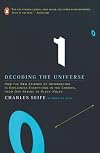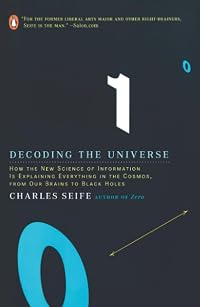
Decoding the Universe: How the New Science of Information Is Explaining Everything in the Cosmos, from Our Brains to Black Holes
by Charles Seife
On This Page
Description
"Charles Seife explains how information theory, once the province of codebreakers and telephone companies, became the crucial science of our time. Starting with the breaking of the Enigma code during World War II and building momentum during the computer revolution, information theory is now at the forefront of theoretical physics. Seife highlights the surprises revealed when we start decoding information: that the universe is half spent; that the entire human race has less genetic diversity show more than the average group of two dozen chimpanzees; that the act of living itself can be seen as the act of replicating and preserving information despite nature's attempt to destroy it. We meet up with some of the towering figures of modern science, as well as a few strange beasts - Schrodinger's cat and Maxwell's demon."--BOOK JACKET. show lessTags
Recommendations


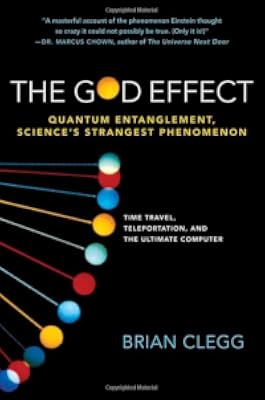
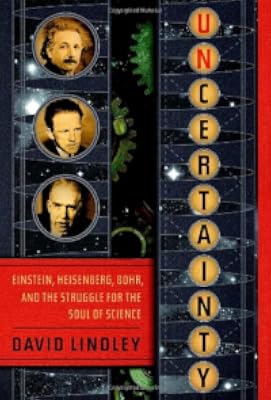
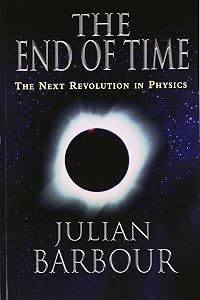
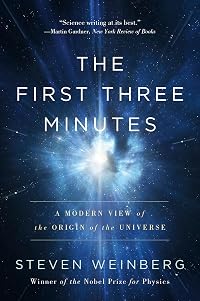
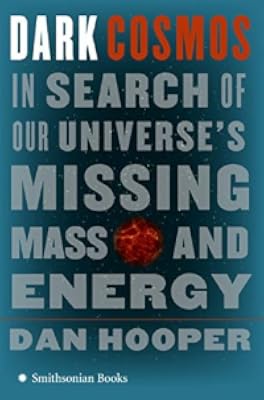
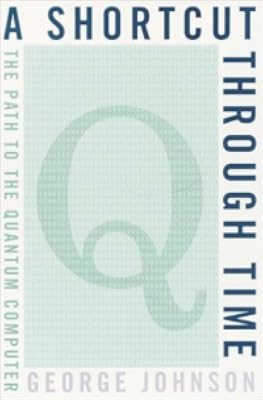
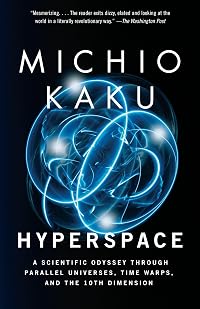
Member Recommendations
waitingtoderail Gleick looks at information theory with more of a view from a mathematical side, Seife more from a scientific side. They complement each other wonderfully.
Member Reviews
Seife has you from hello: the first line of his book is: "Civilization is doomed." His witty quotes and epigrams at the start of each chapter such as this limerick from A.H. Reginald Buller help sum up the themes of this book:
"There was a young lady named Bright,
Whose speed was far faster than light;
She set out one day,
In a relative way,
And returned on the previous night."
Would this be possible? Seife provides user-friendly explanations of some of the basic theories of physics, including entropy, light speed, quantum entanglement, complementary particles, uncertainty, decoherence, and black holes, all from the perspective of information theory. Information theory, he claims is "the third great revolution of twentieth-century physics." show more The laws of thermodynamics, relativity, and quantum theory, are all actually theories of information, and Seife explains why this is so. He answers the question of whether a tree still falls in the forest if no one is able to hear it (yes, he says) and reviews theories of how "spooky action at a distance" could make sense. He even gives a reasonable rationale for multiple-universe theories, explaining that if "stars and galaxies and creatures are cut off from us by some sort of barrier that blocks information" they will, in essence, be inhabiting a "different" universe. (i.e., the problem lies more in our traditional conception of "universe" than with the physical possibilities.)
His explanations, which often include helpful illustrations, are couched in examples and analogies that will benefit the physics novice, but with the added connection of information theory will not be boring to more advanced readers either. He assures us that some of the most improbable paradoxes of physics have now been proven experimentally and can be explained by information theory. He does not inflict mathematical equations on readers, although occasionally he states somewhat apologetically that the reader just has to take in on faith that a really big equation makes some statement true, or at least, allows for accurate predictability.
I admit to not understanding everything in the book, but Seife made the effort of trying interesting and enjoyable. ("What kind of liberation would that be," Seife quotes James Joyce as writing, "to forsake an absurdity which is logical and coherent and to embrace one which is illogical and incoherent?") I would highly recommend this book for any level of reader.
(JAF) show less
"There was a young lady named Bright,
Whose speed was far faster than light;
She set out one day,
In a relative way,
And returned on the previous night."
Would this be possible? Seife provides user-friendly explanations of some of the basic theories of physics, including entropy, light speed, quantum entanglement, complementary particles, uncertainty, decoherence, and black holes, all from the perspective of information theory. Information theory, he claims is "the third great revolution of twentieth-century physics." show more The laws of thermodynamics, relativity, and quantum theory, are all actually theories of information, and Seife explains why this is so. He answers the question of whether a tree still falls in the forest if no one is able to hear it (yes, he says) and reviews theories of how "spooky action at a distance" could make sense. He even gives a reasonable rationale for multiple-universe theories, explaining that if "stars and galaxies and creatures are cut off from us by some sort of barrier that blocks information" they will, in essence, be inhabiting a "different" universe. (i.e., the problem lies more in our traditional conception of "universe" than with the physical possibilities.)
His explanations, which often include helpful illustrations, are couched in examples and analogies that will benefit the physics novice, but with the added connection of information theory will not be boring to more advanced readers either. He assures us that some of the most improbable paradoxes of physics have now been proven experimentally and can be explained by information theory. He does not inflict mathematical equations on readers, although occasionally he states somewhat apologetically that the reader just has to take in on faith that a really big equation makes some statement true, or at least, allows for accurate predictability.
I admit to not understanding everything in the book, but Seife made the effort of trying interesting and enjoyable. ("What kind of liberation would that be," Seife quotes James Joyce as writing, "to forsake an absurdity which is logical and coherent and to embrace one which is illogical and incoherent?") I would highly recommend this book for any level of reader.
(JAF) show less
Un libro divulgativo scritto molto bene e scorrevole, che ho trovato interessante in ogni sua parte e che riesce spesso a strappare un sorriso: "... c'è qualcosa che impedisce a quei grossi, soffici oggetti classici che sono i gatti di essere utilizzati come supporti per memorizzare qubit." Il libro scorre diversi argomenti alla luce della teoria dell'informazione. Inizia con la ridondanza nei messaggi e prosegue con la termodinamica, la genetica, la relatività e la meccanica quantistica: tutto viene rivisto come elaborazione e scambio di informazioni. Un lato piacevole è che il libro è stato scritto nel 2006 e quindi menziona e riporta esperimenti e teorie molto recenti. Anche se sembra scritto per chi non ha nessuna conoscenza di show more fisica e matematica (in appendice spiega in un paio di pagine cos'è un logaritmo!), credo che si possa apprezzare solo se si hanno già conoscenze almeno di base di fisica relativistica e quantistica. Prima di leggerlo non avevo nemmeno sentito nominare la teoria dell'informazione che invece mi ha aperto nuove prospettive di interpretazione della fisica. show less
Decoding the Universe by Charles Seife is an attempt to connect Information Theory with the physical world. It is quite successful in this by changing the vantage point from which we view the results of the experiments.
Information Theory is a relatively new idea to the science scene, having only been formally introduced in 1948 by Claude Elwood Shannon in a Bell Labs Technical Journal. However, in using the concept of Entropy to define Information, Shannon linked the nascent field to the somewhat more established area of Statistical Thermodynamics. The equation is pretty simple. I don’t know if I can put a sigma into this text, so I won’t try.
Seife’s idea and the main thesis is that Information is everything and everywhere. Once show more we figured out how to quantify the stuff it was only a matter of time. Take the difference between living and non-living things for instance. What is the difference between a rock and a virus aside from the obvious ones like size? Well, a virus is capable of replication. It can copy its information and spread it on to descendants that are similar to it. Arguments arise as to whether a virus is a living thing. I don’t know if they still do have such arguments, but Seife argues that viruses can carry on the information present in their bodies, resisting the ever-present ravages of Entropy. DNA is a very effective tool for this information transfer. Mutations that occur are usually taken care of by enzymes and other proteins exquisitely suited to this task.
The same thing goes for relativity and quantum mechanics. Information Theory is everywhere once you look from a different point of view. The limit on the speed of light is not on the light pulse per se, rather it is on the information transfer inherent in that light pulse. The book does a great job of explaining things in simple everyday terms that a layperson should be able to understand. As for quantum mechanics, most people who read this know of the Heisenberg Uncertainty Principle. It is a limit to the amount of Information that we can glean from any measurement of a subatomic particle. More simply, you can’t know both the position and the momentum of a subatomic particle with perfect accuracy. The measurement itself changes something about the particle we are trying to measure.
Going back to light, we know that light has a dual nature of particle and wave. Rather, light might be something else entirely and our understanding of it is limited by these ideas. We can show that light is either a particle or a wave depending on how we conduct an experiment to test for it. Take the now famous Double-Slit Experiment that ‘proved’ light to be a wave. In the present day, we can force an electron to become a probability distribution just by doing this experiment with single electrons at a time. As for the particle nature of light, we can show this by the photoelectric effect, the thing that earned Einstein his Nobel Prize.
This book is really entertaining and written with clarity and flair. The book is somewhat old, so I don’t really know if anything in Physics has drastically changed since 2006. I don’t know if this is a fringe theory or something that holds water, but the argument is compelling to me. show less
Information Theory is a relatively new idea to the science scene, having only been formally introduced in 1948 by Claude Elwood Shannon in a Bell Labs Technical Journal. However, in using the concept of Entropy to define Information, Shannon linked the nascent field to the somewhat more established area of Statistical Thermodynamics. The equation is pretty simple. I don’t know if I can put a sigma into this text, so I won’t try.
Seife’s idea and the main thesis is that Information is everything and everywhere. Once show more we figured out how to quantify the stuff it was only a matter of time. Take the difference between living and non-living things for instance. What is the difference between a rock and a virus aside from the obvious ones like size? Well, a virus is capable of replication. It can copy its information and spread it on to descendants that are similar to it. Arguments arise as to whether a virus is a living thing. I don’t know if they still do have such arguments, but Seife argues that viruses can carry on the information present in their bodies, resisting the ever-present ravages of Entropy. DNA is a very effective tool for this information transfer. Mutations that occur are usually taken care of by enzymes and other proteins exquisitely suited to this task.
The same thing goes for relativity and quantum mechanics. Information Theory is everywhere once you look from a different point of view. The limit on the speed of light is not on the light pulse per se, rather it is on the information transfer inherent in that light pulse. The book does a great job of explaining things in simple everyday terms that a layperson should be able to understand. As for quantum mechanics, most people who read this know of the Heisenberg Uncertainty Principle. It is a limit to the amount of Information that we can glean from any measurement of a subatomic particle. More simply, you can’t know both the position and the momentum of a subatomic particle with perfect accuracy. The measurement itself changes something about the particle we are trying to measure.
Going back to light, we know that light has a dual nature of particle and wave. Rather, light might be something else entirely and our understanding of it is limited by these ideas. We can show that light is either a particle or a wave depending on how we conduct an experiment to test for it. Take the now famous Double-Slit Experiment that ‘proved’ light to be a wave. In the present day, we can force an electron to become a probability distribution just by doing this experiment with single electrons at a time. As for the particle nature of light, we can show this by the photoelectric effect, the thing that earned Einstein his Nobel Prize.
This book is really entertaining and written with clarity and flair. The book is somewhat old, so I don’t really know if anything in Physics has drastically changed since 2006. I don’t know if this is a fringe theory or something that holds water, but the argument is compelling to me. show less
This book changed how I think about evolution. When you think about information, rather than species, attempting to survive, things like viruses and jumping genes make perfect sense.
Delivers a good cross section of entropy and information across engineering, biology, and physics. Liked it more than, "The Bit and the Pendulum". This book had better explanations, for my taste.
A pretty simply written account of information theory, arguing for its universal applicability.
Exactly the book I was looking for. Needs a glossary. Someone needs to write a book specifically about the new ' holographic principle '.
Members
- Recently Added By
Author Information

9+ Works 4,567 Members
Charles Seife is an associate professor of journalism at New York University.
Common Knowledge
- Canonical title
- Decoding the Universe: How the New Science of Information Is Explaining Everything in the Cosmos, from Our Brains to Black Holes
- Original title
- Decoding the Universe: How the New Science of Information Is Explaining Everything in the Cosmos, from Our Brains to Black Holes
- Original publication date
- 2006
- People/Characters
- Werner Heisenberg; John Archibald Wheeler; Alan Turing
- First words
- Civilization is doomed.
- Last words
- (Click to show. Warning: May contain spoilers.)This precious information that may well illuminate the darkest mysteries about the universe carries in it the seeds of its own destruction.
Classifications
- Genres
- Science & Nature, Nonfiction, General Nonfiction, Technology
- DDC/MDS
- 006.33 — Computer science, information & general works Computer science, knowledge & systems Special computer methods (AI, barcoding, VR, web design, social media) Artificial Intelligence Knowledge-based Systems
- LCC
- QA76.76 .E95 .S4436 — Science Mathematics Mathematics Instruments and machines Calculating machines Electronic computers. Computer science Computer software
- BISAC
Statistics
- Members
- 527
- Popularity
- 56,774
- Reviews
- 11
- Rating
- (3.89)
- Languages
- 5 — English, Italian, Japanese, Portuguese, Spanish
- Media
- Paper, Ebook
- ISBNs
- 10
- ASINs
- 3