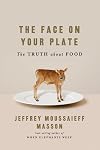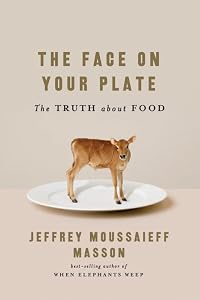
The Face on Your Plate: The Truth About Food
by Jeffrey Moussaieff Masson 
On This Page
Description
This revelatory work brings together author Masson's intellectual, psychological, and emotional expertise over the last twenty years into the pivotal book of the food revolution. Masson shows how food affects our moral selves, our health, and the environment. He raises questions to make us conscious of the decisions behind every bite we take: What effect does eating animals have on our land, waters, even global warming? What are the results of farming practices--such as debeaking chickens show more and separating calves from their mothers--on animals and humans? How does the health of animals affect the health of our planet and our bodies? And uniquely, as a psychoanalyst, Masson investigates how denial keeps us from recognizing the animal at the end of our fork--think pig, not bacon--and how each culture distinguishes which animals are food and which are forbidden.--From publisher description. show lessTags
Recommendations








Member Recommendations
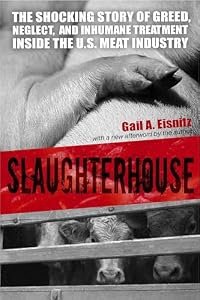
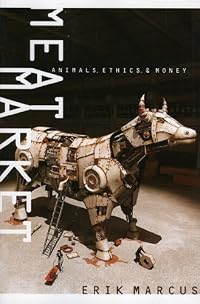
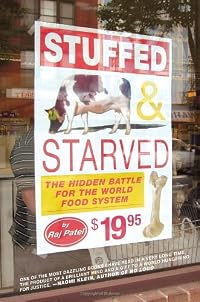
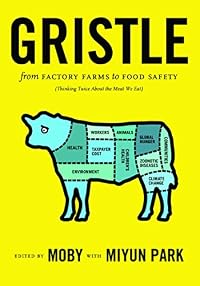
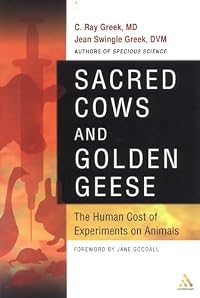
SqueakyChu More about factory farmed animals and the conditions within them.
Member Reviews
Book Review: Who Are You Looking At?
The Face on Your Plate: The Truth about Food by Jeffrey Moussaieff Masson. Norton. 271 pp. £17.99 or $24.95
Reviewed by Kim Stallwood
Some books are written by authors whose biography and personality are seemingly absent. I say seemingly because every book written is, of course, infused with the author’s character and experience regardless of their visibility. Then, there are some authors whose presence is integral. It is impossible to separate them from their work. Sadly, not all authors are good writers. Many are uncomfortable with speaking in public. This, perhaps, should not be too surprising given their preferred medium is the written, not spoken, word.
Books and food are subject to the whims of show more personal taste; books about food even more so. Books about food, whether they are collections of recipes, comprehensive guides to household management ranging from Mrs. Beeton to Martha Stewart, and studies on how and where particular ingredients are produced, are always popular. They are not always well written. The author’s personality, which is not always pleasant, may leave an after taste.
Since the Second World War and the popularity of foreign travel, the increased availability of hitherto unknown ingredients and the industrialization of food production, the range of writing about food has significantly expanded from traditional cook books to titles dedicated to foreign and national cuisines, memoirs, travel, diets of various kinds and much more. Recently, however, a genre of books about food has emerged that is different. These are books which explore, expose, question and challenge how the food we eat today is produced. Some of these books are stamped with the author’s personality and come with a bias while others are university press published scientific studies. Some are targeted toward a general market and others for a specialised one. Some have broken through and become best sellers. Others may not have received the same recognition but are, nonetheless, important in what they say.
Eric Schlosser’s Fast Food Nation (New York: Harper Perennial, 2005) and Michael Pollan’s The Omnivore's Dilemma (New York: Penguin, 2006) are incredibly successful books that captured the public’s attention. They and other titles like them helped to provoke a debate about the food we eat and how it is produced unparalleled since the publication of Upton Sinclair’s unprecedented novel, The Jungle, in 1906.
Schlosser, Pollan and others including Barbara Kingsolver’s Animal, Vegetable, Miracle: A Year of Food Life (New York: HarperCollins, 2007) and Marion Nestle’s Food Politics (Berkeley: University of California Press, 2002), either failed to address the moral issue of killing animals for food or framed it as a regretted necessity. For vegans like me who are most likely more informed about food than the average person, it left us wondering why even in this debate about food animal rights is absent or, if considered, trivialized and dismissed.
Then, Peter Singer and Jim Mason’s The Way We Eat (New York: Rodale Press, 2006) came along. Peter Singer is, of course, the internationally recognized philosopher who successfully bridges the chasm between the rarefied worlds of academia with more mainstream public debate about how we should live. His books are routinely reviewed. He is frequently profiled in newspapers and magazines. He is often featured on radio and television. This is with all good reason. Philosophy is only important when it helps people to make informed decisions. Singer’s work strikes a chord with the public. With all this in mind, I looked forward very much to reading Singer and Mason’s The Way We Eat. Clearly, it is a fine example of a well researched and clearly written book. But it was not as strong as I thought it should be in advocating veganism, however, I understood why it struck a nuanced position. Nonetheless, this left me feeling there is still a need for a definitive book making the case for veganism which successfully breaks through to the mainstream market in the same way that Schlosser’s Fast Food Nation and Pollan’s Omnivore's Dilemma did.
Turning to The Face on Your Plate it is impossible to separate it from the author, Jeffrey Moussaieff Masson. I read it with the anticipation I’m holding the break-through vegan book I’ve been hoping for. I sincerely hope it is but we will only know in the fullness of time.
Jeffrey Moussaieff Masson has lived a most interesting life. It can be crudely divided into the Freud Period and Animal Period. In his Freudian Period, Masson was awarded a Ph.D. in Sanskrit from Harvard University. He became Professor of Sanskrit at the University of Toronto. Here, he trained as a Freudian analyst, graduating as a full member of the International Psycho-Analytical Association. Then, he became Project Director of the Sigmund Freud Archives, with access to Freud’s papers in London and the Library of Congress. He eventually concluded Freud was mistaken when he (Masson) no longer believed sexual abuse caused human suffering to the extent that he (Freud) thought. The Freudian world thought this was heretical. He was fired from the archives. This all led to a book by Janet Malcolm, a lawsuit brought by Masson and a series of books by Masson critical of Freud, psychoanalysis, psychiatry and therapy. Then, in 1995 his Animal Period began with the publication of the international best-seller When Elephants Weep co-authored with Susan McCarthy. This was followed by seven more books about animals, including Dogs Never Lie About Love and The Nine Emotional Lives of Cats. A vegetarian for most of his life; however, since writing about the emotional world of farmed animals in The Pig Who Sang to the Moon, he describes himself as “veganish.” (p. 139)
The Freudian Masson and the Animal Masson come together in The Face on Your Plate. As would be expected in a book on this topic there are the obligatory chapters on the environmental impact of intensive animal agriculture (Chapter One: “The Only World We Have”); on animal welfare (Chapter Two: “The Lives They Lead”); and on fish farming (Chapter Three: “The Fishy Business of Aquaculture”). These chapters are researched, documented, written and argued well. Woven throughout are the author’s personal experiences (e.g., raising vegetarian children, visiting farms, researching and writing books about animals). The writing style is informed and informal, emotional and empathetic. It never preaches, which it could so easily do, and, it has to be said, books of this type often do.
Of the two remaining chapters, the least interesting one is Chapter Five: “A Day in the Life of a Vegan.” As may be expected by the title, Masson shares with us information and tips about, well, a day in the life of a vegan. After 30 plus years of veganism, Masson clearly did not write this chapter for the likes of me! So, I suspect, this chapter will be of much more interest to those who are aspiring and becoming or are already vegan.
The Face on Your Plate is well worth reading; however, what makes it required reading is Chapter Four: “Denial.” This is where Masson, the psycho-analyst, and Masson, the vegan, come together in a fascinating exploration of the reasons why we choose to not see the face on the plate let alone willingly look into the eyes that look out at us. Whether it is in, first, the individual and a reluctance to admit the inevitable fate that befriends us all (death) or whether it is, second, societal and when we look back and ask with hindsight, “Why the Holocaust? The Gulag? The Killing Fields? Why Srebrencia? Why Rwanda? Why Darfur?” (p. 150), Masson suggests denial is a relatively recent phenomenon. Enter Masson, the psycho-analyst, or, as I should say, Masson, the critical psycho-analyst.
The reason that denial played such an important role in Freud’s psychological theories is that for Freud, repression was the very cornerstone of psychoanalysis. No repression, no neurosis, no therapy, no profession. It was also, let me be the first to admit, an enormous step forward compared to the psychology Freud inherited in Vienna during his time. (p.155)
Masson explains denial as a “specific psychic defense against an overwhelming reality” and a “technique for survival, indeed, the defense mechanism of the twenty-first century.” [Emphasis in original] (p. 153)
Denial, then, is a “convenient overarching mechanism” which we employ to avoid thinking about something. (p. 160) The denial about animals as food frequently begins with our parents. They reluctantly betray us when, as innocent children, we ask where meat comes from. “Could it be that the disgust [felt about eating meat] is in fact a displacement?” he asks. “In time we overcome this, as we increasingly swallow the prevailing attitudes toward food in our culture; but some may be left with a lingering feeling of guilt.” (p. 139) We live in a “willed ignorance” of denial. Knowing what we know but denying it. (p. 147)
Throughout this chapter Masson discusses various examples to illustrate how the mechanisms of denial function. “Here is a partial list,” he writes,
(1) humans are omnivores; always have been, always will be. (2) It tastes good. (3) We need meat to live in a healthy manner. (4) Animals eat each other, so why shouldn’t we? (5) Everyone does it. (6) I was raised that way. (7) To refuse to eat meat is to make yourself a social outcast. (p. 151)
He explores other examples in more fascinating depth. For example, we imagine a “domestic contract” between the consumer and the artisan food producer whose free-range animals are slaughtered nonetheless (p. 141). Plants feel pain, too, don’t you know? “The future may prove me wrong,” he concludes. “But until such time, to compare plant suffering with the suffering of humans and animals seems morally irresponsible. In fact, I do not believe the rebuke is meant seriously.” (p. 146)
But can denial ever be justified? Is it better to live in denial of our inevitable death? Should we worry about tragic chapters in the history of humanity that we have no control over but agonize over in hindsight? What about tragedies happening now? The former is truly beyond our control but, he writes, “we can stop killing animals. What is amazing about all these defense mechanisms is how powerfully they work just below the surface of our awareness.” (p. 152)
“We must remove ourselves from whatever blind hides our vision,” Masson concludes, “and look out at the horizon to face what we see there. We owe animals no less. We also owe ourselves no less, it turns out.” (p. 165) The “face” of this author not only informs the reader but also engages with his personality. Time will tell whether The Face on Your Plate will take its rightful place as the authoritative book of its kind. But there can be surely no better way to describe the author’s mission.
Suggested alternative titles to consider include
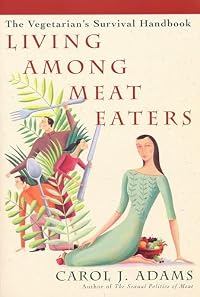
Living Among Meat Eaters: The Vegetarian's Survival Handbook by Carol J. Adams
Skinny Bitch by Kim Barnouin
Farm Sanctuary: Changing Hearts and Minds About Animals and Food by Gene Baur
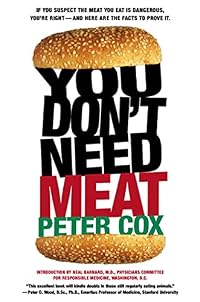
You Don't Need Meat by Peter Cox
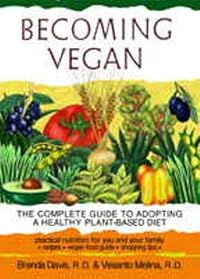
Becoming Vegan: The Complete Guide to Adopting a Healthy Plant-Based Diet by Brenda Davis
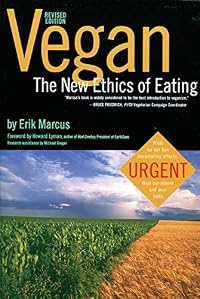
The Ultimate Vegan Guide by Erik Marcus
101 Reasons Why I'm A Vegetarian by Pamela Rice
The Food Revolution: How Your Diet Can Help Save Your Life and Our World by John Robbins
World Peace Diet: Eating for Spiritual Health and Social Harmony by Will Tuttle show less
The Face on Your Plate: The Truth about Food by Jeffrey Moussaieff Masson. Norton. 271 pp. £17.99 or $24.95
Reviewed by Kim Stallwood
Some books are written by authors whose biography and personality are seemingly absent. I say seemingly because every book written is, of course, infused with the author’s character and experience regardless of their visibility. Then, there are some authors whose presence is integral. It is impossible to separate them from their work. Sadly, not all authors are good writers. Many are uncomfortable with speaking in public. This, perhaps, should not be too surprising given their preferred medium is the written, not spoken, word.
Books and food are subject to the whims of show more personal taste; books about food even more so. Books about food, whether they are collections of recipes, comprehensive guides to household management ranging from Mrs. Beeton to Martha Stewart, and studies on how and where particular ingredients are produced, are always popular. They are not always well written. The author’s personality, which is not always pleasant, may leave an after taste.
Since the Second World War and the popularity of foreign travel, the increased availability of hitherto unknown ingredients and the industrialization of food production, the range of writing about food has significantly expanded from traditional cook books to titles dedicated to foreign and national cuisines, memoirs, travel, diets of various kinds and much more. Recently, however, a genre of books about food has emerged that is different. These are books which explore, expose, question and challenge how the food we eat today is produced. Some of these books are stamped with the author’s personality and come with a bias while others are university press published scientific studies. Some are targeted toward a general market and others for a specialised one. Some have broken through and become best sellers. Others may not have received the same recognition but are, nonetheless, important in what they say.
Eric Schlosser’s Fast Food Nation (New York: Harper Perennial, 2005) and Michael Pollan’s The Omnivore's Dilemma (New York: Penguin, 2006) are incredibly successful books that captured the public’s attention. They and other titles like them helped to provoke a debate about the food we eat and how it is produced unparalleled since the publication of Upton Sinclair’s unprecedented novel, The Jungle, in 1906.
Schlosser, Pollan and others including Barbara Kingsolver’s Animal, Vegetable, Miracle: A Year of Food Life (New York: HarperCollins, 2007) and Marion Nestle’s Food Politics (Berkeley: University of California Press, 2002), either failed to address the moral issue of killing animals for food or framed it as a regretted necessity. For vegans like me who are most likely more informed about food than the average person, it left us wondering why even in this debate about food animal rights is absent or, if considered, trivialized and dismissed.
Then, Peter Singer and Jim Mason’s The Way We Eat (New York: Rodale Press, 2006) came along. Peter Singer is, of course, the internationally recognized philosopher who successfully bridges the chasm between the rarefied worlds of academia with more mainstream public debate about how we should live. His books are routinely reviewed. He is frequently profiled in newspapers and magazines. He is often featured on radio and television. This is with all good reason. Philosophy is only important when it helps people to make informed decisions. Singer’s work strikes a chord with the public. With all this in mind, I looked forward very much to reading Singer and Mason’s The Way We Eat. Clearly, it is a fine example of a well researched and clearly written book. But it was not as strong as I thought it should be in advocating veganism, however, I understood why it struck a nuanced position. Nonetheless, this left me feeling there is still a need for a definitive book making the case for veganism which successfully breaks through to the mainstream market in the same way that Schlosser’s Fast Food Nation and Pollan’s Omnivore's Dilemma did.
Turning to The Face on Your Plate it is impossible to separate it from the author, Jeffrey Moussaieff Masson. I read it with the anticipation I’m holding the break-through vegan book I’ve been hoping for. I sincerely hope it is but we will only know in the fullness of time.
Jeffrey Moussaieff Masson has lived a most interesting life. It can be crudely divided into the Freud Period and Animal Period. In his Freudian Period, Masson was awarded a Ph.D. in Sanskrit from Harvard University. He became Professor of Sanskrit at the University of Toronto. Here, he trained as a Freudian analyst, graduating as a full member of the International Psycho-Analytical Association. Then, he became Project Director of the Sigmund Freud Archives, with access to Freud’s papers in London and the Library of Congress. He eventually concluded Freud was mistaken when he (Masson) no longer believed sexual abuse caused human suffering to the extent that he (Freud) thought. The Freudian world thought this was heretical. He was fired from the archives. This all led to a book by Janet Malcolm, a lawsuit brought by Masson and a series of books by Masson critical of Freud, psychoanalysis, psychiatry and therapy. Then, in 1995 his Animal Period began with the publication of the international best-seller When Elephants Weep co-authored with Susan McCarthy. This was followed by seven more books about animals, including Dogs Never Lie About Love and The Nine Emotional Lives of Cats. A vegetarian for most of his life; however, since writing about the emotional world of farmed animals in The Pig Who Sang to the Moon, he describes himself as “veganish.” (p. 139)
The Freudian Masson and the Animal Masson come together in The Face on Your Plate. As would be expected in a book on this topic there are the obligatory chapters on the environmental impact of intensive animal agriculture (Chapter One: “The Only World We Have”); on animal welfare (Chapter Two: “The Lives They Lead”); and on fish farming (Chapter Three: “The Fishy Business of Aquaculture”). These chapters are researched, documented, written and argued well. Woven throughout are the author’s personal experiences (e.g., raising vegetarian children, visiting farms, researching and writing books about animals). The writing style is informed and informal, emotional and empathetic. It never preaches, which it could so easily do, and, it has to be said, books of this type often do.
Of the two remaining chapters, the least interesting one is Chapter Five: “A Day in the Life of a Vegan.” As may be expected by the title, Masson shares with us information and tips about, well, a day in the life of a vegan. After 30 plus years of veganism, Masson clearly did not write this chapter for the likes of me! So, I suspect, this chapter will be of much more interest to those who are aspiring and becoming or are already vegan.
The Face on Your Plate is well worth reading; however, what makes it required reading is Chapter Four: “Denial.” This is where Masson, the psycho-analyst, and Masson, the vegan, come together in a fascinating exploration of the reasons why we choose to not see the face on the plate let alone willingly look into the eyes that look out at us. Whether it is in, first, the individual and a reluctance to admit the inevitable fate that befriends us all (death) or whether it is, second, societal and when we look back and ask with hindsight, “Why the Holocaust? The Gulag? The Killing Fields? Why Srebrencia? Why Rwanda? Why Darfur?” (p. 150), Masson suggests denial is a relatively recent phenomenon. Enter Masson, the psycho-analyst, or, as I should say, Masson, the critical psycho-analyst.
The reason that denial played such an important role in Freud’s psychological theories is that for Freud, repression was the very cornerstone of psychoanalysis. No repression, no neurosis, no therapy, no profession. It was also, let me be the first to admit, an enormous step forward compared to the psychology Freud inherited in Vienna during his time. (p.155)
Masson explains denial as a “specific psychic defense against an overwhelming reality” and a “technique for survival, indeed, the defense mechanism of the twenty-first century.” [Emphasis in original] (p. 153)
Denial, then, is a “convenient overarching mechanism” which we employ to avoid thinking about something. (p. 160) The denial about animals as food frequently begins with our parents. They reluctantly betray us when, as innocent children, we ask where meat comes from. “Could it be that the disgust [felt about eating meat] is in fact a displacement?” he asks. “In time we overcome this, as we increasingly swallow the prevailing attitudes toward food in our culture; but some may be left with a lingering feeling of guilt.” (p. 139) We live in a “willed ignorance” of denial. Knowing what we know but denying it. (p. 147)
Throughout this chapter Masson discusses various examples to illustrate how the mechanisms of denial function. “Here is a partial list,” he writes,
(1) humans are omnivores; always have been, always will be. (2) It tastes good. (3) We need meat to live in a healthy manner. (4) Animals eat each other, so why shouldn’t we? (5) Everyone does it. (6) I was raised that way. (7) To refuse to eat meat is to make yourself a social outcast. (p. 151)
He explores other examples in more fascinating depth. For example, we imagine a “domestic contract” between the consumer and the artisan food producer whose free-range animals are slaughtered nonetheless (p. 141). Plants feel pain, too, don’t you know? “The future may prove me wrong,” he concludes. “But until such time, to compare plant suffering with the suffering of humans and animals seems morally irresponsible. In fact, I do not believe the rebuke is meant seriously.” (p. 146)
But can denial ever be justified? Is it better to live in denial of our inevitable death? Should we worry about tragic chapters in the history of humanity that we have no control over but agonize over in hindsight? What about tragedies happening now? The former is truly beyond our control but, he writes, “we can stop killing animals. What is amazing about all these defense mechanisms is how powerfully they work just below the surface of our awareness.” (p. 152)
“We must remove ourselves from whatever blind hides our vision,” Masson concludes, “and look out at the horizon to face what we see there. We owe animals no less. We also owe ourselves no less, it turns out.” (p. 165) The “face” of this author not only informs the reader but also engages with his personality. Time will tell whether The Face on Your Plate will take its rightful place as the authoritative book of its kind. But there can be surely no better way to describe the author’s mission.
Suggested alternative titles to consider include
Living Among Meat Eaters: The Vegetarian's Survival Handbook by Carol J. Adams
Skinny Bitch by Kim Barnouin
Farm Sanctuary: Changing Hearts and Minds About Animals and Food by Gene Baur
You Don't Need Meat by Peter Cox
Becoming Vegan: The Complete Guide to Adopting a Healthy Plant-Based Diet by Brenda Davis
The Ultimate Vegan Guide by Erik Marcus
101 Reasons Why I'm A Vegetarian by Pamela Rice
The Food Revolution: How Your Diet Can Help Save Your Life and Our World by John Robbins
World Peace Diet: Eating for Spiritual Health and Social Harmony by Will Tuttle show less
Although the facts in this book were interesting, I liked this book a little less than other “foodie” books I’ve read this year. The author has a vegetarian agenda so the tone of the book gets preachy at times. There were some things I’d never thought about before, such as “stealing” honey from bees.
I was also offended by a part of the book in which the author suggests that people should think above and beyond religious dicta. I would rather think through religious doctrine to see why foods the author wouldn’t eat are, in fact, okay to eat within my own religion.
One part of the book, about farmed fish, was really horrifying. That chapter will certainly have me choosing wild fish over farmed fish if at all possible. It show more will not, however, stop me from going fishing myself and eating the fish I catch.
One thing I particularly liked that the author suggested was the idea of “informed consent”. Why not let people know ahead of time what animals must endure prior your eating them? I don’t advocate PETA members accosting diners in restaurants, but I do think that information about the animal food industry should be made available to everyone. I also think that slaughterhouses and people within the meat industry should be more forthright and open about the process of raising animals to become food.
The author also mentioned that it would be worthwhile to learn more about the individual species of animals that we do eat. If we understand animals more, we might decide to eat less of them.
This book had its flaws, but overall it gave an interesting perspective of the food industry from a vegan/vegetarian perspective. show less
I was also offended by a part of the book in which the author suggests that people should think above and beyond religious dicta. I would rather think through religious doctrine to see why foods the author wouldn’t eat are, in fact, okay to eat within my own religion.
One part of the book, about farmed fish, was really horrifying. That chapter will certainly have me choosing wild fish over farmed fish if at all possible. It show more will not, however, stop me from going fishing myself and eating the fish I catch.
One thing I particularly liked that the author suggested was the idea of “informed consent”. Why not let people know ahead of time what animals must endure prior your eating them? I don’t advocate PETA members accosting diners in restaurants, but I do think that information about the animal food industry should be made available to everyone. I also think that slaughterhouses and people within the meat industry should be more forthright and open about the process of raising animals to become food.
The author also mentioned that it would be worthwhile to learn more about the individual species of animals that we do eat. If we understand animals more, we might decide to eat less of them.
This book had its flaws, but overall it gave an interesting perspective of the food industry from a vegan/vegetarian perspective. show less
I thought this book was pretty good, but it's easy to feel like you've read it all before if you've read stuff like The Food Revolution or Cook Food and even books like In Defense of Food and Fast Food Nation. What I did really appreciate was the chapter devoted to fish farming and aquaculture. I wish I could just give a copy of that chapter to people who are astounded when they find out that veg*ns don't eat fish. (Why so many people think this, I have no idea, but they're out there.)
In The Face on Your Plate, Masson means to persuade readers to give up eating meat and all animal products, including eggs, dairy, and honey. There’s not enough room in this slim volume for well-supported arguments, so Masson resorts to dogmatic statements like the following:
"No animal under domestication, with the possible exception of the cat, leads the life it was designed to lead by nature. All of the changes that humans have managed to create, mainly through selective breeding, are not intended for the benefit of the animal. We benefit; the animals suffer the consequences. Does this mean that if we care about animal suffering and about the quality of their lives, we need to give up eating all animal-derived food? I am afraid so. show more I see no other conclusion possible for me personally."
The Face on Your Plate is filled with such conclusory and somewhat condescending statements, and, as a result, is not overly informative or persuasive, or, for that matter, particularly enjoyable to read. On the topics addressed by Masson, there are so many better books out there. The one shining attribute of The Face on Your Plate is its exhaustive appendix, which lists books and websites on the topics of animal rights, the industrial food complex and its effect on the environment, and sustainable food choices. This listing is comprehensive and up-to-date and will point you to the right books.
This review also appears on my literary blog Literary License. show less
"No animal under domestication, with the possible exception of the cat, leads the life it was designed to lead by nature. All of the changes that humans have managed to create, mainly through selective breeding, are not intended for the benefit of the animal. We benefit; the animals suffer the consequences. Does this mean that if we care about animal suffering and about the quality of their lives, we need to give up eating all animal-derived food? I am afraid so. show more I see no other conclusion possible for me personally."
The Face on Your Plate is filled with such conclusory and somewhat condescending statements, and, as a result, is not overly informative or persuasive, or, for that matter, particularly enjoyable to read. On the topics addressed by Masson, there are so many better books out there. The one shining attribute of The Face on Your Plate is its exhaustive appendix, which lists books and websites on the topics of animal rights, the industrial food complex and its effect on the environment, and sustainable food choices. This listing is comprehensive and up-to-date and will point you to the right books.
This review also appears on my literary blog Literary License. show less
Compelling information on animal welfare and great nutritional insights, but a little off the rails with the Freudian uber-analysis of the concept of "denial."
Well written, easy to read essay on the harm we humans do to animals. There were sections I wish the author would have spent more time with when talking about particular animals, and others (fish) where he spent too much time being detailed.
This, along with other books by Masson, has helped me move closer to becoming a vegetarian, and I highly recommend it for anyone else who wants to become a conscientious eater.
Members
- Recently Added By
Lists

W. W. Norton & Company
47 works; 2 members
Author Information

39+ Works 4,702 Members
Jeffrey Moussaieff Masson is the author of "Dogs Never Lie About Love: Reflections on the Emotional World of Dogs"; "When Elephants Weep: The Emotional Lives of Animals"; "My Father's Guru: A Journey Through Spirituality & Disillusion"; "Final Analysis: The Making & Unmaking of a Psychoanalyst"; & "The Assault on Truth: Freud's Suppression of the show more Seduction Theory", among other books. After receiving his undergraduate degree & a Ph.D. in Sanskrit & Indian Studies from Harvard University, he completed a full clinical training program in psychoanalysis at the Toronto Psychoanalytic Institute from 1970 to 1978. Masson served for one year as Projects Director of the Sigmund Freud Archives in London. (Bowker Author Biography) show less
Jeffrey Moussaieff Masson is a LibraryThing Author, an author who lists their personal library on LibraryThing.
Classifications
Statistics
- Members
- 206
- Popularity
- 157,168
- Reviews
- 8
- Rating
- (3.37)
- Languages
- English, Italian
- Media
- Paper, Audiobook, Ebook
- ISBNs
- 10
- ASINs
- 2