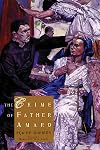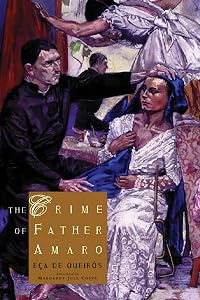
The Crime of Father Amaro
by Jose Maria Eca de Queiros
On This Page
Description
Eça de Queirós's novelThe Crime of Father Amaro is a lurid satire of clerical corruption in a town in Portugal (Leira) during the period before and after the 1871 Paris Commune. At the start, a priest physically explodes after a fish supper while guests at a birthday celebration are "wildly dancing a polka." Young Father Amaro (whose name means "bitter" in Portuguese) arrives in Leira and soon lusts after--and is lusted after by--budding Amelia, dewy-lipped, devout daughter of Sao Joaneira show more who has taken in Father Amaro as a lodger. What ensues is a secret love affair amidst a host of compelling minor characters: Canon Dias, glutton and Sao Joaneira's lover; Dona Maria da Assuncao, a wealthy widow with a roomful of religious images, agog at any hint of sex; Joao Eduardo, repressed atheist, free-thinker and suitor to Amelia; Father Brito, "the strongest and most stupid priest in the diocese;" the administrator of the municipal council who spies at a neighbor's wife through binoculars for hours every day. Eça's incisive critique flies like a shattering mirror, jabbing everything from the hypocrisy of a rich and powerful Church, to the provincialism of men and women in Portuguese society of the time, to the ineptness of politics or science as antidotes to the town's ills. What lurks within Eça's narrative is a religion of tolerance, wisdom, and equality nearly forgotten. Margaret Jull Costa has rendered an exquisite translation and provides an informative introduction to a story that truly spans all ages. show lessTags
Recommendations

































Member Reviews
Not everyone who enters the priesthood comes to it with a true vocation. Father Amaro was a perfect example. The orphaned child of servants to the Marquesa de Alegros, he was brought up by her in her household with the goal of entering the Church. Then the Marquesa died in turn and the young boy went to live with his surly uncle, the grocer.
While Amaro had never chosen the monastic life, he "began to think of the seminary as a liberation" from his relatives, and so, at the age of fifteen, he entered the seminary. However, by this stage, he knew it was not the life for him, absorbed as he was in discovering women. Unfortunately for him, there were no other alternatives.
The idea of women pursued Amaro even into the seminary. The images of show more the Virgin did not depict the pure Mother of God to him, but rather a pretty blonde girl. Then there was the kind of woman the priests warned of, the woman who personified the Path to Iniquity.
By the time Amaro was ordained and made his vows of poverty, chastity and obedience, it was obvious that at least one would be broken.
Amaro's second parish was in the town of Leiria, a comfortable provincial town, run by the usual suspects and full of devout elderly ladies. Both factions were "narrow minded, credulous bigots". The priest he was to replace, the "glutton of all gluttons", had died of apoplexy bought on by overeating on Easter Sunday. He had never been popular, so the handsome youthful Amaro was a welcome addition to the town.
Amaro's new superior would be Canon Dias. Dias decided Amaro would be lodged at São Joaneira's house, as it was clean, full of good food, and well located. What Amaro did not realize at the time, was that his new landlady was the Canon's mistress. The coadjutor of the town suggested mildly that this might not be the best situation for the young priest, since Joaneira had a lovely young daughter, Amélia, and tongues might wag. The coadjutor was overruled.
Matters between the two young people took the very course any town gossip starved for fodder would predict. But while breaking religious vows is a sin, it is not a crime. Father Amaro had a long way to go before he crossed that Rubicon.
The Catholic Church teaches that there are not only sins of commission, there are also sins of omission. As Father Amaro tried to deal with the inevitable consequences of his sins of commission, he was led just as inevitably into sins of omission. While he himself did not commit legal crimes, the omissions were contributing factors to crimes by others. Amaro did not sin like Ambrosio in [The Monk], or Schedoni in [The Italian]. What then were his crimes?
Eça has written a classic nineteenth century novel of social realism and for him, Amaro's crimes were moral crimes against the society he should have served. The translator, Margaret Jull Costa, calls the novel "an attack on provincialism, on the power of a Church that allies itself with the rich and powerful, tolerates superstition and supports a deeply unfair and unChristian society.. It is also... a critique of the position of both men and women in Portuguese society of the time." It is also an attack on institutional celibacy.
There are two moral standard bearers in the novel. One is the doctor, the rationalist and nonbeliever. One is the elderly Father Ferrão, the man who represents all that the Church should be. The Church and the small town politicians and all who support them are the hypocrites. Lust, gluttony, greed, sloth, wrath, envy and pride; all the seven deadly sins are committed by the town's leaders. It is their corruption, which Amaro is a part of, which is the crime against the ordinary people of the town: the poor, the unemployed, those without connections. People like João Eduardo, Amélia's would be suitor, don't stand a chance, and so turn to ideas considered dangerous, like those of the Paris Commune.
Amaro's crimes were in the moral realm, against society. This may sound like a heavy read, but Eça de Queirós has the sly touches of Dickens, the social eye found in Zola and Balzac, and the social conscience of Hardy, making this a rewarding read. show less
While Amaro had never chosen the monastic life, he "began to think of the seminary as a liberation" from his relatives, and so, at the age of fifteen, he entered the seminary. However, by this stage, he knew it was not the life for him, absorbed as he was in discovering women. Unfortunately for him, there were no other alternatives.
The idea of women pursued Amaro even into the seminary. The images of show more the Virgin did not depict the pure Mother of God to him, but rather a pretty blonde girl. Then there was the kind of woman the priests warned of, the woman who personified the Path to Iniquity.
What kind of creature was this, then, who, in theology, was either placed on the altar as the Queen of Grace or had barbarous curses heaped upon her? What power did she have, that this legion of saints should one minute rush to meet her, passionate and ecstatic, unanimously handing over to her the Kingdom of Heaven, and at the next, uttering terrified sobs and cries of loathing, flee from her as if she were the Universal Enemy, hiding themselves in wildernesses and in cloisters so as not to see her and to die there from the disease of having loved her? Unable precisely to define these troubling feelings, he nevertheless experienced them. They would constantly resurface, demoralizing him, so that before he had even made his vows, he was already longing to break them.
By the time Amaro was ordained and made his vows of poverty, chastity and obedience, it was obvious that at least one would be broken.
Amaro's second parish was in the town of Leiria, a comfortable provincial town, run by the usual suspects and full of devout elderly ladies. Both factions were "narrow minded, credulous bigots". The priest he was to replace, the "glutton of all gluttons", had died of apoplexy bought on by overeating on Easter Sunday. He had never been popular, so the handsome youthful Amaro was a welcome addition to the town.
Amaro's new superior would be Canon Dias. Dias decided Amaro would be lodged at São Joaneira's house, as it was clean, full of good food, and well located. What Amaro did not realize at the time, was that his new landlady was the Canon's mistress. The coadjutor of the town suggested mildly that this might not be the best situation for the young priest, since Joaneira had a lovely young daughter, Amélia, and tongues might wag. The coadjutor was overruled.
Matters between the two young people took the very course any town gossip starved for fodder would predict. But while breaking religious vows is a sin, it is not a crime. Father Amaro had a long way to go before he crossed that Rubicon.
The Catholic Church teaches that there are not only sins of commission, there are also sins of omission. As Father Amaro tried to deal with the inevitable consequences of his sins of commission, he was led just as inevitably into sins of omission. While he himself did not commit legal crimes, the omissions were contributing factors to crimes by others. Amaro did not sin like Ambrosio in [The Monk], or Schedoni in [The Italian]. What then were his crimes?
Eça has written a classic nineteenth century novel of social realism and for him, Amaro's crimes were moral crimes against the society he should have served. The translator, Margaret Jull Costa, calls the novel "an attack on provincialism, on the power of a Church that allies itself with the rich and powerful, tolerates superstition and supports a deeply unfair and unChristian society.. It is also... a critique of the position of both men and women in Portuguese society of the time." It is also an attack on institutional celibacy.
There are two moral standard bearers in the novel. One is the doctor, the rationalist and nonbeliever. One is the elderly Father Ferrão, the man who represents all that the Church should be. The Church and the small town politicians and all who support them are the hypocrites. Lust, gluttony, greed, sloth, wrath, envy and pride; all the seven deadly sins are committed by the town's leaders. It is their corruption, which Amaro is a part of, which is the crime against the ordinary people of the town: the poor, the unemployed, those without connections. People like João Eduardo, Amélia's would be suitor, don't stand a chance, and so turn to ideas considered dangerous, like those of the Paris Commune.
Amaro's crimes were in the moral realm, against society. This may sound like a heavy read, but Eça de Queirós has the sly touches of Dickens, the social eye found in Zola and Balzac, and the social conscience of Hardy, making this a rewarding read. show less
You know it's an amazing read when you get through a 350 p novel in a couple of days- this is absolutely up there with Balzac and Trollope (and Spanish author Leopoldo Alas) and is currently joint-first best read of 2019.
De Queiros sets the stage for his narrative so brilliantly. A small, gossipy, ultra-Catholic Portugese town in the 1870s, with a plethora of tragic, comic and villainous characters. And to the town of Leiria comes handsome young priest Father Amaro, pushed into holy orders by a wealthy benefactor. The Canon arranges him a comfortable billet with a local lady of apparent utter respectability (his secret mistress) and her lovely and devout daughter Amelia. The initially blushing and tormented youth finds himself ablaze show more with love (or lust), and Amelia too seems to be more inclined to the good Father than to her erstwhile suitor. Much jealousy, many plots and schemes...utterly fabulous! show less
De Queiros sets the stage for his narrative so brilliantly. A small, gossipy, ultra-Catholic Portugese town in the 1870s, with a plethora of tragic, comic and villainous characters. And to the town of Leiria comes handsome young priest Father Amaro, pushed into holy orders by a wealthy benefactor. The Canon arranges him a comfortable billet with a local lady of apparent utter respectability (his secret mistress) and her lovely and devout daughter Amelia. The initially blushing and tormented youth finds himself ablaze show more with love (or lust), and Amelia too seems to be more inclined to the good Father than to her erstwhile suitor. Much jealousy, many plots and schemes...utterly fabulous! show less
Eca de Queiros is fast becoming one of my favorite 19th Century novelists. This is both his first and his fourth book. An unedited version of the book began being serialized without his knowledge in 1875. A second version was written in in 1876, and the third and final version was written in 1880, with a preface by Eca de Queiros stating, "Corrected, rewritten and entirely different, in form and plot from the original edition."
The novel is set in the provincial Portuguese city of Leira. Newly ordained Father Amaro, for whom the seminary "merely combined the humiliations of prison with the tedium of school", has arrived in town, and is taken to board with the widowed Sao Joaneira and her beautiful daughter Amelia. Each evening the prim, show more proper and religious women of the town, together with some of the clergy, gather at Sao Joaneira's for conversation, cards and other entertainment, a "gathering of skirts and cassocks." Gradually, Father Amaro and Amelia begin a demure and surrepticious flirtation hidden beneath the watchful eyes of her mother and the church ladies. When he learns that the pious Sao Joaneira is conducting an affair with his superior Canon Dias, Father Amaro begins to resent his celibacy and decides to act. He dreams of what a good husband he could be, and resents that he was pushed into the priesthood.
At first, our sympathies are entirely with Father Amaro. Then, he plots to destroy Amelia's suitor--"It was not a plot to take her away from her fiancé, good heavens no; his motives (and he said this out loud the better to convince himself) were honest and pure: it was his duty to drag her back from Hell; he did not want her for himself, he wanted her for God! True, his interests as a lover did coincide with his duties, but even if she were squint-eyed, ugly and stupid he would still, in the service of Heaven,...unmask Senhor Joao Eduardo as a slanderer and an atheist."
The turning point for me came when Father Amaro connives further to arrange for private time with Amelia as her confessor, in order that they might consummate their love affair. He tells Amelia's mother that Amelia "needs...a confessor who will be firm with her, who will say to her--go that way!--and accept no rebuttals. The girl has a weak nature and, like most women, she simply cannot cope on her own; that's why she needs a confessor who will rule her with a rod of iron, someone she will obey, someone to whom she will tell everything, someone she is afraid of...that is what a confessor should be." His ploy works, and, using the cover of saving her soul, he and Amelia are soon engaged in a florid affair. While Amelia entered into the relationship willingly at first, Father Amaro comes to dominate her, and "did not allow her other interests or curiosities about anything other than him. He even forbade her to read novels or poetry. What did she need knowledge for? What did it matter to her what went on in the world?" When Amelia begins to believe that they are sinning, and that she will fact the wrath of God, Amaro tells her that being loved by a priest was special, and would call down upon her God's interest and friendship.
Not surprisingly, Amelia becomes pregnant, and Amaro's response is to pity himself--"he had been so affectionate and kind to her, and now she wanted to repay him with scandal and disgrace." It comes to the point that Amaro is seen "weighing the pros and cons--growing up fostered or suffocated shortly after birth." He rationalizes to himself that should the latter course be taken, "it was clearly God taking pity on the child, not wanting one more wretched orphan on the earth, it was clearly God demanding his angel."
This book has been described as an indictment of small town hypocrisy, the celibacy rules of the Catholic church, the venality of the clergy, and a portrait of the stultification of women in 19th century Portugal. It is all that, but for me, most of all, it a fascinating and masterful character study of an innocent and good individual and his gradual evolution into a degraded monster. show less
The novel is set in the provincial Portuguese city of Leira. Newly ordained Father Amaro, for whom the seminary "merely combined the humiliations of prison with the tedium of school", has arrived in town, and is taken to board with the widowed Sao Joaneira and her beautiful daughter Amelia. Each evening the prim, show more proper and religious women of the town, together with some of the clergy, gather at Sao Joaneira's for conversation, cards and other entertainment, a "gathering of skirts and cassocks." Gradually, Father Amaro and Amelia begin a demure and surrepticious flirtation hidden beneath the watchful eyes of her mother and the church ladies. When he learns that the pious Sao Joaneira is conducting an affair with his superior Canon Dias, Father Amaro begins to resent his celibacy and decides to act. He dreams of what a good husband he could be, and resents that he was pushed into the priesthood.
At first, our sympathies are entirely with Father Amaro. Then, he plots to destroy Amelia's suitor--"It was not a plot to take her away from her fiancé, good heavens no; his motives (and he said this out loud the better to convince himself) were honest and pure: it was his duty to drag her back from Hell; he did not want her for himself, he wanted her for God! True, his interests as a lover did coincide with his duties, but even if she were squint-eyed, ugly and stupid he would still, in the service of Heaven,...unmask Senhor Joao Eduardo as a slanderer and an atheist."
The turning point for me came when Father Amaro connives further to arrange for private time with Amelia as her confessor, in order that they might consummate their love affair. He tells Amelia's mother that Amelia "needs...a confessor who will be firm with her, who will say to her--go that way!--and accept no rebuttals. The girl has a weak nature and, like most women, she simply cannot cope on her own; that's why she needs a confessor who will rule her with a rod of iron, someone she will obey, someone to whom she will tell everything, someone she is afraid of...that is what a confessor should be." His ploy works, and, using the cover of saving her soul, he and Amelia are soon engaged in a florid affair. While Amelia entered into the relationship willingly at first, Father Amaro comes to dominate her, and "did not allow her other interests or curiosities about anything other than him. He even forbade her to read novels or poetry. What did she need knowledge for? What did it matter to her what went on in the world?" When Amelia begins to believe that they are sinning, and that she will fact the wrath of God, Amaro tells her that being loved by a priest was special, and would call down upon her God's interest and friendship.
Not surprisingly, Amelia becomes pregnant, and Amaro's response is to pity himself--"he had been so affectionate and kind to her, and now she wanted to repay him with scandal and disgrace." It comes to the point that Amaro is seen "weighing the pros and cons--growing up fostered or suffocated shortly after birth." He rationalizes to himself that should the latter course be taken, "it was clearly God taking pity on the child, not wanting one more wretched orphan on the earth, it was clearly God demanding his angel."
This book has been described as an indictment of small town hypocrisy, the celibacy rules of the Catholic church, the venality of the clergy, and a portrait of the stultification of women in 19th century Portugal. It is all that, but for me, most of all, it a fascinating and masterful character study of an innocent and good individual and his gradual evolution into a degraded monster. show less
A story of life the small town of Leiria, Portugal, where the priests run religion, politics, and people's life in general and where newly ordained Father Amaro arrives to takes a lurid, and eventually tragic, interest in young Amelia. This is first and foremost a great and highly enjoyable story to read, but its overall purpose (for lack of a better word) is to provide a very sharp satire of corrupt priests' intrigues and their power over their parishioners. For me, as a modern reader, the most interesting parts were the ones that were about Amaro and Amelia's love-story, which is almost impossible not to compare to Emma Bovary and her various love-interests, but where Emma makes stupid decisions based on disillusion and boredom (and show more annoys me to bits), Amaro and Amelia have true passion on their side, which makes me care for them, regardless how ridiculously they sometimes behave. And, the novel comes with a proper 19th-century Realism ending, but still manages to use its last chapter to take a final stab at the "baddies." I've only recently discovered Eça de Queirós, but I'm fast becoming a huge fan. If you plan to read this in English, make sure you get the 2003 version translated by Margaret Jull Costa, because the 1962 translation is quite simply unreadable. show less
I started Nan Flanagan's translation years ago and gave up because the I thought the book was dull and confusing, but in Margaret Jull Costa's new translation it is witty, satirical and lively. A rich benefactress encouraged Father Amaro to enter the priesthood, and now he resents his vow of celibacy, which he deems a ridiculous demand of a young, strong man. On Amaro's transfer to the provincial town of Leira, the local Canon, for his own convenience, arranges for Amaro to board with a widow and her daughter, an arrangement Amaro accepts, despite his misgivings. Inevitably, an attraction develops between the daughter, Amelia, and the priest. Amelia has lived amongst a crowd of hysterically pious women, and has little experience of the show more world. Amaro is led astray by the corrupt clerics of Leira, the Canon in particular.
First published in 1875, The Crime of Father Amaro is an example of naturalism and realism, admired at the time by Zola who compares de Queiros favourably to Flaubert. De Queiros was a Liberal, opposed to the alliance of Church and the aristocracy that had led Portugal into decay.
Highly recommended. show less
First published in 1875, The Crime of Father Amaro is an example of naturalism and realism, admired at the time by Zola who compares de Queiros favourably to Flaubert. De Queiros was a Liberal, opposed to the alliance of Church and the aristocracy that had led Portugal into decay.
Highly recommended. show less
800 stelline...
Mettete un gruppo di preti lerci, ipocriti e impuniti, una combriccola di stupide vecchie bigotte sdentate, in un Portogallo di provincia, miserabile, materialmente e moralmente senza rimedio e senza redenzione nella seconda metà dell'Ottocento. Mettete un capolavoro della lettatura portoghese del XIX secolo...Ce n'è abbastanza per passare oltre e dedicarsi ad altre letture. Non fatelo, datemi retta! 'Sto Eca de Queiros non se lo fila nessuno o quasi (non io, non io!) ma ė uno scrittore prodigioso. Un narratore insuperabile una lingua semplice, ma netta ed evocativa (grazie anche alla straordinaria leggerezza del mitico traduttore, Giacomo Prampolini) una storia coinvolgente ed universale (potrebbe essere stato scritto show more ieri) che tiene col fiato sospeso fino alla fine e impedisce di smettere la lettura. Solo 45 lettori, qui su Anobii, è uno scandalo.. Ma non lo trovate in libreria. L'ultima edizione in italiano e del 1971!
Per la mia libreria ha già vinto il premio di miglior libro dell'anno show less
Mettete un gruppo di preti lerci, ipocriti e impuniti, una combriccola di stupide vecchie bigotte sdentate, in un Portogallo di provincia, miserabile, materialmente e moralmente senza rimedio e senza redenzione nella seconda metà dell'Ottocento. Mettete un capolavoro della lettatura portoghese del XIX secolo...Ce n'è abbastanza per passare oltre e dedicarsi ad altre letture. Non fatelo, datemi retta! 'Sto Eca de Queiros non se lo fila nessuno o quasi (non io, non io!) ma ė uno scrittore prodigioso. Un narratore insuperabile una lingua semplice, ma netta ed evocativa (grazie anche alla straordinaria leggerezza del mitico traduttore, Giacomo Prampolini) una storia coinvolgente ed universale (potrebbe essere stato scritto show more ieri) che tiene col fiato sospeso fino alla fine e impedisce di smettere la lettura. Solo 45 lettori, qui su Anobii, è uno scandalo.. Ma non lo trovate in libreria. L'ultima edizione in italiano e del 1971!
Per la mia libreria ha già vinto il premio di miglior libro dell'anno show less
Me parece muy interesante como presenta el mensaje al lector pero me parece que el principio se extiende demasiado. Hay un par de personajes que me da la sensacion que estan mas bien para hacer bulto y se hace un poco pesado avanzar.
El libro sin embargo avanza a buen ritmo en la segunda parte, dentro de su mundo se podria decir que es un ritmo vestiginoso y el final es casi de infarto.
El libro sin embargo avanza a buen ritmo en la segunda parte, dentro de su mundo se podria decir que es un ritmo vestiginoso y el final es casi de infarto.
Members
- Recently Added By
Lists

1001 Books You Must Read Before You Die
1,448 works; 1,134 members

19th Century
190 works; 16 members

Hidden Classics
73 works; 15 members

Best Literature in Portuguese
15 works; 2 members

Eton's list - the books every bright 16 year-old should read
40 works; 6 members

My TBR
371 works; 3 members

Philip Ward's Lifetime Reading Plan
592 works; 22 members
Author Information

323+ Works 6,888 Members
Some Editions
Awards and Honors
Series
Belongs to Publisher Series
Work Relationships
Has the adaptation
Common Knowledge
- Canonical title
- The Crime of Father Amaro
- Original title
- O Crime Do Padre Amaro; O crime do Padre Amaro
- Original publication date
- 1875
- People/Characters
- Mossèn Amaro; Amélia; Sao Joaneira; Canon Dias; Maria de Assuncao; Joao Eduardo
- Important places
- Leiria, Portugal; Portugal
- Related movies
- El crimen del padre Amaro (2002 | IMDb)
- First words
- Foi no domingo de Páscoa que se soube em Leiria qu o pároco da Sé, José Miguéis, tinha morrido de madrugada com uma apoplexia.
It was Easter Sunday when it became known in Leiria that Jose Migueis, the Cathedral paroco, had died of apoplexy in the early hours of the morning. - Last words
- (Click to show. Warning: May contain spoilers.)E o homem de Estado, os dois homens de religião, todos três em linha, junto às grades monumento, gozavam de cabeça alta esta certeza gloriosa da grandeza do seu país - ali ao pé daquele pedestal, sob o frio olhar de bronze do velho poeta, ereto e nobre, com os seus largos ombros de cavaleiro forte, a epopéia sobre o coração, a espada firme, cercado dos cronistas e dos poetas heróicas da antiga pátria - pátria para sempre passada, memória quase perdida!
(Click to show. Warning: May contain spoilers.)And the representative of the state, the two representatives of religion, all three in line, near the railings of the monument of Camoes, their heads raised, were filled with delight at the certainty of the glory and grandeur of their country; there at the foot of that pedestal under the cold bronze gaze of that old poet, erect and noble, with his fine strong horseman's shoulders, his epic over his heart, his sword held firm; surrounded by the Portugese historians and heroic poets of the past, a past gone forever, a memory almost lost. - Original language
- Portuguese
Classifications
- Genres
- Fiction and Literature, General Fiction, Romance
- DDC/MDS
- 869.33 — Literature & rhetoric Spanish Literature Literatures of Portuguese and Galician languages Portuguese fiction 19th Century
- LCC
- PQ9261 .E3 .C713 — Language and Literature French, Italian, Spanish and Portuguese literatures Portuguese literature Individual authors, 1701-1960
- BISAC
Statistics
- Members
- 923
- Popularity
- 29,002
- Reviews
- 26
- Rating
- (4.05)
- Languages
- 13 — Catalan, Czech, Danish, Dutch, English, French, German, Hebrew, Hungarian, Italian, Portuguese (Portugal), Russian, Spanish
- Media
- Paper, Ebook
- ISBNs
- 86
- ASINs
- 22