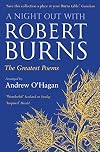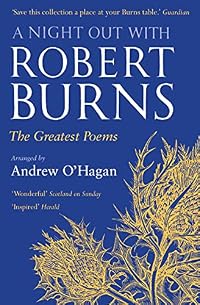
A Night Out with Robert Burns: The Greatest Poems
by Robert Burns
On This Page
Description
The Scottish poet Robert Burns has been idolised and eulogised. He has been sainted, painted, tarted-up and toasted. He is famous as the author of 'Auld Lang Syne', and he has long been the patron saint of the heart-sore and the hung-over. But what about the poems? Beneath the cult of Burns Nights and patriotic yawps, there is the work itself, among the purest and most truthful created in any age.This is a Burns collection like no other, introduced and arranged by novelist and essayist show more Andrew O'Hagan, it is a reader's edition, made for the pleasure of reading and brings Burns' work to full, riotous, colourful life. show lessTags
Recommendations
















Member Reviews
Hopefully I don't need to extol the joys of Burns' poems to most readers. Instead, what's special about this collection is the arrangement and introduction by Andrew O'Hagan, a literary figure akin to James Woods.
O'Hagan is a liberal-left Scotsman from the Irish community which settled in Scotland in the 19th-century, fleeing oppression and poverty, only to find more of the same plus added sectarianism over the water. Yet O'Hagan's novels and essays unify the multiple experiences of Scottishness: religion, class, heritage, politics, Celticism and Britishness. So it's perhaps clear why Canongate asked him to introduce and arrange these very familiar poems: he rearranges to defamiliarise, to confront Scots and others with the radical, show more dangerous Burns, to wrench them (us?) away from the cosy, tartan-bound pride in a local boy done good. My grandfather's pocket copy of Burns is bound in just such ersatz-tartan, and carries no trace of the sexy, dangerous, radical, unsettling Burns who appears in O'Hagan's introduction and in the poems chosen for this volume. Buy it, and have your preconceptions rudely upset. show less
O'Hagan is a liberal-left Scotsman from the Irish community which settled in Scotland in the 19th-century, fleeing oppression and poverty, only to find more of the same plus added sectarianism over the water. Yet O'Hagan's novels and essays unify the multiple experiences of Scottishness: religion, class, heritage, politics, Celticism and Britishness. So it's perhaps clear why Canongate asked him to introduce and arrange these very familiar poems: he rearranges to defamiliarise, to confront Scots and others with the radical, show more dangerous Burns, to wrench them (us?) away from the cosy, tartan-bound pride in a local boy done good. My grandfather's pocket copy of Burns is bound in just such ersatz-tartan, and carries no trace of the sexy, dangerous, radical, unsettling Burns who appears in O'Hagan's introduction and in the poems chosen for this volume. Buy it, and have your preconceptions rudely upset. show less
 This review was written for LibraryThing Early Reviewers.
Burns is a poet whose life and work has been over-sentimentalised and exploited in the 250 years since his birth and this is a book which goes quite a long way in addressing these wrongs. O'Hagan loosely divides the poems into four sections, 'The Lasses', 'The Drinks', 'The Immortals' and 'The Politics' and prefaces each poem with a short introduction explaining why this poem is still important now. I was familiar with most of the poems in first two sections, but it is the Burns the angry radical who is a revelation, as O'Hagan says Robert Burns 'is the prince of poetry, not only for me or for Scotland, but for the world.' Read this collection.
This review was written for LibraryThing Early Reviewers.I’m particularly fond of John Carey’s theory regarding the British and their relationship (or lack of) with the arts. I’ll oversimplify grossly to keep it brief, but it’s essentially that a lot of British people have been put off engaging with art due to the way it’s been taught and regarded since the Second World War, as elitist trophies to be admired rather than works to be engaged with and actively enjoyed, works which may still have vital ideas, maybe even something to say about our own time. He further argues that if this attitude were to be changed in the teaching and presentation of art, more people would find works of art accessible rather than offputting. Essentially, he’s passionate about trying to bring art to the show more people by democratising it. It’s best expressed in his book Pure Pleasure , which selects books not for perceived literary merit but by how much enjoyment can be derived from them. Professor Carey struck a chord with me there, particularly with some of my own reading experiences and as such A Night Out With Robert Burns looked like an ideal book for me. It seeks to take Burns from the cosy nostalgic tomb in which he’s generally been sealed, and reposition him as still vibrant and relevant today.
Introductions for each poem are provided by Andrew O’Hagan. For much of the book I wasn’t quite sure O’Hagan was the ideal man to write and select the introductions, dropping names such as Seamus Heaney’s into these paragraphs comes across as a tad elitist. Various poems in the first three sections occasionally raise the spectre of that whisky fuelled nostalgia. While that might seem offputting, there was occasionally a certain element of that to Burns’ work, so their inclusion is valid. As I progressed through the book though, it became more and more clear how much thought had been put into both the selection of, and the introductions to, the poems, how they were designed to complement rather than tell what the poems are about. O’Hagan selects the poems not because of perceived greatness (although his most famous works are present and correct) but for the pleasure that can be derived from them and to give a good overview. The introductions generally bring out an aspect of the poetry without directly telling or patronising the reader, the occasional mention of famous friends is a small price to pay there – I was particularly fond of the use of one of the Mail’s more hysterical pieces.
Where I found this collection scoring highly was in the final section, dealing with the more political poems. The relevant passages accompanying the poems are immaculately selected and really bring out the obvious anger and frustration that course through Burns’ words. It’s this section more than the other three which gives cause to re-evaluate what you think you know about Burns.
In the end O’Hagan proves a fine advocate for Burns (although bracketing him with Shakespeare may be taking things a touch too far). As a perfect host, he only intrudes on proceedings when necessary, remembering Burns is the star of the show and not he. The rough energy and vibrancy of Burns’ words are allowed the space to speak for themselves whilst being given a relevant modern cultural context. It may not entirely bring Burns out of the Scottish dialect ghetto, but as an exercise in trying to correct historical misperceptions of a great figure it’s hugely successful. show less
Introductions for each poem are provided by Andrew O’Hagan. For much of the book I wasn’t quite sure O’Hagan was the ideal man to write and select the introductions, dropping names such as Seamus Heaney’s into these paragraphs comes across as a tad elitist. Various poems in the first three sections occasionally raise the spectre of that whisky fuelled nostalgia. While that might seem offputting, there was occasionally a certain element of that to Burns’ work, so their inclusion is valid. As I progressed through the book though, it became more and more clear how much thought had been put into both the selection of, and the introductions to, the poems, how they were designed to complement rather than tell what the poems are about. O’Hagan selects the poems not because of perceived greatness (although his most famous works are present and correct) but for the pleasure that can be derived from them and to give a good overview. The introductions generally bring out an aspect of the poetry without directly telling or patronising the reader, the occasional mention of famous friends is a small price to pay there – I was particularly fond of the use of one of the Mail’s more hysterical pieces.
Where I found this collection scoring highly was in the final section, dealing with the more political poems. The relevant passages accompanying the poems are immaculately selected and really bring out the obvious anger and frustration that course through Burns’ words. It’s this section more than the other three which gives cause to re-evaluate what you think you know about Burns.
In the end O’Hagan proves a fine advocate for Burns (although bracketing him with Shakespeare may be taking things a touch too far). As a perfect host, he only intrudes on proceedings when necessary, remembering Burns is the star of the show and not he. The rough energy and vibrancy of Burns’ words are allowed the space to speak for themselves whilst being given a relevant modern cultural context. It may not entirely bring Burns out of the Scottish dialect ghetto, but as an exercise in trying to correct historical misperceptions of a great figure it’s hugely successful. show less
This review was written for LibraryThing Early Reviewers.I got this as an Early Reviewers thingy. And I am very glad I did.
Being from Ayrshire I grew up with Burns. Almost to the point where I had sickened of him. Years had been spent (so it felt like) reading his poems and trying to remember them. Constantly being confused by words almost like your own but not. And always told how great it is.
And the only books I would find would be Complete Works which were much too daunting to actually read. I'm sure many people have the same problem with Shakespeare.
So I was unsure when this came along. But its great point is that it is accessible.
It is a small collection pulled together of poems and songs that Andrew O'Hagan likes. Some for their eternal beauty, some for their aptness in the current show more world. He gives each a short introduction which is more to set the scene than to explain anything academic and then leaves you with the words.
And because it is not too big and daunting I read them. And was enlightened.
Burns is a superb poet, if not the best of men, and can find a beauty and a political statement in almost anything. Something I had lost in the dull English lessons of youth.
So, in summary, read Burns poems. And you could do a lot worse than start with this collection of them. show less
Being from Ayrshire I grew up with Burns. Almost to the point where I had sickened of him. Years had been spent (so it felt like) reading his poems and trying to remember them. Constantly being confused by words almost like your own but not. And always told how great it is.
And the only books I would find would be Complete Works which were much too daunting to actually read. I'm sure many people have the same problem with Shakespeare.
So I was unsure when this came along. But its great point is that it is accessible.
It is a small collection pulled together of poems and songs that Andrew O'Hagan likes. Some for their eternal beauty, some for their aptness in the current show more world. He gives each a short introduction which is more to set the scene than to explain anything academic and then leaves you with the words.
And because it is not too big and daunting I read them. And was enlightened.
Burns is a superb poet, if not the best of men, and can find a beauty and a political statement in almost anything. Something I had lost in the dull English lessons of youth.
So, in summary, read Burns poems. And you could do a lot worse than start with this collection of them. show less
This review was written for LibraryThing Early Reviewers.Andrew O’Hagan’s short introduction to this collection of 41 of Burns’s most famous poems is part history, part memoir, so that we learn the brief outline of Burns’s life while absorbing a certain amount about O’Hagan’s own Ayrshire background. This contextualising of one poet’s relationship to another is continued in the selection of poetry. Divided into The Lasses, The Drinks, The Immortals and The Politics (with a certain amount of overlap between), the poems are each prefaced by a short comment or, occasionally, a modern quote. These glosses have the effect of creating a link between the poet’s experience and our own, and of helping to make a pathway into some of the longer poems, especially those made less show more accessible, for some, by use of broader Scots (Burns wrote variously in Scots, Scottish English and English).
O’Hagan has chosen a varied selection, which give a good idea of the range of Burns’s interests, which ranged far beyond “the lasses” – his politics were fiery, and his rants against hypocrisy and injustice did nothing to endear him to the establishment of the day. Indeed, it did no harm to his reputation as Scotland’s national poet that he died so conveniently young! Although a relatively slim volume, it contains some of the longer poems, such as The Holy Fair and Tam O’Shanter (it would be hard to imagine a Burns collection without the latter).
Burns wrote many of his poems to traditional Scottish melodies, and I found it impossible to read the first section, The Lasses, without music running through my head. Burns was a major contributor to collections of Scottish music, writing both original lyrics and revising others, and wrote of the process:
“I walk out, sit down now and then, look out for objects in nature around me that are in unison or harmony with the cogitations of my fancy and workings of my bosom, humming every now and then the air with the verses I have framed. When I feel my Muse beginning to jade, I retire to the solitary fireside of my study, and there commit my effusions to paper…”
Readers will find many old friends such as A Red, Red Rose and Green Grow the Rashes, as well as some which may be less familiar, such as Parcel of Rogues. There's a short glossary to help with the language, necessary in these days of linguistic homogenisation. If you think you’d like to add some Burns to your bookshelf, this well-chosen collection is the book to do it with. show less
O’Hagan has chosen a varied selection, which give a good idea of the range of Burns’s interests, which ranged far beyond “the lasses” – his politics were fiery, and his rants against hypocrisy and injustice did nothing to endear him to the establishment of the day. Indeed, it did no harm to his reputation as Scotland’s national poet that he died so conveniently young! Although a relatively slim volume, it contains some of the longer poems, such as The Holy Fair and Tam O’Shanter (it would be hard to imagine a Burns collection without the latter).
Burns wrote many of his poems to traditional Scottish melodies, and I found it impossible to read the first section, The Lasses, without music running through my head. Burns was a major contributor to collections of Scottish music, writing both original lyrics and revising others, and wrote of the process:
“I walk out, sit down now and then, look out for objects in nature around me that are in unison or harmony with the cogitations of my fancy and workings of my bosom, humming every now and then the air with the verses I have framed. When I feel my Muse beginning to jade, I retire to the solitary fireside of my study, and there commit my effusions to paper…”
Readers will find many old friends such as A Red, Red Rose and Green Grow the Rashes, as well as some which may be less familiar, such as Parcel of Rogues. There's a short glossary to help with the language, necessary in these days of linguistic homogenisation. If you think you’d like to add some Burns to your bookshelf, this well-chosen collection is the book to do it with. show less
This review was written for LibraryThing Early Reviewers.Due to the unexpected pleasure and success of my 2008 Jamesian Experiment, I have extended my 2009 reading ambitions to poetry appreciation. Burns as the starting point probably isn’t the wisest move, but this volume, at least, makes it an entertaining one. O’Hagan has organised the poems into sections dealing with various Burnsian concerns: The Lasses, The Drinks, The Immortals (Religion), The Politics. He also contextualises each poem with a small introduction relating it to either Burns’s life or his own in contemporary Scotland. A glossary of the dialect is thoughtfully provided at the back though it would have been more thoughtful had the English terms been placed on the same page as the poem. Not to worry, after a couple of show more whiskey collins (recipe astutely provided as an introduction to the drinks section), I’ll be so fluent in the lingo that the glossary will be rendered entirely superfluous! show less
This review was written for LibraryThing Early Reviewers.A different approach to Burns' poetry than the usual tartan-hued nostalgia. I was initially a little disappointed that 'Address to a Haggis' was omitted from the collection, but this is not always a book about his best known works. The Burns in this collection is raw, political, flirting with danger - a new side to the Burns I thought I already knew.
Overall, an enjoyable arrangement of Burns' work.
Overall, an enjoyable arrangement of Burns' work.
This review was written for LibraryThing Early Reviewers.Members
- Recently Added By
Author Information

527+ Works 5,987 Members
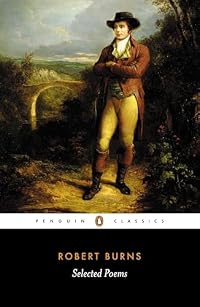
Robert Burns, a Scottish poet, was born in Alloway, Ayrshire, Scotland, on January 25, 1759. He received little formal education, but he enjoyed reading and he became familiar with the writings of such authors as Dryden, Milton, and Shakespeare. Burns worked long hours with his father, a tenant farmer. The frustration of watching his father's show more struggles on the farm is said to have inspired his satirical poetry. When his father died in 1784, Burns moved the family to the farm Mossgiel about one mile north of the town of Mauchline. Here he continued to work as a farmer and to write poetry. In 1786 Poems, Chiefly in the Scottish Dialect was published, which described the existence of the Scottish peasant. Burns's popularity was immediate, if short-lived. After a brief period of fame in Edinburgh, Burns returned to Ayrshire. Burns married Jean Armour in 1788. They moved first to a farm in Ellisland, then to Dumfries, where Burns worked as a tax inspector. In addition to his poetry, Burns is well known for his songwriting. He worked with James Johnson on a project to revise old Scottish tunes and created some new songs of his own. Some favorites include Auld Lang Syne, To a Mountain Daisy, and Tam o' Shanter. Robert Burns died of rheumatic fever on July 21, 1796, at the age of 37. (Bowker Author Biography) show less
Common Knowledge
- Original publication date
- 2008
- People/Characters
- Robert Burns
- Dedication
- In memory of Larry Rhodes
(1967-2002) - Blurbers
- Heaney, Seamus; McGregor, Ewan
Classifications
Statistics
- Members
- 77
- Popularity
- 409,479
- Reviews
- 15
- Rating
- (3.71)
- Languages
- English
- Media
- Paper, Ebook
- ISBNs
- 6
- ASINs
- 3