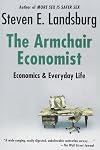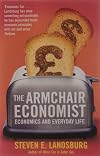
The Armchair Economist: Economics and Everyday Life
by Steven E. Landsburg
On This Page
Description
The extensively revised and updated edition of Steven Landsburg's hugely popular book, The Armchair Economist—"a delightful compendium of quotidian examples illustrating important economic and financial theories" (The Journal of Finance).In this revised and updated edition of Steven Landsburg's hugely popular book, he applies economic theory to today's most pressing concerns, answering a diverse range of daring questions, such as:
Why are seat belts deadly?
Why do celebrity endorsements show more sell products?
Why are failed executives paid so much?
Who should bear the cost of oil spills?
Do government deficits matter?
How is workplace safety bad for workers?
What's wrong with the local foods movement?
Which rich people can't be taxed?
Why is rising unemployment sometimes good?
Why do women pay more at the dry cleaner?
Why is life full of disappointments?
Whether these are nagging questions you've always had, or ones you never even thought to ask, this new edition of The Armchair Economist turns the eternal ideas of economic theory into concrete answers that you can use to navigate the challenges of contemporary life. show less
Tags
Recommendations

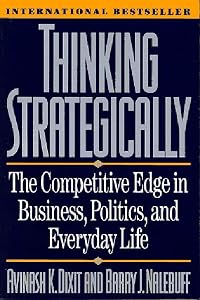
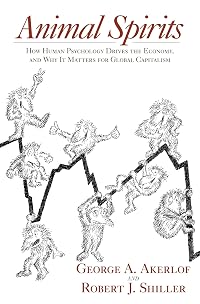
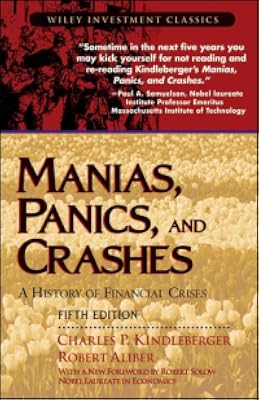
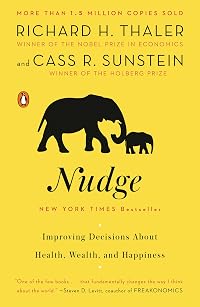
Member Reviews
I've seen a few reviewers of this book decry 'politically motivated' criticism of this book, and I scratch my head at the notion. First, the attempt to keep a neat tidy box around what can be deemed political or not. (I tend to err on the side of more things being political than not.) Second, the inability to understand that economics is a political science.
Jonathan Gruber, professor of Economics at MIT, opens his Microeconomics course (freely available on YouTube!) with a crucially important observation: Economics is a right-wing science. In that, it's basic principles and logical conclusions lead towards right-wing politics. Less government intervention. More dependence on the free market. More individual autonomy. This may seem show more offensive to both adherents and critics of Landsburg. Adherents may protest the claim that a 'science' can be political and critics may find that it proves their suspicions of Landsburg's policy conclusions.
Landsburg's book succeeds when it focuses on those economic principles, and it falls short when it attempts to present them as unassailable.
I’ll provide an example, not from this book, but instead that you would find in many introduction to economics textbooks. That minimum wage laws lead to unemployment. The basic economic theory here is not hard to follow. A minimum wage is effectively a price floor. Price floors set below the equilibrium price do nothing. Price floors set above the equilibrium price create a surplus because the prices are too high for many people who would otherwise be interested. In this example a surplus in labor would translate to higher unemployment rate.
This example is sound economic theory, and the logic rather straightforward. But the wrinkle is that in reality we have seen very different things happening when minimum wage laws are enacted. The effects we observe neither prove or disprove the theory. Instead, they point to a complicated outcome with various factors and inputs.
This is where Landsburg’s book falls short. It presents a very basic introduction to economic thought as a very basic introduction to economics. I think there’s a vast difference between the two. Learning to think like an economist is different than learning to be an economist.
I suppose it’s unfair to malign the book for its inability to crunch various undergrad courses into a single 200-something page popular economics book but alas! The book is a fine introduction to economic thought, but economic thought is not necessarily the end all be all way to analyze the world. It’s an important tool in the toolbox and this book serves as a passable starter set. show less
Jonathan Gruber, professor of Economics at MIT, opens his Microeconomics course (freely available on YouTube!) with a crucially important observation: Economics is a right-wing science. In that, it's basic principles and logical conclusions lead towards right-wing politics. Less government intervention. More dependence on the free market. More individual autonomy. This may seem show more offensive to both adherents and critics of Landsburg. Adherents may protest the claim that a 'science' can be political and critics may find that it proves their suspicions of Landsburg's policy conclusions.
Landsburg's book succeeds when it focuses on those economic principles, and it falls short when it attempts to present them as unassailable.
I’ll provide an example, not from this book, but instead that you would find in many introduction to economics textbooks. That minimum wage laws lead to unemployment. The basic economic theory here is not hard to follow. A minimum wage is effectively a price floor. Price floors set below the equilibrium price do nothing. Price floors set above the equilibrium price create a surplus because the prices are too high for many people who would otherwise be interested. In this example a surplus in labor would translate to higher unemployment rate.
This example is sound economic theory, and the logic rather straightforward. But the wrinkle is that in reality we have seen very different things happening when minimum wage laws are enacted. The effects we observe neither prove or disprove the theory. Instead, they point to a complicated outcome with various factors and inputs.
This is where Landsburg’s book falls short. It presents a very basic introduction to economic thought as a very basic introduction to economics. I think there’s a vast difference between the two. Learning to think like an economist is different than learning to be an economist.
I suppose it’s unfair to malign the book for its inability to crunch various undergrad courses into a single 200-something page popular economics book but alas! The book is a fine introduction to economic thought, but economic thought is not necessarily the end all be all way to analyze the world. It’s an important tool in the toolbox and this book serves as a passable starter set. show less
I don't think I'm qualified to rate and review this book plainly because I realized while reading it that I'm too dumb to understand some of the author's points to either agree or disagree with them, hence just the sitting-on-the-fence score.
I think this borders on esoteric economic thinking and I'm not in the cool kids club. Nevertheless, I'd still recommend reading it because, hey, some things you read and learn will always stick.
Edit: Oh, and yes, the two things I take away from the book: 1) economics is more prevalent in our lives than what we learned in college, and 2) economic thinking is a thing, just like scientific thinking and if adopted, it might change the way one thinks about a lot of things in life.
I think this borders on esoteric economic thinking and I'm not in the cool kids club. Nevertheless, I'd still recommend reading it because, hey, some things you read and learn will always stick.
Edit: Oh, and yes, the two things I take away from the book: 1) economics is more prevalent in our lives than what we learned in college, and 2) economic thinking is a thing, just like scientific thinking and if adopted, it might change the way one thinks about a lot of things in life.
What I enjoyed most about this book was that the examples were so clear that I felt like I actually understood some of the basic principles of economy - and some of the things Mr. Landsburg said were very surprising to me. I also enjoyed his depiction of economists and how they are always trying to figure out the reasons behind problems that seem very simple on first glance (why does popcorn cost so much in the theater?). Very readable.
"Guided by the right theory of cornflakes - which is that families buy cornflakes in order to eat them and won't buy more than they want to eat - he might have realized that letting the government do people's shopping would not make them any hungrier."
Amusing and though-provoking. Still, apparently it only takes five pages of economics to put me to sleep.
Amusing and though-provoking. Still, apparently it only takes five pages of economics to put me to sleep.
I generally enjoy books that cover Economics topics for laymen, but I didn't like this one very much. The basics of the field are presented in a clear way, but the examples were often oversimplified to the point that they were distracting. His focus on economics isolated from all other aspects of society lead to him saying ridiculous things like, "taxes have no effect on the economy".
While I don't always agree with Landsburg's conclusions, this book is an interesting view of how to use economics to think about not just the major problems of society, but many everyday issues as well. So long as the concept of incentivized behavior is present, Landsburg seems interested and manage to convey the thought process quite well.
Two chapters into this book, and I already had a beef with the author. Landsburg seems to me to be one of those economists who don’t live enough in the real world. His arguments sound much like the economist who won’t stoop to pick up a $100 bill on the ground because if the $100 were real, someone else would already have picked it up. He doesn’t say that specifically (at least so far) but his arguments sounds very much like one who would.
(Full review at my blog)
(Full review at my blog)
Members
- Recently Added By
Lists

My List
302 works; 1 member
Author Information

13+ Works 1,587 Members
Steven E. Landsburg is a professor of economics at the University of Rochester. He is the author of Fair Play, More Sex is Safer Sex, The Big Questions, two textbooks on economics, a textbook on general relativity and cosmology, and more than thirty journal articles on mathematics, economics, and philosophy. For more than ten years he wrote the show more monthly Everyday Economics column in Slate magazine. He has written regularly for Forbes and occasionally for the New York Times, the Wall Street Journal, and the Washington Post. He blogs at www.TheBigQuestions.com. show less
Common Knowledge
- Canonical title
- The Armchair Economist: Economics and Everyday Life
- Original title
- The Armchair Economist - Economics and Everyday Life
- Original publication date
- 1993
Classifications
- Genres
- Economics, Nonfiction, General Nonfiction
- DDC/MDS
- 306.3 — Society, government, & culture Social sciences, sociology & anthropology Social Behavior - Dating, Marriage, Divorce Economic institutions
- LCC
- HM35 .L35 — Social sciences Sociology (General) Sociology These are obsolete numbers no longer used
- BISAC
Statistics
- Members
- 787
- Popularity
- 35,640
- Reviews
- 12
- Rating
- (3.58)
- Languages
- 5 — English, Italian, Portuguese, Russian, Spanish
- Media
- Paper, Audiobook, Ebook
- ISBNs
- 13
- ASINs
- 8