On This Page
Description
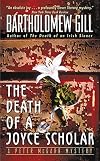
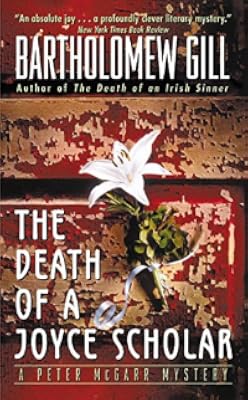
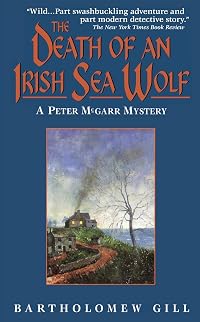
Trinity professor and Joycean scholar Kevin Coyle was one of Dublin's most colorful -- and controversial -- characters, until someone stabbed him through the heart on Bloomsday, the annual citywide celebration honoring Ireland's most beloved literary light. The poetic irony is not lost on Chief Superintendent Peter McGarr: one of the foremost experts on the works of James Joyce was slain on the so-called "Murderers' Ground" made famous in the author's magnum opus Ulysses. But the connection show more does not end there. And the deeper the intrepid McGarr digs, the more startling truths he uncovers about a victim's dark, licentious history, a list of suspects as vast and varied as the characters in a great novel ... and a motive for murder that can hide as easily in the pages of a classic book as in the twisted passions of a human heart. show lessTags
Recommendations


















Member Reviews
I enjoy a murder mystery with literary overtones, or one set in Ireland. I was fortunate to find this one, which covers both categories.
A university professor, who is not now only a Joyce scholar but a performer in the annual Bloomsday celebration in Dublin
But then he’s murdered, stabbed through the heart.
The book covers not only the investigation of his death, but the doings of quite a few different characters. It meanders a bit, but I think that’s deliberate on the author’s part. Lots of information on Ulysses and Joyce to delight the literature maven.
Recommended.
A university professor, who is not now only a Joyce scholar but a performer in the annual Bloomsday celebration in Dublin
But then he’s murdered, stabbed through the heart.
The book covers not only the investigation of his death, but the doings of quite a few different characters. It meanders a bit, but I think that’s deliberate on the author’s part. Lots of information on Ulysses and Joyce to delight the literature maven.
Recommended.
Bartholomew Gill is a pen name for Mark McGarrity, whose 1989 mystery The Death of a Joyce Scholar is the eighth and probably the best of McGarrity’s Dublin mysteries. The series, which features Chief Superintendent Peter McGarr of the Dublin Murder Squad, began with McGarr and the Politician’s Wife in 1977 and ended with the author’s death in 2002. MacGarrity was not, like his main character, a native Dubliner; he grew up in Massachusetts and went to Brown University. He fell in love with Dublin while in graduate school at Trinity College. In recent years he had divided his time between Dublin and New Jersey, where he wrote a regular outdoors feature column for the Newark paper. It was in New Jersey where he died in 2002. He had show more locked himself out of his second-story apartment and, when he tried to get in through a window, he fell.
The title, The Death of a Joyce Scholar, makes McGarrity’s book sound like a literary mystery, but it isn’t really, although its murder victim was not only a Joyce scholar at Trinity College but a performer and guide in the Bloomsday tours that reproduce the route taken around Dublin by Joyce’s main characters in Ulysses. In fact, the scholar’s wife seeks out McGarr because he is not a literary type like her husband’s colleagues, but rather, as she says, “one of us,” meaning a Dubliner from a working-class background like her husband and herself.
This “us versus them” attitude becomes a theme in the book. The scholar’s wife and her women friends have an exclusionist feminist view of the world. The Trinity College literature crowd has an “us or them” attitude that can destroy promising graduate students, an ironic elitism since Fergus Flood, seemingly the most Irish of the Trinity professors, is a transplant from the American Midwest. The new cop in McGarr’s squad, Ruthie Bresnahan, is concerned about fitting in with the others because of her gender and her Kerry origin. McGarr is supremely at home in the murder squad but uncomfortable in his young wife’s artist crowd as well as in the literary world his investigation throws him into.
Eventually McGarr reads Ulysses, which he’s never read before. He doesn’t find it a key to solving his murder, but he thinks its snapshot of 1904 Dublin still depicts the city he grew up in. The city is almost like another character in the book.
The Death of a Joyce Scholar contains perhaps the most imaginative use of the mystery convention of recounting in the middle of the book what we know about the case so far: one cop, Ruthie Bresnahan, details the case so far to another cop as he’s undressing her. Joyce, Dublin, murder, sex . . . what more could you ask for? show less
The title, The Death of a Joyce Scholar, makes McGarrity’s book sound like a literary mystery, but it isn’t really, although its murder victim was not only a Joyce scholar at Trinity College but a performer and guide in the Bloomsday tours that reproduce the route taken around Dublin by Joyce’s main characters in Ulysses. In fact, the scholar’s wife seeks out McGarr because he is not a literary type like her husband’s colleagues, but rather, as she says, “one of us,” meaning a Dubliner from a working-class background like her husband and herself.
This “us versus them” attitude becomes a theme in the book. The scholar’s wife and her women friends have an exclusionist feminist view of the world. The Trinity College literature crowd has an “us or them” attitude that can destroy promising graduate students, an ironic elitism since Fergus Flood, seemingly the most Irish of the Trinity professors, is a transplant from the American Midwest. The new cop in McGarr’s squad, Ruthie Bresnahan, is concerned about fitting in with the others because of her gender and her Kerry origin. McGarr is supremely at home in the murder squad but uncomfortable in his young wife’s artist crowd as well as in the literary world his investigation throws him into.
Eventually McGarr reads Ulysses, which he’s never read before. He doesn’t find it a key to solving his murder, but he thinks its snapshot of 1904 Dublin still depicts the city he grew up in. The city is almost like another character in the book.
The Death of a Joyce Scholar contains perhaps the most imaginative use of the mystery convention of recounting in the middle of the book what we know about the case so far: one cop, Ruthie Bresnahan, details the case so far to another cop as he’s undressing her. Joyce, Dublin, murder, sex . . . what more could you ask for? show less
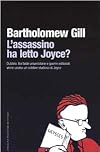
Dublino 16 giugno: ovunque si festeggia Bloomsday, la giornata commemorativa dell’Ulisse di Joyce. Un accademico del Trinity College di Dublino ed esperto studioso dello scrittore irlandese, viene trovato morto nei pressi di un cimitero. L’indagine viene affidata ad un ispettore “dublinese doc” nonché capo della squadra omicidi, che si trova ben presto invischiato in un caso che intreccia passioni amorose... e un libro.La soluzione di questo complicato delitto dovrà infatti passare attraverso un’accurata analisi dei personaggi dell’Ulisse. Sullo sfondo della Dublino di Joyce, una trama che intreccia fiction e realtà, in un continuo rincorrersi e riflettersi di personaggi reali e letterari.
i enjoyed the joyceness, the dubliness, the love story. i found the suspects a totally disagreeable lot.
This book was a little long winded. I thought it could have been wrapped up sooner but who am I to judge? Possibly it's the Dublin way of doing things.
Supt. Peter McGarr. Drunken Professor Kevin Coyle stabbed after a day of conducting a literary tour of Dublin, based on Joyce's novel, "Ulysses". Suspects include wife and her girlfriend, punk, brother professor. Added love story, between country girl cop and "boxer" cop, who gets beat up.
Cosa c'è dietro l'omicidio, avvenuto alla fine del Bloomsday, di Kevin Coyle, letterato esperto nell'opera di Joyce? È quello che il capo della squadra omicidi, Peter McGarr, deve scoprire in questo libro. E dire che McGarr, pur essendo dublinese dalla testa ai piedi, non ha mai letto l'Ulisse...
Come avrete intuito, la vera protagonista di questo giallo è Dublino. La Dublino della fine degli anni '80, per la precisione (il libro è del 1989), che immagino essere molto diversa da quella odierna diventata improvvisamente ricca; gli omicidi magari non sono cambiati più di tanto, ma di famiglie con dieci figli in dodici anni non ce ne sono più tante. La descrizione dei luoghi, soprattutto nei primi capitoli, è così dettagliata da show more risultare un po' stucchevole, e ci sono alcuni brani - per esempio la parte iniziale con la descrizione della famiglia di Coyle - che sembrano essere buttati lì un po' a caso senza avere alcuna attinenza con il resto della storia. Superate le prime cinquanta pagine, però, la trama migliora indubbiamente, e la lettura si fa molto più scorrevole e piacevole: non sarà insomma un capolavoro, ma non è nemmeno da buttare via, soprattutto per chi ama la letteratura irlandese del '900 e si ritrova nelle diversità di stile tra Joyce e Beckett. Al limite ci si può lamentare perché il titolo, davvero bello, farebbe sperare in qualcosa di più!
La traduzione in genere è chiara, tranne che nel penultimo capitolo dove uno un po' disattento si perde tra i personaggi. Verso metà libro, però, Gianna Lonza si dev'essere messa a sonnecchiare: a pagina 117 abbiamo "sessant'anni e dispari" ("sixty years and odd"?) invece che "sessant'anni e rotti", e a pagina 120 un "punto alla fine di un periodo" ("period"?) è presumibilmente alla fine di "una frase". A pagina 192 poi si continua a parlare di cibo "organico", quando "organic" sta per "biologico" (e le battute sarebbero venute ancora meglio con la traduzione corretta)(recensione anche sul mio blog, http://xmau.com/notiziole/arch/200807/004512.html ) show less
Come avrete intuito, la vera protagonista di questo giallo è Dublino. La Dublino della fine degli anni '80, per la precisione (il libro è del 1989), che immagino essere molto diversa da quella odierna diventata improvvisamente ricca; gli omicidi magari non sono cambiati più di tanto, ma di famiglie con dieci figli in dodici anni non ce ne sono più tante. La descrizione dei luoghi, soprattutto nei primi capitoli, è così dettagliata da show more risultare un po' stucchevole, e ci sono alcuni brani - per esempio la parte iniziale con la descrizione della famiglia di Coyle - che sembrano essere buttati lì un po' a caso senza avere alcuna attinenza con il resto della storia. Superate le prime cinquanta pagine, però, la trama migliora indubbiamente, e la lettura si fa molto più scorrevole e piacevole: non sarà insomma un capolavoro, ma non è nemmeno da buttare via, soprattutto per chi ama la letteratura irlandese del '900 e si ritrova nelle diversità di stile tra Joyce e Beckett. Al limite ci si può lamentare perché il titolo, davvero bello, farebbe sperare in qualcosa di più!
La traduzione in genere è chiara, tranne che nel penultimo capitolo dove uno un po' disattento si perde tra i personaggi. Verso metà libro, però, Gianna Lonza si dev'essere messa a sonnecchiare: a pagina 117 abbiamo "sessant'anni e dispari" ("sixty years and odd"?) invece che "sessant'anni e rotti", e a pagina 120 un "punto alla fine di un periodo" ("period"?) è presumibilmente alla fine di "una frase". A pagina 192 poi si continua a parlare di cibo "organico", quando "organic" sta per "biologico" (e le battute sarebbero venute ancora meglio con la traduzione corretta)(recensione anche sul mio blog, http://xmau.com/notiziole/arch/200807/004512.html ) show less
Jun 22, 2018Italian
Members
- Recently Added By
Author Information

21+ Works 1,858 Members
Mark McGarrity, who wrote mystery novels under the pseudonym Bartholomew Gill, was born in Massachusetts in 1943. He graduated from both Brown University and Trinity College in Dublin, Ireland. He wrote seventeen murder mysteries and was an Edgar Award nominee. As a journalist, he wrote for the Newark Star Ledger. He lived in Dublin and Cranberry show more Lake, NJ. He died in 2002. (Bowker Author Biography) show less
Awards and Honors
Awards
Series

Common Knowledge
- Original title
- The Death of a Joyce Scholar
- Original publication date
- 1989
- People/Characters
- Peter McGarr (Superintendent); Professor Kevin Coyle
- Important places
- Dublin, Ireland
- Epigraph
- "We Irishmen think otherwise" -Bishop Berkeley.
- First words
- It began during an unprecedented period of June heat.
Classifications
Statistics
- Members
- 264
- Popularity
- 122,622
- Reviews
- 7
- Rating
- (3.27)
- Languages
- English, French, Italian, Japanese
- Media
- Paper, Ebook
- ISBNs
- 11
- ASINs
- 4