
Casey at the Bat: A Ballad of the Republic Sung in the Year 1888
by Ernest L. Thayer
On This Page
Description
A narrative poem about a celebrated baseball player who strikes out at the crucial moment of a game.Tags
Recommendations







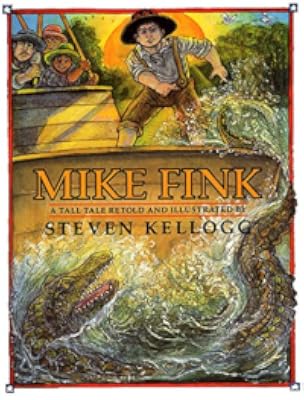
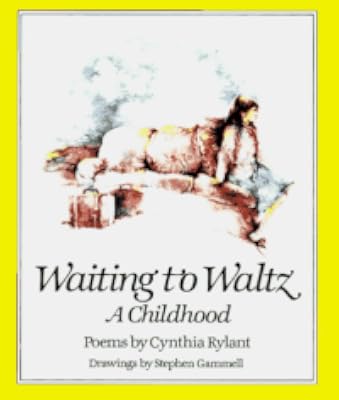
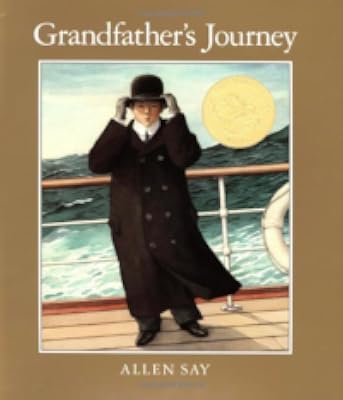

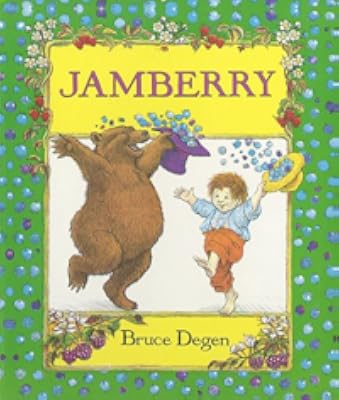

Member Recommendations
Member Reviews
Being both a lover of poetry and baseball, "Casey at Bat" is as familiar to me as "Line-Up for Yesterday." This classic American poem, written in 1888 as the title suggests, is about a fictional baseball team, "The Mudville Nine." Down 2 runs in the ninth inning, the crowd hopes that their team's best hitter, Casey, can step up to bat. However, the first two batters of the inning fail to reach, and the fans begin to leave. The next to batters unexpectedly both get hits, which allows Casey to come to bat. Due to hubris, Casey allows the first two pitches to pass him as strikes. But then, on the third pitch, he takes a mighty swing...and promptly strikes out, thus ending the tale.
The character of Casey is one that students can learn from. show more His boneheaded actions at the plate, during a crucial time in the game, shows the downfall of having too much pride in your own abilities, especially in baseball when getting a hit just 1/3 of the time puts you in rarefied air. There's also the lesson of taking advantage of the opportunities you have, as opposed to waiting out a situation (something I often do, so I did a bit of reflection post-reading).
As for class, this is a great poem to use as an example for a "standard" poem - it's fun, it's about sports, and it has such a great build-up to a non-payoff that the situation becomes comical. While it's funny, build up is a key ingredient in developing a narrative, no matter how long, which provides engagement and investment for the reader.
The students' will likely be entertained by the text, and it adheres to both a meter and rhyme scheme. While most students at the high school level would probably be familiar with a couplet scheme, showing the consistent 7 foot meter could be educational. It could also culminate in students writing their own poems about a tense situation in their own lives, or a fictional one, provided they stick to the scheme of "Casey at Bat." show less
The character of Casey is one that students can learn from. show more His boneheaded actions at the plate, during a crucial time in the game, shows the downfall of having too much pride in your own abilities, especially in baseball when getting a hit just 1/3 of the time puts you in rarefied air. There's also the lesson of taking advantage of the opportunities you have, as opposed to waiting out a situation (something I often do, so I did a bit of reflection post-reading).
As for class, this is a great poem to use as an example for a "standard" poem - it's fun, it's about sports, and it has such a great build-up to a non-payoff that the situation becomes comical. While it's funny, build up is a key ingredient in developing a narrative, no matter how long, which provides engagement and investment for the reader.
The students' will likely be entertained by the text, and it adheres to both a meter and rhyme scheme. While most students at the high school level would probably be familiar with a couplet scheme, showing the consistent 7 foot meter could be educational. It could also culminate in students writing their own poems about a tense situation in their own lives, or a fictional one, provided they stick to the scheme of "Casey at Bat." show less
Casey at the Bat, illustrated and expanded by Patricia Polacco
First published in 1888, in The San Francisco Examiner, Ernest Thayer's famous baseball poem, in which an overconfident batsman strikes out, bringing disappointment and defeat to the Mudville team, has been expanded and reinvented by prolific children's author and artist Patricia Polacco in this charming picture-book, which presents the cocky batsman as a little league player. Using the poem itself as her main text - "The outlook wasn't brilliant for the Mudville nine that day: / The score stood four to two, with but one inning more to play" - Polacco adds a brief prose narrative at the beginning and end of her book, filling out the story, and giving it an unexpected, and show more ultimately heartwarming conclusion.
The only one of Polacco's many picture-books that she did not write herself (at least, not in whole), Casey at the Bat presents a unique, and entirely fitting revisionist take on this American classic. Fitting, because Polacco's body of work, as a whole, has a distinctly American ethos - I have seen her books described as "Americana," a judgment with which I would concur - and her artwork is well suited to this tale. I can't say, in all honesty, that Thayer's poem has ever been a personal favorite of mine, but Polacco's presentation certainly makes me feel its hometown charm! Recommended to young baseball enthusiasts, and to fans of the author/artist. show less
First published in 1888, in The San Francisco Examiner, Ernest Thayer's famous baseball poem, in which an overconfident batsman strikes out, bringing disappointment and defeat to the Mudville team, has been expanded and reinvented by prolific children's author and artist Patricia Polacco in this charming picture-book, which presents the cocky batsman as a little league player. Using the poem itself as her main text - "The outlook wasn't brilliant for the Mudville nine that day: / The score stood four to two, with but one inning more to play" - Polacco adds a brief prose narrative at the beginning and end of her book, filling out the story, and giving it an unexpected, and show more ultimately heartwarming conclusion.
The only one of Polacco's many picture-books that she did not write herself (at least, not in whole), Casey at the Bat presents a unique, and entirely fitting revisionist take on this American classic. Fitting, because Polacco's body of work, as a whole, has a distinctly American ethos - I have seen her books described as "Americana," a judgment with which I would concur - and her artwork is well suited to this tale. I can't say, in all honesty, that Thayer's poem has ever been a personal favorite of mine, but Polacco's presentation certainly makes me feel its hometown charm! Recommended to young baseball enthusiasts, and to fans of the author/artist. show less
My all-time favorite baseball poem!
But the illustrations in this book kind of creeped me out. Elongated bodies, over-sized hands, and scary faces in the crowd. I would totally read this to my daughter, but I would not show her the pictures. Especially the ones showing the crowd. Yeesh...
But the illustrations in this book kind of creeped me out. Elongated bodies, over-sized hands, and scary faces in the crowd. I would totally read this to my daughter, but I would not show her the pictures. Especially the ones showing the crowd. Yeesh...
A phenomenal book. The artwork and the level of detail in the creation left me in awe. My regard for sports in general is lukewarm at best, but I love, adore, baseball. When I was little and my parents couldn't find me, they went straight to the baseball field at our local park and I'd be there in the stands, so Casey at the Bat tugs all the right heartstrings for me and I can't imagine a better presentation for this bit of American poetry.
Awesome.
Awesome.
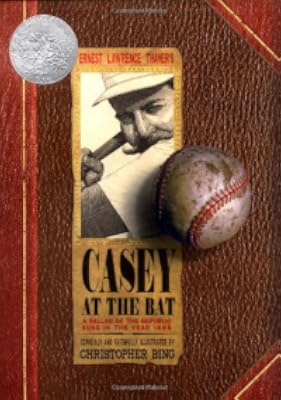
The story of "Casey at the Bat" and the Mudville nine is a familiar one, but Bing's illustrations make the story fresh again. The book's layout resembles that of a contemporary newspaper, which gives young students today a glimpse of how people long ago viewed the world. This would be an interesting "slice of life" book to accompany a social studies lesson.
I love the build up of this story and the twist at the end. But what I especially love are the magazine "clippings" that connect to each part of the story - the ad for the throat lozenges when the crowd is screaming is my favorite.
Summary: In this poem, it is the last inning of a baseball game and the home team is down two runs with two outs and their two worst players up to bat. Miraculously, the two players get on base, and now their best player, Casey, is up to bat. Everyone believes they are going to win now. Casey watches one strike go by, then another, and finally he strikes out. Everyone is shocked and disappointed.
Reflection: This poem is kind of confusing, but there is a couple of things I got from it. One, don't assume anything, because you never know what could happen. Two, don't ever get too big headed, because when you do, that is when someone will come along and deflate it very quickly.
Extension: For a extension, I would have the students discuss show more what their reaction would be if they were a fan of that team and how they would feel. For another activity, I would create a poem using the whole class. I would choose a topic then go around the room and have each student come up with a line for the poem. show less
Reflection: This poem is kind of confusing, but there is a couple of things I got from it. One, don't assume anything, because you never know what could happen. Two, don't ever get too big headed, because when you do, that is when someone will come along and deflate it very quickly.
Extension: For a extension, I would have the students discuss show more what their reaction would be if they were a fan of that team and how they would feel. For another activity, I would create a poem using the whole class. I would choose a topic then go around the room and have each student come up with a line for the poem. show less
Members
- Recently Added By
Published Reviews
Bill Ott (Booklist, Feb. 15, 2001 (Vol. 97, No. 12))
First-time children's book illustrator Bing's take on Casey at the Bat represents, above all, a stunning example of contemporary bookmaking in which the most sophisticated electronic techniques have been used to re-create the past. The text is presented as a "newly discovered," 100-year-old scrapbook into which newspaper articles, including show more Thayer's poem and other memorabilia, have been pasted, recording not only the events of the day--Casey's ninth-inning strikeout and the Mudville nine's four-to-two defeat--but also a broader view of the baseball world in 1888. The poem is illustrated in two-page spreads in which Bing's scratchboard drawings effectively capture the look of engravings used in newspapers of the period. Imposed over the drawings are fictional clippings that amplify issues suggested in the text (on the spread where Jimmy Blake "tears the cover off the ball," an editorial decries the practice of using only one ball throughout a game). Elsewhere, the illustrations depict a black player, and the clipping concerns the soon-to-be-instituted color line. (As with all the fictional clippings, this reference to baseball before the color line is historically accurate.) There is a phenomenal amount of information on baseball history compacted into this fascinating format, and the juxtaposition of memorabilia to text is unfailingly, even exhaustingly, clever (a newspaper ad for "bronchial troches" to cure hoarseness appears alongside the lines "Then from 5,000 throats and more there rose a lusty yell"). As with so many recent tour-de-force picture books, however, questions linger about the audience. For all its brilliance and bravura, this is a far less kid-friendly Casey than Gerald Fitzgerald's 1995 version. Adults, of course, will marvel at the bookmaking and relish the arcane information, but they may meet a fate similar to Casey's when they try to pass on their enthusiasm to their young children. Category: Books for the Young--Nonfiction. 2000, Handprint, $17.95. Ages 5-8. show less
First-time children's book illustrator Bing's take on Casey at the Bat represents, above all, a stunning example of contemporary bookmaking in which the most sophisticated electronic techniques have been used to re-create the past. The text is presented as a "newly discovered," 100-year-old scrapbook into which newspaper articles, including show more Thayer's poem and other memorabilia, have been pasted, recording not only the events of the day--Casey's ninth-inning strikeout and the Mudville nine's four-to-two defeat--but also a broader view of the baseball world in 1888. The poem is illustrated in two-page spreads in which Bing's scratchboard drawings effectively capture the look of engravings used in newspapers of the period. Imposed over the drawings are fictional clippings that amplify issues suggested in the text (on the spread where Jimmy Blake "tears the cover off the ball," an editorial decries the practice of using only one ball throughout a game). Elsewhere, the illustrations depict a black player, and the clipping concerns the soon-to-be-instituted color line. (As with all the fictional clippings, this reference to baseball before the color line is historically accurate.) There is a phenomenal amount of information on baseball history compacted into this fascinating format, and the juxtaposition of memorabilia to text is unfailingly, even exhaustingly, clever (a newspaper ad for "bronchial troches" to cure hoarseness appears alongside the lines "Then from 5,000 throats and more there rose a lusty yell"). As with so many recent tour-de-force picture books, however, questions linger about the audience. For all its brilliance and bravura, this is a far less kid-friendly Casey than Gerald Fitzgerald's 1995 version. Adults, of course, will marvel at the bookmaking and relish the arcane information, but they may meet a fate similar to Casey's when they try to pass on their enthusiasm to their young children. Category: Books for the Young--Nonfiction. 2000, Handprint, $17.95. Ages 5-8. show less
added by kthomp25
Lists

Caldecott Honor Books
296 works; 23 members

Rhyming Stories
4 works; 1 member

Honey For a Child's Heart
1,152 works; 25 members

Poetry Corner
187 works; 15 members

Books Read in 2023
5,547 works; 145 members

Recreation
93 works; 1 member
Author Information

6+ Works 1,799 Members
Some Editions
Awards and Honors
Awards
Distinctions
Series
Belongs to Publisher Series
Work Relationships
Is contained in
Has the adaptation
Has as a reference guide/companion
Has as a supplement
Has as a student's study guide
Common Knowledge
- Canonical title
- Casey at the Bat: A Ballad of the Republic Sung in the Year 1888
- Original title
- Casey at the Bat
- Alternate titles
- Casey at the Bat
- Original publication date
- 1888
- People/Characters
- Casey at the Bat
- Important places
- Mudville
- Related movies
- Casey at the Bat (1899 | IMDb); Casey at the Bat (1913 | IMDb); Casey at the Bat (1916 | IMDb); Casey at the Bat (1922 | IMDb); Casey at the Bat (1927 | IMDb); Casey at the Bat (1946 | IMDb) (show all 9); Casey at the Bat (1976 | IMDb); Casey at the Bat (1986 | IMDb); Casey at the Bat (2016 | IMDb)
- Dedication
- This book is dedicated to all those children of spring who have found moments of heaven in the smell of a freshly mowed ballpark beneath their feet, a well-worn and oiled glove on their hand, the crack of a bat on a ball and ... (show all)the umpire's bellow of "Play Ball," but most especially Bill, Gil, Sean, Patrick, Ryan, Ryan O., Matt, Matty, William, Biff, and Christian.
This book is for my son Christian, for giving me back a love thought lost for the game of baseball, and the cherished gift of watching the greatest catch in the history of baseball on a warm spring night in 1995. And for my ... (show all)wife, Wendy, and our daughters, Amy and Tessa, for their patience while I juggled furiously, standing on one foot. - First words
- The outlook wasn't brilliant for the Mudville nine that day;
The score stood four to two with but one inning left to play. - Last words
- (Click to show. Warning: May contain spoilers.)Oh, somewhere in this favored land the sun is shining bright;
the band is playing somewhere, and somewhere hearts are light,
and somewhere men are laughing, and somewhere children shout;
but there is no joy in Mudville — mighty Casey has struck out. - Original language
- English
Classifications
Statistics
- Members
- 1,738
- Popularity
- 12,677
- Reviews
- 56
- Rating
- (4.10)
- Languages
- English
- Media
- Paper, Audiobook, Ebook
- ISBNs
- 53
- UPCs
- 3
- ASINs
- 16